British army

Letters: Don’t underestimate Ed Miliband’s malign influence

Leave the US to it Sir: I was struck by the dichotomy of your 21 March issue. Christopher Caldwell describes President Donald Trump’s world-affecting miscalculation in attacking Iran (‘The end of Trumpism’), while the editorial exhorts us to climb aboard this runaway train to ‘finish the job’. The conflux of multinational involvement in this fiasco is already reminiscent of the tumbling dominoes of August 1914. Underlined by three colliding religions, the scale is now much larger and touches the entire planet. The Americans, for whom the ‘special relationship’ is skin-deep, made this bed and should lie in it, not us. J.B. Cowper Taplow, Bucks Net loss Sir: I fear Michael

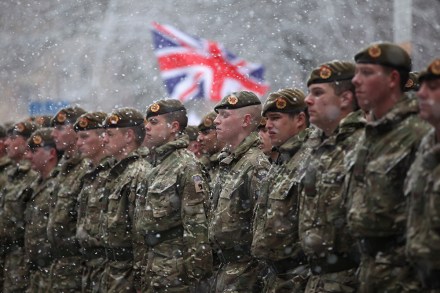
How the army can rediscover its fighting spirit

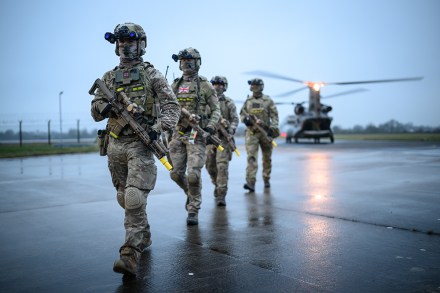
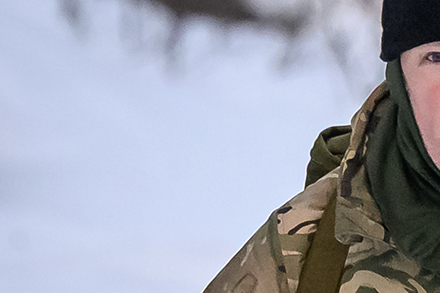
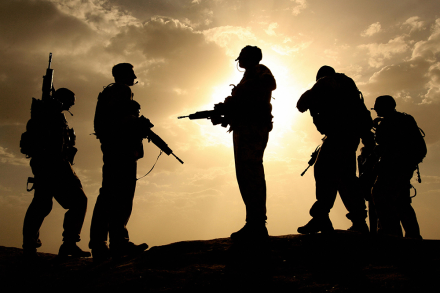
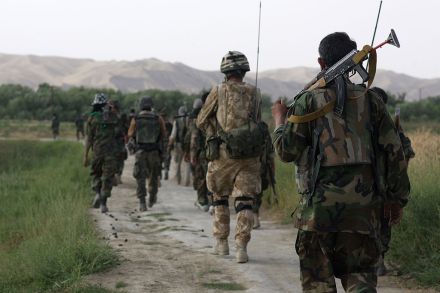
The seemingly endless debate about the hollowness of our armed forces has concentrated on size, technical capability and sustainability – never more so than in recent days when the UK’s unreadiness for war, or even to defend its own bases overseas, has been exposed. But there has been no mention of the moral component of fighting power (morale, spirit, will), which is the most important element of combat effectiveness. Napoleon is often quoted as saying that in war, ‘the moral is to the physical as three to one’, and history is littered with examples showing this to be true. The most recent was the evaporation, within days, of the Afghan

Britain is not ready for war – and Labour isn’t doing enough

38 min listen

Britain is defenceless, declares the Spectator’s cover piece this week. From the size of the armed forces to protection against cyber warfare, the government is not spending fast enough to meet the UK’s security challenges. But is the public ready to choose warfare over welfare? And can we blame the young people who don’t want to fight for their country? For this week’s Edition, host William Moore is joined by opinion editor Rupert Hawksley, columnist Matthew Parris, and Whitehall editor of the Financial Times Lucy Fisher. As well as meeting Britain’s defence challenge, they discuss: whether the Mandelson scandal is bigger than the Profumo affair; the organised gangs terrorising rural

Britain is not ready for war – and Labour isn’t doing enough

How prepared is Britain for war? – with Gen Sir Nick Carter

35 min listen

General Sir Nick Carter, former chief of the defence staff, joins Tim Shipman to discuss Britain’s military preparedness – or rather, lack thereof. While a friendlier US presence at the Munich Security Conference may have provided some relief, the military threats to the UK and to Europe presented are still stark. So what choices need to be addressed to ensure that Britain is equipped to deal with these threats? Is the government doing enough to address the awareness gap with the public? And how could AI change warfare? Produced by Patrick Gibbons.

How prepared is Britain for war? – with Gen Sir Nick Carter

What explains the weird military hype around Al Carns?

If Keir Starmer resigned tomorrow, the Labour party would be thrown into confusion. None of its factions has an obvious candidate to replace him. Yet some Labour MPs and commentators think they have found a solution. Why not send for Al Carns, minister for the armed forces, a former Royal Marines colonel, and MP for Birmingham Selly Oak since 2024? Carns, 45, who was briefly a candidate for the party’s deputy leadership last year, has built up a modest social media profile, posting videos of himself hiking, working out at the gym and training with reservists. One video saw him challenge a fireman to an impromptu pull-up contest, which Carns

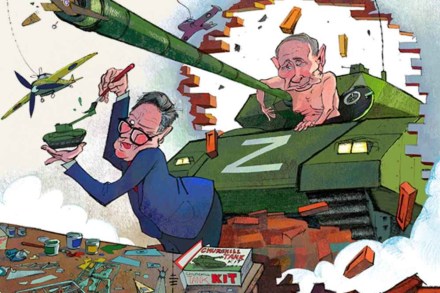
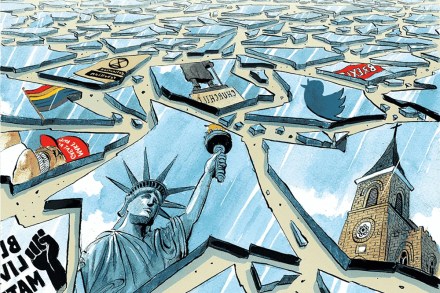
The army is too woke for war

Last month, in a two-page letter to colonels of corps and regiments, the Deputy Chief of the General Staff, Lieutenant-General David Eastman, inadvertently exposed the moral confusion, panic even, possessing parts of the British Army. Invited to dine by retired and serving officer members of the private London club Boodle’s, Eastman was dismayed to discover that there were ‘restrictions on the rooms that can be accessed’ by women. In his subsequent letter, he expresses concern that, even in mixed clubs, ‘rules, policies or cultural practices may not align with the army’s commitment to inclusivity’. And so, like Widmerpool in his pomp, he calls for corps and regiments to review their

Wine to toast the fallen

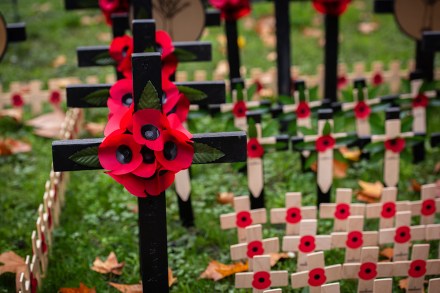
Solemn, moving, serious: British. As silence fell and the wreaths were lain, even teenagers joined in the mood of reverence. Suddenly it did not matter what the gossip columns were saying about Andrew Mountbatten Windsor, or what latest mischief might arise from the Duchess of Sussex. The great ship of state and of history sailed on serenely. The sacrifices of a previous generation were saluted. They had paid the price for their Britishness. We, their successors, unworthy as we might feel, could at least salute them, especially as good bottles were about to be opened, to toast the fallen. Yet there was a problem far more important than princely indiscretions.

Is the public ready for difficult decisions on defence?

16 min listen

Former Commander of Joint Forces Command – and one of the authors of the Strategic Defence Review – General Sir Richard Barrons joins Lucy Dunn and James Heale to talk through the main conclusions of the review, and the questions it raises. Labour have talked up the fact that this is the first government in a generation to not reduce the size of the armed forces. But, as Sir Richard explains, difficult choices await politicians and the public if the UK wants to be more prepared, and faster, for potential threats. Produced by Patrick Gibbons. 

Letters: The romantic route to cheap flights

Blood on our hands Sir: Paul Wood asks if anyone will be punished for the bloodbath in Syria (‘Massacre of the innocents’, 15 March). But where does one start? What we have seen most recently are the dreadful consequences – as also in Iraq and Afghanistan – of selfish western meddling in the Middle East for our own ends. I was on sabbatical in Syria at the end of 2010 interviewing Syrians of all religions and political persuasions. Well over 90 per cent and especially women saw the Assads as the only plausible bulwark against an Islamist theocratic nightmare. There was freedom of religion, freedom of association, the freedom for

Letters: Wokery is a form of dictatorship

Democracy rules Sir: I share the sentiments of both Rod Liddle (‘Trump displays weakness, not strength’, 8 March) and Douglas Murray (‘How MAGA turned on Ukraine’). I am one of those peculiar political animals who finds himself in agreement with certain elements of the right, including those represented by Donald Trump, on just about everything except Ukraine. Nevertheless, I see his election as an essential antidote to the poisonous ideology of the woke that has all but conquered the rest of the West in terms of the manner in which we live and are governed. Nor is the US immune. Without wishing to quibble with a courageous and eloquent speaker

Letters: Leave our soldiers alone

Military farce Sir: Your leading article (‘The age of realism’, 1 March) argues that the government must invest in the UK’s ‘thinned-out infantry ranks’. This is certainly true, but it does pass over, in my view, the more fundamental issue of the broken recruitment system. My own application to join the Royal Air Force was rejected on the basis that my mother is Polish. Given that Poland is an ally, this seems a curious justification for disqualification. I was born and educated in London, my mother having moved to the UK with my English father 30 years ago. Clearly I am not a security threat, but because ‘computer says no’,

SAS betrayal, the battle for Odesa & in defence of film flops

48 min listen

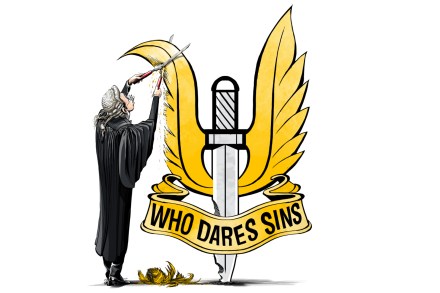
This week: SAS SOS The enemy that most concerns Britain’s elite military unit isn’t the IRA, the Taliban or Isis, but a phalanx of lawyers armed with the European Convention on Human Rights (ECHR), writes Paul Wood in The Spectator. Many SAS soldiers now believe that if they kill a terrorist during an operation, they’ll spend decades being hounded through the courts. Paul speaks to former SAS soldiers who say that stories of men being ‘dragged back to be screamed at in interview rooms’ are ‘flying around the canteens now’. Soldiers feel like ‘the good guys have become the bad guys – and the bad guys are now the good guys’.

The heyday of the gay guardsmen

In 1943 the music critic Desmond Shawe-Taylor placed an advertisement in Exchange & Mart offering a pair of trooper’s breeches for sale. A number of men replied, one asking ‘Have they been worn by a trooper or just yourself?’, while another observed: ‘It is always good to see the boys pulling themselves into tight troopers and then admire the “smashing finish”.’ Members of the Household Division of the British Army, in their figure-hugging breeches and scarlet coats, had always held a particular appeal for homosexual men. It was therefore fortunate that, though the military authorities publicly denied it, there was a long tradition in Guards regiments of combining ceremonial duties

Are we ready for the next war?

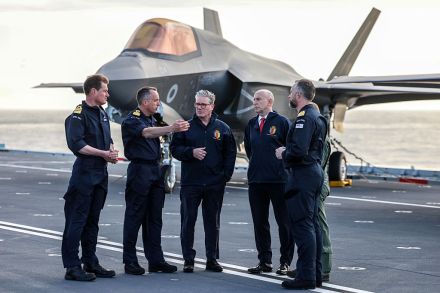
Is Britain ready to fight tomorrow’s wars? ‘Ish,’ answers James Heappey, the armed forces minister. Britain’s military is in an okay state, he says. But we need to spend more money on ammunition, medics and logistics systems. Our high-tech kit, the kind that helps us wage electronic warfare and collect data on our enemy’s positions, needs to be better connected with what our soldiers on the ground are doing. Liam Fox, the Tory MP and former defence secretary, is scathing about how we identify threats. ‘We have to stop substituting wishful thinking for critical analysis’, he says, to approving murmurs from the audience at Tory party conference. Fox asks us to remember the 2007

Troubles of the past: The Slowworm’s Song, by Andrew Miller, reviewed

Andrew Miller specialises in characters who are lost, often struggling to deal with the burden of failure. They don’t come much more adrift than Stephen Rose in The Slowworm’s Song, a former English soldier and alcoholic who is trying to start afresh with Maggie, a daughter he has barely met. Miller plunges straight into this painful yet beautiful novel, opening with the bombshell that drives the narrative: a letter that has arrived with the return address Belfast BT2, and a street Stephen may have walked down 30 years earlier. It is from an organisation calling itself the Commission, signed by an Ambrose Carville, inviting Stephen to come to Belfast in

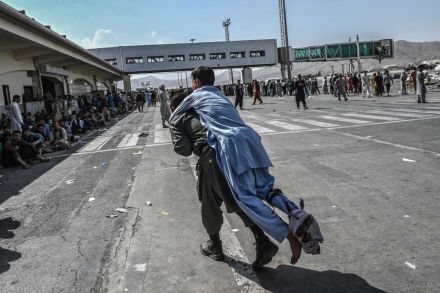
Why didn’t the UK rescue Afghan interpreters sooner?

We lost. Whatever hope we had that we could help Afghanistan crawl out of its misery has been shattered. The dreams of the 14 million women in Afghanistan or the tens of thousands of Kabul university graduates, who had grown-up after the expulsion of the Taliban, are now in ruins. Afghanistan has been broken again, by the Afghans’ inability to bury their personal or ethnic differences; by the perfidy of the Pakistanis, who have harboured and nurtured the Taliban; and by the actions of a foolish old man who happens to be US President. Caught in this web of misery are those who supported the Allied forces and those who

Has Britain learned from its failures in Afghanistan?

As the Americans prepare to leave Afghanistan, and in the UK we hold our own Defence Review, should we not be asking: have we really learned from the lessons of our failures there? I was in Afghanistan for a brief and intense time in 2007 when I was filming for Channel 4 Dispatches and CNN. We saw a country that had been brutalised for decades by the Russian occupation, the ensuing civil war and then American carpet bombing to ensure US troops met no resistance. A country which was becoming restive as the allies seemed increasingly unable to help them rebuild, or for that matter interested in doing so once

Marine A: the shambles that shamed us

Like it or not, and many in high places will loathe it, what we may now call The Blackman Affair is not going to go away. It will be recalled as a shambles and a glaring miscarriage of justice. Also remembered will be the ferocious, self-serving and vindictive role of the establishment in permitting this injustice to occur. Posterity will say that a Royal Marine sergeant on an exhausting assignment in Northern Helmand, Afghanistan, in the late summer of 2011, shot and killed a Taliban terrorist who, though undoubtedly dying and wholly unsaveable, was not yet quite dead. A more expanded account might add that a nearby corporal, secretly filming

Women – and transwomen – should fight on the frontline

My favourite quote of all time comes from John Stuart Mill: ‘War is an ugly thing, but not the ugliest of things. The decayed and degraded state of moral and patriotic feeling which thinks that nothing is worth war is much worse. The person who has nothing for which he is willing to fight, nothing which is more important than his own personal safety, is a miserable creature and has no chance of being free unless made and kept so by the exertions of better men than himself.’ The willingness of the British armed forces to sacrifice their lives on a daily basis – not for their country these days,

Lariam and my six months of madness

I once went mad in Africa and it was no fun at all. I was snorkelling off the coast of Zanzibar and I dived a little too deep, and something in the middle of my head went click. And then I came up and fell on to a boat that took me back to the paradise sands, and when I got there I couldn’t walk straight and everything started to fall apart. In fairness, that might not have been madness. That might have just been a problem with my inner ear. At the time, though, it was all bundled together. I’d been sub-Saharan for about nine months by this point,