Boris johnson

The Spectator Podcast: The dying of the right

On this week’s episode, we look at conservatism’s apparent decline, how society has responded to the Grenfell Tower tragedy, and whether young people have had their critical faculties vanquished by a certain boy wizard. First up: This time last year many were wondering whether the left, in Britain and abroad, was in terminal decline. The Brexit vote and Trump’s shock victory seemed only to compound that, and yet, just a few months later, the Spectator now has a cover piece, by Fraser Nelson, declaring that conservatism needs saving. How did we get here? And can anything be done about it? To discuss this, Fraser joined the podcast along with Michael Heseltine.

Boiling point

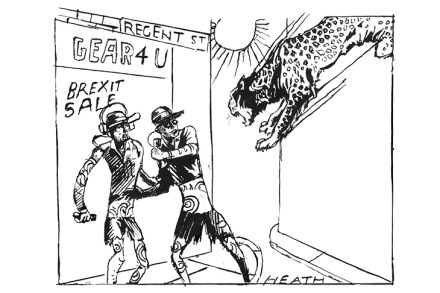
Bicycling up Regent Street in the intense June heat last week, I was cut up by a black cab driver. When I remonstrated with him, he leapt out of the cab and assaulted me, with a violent shove in the small of my back, trying to push me off my bike. It was the heat that did it. The driver wouldn’t have deserted his snug cab — and his passenger — if it had been raining. But, in the longest heatwave in more than a decade, he went stir-crazy in his confined space, as the black paint of his taxi absorbed mind-altering quantities of ultraviolet rays. He isn’t the only one who goes bonkers in this weather. When summer heat strikes the British, it morphs into summer madness.

Listen: Boris Johnson’s car crash Radio 4 interview

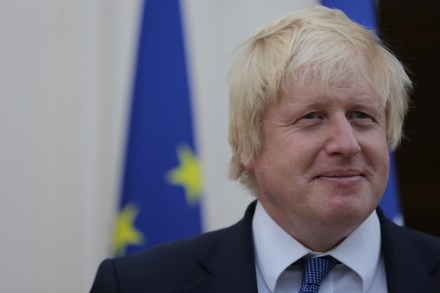
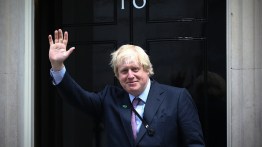
Oh dear. Although Theresa May has managed to make it through the Queen's Speech today, the real test will come next week when MPs vote on it. With the Prime Minister's authority already weak, talk has turned to who will be her eventual successor. So, it was a helpful coincidence that the frontrunner to be the next Tory leader just so happened to be doing the press rounds today. Boris Johnson appeared on Radio 4, where he was interviewed by Eddie Mair on his party's sparse legislative plans for the next two years. Unfortunately for Johnson, the interview did not go to plan. Asked how his party's plan would help deal with the 'burning injustices' in the UK, the Foreign Secretary bumbled and blustered.

Tory leader runners and riders: Who could replace Theresa May?

Theresa May has granted herself a brief reprieve by saying ‘sorry’ to Conservative MPs. But while the Prime Minister’s apology won her some breathing space, in the long term little has changed: the PM’s Downing Street days are numbered. Who could be next in line to take over as the new Tory leader? Boris Johnson Boris remains the bookies’ favourite despite being badly bruised by last year’s bungled bid for the top job. The Foreign Secretary has thrown his weight behind May for now. It’s difficult though to ignore George Osborne’s assessment that Boris is in a ‘permanent leadership campaign’.

I called it! Theresa May has been undone by her pointless election

I would direct you to Liddle passim for why we are now in this state of chaos. Even if Theresa May hadn’t run the worst election campaign in living memory (again, passim) she still wouldn’t have increased her majority by much at all. I knew that as a fact, an absolute certainty, on the day the election was called, and explained why, no matter that the polls were showing a landslide. The decision to call an election was arrogant and complacent — and so was the subsequent campaign. None of us may want the additional chaos of a leadership election, but nonetheless, there should be one. She is, as I said two weeks ago, undone. Come apart. And dead meat. I see the odds have shortened on Boris Johnson becoming leader and thus PM. I like Boris. He was even a friend.

In the wake of the police numbers row, attack is the best form of defence for the Tories

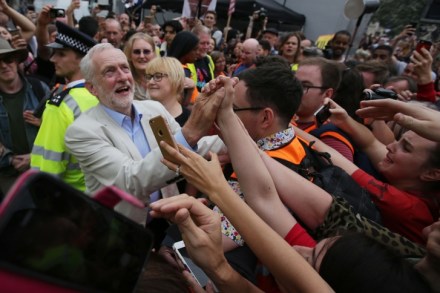
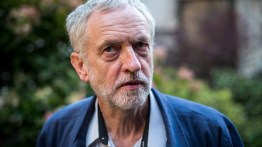
Boris’s last appearance on the airwaves during the election campaign left many scratching their heads. Just what did the word 'mugwump’ actually mean? This time, the Foreign Secretary’s attack against Jeremy Corbyn was much more straightforward: the Labour leader's opposition to the ‘shoot to kill’ policy. Here, Corbyn has undoubtedly changed his tune: in 2015, he said he wasn’t happy with the idea; and last year, he said that he hadn’t changed his mind. In the wake of the London attack though, Corbyn backed officers being able to use lethal force in certain situations.

Letters | 25 May 2017

NHS in a mess Sir: Max Pemberton is quite right to say that the NHS is close to collapse, but I’m not sure a Royal Commission is the answer (‘This is an emergency’, 20 May). The problems facing the NHS have been obvious for years, and need, as Max points out, a strong politician to take unpopular decisions, not an expensive Royal Commission to decide what the issues are. The other problem with a Royal Commission is that it would draw its membership from senior doctors, retired politicians, and other members of the establishment, some of whom are responsible for the mess in the first place. Dr Chris Nancollas Yorkley, Gloucestershire How to free up beds Sir: How gratifying to read Max Pemberton’s well-constructed debate on NHS funding.

Diary – 25 May 2017

The chances of my 20-year-old student son being at an Ariana Grande concert on a Monday night were, my head told me, zero. But as I watched ambulances converge on the arena, my maternal heart was in my mouth. Oliver had just been to the premier league darts at the venue (like me, there is no sport my son doesn’t enjoy watching). I called. No answer. I sent a text. ‘Don’t go near Manchester Arena — explosion.’ Then another one. ‘Let me know you’re OK.’ He was. But those teenagers, all those girls. Eight years old. The nation weeps for other people’s children. The day I went Yellow Tory and joined the Lib Dems, I got a two-word text from David Davis, the Brexit secretary. ‘Lib Dem?’ My two-word text back: ‘For now.

Here’s who should be Mrs May’s cabinet supremo to tackle the housing shortage

Who should be housing supremo in what we all assume will be Mrs May’s new administration? Brandon Lewis and Gavin Barwell, recent junior ministers with that brief, achieved nothing — if we also assume the brief was to procure an adequate supply of new homes, in the private sector or ‘social’ one, which the ‘just about managing’ could afford. The number of affordable homes built in 2015-16 was just 32,000, half that built in the previous year and the lowest since 1992. But action is coming — apparently. ‘We will fix the broken housing market,’ declares Mrs May, mustard-keen on fixing broken markets, ‘to build a new generation of council homes right across the country.

Libya’s best hope

We were in a detention centre for migrants in Tripoli and we came to a big locked door. It was impressively bolted and padlocked. Someone murmured that we didn’t have time to look inside. But I felt somehow obliged to do so. Outside in the sun I had already said hello to about 100 migrants — almost all of them from West Africa: Guinea-Conakry and Nigeria. They were sitting on the concrete in rows, their heads in their hands; the men in one group, and about half a dozen women a little way off. They had been here for months, in some cases, and they wanted to go home. Kwasi Kwarteng and Kim Sengupta consider the future of Libya: ‘J’ai faim,’ said one of the men. ‘C’est pas bon ici,’ said another.

Aspirations of a Mugwump, by Evelyn Waugh

'Mugwumps' are in the news today, after Boris Johnson used the term to describe Jeremy Corbyn. In the 2 October 1959 issue of The Spectator, Evelyn Waugh also used the term, when he wrote a piece entitled 'Aspirations of a Mugwump':  I hope to see the Conservative Party return with a substantial majority. I have bitter memories of the Attlee-Cripps regime when the kingdom seemed to be under enemy occupation. I recognise that individually some of the Liberal candidates are more worthy than many of the Conservatives, but any advantage to them can only produce deplorable instability. I have met, seen or heard very few leading politicians; of those I know the Conservatives seem altogether more competent than their opponents.

Books Podcast: How freakin’ zeitgeist are you?

In this week’s Books Podcast, I meet the poet Murray Lachlan Young. In the 1990s, Murray became notorious: the first and only poet in history to get a million-pound contract with a record label. Naturally, those living in the standard-issue garrets developed some envy issues. As he promotes his collected work, How Freakin’ Zeitgeist Are You?, Murray talks in detail for the first time about the wild and eventually traumatising ride that took him from obscurity, via the main stage on Glastonbury, to obscurity again — before he picked up the pieces and returned to the stage. He also shares a somewhat disrespectful poem about a former editor of this magazine… You can listen to our conversation here: And do subscribe on iTunes for a new episode every Thursday.

Labour is full of mugwumps – but Corbyn is not one of them

Trust Boris to dominate the headlines by reopening that most famous of books, Johnson’s Dictionary. Writing in the Sun, our effortlessly provocative Foreign Secretary swiped at Jeremy Corbyn with this colourful barb: ‘He may be a mutton-headed old mugwump, but he is probably harmless.’ Couched rather incongruously as the reflections of ‘the people’, this comment has left many laughing, but more still scratching their heads. In fact, there’s more to being a ‘mugwump’ than a throw-away jibe. The word comes from the original New Englanders, the Algonquians, for whom mugquomp meant ‘great chief’. It was a term of respect laden with connotations of nobility. But that presumably wasn't what Boris had in mind.

There’s more to Boris’s ‘mugwump’ insult than meets the eye

Boris Johnson has entered the election campaign with a bang. The Foreign Secretary was being squirrelled away, some were saying, after a number of ministers apparently suggested to Theresa May that she should sideline Boris to avoid alienating voters. It’s clear that’s not going to be happening. Today, Boris is front and centre calling the leader of the opposition a ‘mugwump’. In the Sun, Boris said that some may think Corbyn is harmless - a ‘mutton-headed old mugwump’ - but they’d be wrong to hold that view. The po-faced will say this is proof that Johnson is up to his old tricks and we shouldn’t fall for it; shadow foreign secretary Emily Thornberry has done just that, calling the comments ‘crass’.

The real victims of this snap election? The bankers’ wives

The people I feel most sorry for in the wake of Theresa May’s shock announcement are not moderate Labour MPs, nor even the pollsters, who really will be in trouble if they get another election wrong. No, it’s the bankers’ wives of west London. If the EU is going to be the No.1 issue in the campaign, and the Tories are standing on a pro-Brexit platform, how will the poor dears vote? On the one hand, they were very, very angry about the outcome of the EU referendum and, even today, they’re not above buttonholing leavers at cocktail parties and giving them the hairdryer treatment. They regard David Cameron as criminally negligent —‘How could he let this happen?’ — and Theresa May as a ‘turncoat’.

Boris was right on sanctions

Boris Johnson has received a bit of a kicking this week. There have been no shortage of people wanting to say he has been humiliated by the G7’s refusal to back his call for further sanctions on Russia and Syria after the chemical weapons attack. But I argue in The Sun today, that the real story is the weakness of the EU members of the G7. To be sure, Boris got too far forward on his skis on sanctions. But the bigger issue, by far, is the weakness of those members of the G7 who wouldn’t back them: principally, Italy and Germany. Lenin used to say “Probe with a bayonet; if you meet steel, stop! If you meet mush, then push.” This is, pretty much, Putin’s approach. So, Europe’s unwillingness to push back will embolden him.

Portrait of the Week – 12 April 2017

Home Boris Johnson, the Foreign Secretary, having cancelled a trip to Moscow over the Syrian poison gas incident, consulted other foreign ministers at the G7 summit at Lucca in Italy about how to get President Vladimir Putin of Russia to abandon his support for President Bashar al-Assad of Syria. The Scottish Medicines Consortium accepted for routine use by NHS Scotland a drug called Prep which, at a cost of more than £400 a month, can protect people at risk of contracting the HIV virus through unprotected sexual activity. In England, 57 general practitioners’ surgeries closed in 2016, Pulse magazine found, with another 34 shutting because of mergers, forcing 265,000 patients to move.

What the papers say: Did Boris bungle his first big test?

Boris Johnson fell flat on his face at yesterday’s G7 summit. Having called for tougher sanctions against Russia to punish the Kremlin for its support for the Assad regime in Syria, Boris laid the ground for the G7 to announce a firm crackdown. In the end, the G7 steered clear of any new sanctions, saying that it didn’t want to push Putin into a corner. So where does this leave Boris? Boris Johnson’s ‘first big foray into geopolitical diplomacy foundered’, says the Daily Telegraph. The paper says that there are some crumbs of comfort for Boris though. Despite the criticism being directed at the Foreign Secretary, Boris can claim some credit for ‘bringing the US more into line with Britain’s approach’.

What message do Trump’s missiles really send?

Let me take this opportunity to join with our Prime Minister and Foreign Secretary in commending President Trump’s swift and decisive military action against the Syrian government as being ‘appropriate’ — one of my favourite words and one which I like to use every day, regardless of whether it is appropriate to do so. The important thing was not of course the destruction of a few Syrian planes and, collaterally, a few Syrian children. The crucial point is that this moderate and judicious use of expensive missiles ‘sends out a message’ to President Assad. And the message is very simple. We will no longer tolerate Syrian children being killed by hugely unpleasant chemical weapons such as sarin or chlorine gas.

The G7 proves too weak to hold Putin to account

The G7 has failed to agree on any new sanctions on Russia following the Syrian regime’s use of chemical weapons last week. This is a blow to Boris Johnson, who has been pushing hard for targeted sanctions on Russian and Syrian military figures thought to be linked to last week’s attacks. But it is worth noting who blocked this push for new measures: the Italians and the Germans. Those who regularly say that the EU is the best way to stand up to Putin’s Russia and that Brexit is, therefore, a mistake, should reflect on this. The Syrian regime is a client of Russia’s; most of Assad’s military success in recent months has been down to Moscow’s help. Putin must, therefore, take responsibility for the Syrian government’s behaviour.