Boris johnson

What the papers say: The trouble with Boris, and McDonald’s Brexit boon

Boris Johnson was slapped down by Theresa May yesterday for his comments about Saudi Arabia. And the Foreign Secretary earns himself a similar rebuke in the Guardian this morning. The paper describes his remarks as ‘plain speaking without a purpose’ and says that ‘he frequently shoots from the hip or goes off half-cocked’. It warns that while speaking out of turn as a columnist could be ‘embarrassing’, now the ‘potential consequences are far graver’. But if so, why is Theresa May still tolerating Boris? In the eyes of the Guardian’s editorial, it’s because the PM thinks that ‘a cannon that misfires so often is less dangerous in front of her than on the benches behind her’. But how long will the PM's patience persist?

Boris Johnson is right about Saudi Arabia

In what sense does anyone actually disagree with what Boris Johnson said about Saudi Arabia and Iran? Does anyone actually think that his observation that they are both engaged in 'puppeteering' in Syria and Yemen is not only true, but understates the seriousness of the problem? Does anyone believe the Foreign Office when it says that Mr Johnson’s remarks do not reflect the position of the Government? Now I know the argument, viz, that Saudi Arabia is an important and very sensitive ally and the way to deal with its sensitivities is to make criticism in private, which is what, we are invited to believe, Theresa May did when she visited the Kingdom.

‘I get so frustrated with Whitehall’

The Prime Minister’s office is a small, unimpressive room in 10 Downing Street with miserable views and unexceptional furniture. Since moving in, Theresa May has spruced it up — but only a little. There is now a large glass meeting table; her predecessor preferred to chat on the sofas. She has also delved into the government art collection to retrieve two pictures of Oxford, where she honed her interest in politics and met Philip, her husband. She has also picked a painting of an English country church (she is of course a vicar’s daughter), and that’s about it. It’s a place for work and — very occasionally — interviews. We meet a few weeks after Mrs May won The Spectator’s Politician of the Year award.

A year of revolution

Few years will live as long in the memory as 2016. Historians will ponder the meaning and consequences of the past 12 months for decades to come. In the future, 180-odd years from now, some Zhou Enlai will remark that ‘it is too soon to say’ when asked about the significance of Brexit. The referendum result shocked Westminster. Michael Gove was so sure it would be Remain that he had retreated to bed on the evening of 23 June and only found out Leave had won when one of his aides telephoned in the early hours of the morning. Theresa May admits in her interview with us on p. 26 that she was ‘surprised’ by the result and had been expecting a Remain vote, based on both the polls and the mood in her own constituency.

Brexit’s breaking points

Trying to write the first draft of history on the EU referendum and the leader-ship mess that followed had both its dramatic and its comic elements. My phone never stopped ringing with Eurosceptics keen to tell me why their contribution to a meeting that had previously escaped my notice was the decisive factor in securing victory. But when a vote is so close — 52 per cent to 48 per cent — then it would not have taken much to push the result the other way. Donald Trump’s victory adds some credence to the idea that Brexit was pre–ordained, part of a wave of history. But the campaign turned on several events that were the result of accident, farce or both. If a relatively small number of those who backed Brexit had voted the other way, Remain would have triumphed.

Boris is fed up with being the butt of the government’s jokes

In the autumn statement, Philip Hammond chose to mock Boris’ failed leadership bid. This wasn’t the first time that one of the Foreign Secretary Cabinet’s colleagues had had a laugh at his expense. At our parliamentarian of the year awards, Theresa May joked that Boris would be put down when he was no longer useful. But Boris and his circle are getting rather fed up with him being the butt of the joke, as I say in The Sun today. Those close to Boris feel that these gibes undercut him on the world stage. 'If they want the UK to be taken seriously, they need to back him not mock him’ one close ally of his tells me.

Gove struggles to compete with Boris

Spare a thought for Michael Gove. While his fellow Brexiteer Boris Johnson's leadership campaign came to an abrupt end thanks to Gove challenging him, in the end it was the former mayor who found himself in the Cabinet and Gove who ended up on the backbench. Now it seems that Boris has had the last laugh once again. The latest register of interests shows Gove is earning £150,000 a year for his Times column. In comparison, Johnson's Telegraph column earned him £247,000 a year. Well, at least Gove has a book on the way to help make ends meet.

Boris Johnson vs the virtue signallers

As the government 'consider' inviting Donald Trump for a state visit, the president-elect was top of the agenda at today's Foreign Office questions. With the Westminster establishment riled over Trump's latest tweet claiming Nigel Farage would make a 'great' UK ambassador to the US, Simon Burns hit back -- suggesting Boris Johnson return the favour and request Trump send Hillary Clinton to fill the role of US ambassador to the UK. Continuing the theme of putting people forward against their will for jobs that either aren't available or don't exist, Labour's David Winnick said that it was Brandon Dixon -- the Hamilton actor who made an anti-Trump speech over the weekend -- who ought to become the 'unofficial ambassador' from the United States to Britain.

What the papers say: Boris’s ‘indiscreet’ way with words and Project Fear comes unstuck

In the run-up to the referendum, the Treasury warned that unemployment would rise by half-a-million. Today, this prophecy comes in for criticism in the papers following yesterday’s news that the number of Brits out of work had tumbled to an 11-year low. It’s not only Project Fear which gets a hard time in the editorials though. The moaning ‘anti-Brexit mob’ are also criticised - while the Guardian savages Boris Johnson for making a ‘fool of himself’. The Sun launches an attack on the moaning ‘anti-Brexit mob’ in its leader this morning, saying that it seems that the better the economic outlook since the referendum ‘the louder the caterwauling’ from those unhappy with the result.

Fine silks and fiery curries

Genial, erudite and companionable over most of its 760 pages, this stout Georgian brick of a neighbourhood history at length flings itself in fury through a toff’s window. Much of Dan Cruickshank’s book has shown with learned charm how, in its tangle of ancient streets just east of the City of London, Spitalfields has always hosted the rough with the smooth, tumult beside elegance. The East End patch where he has lived for four decades — his own 1720s home, a finely embellished history of inner London in itself, gets 15 loving pages — has ‘constantly embodied paradox: great wealth alongside appalling poverty, beauty juxtaposed with squalor’. As he nears his finale, the twin streams of this urban microcosm join.

Full text: George Osborne’s speech at the Spectator Parliamentarian awards

I am honoured to be invited to present these awards. Thank you very much for taking me out of my unemployment. When I read the Spectator front cover on the eve of the referendum, I thought it was advice on how to vote: ‘Out - and into the world’. But it turned out to be career advice to me. And of course, normally these annual awards are presented by last year’s winner of ‘Politician of the year’, David Cameron. And it’s another example of where he’s disappeared and left me holding the baby. I wanted to support the Spectator magazine - a brilliant weekly compendium on the arts, on politics, on society. Yours for only £4.25 - or $4 because of the policies of the Spectator.

Boris Johnson: Brexit will be a Titanic success

This morning, many politicians will be waking up with a sore head following a well-hydrated night at the Spectator's Parliamentarian of the Year awards. While the event proved to be a rather lively affair thanks to some choice words from both Theresa May and George Osborne, it's Boris Johnson who may be wishing he could give his speech a second try. On accepting the award for comeback of the year -- and speaking of his hope to last longer than Michael Heseltine's Alsatian did -- the Foreign secretary spoke of his vision for Brexit Britain. Unfortunately his turn of phrasing failed to inspire many in the audience as he promised to make a 'Titanic success' of Brexit: 'Brexit means Brexit and we are going to make a Titanic... Titanic success of it.

Full text: Theresa May’s ‘Politician of the year’ acceptance speech

Oh come on, we’re all builders now. Thank you very much indeed and it’s a great pleasure to receive this award. I am particularly pleased to receive the award from George, because I gather when it came to the voting it actually got very tight and I owe it to George - he just nudged me over the line because he told all the other members of the jury that if they didn’t vote for me, the economy would collapse and world war three would start. I feel I just have to make a comment or an intervention on a previous speech: Boris, the dog was put down, when it’s master decided it wasn’t needed any more. I have to say... the new job is very interesting, there's a lot to do but I am discovering some side effects of it.

Brexit means Brexit and we are going to make a Titanic success of it

Thank you very much. You are perfectly right, I had prepared two speeches. As some of you may know, I do like to have two versions for these occasions. Thank you very much, George, thank you very much Fraser. What an extraordinary few months it has certainly been and there have been times where I have had to admit that, like the loyal and faithful hound, Kim, to whom George has already alluded, like him, like the faithful alsatian belonging to Michael Heseltine, there have been moments since June 23rd where I have genuinely feared. In those very grim days after June 23rd, I genuinely feared that I might be strangled by a crazed, pop-eyed Europhile 'Remainer'.

The Heathrow saga: What the papers are saying

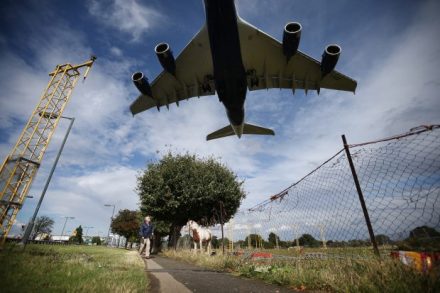
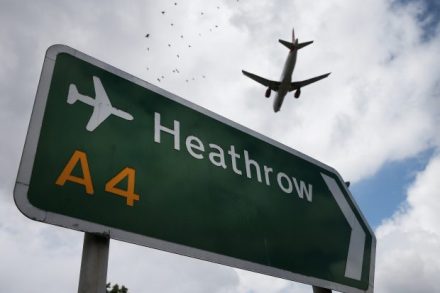
Heathrow’s third runway has won the backing of the Government but the long-running saga over the airport’s expansion rumbles on. Zac Goldsmith has quit in protest and Boris Johnson said the plans are ‘undeliverable’. So will the scheme ever see the light of day? Hopefully not, says The Times in its editorial, which suggests Boris’s view about the likelihood of planes taking off from a third runway is ‘probably right’. The paper says the need for airport expansion in the south east is clear and that ‘a decision of sorts is better than none at all’. But it says that Heathrow isn’t the place for it. The Times says expanding Heathrow ‘is the wrong decision, and history will not thank (the PM) for it’.

Heathrow’s third runway gets the go-ahead from the Government

As was widely expected, the Government has backed plans to expand Heathrow. Transport Secretary Chris Grayling said the decision to approve a third runway is 'truly momentous'. In a statement released moments ago, he said: 'I am proud that after years of discussion and delay this government is taking decisive action to secure the UK’s place in the global aviation market – securing jobs and business opportunities for the next decade and beyond.' This morning's news isn't much of a surprise, with the Prime Minister signalling last week that she favoured choosing Heathrow over Gatwick, in a decision that matches the Airport Commission's recommendation. So what happens now?

We’re too busy vilifying Putin and Russia to notice our own misdeeds

I have been wondering these last few weeks whether it would be cheaper to excavate a basement and buy a Geiger counter and iodine tablets, or emigrate to New Zealand. Call me frit, but I don’t like the way things are heading. Probably the second option is easier: Armageddon outta here, etc. I can re-enact Nevil Shute’s On the Beach from some rocky cove near Dunedin, waiting for the fallout to arrive. I was sentient only during the latter stages of the Cold War but from what I can remember, the two sides, them and us, behaved for the most part with a degree of rationality and common sense. (I like my politicians to be pragmatic rather than charismatic, which is why, if you were to ask who my favourite Soviet despot was, Brezhnev would always be the answer.

From Socrates to Boris

In writing an article that argued both for and against the European Union, Boris Johnson was following a solidly classical precedent — that the finest exponents of the art of persuasion were those able to argue equally convincingly on both sides of any question. An anonymous document entitled Dissoi Logoi (‘Two-sided arguments’, c. 4th Century BC) provided a long list of examples: ‘Death is bad for those who die, but good for the undertakers and the grave-diggers. Farming, when it makes a handsome success of producing crops, is good for the farmers, but bad for the merchants… It is shameful for a husband to adorn himself with white lead and wear gold ornaments, but proper for a wife. It is proper to do good to friends, but shameful to do it to enemies.

Boris’s Royal Yacht obsession shows his weakness for vanity projects

I would like to think that the lack of obvious progress on negotiating a post-Brexit deal with the EU is, as Theresa May said this week, part of a strategy – that there is a lot going on behind the scenes but it is not in our interests for the Government to give a ‘running commentary’ on it. But listening to the foreign secretary speaking before the Commons foreign affairs committee I am beginning to wonder. Maybe, actually nothing is going on. Top of Boris’s ‘to do’ list, it seems, is not securing trade deals with the world beyond the EU. It is securing himself a royal yacht on which he can then swan around the world - perhaps doing a trade deal or two on the way.

Stop the War stay away from the Russian embassy – ‘we won’t contribute to the jingoism and hysteria’

Although little was agreed upon in yesterday's debate on Aleppo with regards to a no-fly zone, one thing the Foreign Secretary did suggest was that the public stage mass protests outside the Russian embassy. What's more, Boris Johnson queried just why the Stop the War coalition had failed to do this as of yet. So, why has the anti-war group -- formerly chaired by Jeremy Corbyn -- refrained from getting out on the streets to protest Russia's actions in Syria? Well, because they are not the West -- obviously.