Boris johnson

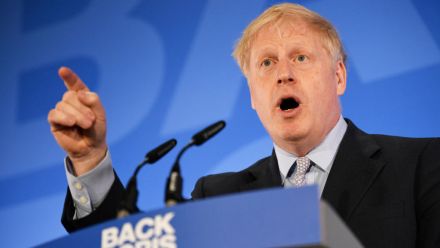
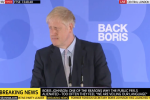
Full text: Boris Johnson launches his Tory leadership campaign

It's a measure of the resilience of this country that since the vote to leave the EU and in defiance of all predictions, the economy has grown much faster than the rest of Europe. Unemployment has fallen to the lowest level since 1972, exports have soared, English football teams have won both the Champions League and the UEFA cup by beating other English football teams, and inward investment has soared to a record £1.3 trillion. It's almost as if the commercial dynamism of the British people is insulating them from the crisis in our politics, and yet we cannot ignore the morass of Westminster, where parties have entered a yellow box junction, unable to move forward or back, while around the country, there is a mood of disillusion even despair at our ability to get things done.

Watch: Boris Johnson dodges the question on his cocaine use

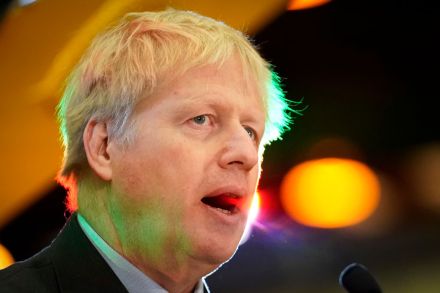
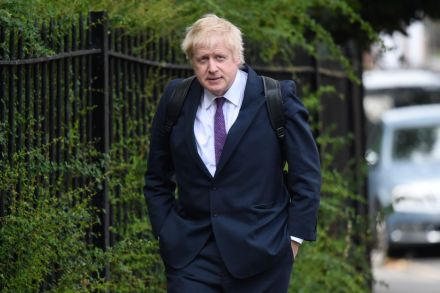
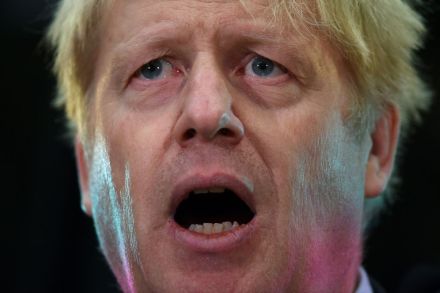
After spending some time in the shadows ahead of the first round of voting in the Tory leadership contest, Boris Johnson officially launched his campaign today, giving a speech in central London where he reiterated his intention to take Britain out of the EU by 31st October. Unsurprisingly, considering his confusing array of past comments on the topic, the topic of drugs was soon brought up. Johnson was first asked if he'd ever committed a crime, to which he confessed to occasionally breaking the 70mph speed limit. Honing in, the former Foreign Secretary was then asked directly about his use of cocaine.

Rory Stewart is a reminder of what Boris Johnson used to be

Britain is not quite in the grip of Rorymania. He gave a properly impressive speech this week and he has spoken with honesty and clarity about politics and policy. But Rory Stewart isn’t going to be our next prime minister and it’s hard to see him remaining in Cabinet for much longer. He’s a hit on Twitter, but Twitter is not real life. Most voters still don’t know who he is. None of that means what Stewart has done during the Conservative leadership election is irrelevant or unimportant. He, like Matt Hancock, has run towards conversations about difficult and important things like social care when many of their colleagues have run away.

Tax cuts are welcome, but Boris’s proposal is not the best

The source of government revenue is a mystery for many people, but one thing voters do remember is that they are taxed. When people open up their pay slips, the income tax deduction stares them in the face. The sight of it is galling, and the higher the percentage taken, the worse it is. This is true even if there is a sense that, like a foul-tasting medicine, it is a necessity. So this aversion to tax explains why Boris Johnson's pledge to raise the level at which the higher rate tax band of 40 per cent kicks in – from £50,000 to £80,000 of earnings – is electorally attractive.

Rory Stewart: would you trust Boris with the nuclear codes?

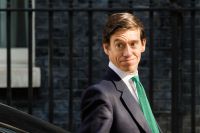
Rory Stewart has not exactly had the most orthodox of campaign strategies to become the next leader of the Conservative party. The dark horse of the leadership race has built up a cult following by heading out across the country, recording hand-held campaign videos and having conversations with various members of the public. And he decided to continue this trend of unorthodoxy once again today when he officially launched his leadership bid: in a small circus-tent in the Southbank in London. There, the international development secretary used his launch to put forward his vision for the United Kingdom. But it was Stewart’s view that the frontrunner Boris Johnson could not be trusted with the nuclear codes that garnered the most attention at the launch.

Boris Johnson: everything about you is phoney

Rather rashly, Boris Johnson published The Churchill factor: How one man made history in 2015. It was without historical merit, or intellectual insight, but Johnson did not intend readers to learn about Churchill. The biography was not a Churchill biography but a Johnson campaign biography, where we were invited to see our  hero as Winston redux. Both ignored party discipline and conventional routes of advancement, after all. Both were great company. Churchill stayed in the wilderness for years making a fortune from journalism, and so has Johnson. Churchill was a man of principle and so is… Hold on. That doesn’t work. It doesn't work at all.

Boris Johnson’s opponents have been too easy on him

Boris Johnson is currently the quiet man of the Tory leadership contest, lurking in the shadows rather than courting media attention as he usually does. His campaign team has deliberately held him back from touring the studios to avoid gaffes or rows. They're even nervous about the limited exposure he has, joking that he is 'always one Monday column away from disaster'. Of course, it's easier to do this when your candidate has as high a profile as Johnson: he doesn't really need any more attention than he's already got. It is, though, not the greatest of compliments from those members of his campaign team that they seem to feel Johnson cannot be trusted not to cause a career-damaging row when the stakes are so high.

Watch: Gove’s message to Boris: ‘Don’t pull out’

The Tory leadership race is turning nasty. And not for the first time, it's Michael Gove who is taking a pop at Boris Johnson. After a disastrous weekend for Gove that was overshadowed by revelations of drug-taking, Gove has just attempted to start afresh at his campaign launch. Gove also used his speech to take a shot at Boris. Here is his message to his rival: 'If I get through – which I am sure I will actually – to the final two against Mr Johnson, this is what I will say to him: Mr Johnson, whatever you do, don't pull out. I know you have before and I know you may not believe in your heart that you can do it, but the Conservative party membership deserve a choice. So let's have a proper race' Gone are the days of Gove calling his old pal Boris....

A Boris Johnson victory spells trouble for Ruth Davidson

You might not have realised from his lack of appearances but Boris Johnson is standing to be Tory leader. There are MPs on the left of the party, and so he’s told them he’s a One Nationer. There are MPs on the right of the party, and so he’s told them he’s a tax-cutter. And what a tax-cutter he is. Johnson says in this morning’s Daily Telegraph that he wants to hike the higher rate income tax threshold from £50,000 to £80,000. This, the paper estimates, will cost £9.6bn annually and will be paid for using the £26.6bn fund for No Deal Brexit preparations and by raising National Insurance contributions. So far, so Tory, but what about Scotland?

Boris Johnson is making the same mistake as Theresa May

The concept of Boris Johnson avoiding publicity takes some getting used to. Normally, the man seeks out TV studios like apes seek out trees – they are a natural habitat from which it would be cruel to separate him. Yet Boris has suddenly gone missing, to the point Boris-watchers might soon start to worry about possible extinction. He is refusing all broadcast interviews, and has limited his appearance in the Conservative leadership election campaign so far to a single newspaper interview with the Sunday Times. There is, of course, some logic behind his sudden shyness. When Boris meets a microphone there is always a possibility – or a probability – of a gaffe which will go on to dominate the news agenda for days afterwards.

Could the Tory leadership race end early?

The Tory leadership is fast becoming Boris Johnson’s to lose, I say in The Sun this morning. He has more MPs backing him than any other candidate, and his campaign receives a further boost this morning with the former Defence Secretary Sir Michael Fallon endorsing him. In the words of one of those knows the Tory parliamentary party best, ‘the wind is blowing in one direction’. There is increasing talk among senior figures in the party that if the former Foreign Secretary comes out on top in the parliamentary rounds, it would be best to skip the members part of the contest and make him Prime Minister straight away. The argument goes that the polling shows that Johnson is the members’ choice, and so they wouldn’t mind him being coronated.

Boris Johnson’s court victory is good news for remainers and leavers

In the end common sense has prevailed – and swiftly. When District Judge Margot Coleman decided last week to issue a summons against Boris Johnson for misconduct in public office it looked as if the case would drag on for weeks or months. But exceptionally the High Court today intervened in the criminal case to stop it now, recognising that it would have inevitably failed had it made it to the Crown Court. The arguments in court today centred around the nature of the crime that Boris Johnson was alleged to have committed. Misconduct in public office is an offence aimed at public officials who misuse their public position to such an extent that it constitutes a gross breach of trust.

Seduction and the Boris bus

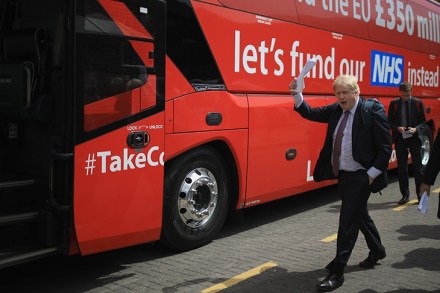
Boris Johnson is to be tried at the Crown Court on the grounds that, during the 2016 Brexit referendum campaign, he crucially affected the referendum result by arguing that the UK paid the EU £350 million a week, ignoring another interpretation that the sum was only £250 million a week. Ancient Greeks knew all about advocating one side of an issue, as a law suit exemplifies. Euphiletus was the defendant in a homicide case brought against him by the relatives of one Eratosthenes. The relatives claimed that Euphiletus had murdered Eratosthenes after luring, or even forcing, him into his house as part of a premeditated plan. But Euphiletus’s defence (we do not possess the prosecution’s case) was that Eratosthenes had been seducing his wife.

How will Raab’s prorogue comments play out with Tory MPs?

To prorogue or not to prorogue? That’s the question dividing the Brexiteer candidates today following the One Nation conservative hustings. After Boris Johnson, Andrea Leadsom and Sajid Javid on Tuesday all ruled out proroguing Parliament in order to achieve a no deal Brexit in the event that MPs tried to block one, Dominic Raab used his appearance on Wednesday night to tell a group of MPs that he would not rule out suspending Parliament to bring about the UK's exit from the EU – with or without a deal. Proroguing Parliament is what happens at the end of every parliamentary session.

A fractured and crowded field

The remarkable thing about the Tory leadership election is how long it has been coming. When Theresa May blew the party’s majority in the 2017 general election, few imagined that it would be two years before she quit as leader. What kept her in place was not a lack of Tory ruthlessness but a failure to agree on who should replace her. A lack of consensus is the defining feature of this contest. No candidate is pulling ahead in the endorsements, and no one has the backing of most of the cabinet. Instead, the race is as fractured as it is crowded. There are two sides to this election: full-on Brexit vs the cabinet. On the Brexit side, Boris Johnson is consolidating his position.

Why Tories should think carefully before backing Boris

In my old job as an investment banker, there were two schools of thought about how to get the best return. Long-term funds – where money was invested over a number of years; and short-term ones – which sought quick returns wherever it could be found. The Conservative party now finds itself facing a similar dilemma: wondering whether to make the short term bet – aping the Brexit Party’s push for no deal in the hope of an immediate recovery from its dire position. Or whether to take the long view: make for the centre ground while still delivering Brexit. The latter is a strategy that is riskier in the medium term but could represent better long-term success. So what should the Tories do?

Tory leadership candidates start frenzied final push for support

With just a few days to go until nominations close in the Tory leadership contest, candidates are busy trying to shore up support in the parliamentary party. There are five - Sam Gyimah, Andrea Leadsom, Rory Stewart, Mark Harper and Esther McVey - who currently don't have sufficient nominations to make it onto the ballot paper. Harper tried to get some attention by asking a question about the Peterborough by-election at today's Prime Minister's Questions, while Gyimah has been doing the rounds in Portcullis House as MPs have trundled through. Meanwhile I understand that Rory Stewart has cancelled all his media appearances in order to hold as many meetings as possible with MPs. Stewart's predicament is an interesting one.

Back Boris: Johnson tries to prove his electability in campaign video

The Tory leadership race officially starts next week when nominations close for the first stage of the contest. Until then, each campaign is doing their bit to show they are not falling behind. Today the Boris Johnson campaign have stepped up a gear with the release of their campaign video. It comes after a series of mixed videos from contenders so far. Dominic Raab was mocked for a decisive head turn, Sajid Javid for using his Parliamentary office and Jeremy Hunt for mispronouncing Culloden. Boris Johnson's has tread a different path. In his campaign video, the former Mayor of London is seen out of Westminster meeting with ordinary voters. The idea behind it was to show that there is grassroots support for Johnson.

Johnson bags Truss endorsement, but no Boris Amber dream ticket

The Boris Johnson campaign has been very quiet this week. But as I say in The Sun this morning, it will move into a higher gear next week. Liz Truss is set to become the first person who sits round the Cabinet table to endorse the former Foreign Secretary. I understand that the campaign will also unveil a slew of endorsements from MPs, giving it more declared supporters than any other campaign. One MP who won’t be endorsing him, though, is Amber Rudd. Her and Boris Johnson sat down on Thursday. But ultimately the differences between them over Brexit policy are simply too great to make any kind of dream ticket work. I understand that Rudd pushed the former Foreign Secretary to budge on his commitment that the UK would leave the EU on October 31st with or without a deal.