Boris johnson

‘Corbyn is led by ideology, I’m led by economics’: Sajid Javid’s spending plan

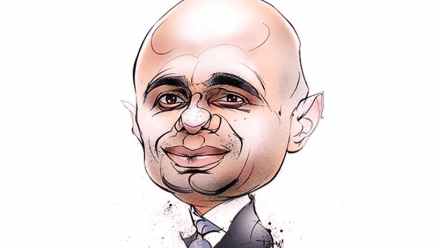
If Boris Johnson wins next week, it will be on a manifesto of change. He will not deliver the fourth term of the same Tory government, he says, but a new agenda guided by a new philosophy — and the big difference will be spending. Gone are the days when Tories defined themselves by a determination to balance the books. Sajid Javid, the Chancellor, promises a ‘new economic plan for a new era’, which would mean investment on a scale that would have made George Osborne baulk. Providing, of course, that his party is still in government by the end of the next week. ‘There is a path to victory,’ he says when we meet while he is campaigning on the outskirts of Birmingham. ‘But it’s a narrow path.

Watch: Andrew Neil eviscerates Boris Johnson over interview no show

Boris Johnson has so far refused to take part in an election interview with Andrew Neil. Jeremy Corbyn, Jo Swinson, Nigel Farage and Nicola Sturgeon have all had their turns. But not the Prime Minister. At the end of his interview tonight with Farage, Andrew Neil sent a message to Boris Johnson: 'We have been asking him for weeks now to give us a date, a time, a venue. As of now, none has been forthcoming. No broadcaster can compel a political to be interviewed. But leaders’ interviews have been a key part of the BBC’s prime time election coverage for decades. We do them, on your behalf, to scrutinise and hold to account those who would govern us. That is democracy. We’ve always proceeded in good faith that the leaders would participate. And in every election they have.

Why I feel sorry for Jo Swinson’s Lib Dems

Interviewing Boris Johnson last night on my show, I ended up feeling a bit sorry for Jo Swinson, leader of the Liberal Democrats. Because for him the election is a proxy for another referendum. His whole mantra is 'get Brexit done, and move on'. Swinson's position of 'revoke and move on' is a wholly rational response in the context of Johnson's framing. But apparently what is democracy in action for Johnson is anti-democracy when the Lib Dems react. We are truly in the 'age of unreason'. Some of you will be screaming that 'we had a referendum, so the only legitimate way to cancel it is to hold another one'. Except under our unwritten constitution referendums have no legal force, and are certainly inferior in their democratic weight to general elections.

I’m calling it: the Tories will win a majority

It’s time to stick my neck out. What follows is anecdotal and my hunches have often been wrong. But I think that though Boris Johnson will get his overall majority, Tory strategists’ hopes of surfing a tidal wave of new support from ‘tribal’ Labour voters in the English Midlands and the North will not be fulfilled. Mr Johnson will win this time, but there will be no substantial and enduring shift northwards of Tory support. I live in the north Midlands. The two closest constituencies to that (safe) Conservative seat of Derbyshire Dales neatly fit the description political pundits offer of the sometimes struggling Midlands and northern seats where Johnson’s Tories hope to make huge, game-changing advances on 12 December.

Politics of a certain vintage – and wine to match

I wonder how they do things now at Tory headquarters. For the ’79 election, the preparations had been completed weeks in advance. Press conferences had been planned on the basis of a four-week campaign, press releases drafted and shadow ministers told when they would be needed in London to go on the platform. Then the starting gun was fired and von Moltke kicked in. No plan survives the initial contact with the enemy. Some of the material was used, but not in the order that had been expected. There was a lot of improvisation. But it did not seem to matter. Something similar happened in 1992. The first press conference was to be devoted to tax. Labour’s tax plans would be lambasted, allowing the Tories to move on to other themes.

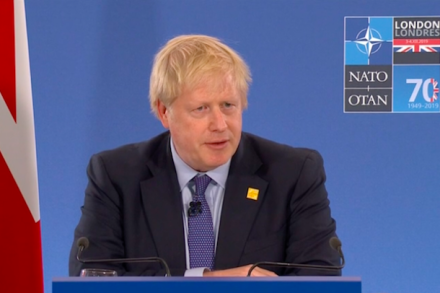
Boris Johnson plays it safe at Nato press conference

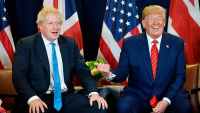
There will be relief in Conservative Campaign Headquarters as the Nato summit draws to a close with no election gaffe in sight. With the UK hosting the summit of world leaders, there had been concern that the arrival of the US president with less than a fortnight until polling day could have thrown a spanner in the works. Instead, Donald Trump has said little to cause alarm in Tory high command. When asked about the prospect of NHS privatisation as part of a UK/US trade deal, Trump said the NHS would not be on the table – as the US had little interest in it. In Boris Johnson's press conference this afternoon, the UK Prime Minister attempted to play it safe. He spoke about the importance of Nato along with what had been a practical and constructive event.

What really happens when Trump comes to town?

Air Force One touched down at Stansted Airport last night for the annual Nato summit, held just over a week before the British public go to the polls. So far, Donald Trump has avoided becoming embroiled in the campaign. He told reporters: 'I'll stay out of the election'. Spectator USA editor Freddy Gray took to the airwaves this morning to discuss the impact of a potential Trump intervention alongside BBC Radio 5 Live's Emma Barnett and Paul Harrison, the former Number 10 press secretary to Theresa May. During the discussion, Harrison told BBC Radio 5 Live about his experience of working with Trump.

Security moves to top of the election agenda

With ten days to go until polling day, the election campaign has turned to national security. Following the London Bridge knife attack on Friday by a convicted terrorist which left two members of the public dead, the Conservatives have made a concerted effort to get on the front foot on the issue. Over the weekend, Boris Johnson announced plans for tougher sentencing for terrorists – including a minimum sentence of 14 years. There's more to come – with Johnson to announce a five-point plan to prevent serious criminals and terrorists from entering the country after Brexit. Given that this is the week the NATO summit comes to town, the Tories were always planning a security focus. However, the events of Friday mean that this has been amplified.

Expect fireworks at this week’s Nato summit

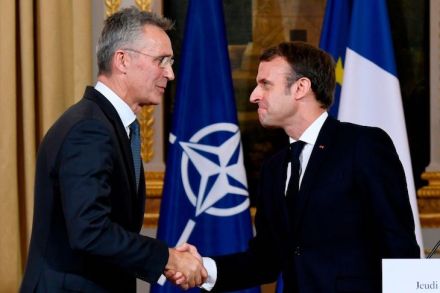
This week is seminal for Boris Johnson and Emmanuel Macron. Boris, in Watford, is hosting one of the most important Nato summits for years. Its significance is not because it marks the Alliance’s 70th anniversary, but because of President Macron’s ‘disruptive’ and trenchant criticism of the Atlantic Alliance as close to ‘brain dead’, which has touched a nerve. The French President went on to reiterate his remarks at an Elysée press conference, with a visibly uncomfortable Nato Secretary General, three weeks later.

Boris’s ‘Buy British’ plan shows how Brexit has changed the Tories

Where to start with the Conservatives’ “Buy British” promises to end EU state aid rules? The obvious point is that dumping rules that prevent governments subsidising domestic firms will make it much harder to strike a trade deal with the EU after Brexit. Limiting state aid is pretty much fundamental to the EU’s very existence and operations; arguably the story of the EU since the late 1980s is a story of trying to drag European politicians away from protecting favoured sectors and firms and opening their economies up to cross-border competition. Of course, that story isn’t much told in the UK where, thanks not least to the sort of journalism once practiced by Boris Johnson, most people believe the EU is an exercise in anti-competitive protectionism.

Watch: Tory MP admits ‘I wouldn’t do Andrew Neil as he’d take me to pieces’

Charles Walker, the former chairman of the influential Conservative 1922 Committee, took to the airwaves last night in an attempt justify Boris Johnson's growing list of TV no shows. The interview followed a Channel 4 leaders' debate on climate change in which the public service broadcaster decided to replace Boris Johnson with a melting block of ice. In return, the Tories threatened to put Channel 4's current broadcasting licence on ice. Speculation abounds that Boris Johnson is attempting to wriggle out of an interview with Andrew Neil following Jeremy Corbyn's disastrous appearance earlier this week. That speculation was only made worse when the BBC press office confirmed that they had yet to pin the PM down.

Socrates would have made the leaders’ debates real interrogations

There is something deeply unsatisfying about the debates featuring party leaders. The questions put to them, whether by an audience or presenter, are the routine ones that they face every day and therefore draw routine responses. What they never get is an interrogation. Enter Socrates, licking his lips. He once described how a friend of his had asked the oracle at Delphi whether there was anyone wiser than he. The Pythia answered ‘No’. Baffled by this, Socrates set about to prove her wrong. He failed. After interrogating a wide range of people he concluded that he was wiser, but only in this respect, that he knew he was ignorant, whereas they did not. How, then, to put his ignorance to good use?

‘Austerity was not the way forward’

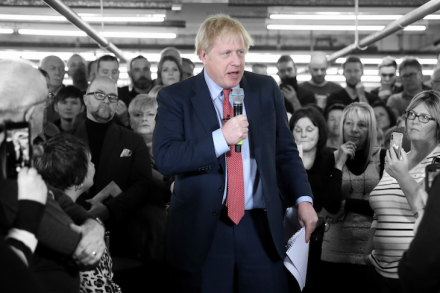
Only once in the post-war era has a British political party won a fourth term in office, but that is what the Conservative party are attempting to do in this election. It’s a tall order, but Boris Johnson has a plan: to make it clear that his is a new government — offering change, not simply more of the same. ‘I have great respect for my predecessors, it goes without saying, great respect, but this is a new government and we have a new agenda and it will be a different agenda,’ he insists, when we meet in an aircraft hangar in the marginal seat of Norwich North. ‘This is not a continuity government. This is a new government, we have a very different approach. If we can get in with a working majority, we will have a transformative agenda for the country.

Trump’s visit couldn’t come at a worse time – for Boris and for Nato

In the next few days, on 3 and 4 December, Prime Minister Boris Johnson will host a grand international conference of 29 North American and European nations to mark the 70th anniversary of the foundation of Nato — the North Atlantic Treaty Organisation, which, led by the United States, kept the peace during the fraught years of Cold War confrontation with the Soviet Union. We are told that the Queen will give a reception in honour of the heads of state and government and that Donald Trump has accepted the invitation. Just over a week later, the British general election takes place. Intrinsically the two events are quite unconnected. In reality they are bound together by the common menace of the President of the United States, who bobs beneath them like an untethered floating mine.

Three things we learnt from the Conservative party political broadcast

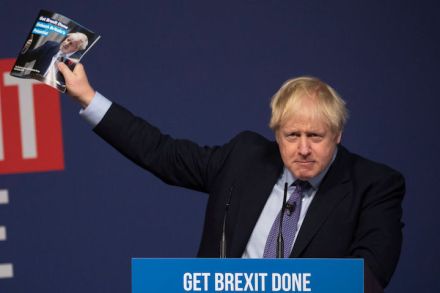
The Conservatives have launched a new party election broadcast that ran for the first time this evening on BBC One and ITV. The video (which you can view below) is made up of lots of different voters explaining why they're backing Boris Johnson. But what does this advert tell about the Tories' overall election strategy?   Getting Brexit done is still the central message Unlike the Labour party, who are reportedly changing their strategy just two weeks before election day, Boris Johnson is firmly sticking to his central message. But as Katy and James explained earlier on the Coffee House Shots podcast, Conservative strategists are more worried today than they have been at any other point during the campaign.

Tories shouldn’t be terrified by Trump’s trip to London

Never mind the polls, Conservative insiders are more terrified about something else at the moment. The Donald is coming. CCHQ is quaking. After Black Friday comes Orange Monday, when the US president will touch down again in Great Britain ahead of another Nato summit. Trump is, we all know, a news cycle hurricane. What havoc might he wreak this time? One disastrous Trump quote, the Tories fear, could blow Boris Johnson’s chances of a majority away. Well, yes but no. What the Westminster bubbleheads don’t realise is that most British people will be relishing — even if we don’t admit it — the arrival of Trump the human-wrecking-ball just days before a general election.

Can the Tories really underpromise in their manifesto and overdeliver in government?

Boris Johnson is today launching the Welsh Conservatives' manifesto. For the Tories, this event comes with a trigger warning: it was where Theresa May defended her party's social care U-turn in 2017 after its disastrous manifesto launch. The clip of her insisting that 'nothing has changed' became one of the defining moments of the election campaign. So far, it seems that today's Welsh event won't be quite so dramatic, which is just what the Conservatives wanted. They have devoted an entire page of their 2019 manifesto to social care, but what it amounts to is little more than thin air. It even promises to search for a 'cross-party consensus', which is something politicians of all hues have spent the past two decades trying and failing to reach.

Boris Johnson has gambled big by pledging to spend small

Boris Johnson just took a very big political risk, by not making any serious attempt to compete with Labour on bunging cash at public services and the fabric of the UK. Where Corbyn is pledging £83 billion a year of increased spending on students, the elderly, health, schools, public-sector pay and so on by 2023, the Tories offer £3 billion. For Labour’s £80 billion plus per year on new housing, pension compensation for women born in the 1950s, nationalisations, greening businesses and multiple other projects, Johnson is committing to £8 billion by the end of the next parliament.