Boris johnson

When will Boris get serious about balancing the budget?

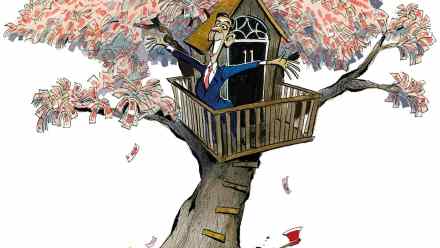
Should we be pleased that net government borrowing for June came in below expectations, at £22.8 billion – £5.5 billion less than June 2020? Should we see it as a sign that the economy is recovering a little faster than had been hoped? That is the spin being put on the public borrowing figures released this morning. An alternative, and less rosy, view might come from examining two figures in particular. Firstly, while borrowing is down compared with June 2020, public spending is actually up. Over the month the government spent £84.1 billion of our money, £2.5 billion more than in the same month a year earlier. Balancing the budget seems to have become a deeply unfashionable debate in UK politics That is extraordinary.

Boris’s Brexit deal isn’t worth sacrificing Northern Ireland for

There will be chaos at the borders. Food will run out at the supermarkets. Travellers will face long queues, and companies yet another round of disruption. As the UK lays the groundwork for breaking with the Northern Ireland Protocol, we will hear plenty of scare stories about how it might mean losing the Free Trade Agreement with the European Union. There is an element of truth in that, of course. The EU may well decide that if we are not sticking to the Protocol then the free trade deal has to go as well. But there is a flaw in that argument, and it is not exactly a minor one. In truth, the FTA is not worth saving – and certainly not worth sacrificing Northern Ireland for.

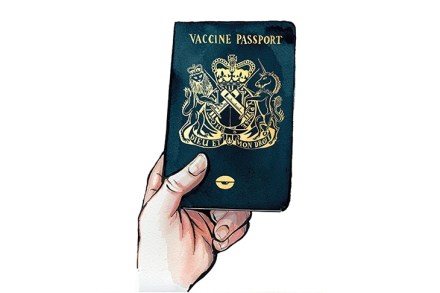
Boris should follow New York’s example and ditch vaccine passports

Is making young people show vaccine passports to get into nightclubs a good idea? Boris Johnson's motivation in doing so appears to be that this is a good way to entice under 30s to get their jabs. In reality, the policy is illiberal, shows no gratitude for the sacrifices young people have already made during this pandemic, and should go against all of our British sensibilities. There's also a better alternative: one demonstrated in New York.  I’ve been based in the United States for the past six months and Boris could learn a thing or two from the freedom-loving Yankees. Here, proof of vaccination is not required for entry into nightclubs, as I experienced first hand last Saturday night.

Why Dominic Cummings’s attacks on Boris Johnson backfire

Anyone who thinks Boris Johnson lacks statecraft should pay attention to Dominic Cummings’s attacks on him. They often to seem to show the opposite of what Dom intends. Cummings now reveals that, in January 2020, he and his allies were saying: ‘By the summer, either we’ll all have gone from here or we’ll be in the process of trying to get rid of [Johnson] and get someone else in as prime minister.’ In fact, neither happened. By November, however, Cummings was (to use Mr Pooter’s joke) going; Boris stayed. The winner of the then still recent landslide election victory presumably discovered his adviser’s seditious conversations and, reasonably, did not like them.

Boris Johnson’s sombre ‘freedom day’ press conference

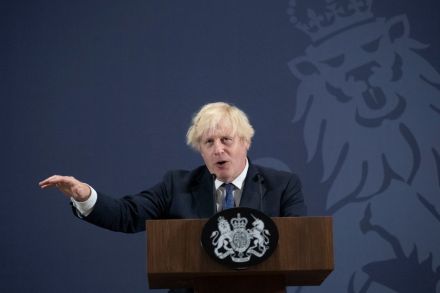
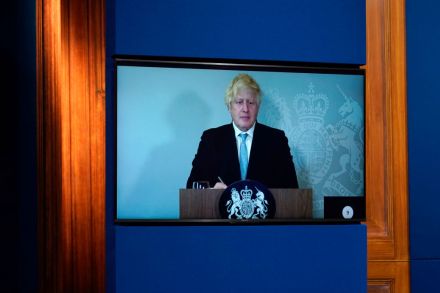
On the day that nearly all legal Covid restrictions go, one could be forgiven for presuming ministers would be in the mood for celebration. Instead the press conference Boris Johnson led this afternoon to mark so-called freedom day proved a sombre affair. The Prime Minister was forced to dial in remotely after having to self isolate as a result of coming into close contact with the Health Secretary last week, who has since tested positive for Covid. From his self isolation, Johnson went on to unveil plans for vaccine passports for nightclubs and contingency plans to keep the country moving as millions face self isolation in the coming weeks.

Boris and Rishi skip self-isolation

Following yesterday's news that health secretary Sajid Javid had tested positive for Covid, it seemed only a matter of time before other cabinet ministers were similarly forced to self-isolate. Javid had a 'lengthy' meeting with Boris Johnson on Friday afternoon, just hours before his symptoms developed. So, surely the Prime Minister will be expected to self-isolate? Think again...This morning, No. 10 has released the following statement: The Prime Minister and Chancellor have been contacted by NHS Test and Trace as contacts of someone who has tested positive for Covid. They will be participating in the daily contact testing pilot to allow them to continue to work from Downing Street. They will be conducting only essential government business during this period.

Is London being ‘levelled down’ already?

In his ‘levelling up’ speech in Coventry this week, the Prime Minister insisted time and again that this was no ‘zero sum’ game. Improving the fortunes of the poorer parts of the country would not entail levelling richer parts of the country down, he said: ‘Levelling up is not a jam-spreading operation. It's not robbing Peter to pay Paul.... It's win-win.’ Well, maybe. But there was good cause for his defensiveness. One reason advanced for the Conservatives’ dramatic defeat in last month’s Chesham and Amersham by-election was apprehension that such places would have to help pay the bill for, say, regenerating Hartlepool.

The EU’s Brexit bill doesn’t add up

A dozen hospitals. A hundred million doses of the Pfizer vaccine, and a lot more of the Oxford one. Or even a few trips in one of Jeff Bezos’s new space rockets. Even with inflation, there is still plenty you can buy with an extra three to four billion pounds.  In recent days, it has emerged there is a big gulf between what the European Union insists we owe under the terms of our departure agreement, and what the UK believes is due.  In the EU’s accounts, it put the sum at £40.5 billion. The UK now says it will be £37.3 billion, or £3.2 billion less than the EU reckons. Despite this discrepancy, the EU continues to insist the UK should pay that full sum of money.

Whitty’s lockdown warning will trouble Boris

In a Science Museum webinar yesterday, Chris Whitty, the chief medical officer, warned about the increasing number of people in hospital and said that, if in the next five to eight weeks 'things are not topping out, we do have to look again and see where we think things are going.'  He added that 'we've still got 2,000 people in hospital and that number is increasing. If we double from 2,000 to 4,000 from 4,000 to 8,000...and so on, it doesn't take many doubling times until you're in very, very large numbers indeed.'  If new restrictions are imposed as schools go back, the government will find itself in the worst political position it has been in yet during this pandemic The implication of these statements is that some restrictions could come back.

In defence of ‘levelling up’

Modern pragmatist political leaders are generally keen to reassure us that there is a unifying philosophy to be found running through their mish-mash of measures. In reality, perhaps they are keenest of all to reassure themselves of it. Tony Blair had the 'Third Way' and David Cameron the 'Big Society'. Boris Johnson has 'levelling-up'. But despite the largely hostile political class reviews being rolled out on Thursday in response to his speech on the latter, Johnson’s formulation is actually far more readily understandable than those of his predecessors. Many of you will vaguely recall that the Third Way was something to do with synthesising right-of-centre economics and left-of-centre social policy (and try selling that on the doorsteps on a wet Wednesday in Withernsea).

Has Boris got cold feet over ‘freedom day’?

A very strange ‘freedom day’ greets us on Monday. Legally, almost all restrictions will be lifted. But practically, ministers are deeply worried by the surge of the Indian variant and the rise of hospitalisations to around 600 a day — a figure that will probably double according to the Bristol University PCCF project (which we at The Spectator find to be the most reliable). Hence this massive fudge: the government abolishing the mask mandate but saying it ‘expects’ people to wear them in shops and crowded spaces nonetheless. The NHS will continue to mandate them in hospitals. Then perhaps the biggest surprise: the vaccine passport U-turn whereby companies are told it’s their social duty to ask people for proof of immunity or a negative test.

Can Boris crack the unwhippables?

‘Nothing except a battle lost can be half so melancholy as a battle won,’ wrote the Duke of Wellington after the Battle of Waterloo. This sentiment, rather than any form of triumphalism, is what Tory whips should feel after winning the vote on the government’s decision to reduce spending on foreign aid from 0.7 per cent of GDP to 0.5. The vote is a sign of the battles to come in the rest of this parliament. The government put its authority on the line in the Commons debate. The Prime Minister opened it, the Chancellor closed it. The government also offered something of a concession, a pledge to return to 0.7 once the current budget was balanced.

Nanny Boris: the PM’s alarming flight from liberalism

‘Freedom day’ is coming, but how free will we actually be when it arrives? Boris Johnson is to abolish all coronavirus restrictions on 19 July. But in the small print, we find a strange caveat. The government will be ‘encouraging’ businesses to demand proof of vaccination from customers if there’s a ‘higher risk’ of the virus spreading on their premises. If they do not do so, then the government reserves the power to force them to. It’s a voluntary system — until it’s not. In a rather Orwellian turn, ‘freedom day’ means freedom for some, but not others. The unvaccinated might find their freedoms curtailed in ways that would have seemed astonishing not so long ago.

PMQs: Boris fluffed his response to England taking the knee

Who won the Euros? Race-baiters clearly. Sir Keir Starmer spent most of PMQs trying to label Boris as a bigot. The Labour leader craftily wove several arguments into one. He claimed that by failing to condemn fans who booed the BLM-inspired rite of genuflection, Boris was responsible for the abuse suffered by black players after the match. The PM had many powerful and obvious lines of defence. But he failed to use them. He fluffed it completely. He ignored a BBC report suggesting that most of the online abuse originated abroad. He didn’t mention that BLM is a political movement whose Marxist supporters want to close prisons and abolish police forces. Nor did he say that booing such an idiotic manifesto is simply common sense.

PMQs: Johnson strains over ‘gesture politics’

Boris Johnson's uncomfortable session at Prime Minister's Questions was largely of his own making rather than the work of Keir Starmer. As I wrote earlier, the Tories have tied themselves in knots over the question of taking the knee to the extent that they are now open to accusations that they don't really care about racism. The Labour leader did a reasonable job of prosecuting the various statements made by Johnson and others, including Priti Patel's comment that it was 'gesture politics'.  Prime Ministers don't tend to make a habit of carrying out of date by-election literature in their handbags That Johnson was nervous about the theme of the session became obvious when he brandished a leaflet from the Batley and Spen by-election which he demanded Labour retract.

Johnny Mercer and the Tory loyalty problem

Following his re-election as Chairman of the 1922 Committee, Sir Graham Brady would be well advised to start banging a few heads together. Because the Conservative parliamentary party has turned into a thoroughgoing disgrace. We’ve all read about the 'transactional' relationship between most Tory MPs and Boris Johnson – i.e. they will only continue to back him if he keeps winning. But what the past few days has highlighted is the transactional relationship Tory MPs have with each other. There is almost no semblance of basic team loyalty, let alone that higher level of solidarity known as esprit de corps.

The foreign aid vote may shatter Boris’s fragile majority

The vote on the cut to the foreign aid budget, which Jacob Rees-Mogg has just announced in the Commons, will be tight. The government has said that it plans to return to its manifesto commitment of 0.7 per cent but only when the Office for Budget Responsibility's forecasts show the UK is no longer borrowing for day-to-day spending and the debt is in decline. But that may not be enough to edge it given that the rebels want it restored when the economy returns to pre-pandemic levels, which will come much sooner. Reducing the aid budget from 0.7 per cent of GDP to 0.

Are ministers prepared for ‘freedom day’?

Is the government having a wobble over ‘Freedom Day’ on 19 July? Well, for one thing you won’t hear ministers talking about ‘Freedom Day’ over the next week. Instead, they are preferring to focus on the need for people to be very cautious, given the soaring numbers of cases and hospitalisations. When he appeared on Times Radio this morning, vaccines minister Nadhim Zahawi talked far more about what would still be ‘expected’ of people after 19 July than about how the roadmap was working and how nice it was for life to be returning to normal. For him, this date seems to be more ‘Be very careful day’.