Books

A crisp and refreshing account of the apple

From our US edition

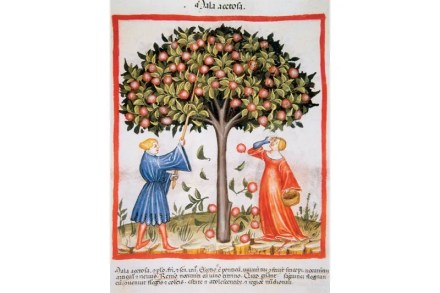
In Food for Life, Tim Spector’s book on the science of eating, the author gives the chemical makeup of a mystery food, listing more than 30 scary-sounding E numbers, sugars, acids and chemicals, before revealing that it is an… apple. Sally Coulthard’s book, The Apple, shows that it’s the apple’s complexity as well as its familiarity, that makes it the ideal punchline for Spector, and, for Coulthard, a perfect vehicle to carry the history of how we grow, trade, cook and eat together and take responsibility for each other and the environment (or not).

apple

I just don’t get P.G. Wodehouse

I have a confession to make, which may upset many readers. Having only a passing acquaintance with his books, I’ve long experienced a faint allergic reaction to the works of P.G. Wodehouse. It is, I think, to do with the mannered, heavily whimsical nature of his world; the circumlocutory sentences; the ‘right-ho’s and ‘dash it’s and choreographed mix-ups; and the inexplicably passionate adoration of his many fans, among whom I count a number of my family and friends. But before dismissing something that so many intelligent people hold in high esteem, it’s worth considering whether I’ve missed a trick.

Don’t write off literary fiction yet

I don’t intend to start a feud. Most of Sean Thomas’s essay on The Spectator’s website last week, titled ‘Good riddance to literary fiction’, I agree with. It’s true that the high-flown heavy hitters of the book biz get far less attention than in yesteryear – though ‘litfic’ has never been a big money-maker in publishing. It’s true that no one reads book reviews any longer, and I should know because I write book reviews. I’ve no use for fiction exclusively powered by plot. If the words are flat and lifeless, I can’t read the book It’s true, too, that literary prizes don’t trigger the massive surge in sales they once did, owing to a depreciation that awards judges have exacerbated by woking-out.

Good riddance to literary fiction

In case you hadn’t noticed, the London Book Fair has been gracing our nation’s capital this week, down in Earl’s Court. There, the publishers, agents and buyers of the literary globe (London is second only to Frankfurt in ‘book fair importance’) have been feverishly buying and selling the rights to hot new titles, hot new authors, maybe the odd lucky midlister, while identifying the trends, writers and genres that conceal the ultra-precious kernel of hotness to come. In today’s market it’s likely that buyers have been looking for visually rich comic books for children – enjoying a resurgence – and anything in a newish genre called ‘romantasy’ (think Fifty Shades of Grey meets Game of Thrones, with more vampires and less spanking).

How F. Scott Fitzgerald anticipated our modern age

From our US edition

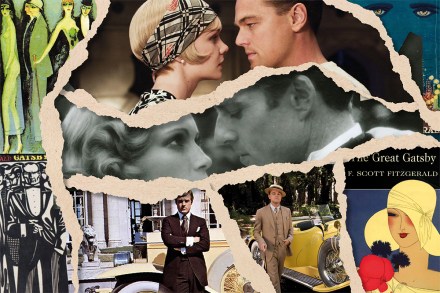
It has never been easier, or less rewarding, to be a Great Gatsby bore. As the book that is frequently, and speciously, cited as the Great American Novel — perhaps because, at around 180 pages, people have bothered to read it — turns 100 this month, it has become the byword for a certain kind of middlebrow literary appreciation. Even people who are barely aware of the novel know certain images and lines, such as the omnipresent lighthouse, “So we beat on, boats against the current, borne back ceaselessly into the past” and the whole Ralph Lauren-esque visual aesthetic that F. Scott Fitzgerald appeared to anticipate. The novel, published in April 1925, has achieved the impossible by breaking free of the page and reverberating across the world in a kind of endless meta-narrative.

Gatsby

The comfort of curling up with a violent thriller

Tsundokists of the world, unite! You have a new champion in Lucy Mangan, whose follow up to her entrancing memoir of childhood reading (Bookworm) is an unabashed paean to the pleasure of acquiring more books than you could ever possibly read in your life. That does not stop Mangan from trying, and this is a whirlwind tour through her voracious, encyclopaedic adult reading habit, one that not so much offers evidence of ‘how reading shapes our lives’, but how life shapes our reading. The ‘forced march’ of patriarchal school set texts in Mangan’s teens is relieved when she inherits a Maeve Binchy doorstopper and first encounters a book that is ‘unapologetically about women’.

The dark side of World Book Day

What began in 1998 with Tony Blair standing in the Globe Theatre to announce a new celebration of books has morphed into something much bigger. Along with Black History Month or World History Day, tomorrow’s World Book Day is now a full member of the woke calendar. This calendar has grown – largely thanks to the UN, which spends millions inventing such initiatives – into a global non-profit industry. In March alone, we have Zero Discrimination Day, World Wildlife Day, and World Day for Glaciers. As an author of several books, I’m all for celebrating reading, poetry and especially book buying.

Romantasy, the hot new literary genre du jour

From our US edition

A friend recently found himself trapped on a plane next to a young woman reading a Kindle bedecked with stickers of dragons and pointy-eared, hunky men. The font size was so large it was impossible not to see the sexually explicit text. He observed, “I was reading The Lord of the Rings; her book was more along the lines of I’m the Lord of Your Ring. I’ve never felt so uncomfortable.” Welcome to the cultural phenomenon of romantasy — a newly mainstreamed trend fueled by TikTok, or rather BookTok. It’s a shame there isn’t room in the portmanteau name for “sex,” which is a crucial ingredient in the genre, made clearer in the alternative informal term “fairy porn.

romantasy
Pynchon

Inside Thomas Pynchon’s most underrated novel

From our US edition

Atop the Almaden Tower in downtown San Jose — the world headquarters of Adobe Systems Inc. — sits a singular art installation. Four amber wheels rotate every few seconds in a seemingly innocuous and frankly nonsensical digital display. The installation, known as the “San Jose Semaphore,” is the brainchild of the data-driven media artist Ben Rubin and first appeared — or began transmitting — in August 2006 to the mass bamboozlement of passersby. What was going on, they cried? Was it that most millennial of things — a sign? For those less likely to be beguiled by some concealed piece of chicanery, the circles were little more than frivolous decoration, another example of Adobe splashing the cash on some geometric garnishing.

Lodge

David Lodge, the master of Anglo-American campus humor

From our US edition

"Literature is mostly about having sex and not about having children.” So said the British novelist, occasional screenwriter and literary critic David Lodge, who died at the beginning of 2025 at the age of eighty-nine. Lodge, who had suffered from encroaching deafness for several decades, had not, in truth, been a major literary figure for a considerable period before his death. This retreat into obscurity had not been helped by a trio of memoirs, beginning with 2015’s Quite a Good Time To Be Born, which perplexed critics — including this one — with their dour, downbeat and decidedly un-humorous tone. Few would have known, from reading them, that their author had once been regarded as one of the late twentieth century’s most accomplished comic novelists.

Lost in Mexico: in the stumbling footsteps of Malcolm Lowry

I had been kicking my heels in a dusty two-star hotel on a dual carriageway in Leon, central Mexico, for days. One afternoon, I spotted a battered old English language hardback in a junk shop window: Under the Volcano by Malcolm Lowry.  I had read the book before, half a lifetime ago, in maybe 1985, when I knew nothing about Mexico, failed relationships or alcoholism. Almost 40 years later, with a more than working knowledge of all three, I felt better placed to appreciate Lowry's 1947 masterpiece. With nothing else to do or read, I bought it. I haggled the shopkeeper down to 100 pesos – about £4. Barely 24 intense hours later – the same time span that the novel unfolds in – I had finished it. Or had it finished me?

Are these performances of the Bach cantatas the best on record?

Three projects shedding light on the sacred music of J.S. Bach are nearing completion. The first consists of an epic 25-year project to record all the composer’s vocal works – passions, masses, motets and more than 200-odd cantatas – in electrifying performances supplemented by lectures and workshops. At the helm is a Swiss choral conductor renowned for his improvisatory skills – and surely the only baroque specialist to have played Sidney Bechet on a chamber organ. The second project is a guide to Bach’s church cantatas tailored at ‘cultural Christians’; that is, music lovers intrigued but intimidated by their Lutheran theology, unsure how to approach this treasure trove of, at a conservative estimate, more than 100 masterpieces of western civilisation.

Never write a book

I have just finished writing a book and am moping about the house at a loose end. The conventional advice to anyone thinking about writing a book is: don’t. Unless you’re one of the 1 per cent of authors who make 99 per cent of the money, it’s a mug’s game as far as making a living is concerned. Your cleaning lady earns more per hour. So my advice is only write a book if you have an alternative source of income. One of the hardest things about writing a book is stopping. The temptation to tinker persists until the publisher screams at you to stop and mutters that publishing would be a good business if it weren’t for the authors. Still, the end is in sight, and now I need something to do.

The delightful melancholy of an antiques shop

Antique shops are melancholy places. The deep leather armchairs, Anglepoise lamps and bamboo bookshelves. They ask questions: who sat, worked or read using these? Banal questions, possibly, but life is generally banal, and no less poignant for that. It’s not an unpleasant sort of melancholia. Quite the opposite. If I had to create a word to describe the feeling, I’d say it was melanphoria: ‘a state of intense excitement arising from a feeling of deep sadness’. One feels both a nostalgia for the lives of strangers and a sense of life’s possibilities. If this is abnormal, I would ask any amateur psychiatrists to write to The Spectator offices. I am physically unable to go into any antique shop without buying something. It is rarely a grand purchase.

Ali Smith’s latest novel falls flat

From our US edition

"Gliff" is a word which can mean "a short moment," "a wallop," and "a post-ejaculatory sex act;" to "dispel snow," "to frighten," and to "escape something quickly." It’s "really excitingly polysemous," says one of Ali Smith’s characters. It’s certainly an apt title for a book which can’t seem to define itself. At its center are two children, Briar and Rose, who have been abandoned. Their mother is absent, caring for a sick sister, and their other responsible adult leaves to find her. The children exist in a stock dystopian world (people are surveilled by CCTV cameras and zombified by screens) with a twist: they repeatedly wake up to find that a red line has been painted around their house or camper van. They are on a list of "Unverifiables.

Gliff

The enduring charm of King Solomon’s Mines

How many people under 40 in Britain today do you think have read H. Rider Haggard’s King Solomon’s Mines? Five, six… 50? It’s hard to know. If you’re lucky – or unlucky, depending on your point of view – you might have bumped into the 1985 film version with Richard Chamberlain, Sharon Stone and Herbert Lom in the unloved crevices of the TV schedule when only insomniacs or household spiders are deemed to be a risk. I ask the question because this year marks 100 years since the death of Sir Henry Rider Haggard as he was then, having been knighted in 1919, apparently for services to the British Empire – and things have obviously moved on a bit since then. Except, of course, they haven’t changed in his famous tale of adventure and lost treasure in Africa.

Is the tide turning on restitution? 

When passions are aroused, all of us are liable to overstate our case. Dan Hicks, a curator at Oxford’s extraordinary Aladdin’s Cave of anthropology, the Pitt-Rivers Museum, is perhaps a case in point. A Swedish academic, Staffan Lunden, has convincingly argued that Hicks is guilty of ‘distortion’ when writing about the British raid on Benin in 1897, which brought several thousand objects, including finely wrought brass statuettes, to museums across the world. Hicks published his uncompromising views in 2020 in a prize-winning book, The Brutish Museums: The Benin Bronzes, Colonial Violence and Cultural Restitution.

What makes a good title?

Liszt’s compositions tend to have descriptive titles – ‘Wild Chase’; ‘Dreams of Love’ – whereas Chopin avoided titles. Thomas Wentworth Higginson wished titles on Emily Dickinson’s poems, opposed by his fellow editor Mabel Loomis Todd. They didn’t stick. Maybe this is why Dickinson is acclaimed but unread. ‘I heard a Fly buzz’ is easier to remember than 465. We can express this truth by quoting Dickens on the Bible in Little Dorrit: ‘such hiccupping reference as 2 Ep. Thess. C. iii, v. 6 & 7.’ Or by remembering how often we forget our several PINs. For poets, titles can be a resource, a useful press release before the actual poem Titles are important. Titles are useful.

One hundred years of Theodore Dreiser’s An American Tragedy

From our US edition

The high-water mark of the American naturalist novel lasted for about forty years — the period bookended by Frank Norris’s 1899 McTeague and John Steinbeck’s 1939 The Grapes of Wrath, taking in along the way such highlights of the form as Upton Sinclair’s 1906 The Jungle, Sinclair Lewis’s 1920 Main Street and James T. Farrell’s Studs Lonigan trilogy of 1932-35. But these are all subsidiary crags on the path to Mount Olympus, for the novel that towers above them all and draws each of them — to mix the metaphor a little — into its remorseless slipstream is Theodore Dreiser’s 1925 An American Tragedy.

Dreiser

What Spectator writers read in 2024

Rod Liddle The angels in Jim Crace's Eden are tetchy and petty authoritarians, apart from one who can't fly properly. This dissertation on freedom and mortality is rather wonderful – published two years ago but I caught up with it only this year. The best non-fiction book of the year is David Goodhart's The Care Dilemma: Caring Enough in the Age of Sex Equality, which has the temerity to suggest that divorce rates and broken families might just have something to do with our epidemic of mental illness. How dare he? Lionel Shriver I’d recommend the novel Havoc by Christopher Bollen, set in an Egyptian hotel to which westerners have fled to avoid the tyrannies of Covid regulations.