Books

Do we really need a ‘new spin’ on Jane Austen?

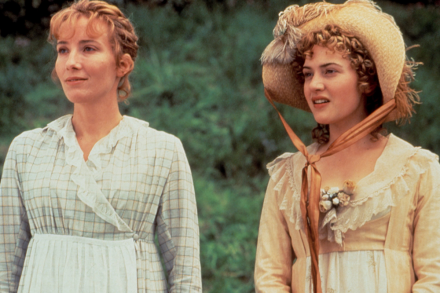
If you like your period dramas butchered, then you are in for a real treat. The 250th anniversary of Jane Austen’s birth falls on 16 December, and we are promised a slew of adaptations, documentaries and lectures to mark it. Inevitably, some of these will try to put a ‘new spin’ on Austen, to make out that she was somehow in line with a particular cause or interest of modernity; Mansfield Park is about saving the whales, Colonel Brandon is actually trans, that sort of thing. This year, Emma Thompson stars in a ‘racy’ new audio drama, Becoming Meg Dashwood, which will focus on the youngest Dashwood sister and her quest for ‘female friendship, sexuality, and liberation’. Oo-er.

Ireland is looking for its own Nigel Farage

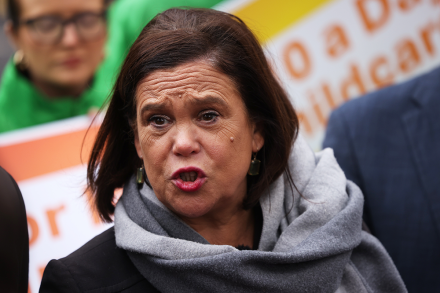
A few years ago, I watched an Irish-made drama on Netflix called Rebellion. Given that it was about the 1916 Easter Rising, I expected it to be somewhat anti-British but was pleasantly surprised. I knew the basics of what happened, but the series made me question why I knew so little about Irish history and politics more generally. I could name each taoiseach (prime minister) going back to Jack Lynch but, apart from Eamon de Valera, none before him. So I began to read voraciously about our nearest neighbour. Having edited books about British prime ministers and American presidents, I decided that one of the (now) 16 men who have held the office of taoiseach since 1922 might make an interesting project.

Give Andrew Miller the Booker

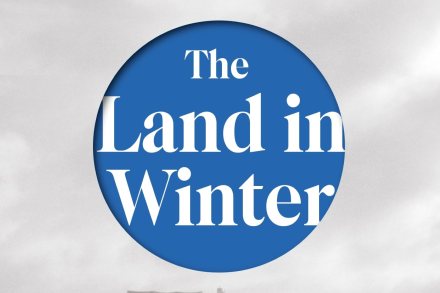
The winner of this year’s Booker Prize will be announced tonight. Of the six shortlisted novels, Andrew Miller’s The Land in Winter looks like a good bet for the £50,000 award. It might even be a contender for best Booker novel ever. The prize’s judges have been known to make strange calls – and always bet responsibly! – but the odds on Miller are good. The story takes place against the backdrop of snowbound Britain’s ‘Big Freeze’ between December 1962 and February 1963. ‘For a mile from the Kent coast,’ Miller writes, ‘the sea had turned to pack ice.’ This was the time of Beeching, Babycham, Benny Hill, Acker Bilk, Dr Kildare, the Daily Herald, the Kray twins, London smog, shillings in the meter, the H-bomb and flying saucers.

The day ‘Hitler’ was captured in Tottenham

Given the way the world is right now, I am avoiding it in the main. For the sake of my mental wellbeing, I require less bad news and more fun company. Just as George V collected postage stamps and Rod Stewart collects toy trains, I have been collecting theatrical dames since the beginning of the 1970s when I first worked with Dame Peggy Ashcroft. It’s an odd hobby, but it has proved hugely rewarding. From Dame Flora Robson (who gave me a very useful book on window boxes when I bought my first flat) to Dame Joan Plowright (who bequeathed me her husband Laurence Olivier’s favourite sun hat, which I’ve worn with pride all summer), I have bagged more than 50 of them over the years. I recently had lunch with one of my favourites: Dame Eileen Atkins, 91.

A remarkable insight into Le Carré’s working methods

When Richard Ovenden of the Bodleian Library wrote to John le Carré asking if the writer would leave it his papers, he got more than he could ever have bargained for. Le Carré not only responded with enthusiasm, explaining that ‘Oxford was Smiley’s spiritual home, as it is mine’, but also sent along 85 boxes of neatly arranged papers and memorabilia. After le Carré’s death in 2020 came a second larger tranche; the total archive consisted of more than 1,200 boxes. This was a writer who threw nothing out. Selected fruits of this vast haul can be seen in a new and impressive exhibition in the Bodleian’s Weston Library (formerly the New Bodleian).

Jilly Cooper was utterly unrivalled

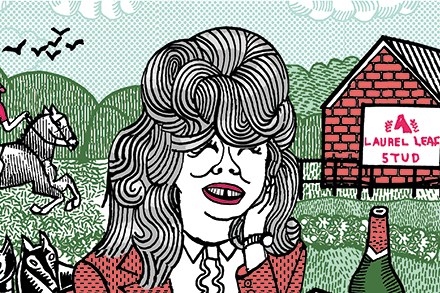
Jilly Cooper, the last great Englishwoman of my lifetime – after Queen Elizabeth II and Debo – has died. The lights are going out all over Rutshire. During her life, Jilly shone as an author, a friend and a person – the definition of effervescent. You had to meet her only once to become a founder member of the Jilly Cooper Adoration Society. When she wrote her last book, Tackle!, about a rural football club complete with ‘bitch invasions’ and ghastly Wags, I told her that, in a way, she was the beautiful game, only she gave entertainment to millions not by striking a ball but by putting one word in front of another on her ancient typewriter, Monica. (A friend told me she liked to write topless in the garden, with a glass of wine.

Is Dan Brown finished?

From our US edition

In a moment of modesty that he’s never quite been allowed to forget, Stephen King once declared himself “the literary equivalent of a Big Mac and fries.” This is self-deprecation taken too far. As the author of more than 60 books in a career that has spanned more than half a century, King’s writings have roamed over numerous genres: horror, most famously, but also mystery, suspense, science fiction, fantasy and a surprisingly dour brand of social realism. All are delivered in his trademark muscular prose, dappled with moments of stylistic brilliance. The real purveyor of literary junk food is surely Dan Brown, whose works of fiction mirror far more accurately the salt-rich, nutrition-free offerings of the hamburger giant than anything King has ever produced. If Mr.

Brown

‘Media Literacy’ and the decline of Woke

From our US edition

What is “woke”? To Jordan B. Peterson it is “postmodern neo-Marxism.” To James Lindsay it is “critical race theory” and latterly “revisionism” in general. These theories of what woke means take for granted that one of its core tenets is a denial of objective truth under the influence of what is broadly called “critical theory,” but the thinking behind contemporary wokeness falls far short of these theoretically exalted standards. Critical theory was a movement, primarily among academics, in the mid 20th century which had a diverse array of followers, but the common denominator was the belief that texts, whether literary works like novels, or historical documents, had no inherently “true” interpretation.

Media Literacy
Griffin

What is going on with Amy Griffin?

From our US edition

Memoir, we are told, is the new growth genre within publishing. It used to be the preserve of the famous and successful, but now it has expanded to include anyone with a story to tell, whether heartwarming and inspirational or downbeat and miserable (but eventually inspirational). Many of these memoirs are New York Times bestsellers and can change the weather in the industry, helped by their prominence within such high-profile book clubs as Reese Witherspoon’s and Oprah’s. But what if the story in a memoir’s pages is exaggerated or simply fabricated?  Turning one’s life into invention may not be so much a lie as a gift for fiction, but when it comes to this area, it is deeply frowned upon from all sides.

Second-hand books tell the most surprising stories

It’s relatively common, I find, when opening a newly purchased second-hand book for the first time, for something to fall from its pages. Most likely this will be a branded bookmark or printed stocklisting paper from the dealer who sold it. But it’s not unusual to find something more interesting, something belonging to the book’s previous owner. Apparently the singer Nick Cave donated 2,000 books to an Oxfam in Hove this summer, and new owners of his paperbacks discovered old plane tickets and Post-it notes tucked inside. We serial readers of actual physical books are constantly in need of bookmarks and will grab at anything to hand to use as one.

The decline of the Booker Prize

‘Prizes are for little boys,’ said Charles Ives, the American composer, ‘and I’m a grown-up.’ It’s a pretty sound rule of thumb. The prizes worth having are usually those which reflect a body of work, not a single achievement. Cary Grant, the greatest leading man in the history of cinema, never won an Academy Award. Neither did Alfred Hitchcock, who made a few half-decent films. They received ‘lifetime awards’ from the red-faced academicians, but those gestures merely endorsed William Goldman’s view that, in Hollywood, nobody knows anything. As Billy Wilder told the producer who asked what he had been up to: ‘You first.’ Nobody takes much notice of the Grammys, which were designed to reward commercial success.

A lack of national identity has killed off the Great American Novel

From our US edition

Is there hope for literature in America this century? The forecast looks grim. One walk through the literary fiction section at a bookstore is a testament to the art form’s cultural bankruptcy. Just about every other book on the new release table is a treatise on your racism masquerading as a tale of collective uplift. Fine, if you want to expiate your sins of privilege – but all in all, a snoozefest. Novels held a central place in America as a vital cultural force; novelists were worshipped as electrifying sages Same goes for most of the books on the New York Times list of the 100 best books of the century so far. The subjects of race, gender and oppression generally dominate.

Buckeye

Patrick Ryan’s second novel doesn’t pretend to be perfect

From our US edition

Patrick Ryan’s second novel is a small-town family saga that spans three generations, four wars, 11 presidents and many a watershed moment along the way. Ryan understands that big stories are made of small moments, not the other way around, and Buckeye is a fine illustration of how drawing-room tensions can fester and become matters of historical significance. In 1945, very few young men can be seen walking the streets of Bonhomie, Ohio. Cal Jenkins, a hardware store clerk with one leg shorter than the other, is one of them. The superheroes in the comic books he reads are versions of himself, but for the limp. Cal is married to Becky, whose occasional séances with her childhood friend Janice he initially brushes off as an innocuous, if slightly odd, pastime.

The rise of performative reading

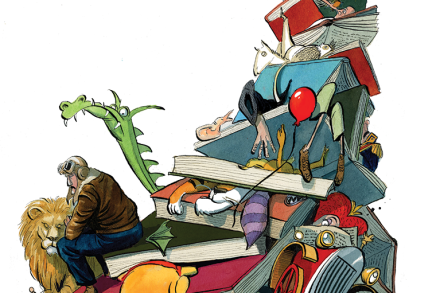
‘To be or not to be’ may be the question but when it comes to eliciting answers, I’ve always preferred Mr Darcy’s epic conversation starter: ‘What think you of books?’ Two hundred years on, it has become harder than ever to find out what anyone actually thinks of books – and not just because our attention spans have been so corroded by dopamine addiction. There are more books published today than ever. TikTok creates relentless literary sensations, and the day after the murder of Charlie Kirk, AI-produced histories were available on Amazon giving ‘the full story’.  If social media is to be believed, everyone is reading so much it’s impossible to keep up. But what matters most is not what you think about books but how your books look.

The day I ate a royal love letter

From our US edition

Our very own Roger Kimball made it possible. I am referring to The Last Alpha Male, the greatest book ever written except for the Bible, as a Greek critic by the name of Taki put it. It is written by yours truly and owes a lot to Harry Stein, himself a terrific writer, whose father happened to write a musical play by the name of Fiddler on the Roof. My problem was how to justify Don Giovanni behavior while married to a Penelope-like beauty. Roger put me in touch with Harry, who came to my rescue. Presto, the wars in Gaza and the Ukraine stopped overnight. Fighters put down their weapons and read about the last alpha male and his ladies. My spies tell me even the Donald asked for a copy thinking it was about him, but then threw it out as Air Force One took off from Palm Beach.

letter
Austen

Why Jane Austen is still the queen of romance

From our US edition

Jane Austen was born in Hampshire on December 16, 1775, the seventh child of a poor country rector. Despite being red-cheeked and a good dancer, she never married. And despite the handful of novels she wrote under the byline “A Lady,” she was always considered by her family less promising than her older sister. She died of a painful illness at 41. Her books found a readership that included the Prince Regent, but she had some prominent detractors. Charlotte Brontë scorned them: “I should hardly like to live with her ladies and gentlemen in their elegant but confined houses.” Where were the windswept moors, the big feelings? In the next century, D.H. Lawrence dismissed Austen as “mean” and “snobbish.

Why A Dance to the Music of Time has stood the test of time

Fifty years ago today, a literary masterwork of the 20th century reached its conclusion with the publication of Hearing Secret Harmonies, the final volume in Anthony Powell’s 12-novel sequence A Dance to the Music of Time. Inspired by the painting of the same name by the 17th-century French artist Nicolas Poussin (which you, like Powell, can see at the Wallace Collection), the series began with A Question of Upbringing, published a quarter of a century earlier in 1951. This introduced us to the English narrator of the whole endeavour, Nicholas Jenkins (uncoincidentally he shares the Christian name of the painter, albeit with an Anglicised aitch), who attends a boarding school – unnamed but modelled on Powell’s time at Eton.

Bring back the book launch!

It’s that time of year when the local librairie-papeterie in your French holiday village is full of signs for la rentrée and English newspapers carry ads for gel pens and shoes with Velcro fastenings. I used to love this season as a schoolboy – discovering if I’d made the under-13 football training squad. For the past 40 years, though, September has been for me a different season: the time of the publishers’ launch party. These used to be lavish affairs, held in a hotel or gallery with themed drinks and food, the whole thing fizzing with romantic possibilities. In 2001 we had a memorable do for my American novel On Green Dolphin Street with a jazz quartet, cheeseburgers and bottomless dry Martinis. (What happened afterwards in Vauxhall Bridge Road has stayed in VBR.

There’s nothing ironic about civilisation

A recent photograph on a BBC website startled me. It was of hundreds of books thrown out of a former library in Croydon on to the ground.  It startled me because I had taken an almost identical photograph 34 years before – in Liberia. The books in the University of Liberia had been pulled from their shelves and scattered in similar fashion to those in Croydon. Of course, the books in Liberia were at a higher intellectual level. The capital city of Monrovia was in those days cut off from the rest of the country by the forces of Charles Taylor, and the only way to arrive was by the Steel Trader, a ship owned by a redoubtable old Africa hand, Captain Monty Jones, responsible, at his risk and profit, for revictualling the besieged city.

Loving salute to a book I wouldn’t touch: The Thursday Murder Club reviewed

Richard Osman’s The Thursday Murder Club, which is set in a retirement village and features pensioners solving murders, was a publishing sensation. (There are now four books in the series, with combined sales of more than ten million copies.) I’ve never read it. ‘Cosy crime’, as it’s called, is either your bag or it isn’t. This adaptation, however, feels exactly like the book that I haven’t and would never read. I hope Mr Osman et al. will take this as praise. In other words, the film knows what it is doing, who it is for, and fans will, I’m convinced, be delighted. It’s reminiscent of Enid Blyton’s The Famous Five, but at the opposite end of the age spectrum It’s not cinematic.