Books

Who doesn’t want a better life?

Every couple of years a columnist-cum-novelist will inevitably stoop to shameless self-promotion. In my defence, at least the novel released this month is germane to the political moment. Lest its simple title, A Better Life, come across as lame, I asked the designers of my British and American hardback covers to use imagery that conveys the book’s focal subject matter: immigration. See, proponents of unfettered mass migration have eternally assured us that most illegal immigrants – or as the Biden administration instructed federal law enforcement to call them, ‘newcomers’ – are merely seeking ‘a better life’. This explanation is routinely trotted out as an irrefutable justification for a potentially near-infinite

The demise of London’s junk shops

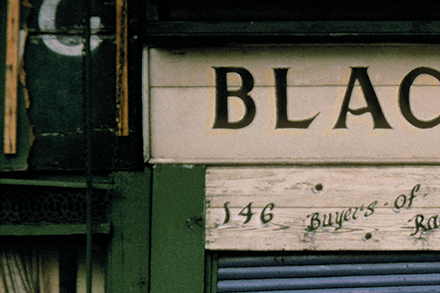
‘The place through which he made his way at leisure was one of those receptacles for old and curious things which seem to crouch in odd corners of this town and to hide their musty treasures from the public eye in jealousy and distrust.’ In Dickens’s The Old Curiosity Shop, Nell Trent’s grandfather loses his precious shop to the malicious money-lender Quilp. London’s junk shops have, it seems, always been under some form of threat. But the forces against them today appear unstoppable. The junk shop is increasingly the sole preserve of the city’s ‘odd corners’ – pushed out by hiked rents, the charity-shop boom with its variety of cost

The alt-right are clueless about neoclassicism

The adherents of the American alt-right are not known for their delicate aesthetic sensibilities, but there is an exception. They love neoclassical architecture and are calling for it to be deployed in the 250th celebrations this year of what they still call ‘the country of liberty’. Judging from the desecration of the Oval Office and its surroundings, and the plans for the world’s most expensive dance hall, what they have in mind is a style derived not from ancient Greece and Rome but 1950s Technicolor movies. Donald Trump’s White House interior reminds me of Hogarth’s crisp verdict on French 18th-century rococo interiors: ‘All gilt and beshit.’ Expect more of the

In praise of French brothels

In the days of the Belle Époque and Jazz Age, a trip to Paris would have included, for the discerning tourist, a visit to the Eiffel Tower, Notre-Dame and the Comédie Française, but also to Le Chabanais, the One-Two-Two or Le Sphinx. There would have been no need to give the driver an address: they would have known exactly where to go, for these were Paris’s most luxurious brothels, famous the world over for their beautiful inhabitants, sumptuous interiors, outlandishly themed rooms and specially designed erotic furniture. This year marks the 80th anniversary of the abolition of the French maisons closes system – also known as maisons de tolérance –

In praise of Elizabeth Taylor (no, not that one)

On 15 November 1975, Elizabeth Taylor died. No, not that Elizabeth Taylor – she had many more years, and many more husbands, to get through. I mean Elizabeth Taylor the author, whose 12 novels and four volumes of short stories so piercingly and hilariously chronicle the quietly desperate lives of middle-class women in and around the sleepy towns and villages of the Thames Valley in the middle part of the last century. Kingsley Amis thought her ‘one of the best English novelists born in this century’. Anita Brookner considered her ‘the Jane Austen of the 1950s and 60s’. Despite such accolades, Taylor never quite achieved the status she deserved. She

The cruelty of H is for Hawk

H is for Hawk is an adaptation of the bestselling memoir by Helen Macdonald who, following the sudden death of her beloved father, channels her grief through the training of a goshawk, Mabel. The film stars Claire Foy, who is superb, as is the nature photography, but is it right, keeping a wild animal captive, and depriving it of its natural behaviours because it helps you in some way? What’s in it for this gorgeous bird, I kept wondering. The cruelty is never addressed. This is solely about human need. We’re not even told who plays Mabel, so I can’t say what she has been in before or whether she

The joyless reading app being forced on my son

It was only recently that I fully appreciated how the books I read as a child formed me. A pregnant friend asked me about my parenting philosophy and I realised it amounted to ensuring my son would survive a tour of Willy Wonka’s chocolate factory. I never had the money of Veruca Salt’s daddy to indulge his every desire, but I came down hard on chewing gum, gorging on chocolate and, above all, staring at a screen.  Despite my son’s complaints that I was acting like a father from Victorian times, it seemed to have worked, and, as the Oompa–Loompas predicted, not being glued to a screen encouraged him to

The independent bookshops that aren’t what they seem

Independent bookshops remain some of Britain’s loveliest places. Quaint, charming, precarious, they are a bulwark against blandness and offer refuge in an age of doomscrolling. The bookseller stacking the shelves is likely to be local, almost certainly poorly paid and a bit moth-eaten. I should know – I own an independent bookshop. We are a flock of sheep, which is why it has proved so easy for a wolf to slip into our clothing. Walk down a high street today and you may well pass a bookshop that looks just right. Handwritten recommendation cards. Tastefully curated tables. Knowledgeable booksellers. The name over the door reassuringly local. Nothing here suggests scale,

The march of lazy children's books

There’s a myth that lots of us fall for/ ‘Kids’ books are so easy to write’/ And you can see why we might think so/ As so many of them are shite. Little poem by me there. As the dad of a six-year-old and a three-year-old, I have spent perhaps 100 hours reading some wonderful books, and hearing gorgeous books read to me. But parents everywhere will know what I mean when I say: Christ there’s a lot of dross out there. Why are so many children’s books so bad? Children learn through books. If they read lazy poetry, they’ll become lazy writers and lazy thinkers While looking for kids’

How the Queen is spreading the joy of reading

Queen Camilla loves a book. Almost any book will do. ‘There’s something so tactile about a book,’ she says. ‘I like the smell of the pages when you open the cover. I like turning the pages and folding down a corner ready for next time…’ The Queen, 78, has loved books for as long as she can remember. She says her father, Bruce Shand, inspired this lifelong passion: ‘He read to us as children. He chose the books, and we listened. He was probably the best-read man I’ve come across anywhere. He devoured books.’ Bruce Shand was a soldier. His father was a writer, about architecture, food and wine. His

Do we really need a 'new spin' on Jane Austen?

If you like your period dramas butchered, then you are in for a real treat. The 250th anniversary of Jane Austen’s birth falls on 16 December, and we are promised a slew of adaptations, documentaries and lectures to mark it. Inevitably, some of these will try to put a ‘new spin’ on Austen, to make out that she was somehow in line with a particular cause or interest of modernity; Mansfield Park is about saving the whales, Colonel Brandon is actually trans, that sort of thing. This year, Emma Thompson stars in a ‘racy’ new audio drama, Becoming Meg Dashwood, which will focus on the youngest Dashwood sister and her

Ireland is looking for its own Nigel Farage

A few years ago, I watched an Irish-made drama on Netflix called Rebellion. Given that it was about the 1916 Easter Rising, I expected it to be somewhat anti-British but was pleasantly surprised. I knew the basics of what happened, but the series made me question why I knew so little about Irish history and politics more generally. I could name each taoiseach (prime minister) going back to Jack Lynch but, apart from Eamon de Valera, none before him. So I began to read voraciously about our nearest neighbour. Having edited books about British prime ministers and American presidents, I decided that one of the (now) 16 men who have

Give Andrew Miller the Booker

The winner of this year’s Booker Prize will be announced tonight. Of the six shortlisted novels, Andrew Miller’s The Land in Winter looks like a good bet for the £50,000 award. It might even be a contender for best Booker novel ever. The prize’s judges have been known to make strange calls – and always bet responsibly! – but the odds on Miller are good. The story takes place against the backdrop of snowbound Britain’s ‘Big Freeze’ between December 1962 and February 1963. ‘For a mile from the Kent coast,’ Miller writes, ‘the sea had turned to pack ice.’ This was the time of Beeching, Babycham, Benny Hill, Acker Bilk, Dr Kildare, the Daily Herald, the

The day ‘Hitler’ was captured in Tottenham

Given the way the world is right now, I am avoiding it in the main. For the sake of my mental wellbeing, I require less bad news and more fun company. Just as George V collected postage stamps and Rod Stewart collects toy trains, I have been collecting theatrical dames since the beginning of the 1970s when I first worked with Dame Peggy Ashcroft. It’s an odd hobby, but it has proved hugely rewarding. From Dame Flora Robson (who gave me a very useful book on window boxes when I bought my first flat) to Dame Joan Plowright (who bequeathed me her husband Laurence Olivier’s favourite sun hat, which I’ve

A remarkable insight into Le Carré's working methods

When Richard Ovenden of the Bodleian Library wrote to John le Carré asking if the writer would leave it his papers, he got more than he could ever have bargained for. Le Carré not only responded with enthusiasm, explaining that ‘Oxford was Smiley’s spiritual home, as it is mine’, but also sent along 85 boxes of neatly arranged papers and memorabilia. After le Carré’s death in 2020 came a second larger tranche; the total archive consisted of more than 1,200 boxes. This was a writer who threw nothing out. Selected fruits of this vast haul can be seen in a new and impressive exhibition in the Bodleian’s Weston Library (formerly

Jilly Cooper was utterly unrivalled

Jilly Cooper, the last great Englishwoman of my lifetime – after Queen Elizabeth II and Debo – has died. The lights are going out all over Rutshire. During her life, Jilly shone as an author, a friend and a person – the definition of effervescent. You had to meet her only once to become a founder member of the Jilly Cooper Adoration Society. When she wrote her last book, Tackle!, about a rural football club complete with ‘bitch invasions’ and ghastly Wags, I told her that, in a way, she was the beautiful game, only she gave entertainment to millions not by striking a ball but by putting one word

Second-hand books tell the most surprising stories

It’s relatively common, I find, when opening a newly purchased second-hand book for the first time, for something to fall from its pages. Most likely this will be a branded bookmark or printed stocklisting paper from the dealer who sold it. But it’s not unusual to find something more interesting, something belonging to the book’s previous owner. Apparently the singer Nick Cave donated 2,000 books to an Oxfam in Hove this summer, and new owners of his paperbacks discovered old plane tickets and Post-it notes tucked inside. We serial readers of actual physical books are constantly in need of bookmarks and will grab at anything to hand to use as

The decline of the Booker Prize

‘Prizes are for little boys,’ said Charles Ives, the American composer, ‘and I’m a grown-up.’ It’s a pretty sound rule of thumb. The prizes worth having are usually those which reflect a body of work, not a single achievement. Cary Grant, the greatest leading man in the history of cinema, never won an Academy Award. Neither did Alfred Hitchcock, who made a few half-decent films. They received ‘lifetime awards’ from the red-faced academicians, but those gestures merely endorsed William Goldman’s view that, in Hollywood, nobody knows anything. As Billy Wilder told the producer who asked what he had been up to: ‘You first.’ Nobody takes much notice of the Grammys,

The rise of performative reading

‘To be or not to be’ may be the question but when it comes to eliciting answers, I’ve always preferred Mr Darcy’s epic conversation starter: ‘What think you of books?’ Two hundred years on, it has become harder than ever to find out what anyone actually thinks of books – and not just because our attention spans have been so corroded by dopamine addiction. There are more books published today than ever. TikTok creates relentless literary sensations, and the day after the murder of Charlie Kirk, AI-produced histories were available on Amazon giving ‘the full story’.  If social media is to be believed, everyone is reading so much it’s impossible

Why A Dance to the Music of Time has stood the test of time

Fifty years ago today, a literary masterwork of the 20th century reached its conclusion with the publication of Hearing Secret Harmonies, the final volume in Anthony Powell’s 12-novel sequence A Dance to the Music of Time. Inspired by the painting of the same name by the 17th-century French artist Nicolas Poussin (which you, like Powell, can see at the Wallace Collection), the series began with A Question of Upbringing, published a quarter of a century earlier in 1951. This introduced us to the English narrator of the whole endeavour, Nicholas Jenkins (uncoincidentally he shares the Christian name of the painter, albeit with an Anglicised aitch), who attends a boarding school