Book review

No end in sight

From our UK edition

Are you a deathist? A deathist is someone who accepts the fact of death, who thinks the ongoing massacre of us all by ageing is not a scandal. A deathist even insists that death is valuable: that the only thing that gives life meaning is the fact that it ends — an idea not necessarily embraced by someone about to be murdered on video by an Isis fanatic. But what is the alternative? There has never been one, which is why until recently no one needed to coin the term ‘deathist’. But now many tech entrepreneurs and scientists take a different view: death, they say, is simply an engineering challenge. Biotechnology should, in principle, be able to reverse the wear-and-tear on cellular machinery in our bodies and keep us in our prime indefinitely, barring violent accident.

Romancing the stones

From our UK edition

If Britain’s prehistoric monuments have had a magnetic attraction for generations of artists, it is perhaps because they have long been seen as works of art themselves. ‘The whole temple of Avebury may be consider’d as a picture’, enthused the antiquary William Stukeley in 1743, while ‘my God how sculptural’ was Barbara Hepworth’s response to Cornish sites such as the Mên-an-Tol and the Nine Maidens which she encountered after moving to St Ives in 1939. The creative tension between artists and these mysterious presences in the landscape is the subject of Sam Smiles’s engaging book British Art: Ancient Landscapes, published to accompany an exhibition at the Salisbury Museum (until 3 September).

Too young to die

From our UK edition

In the north transept of Westminster Abbey, there is a memorial by Joseph Nollekens to three British captains killed at the Battle of the Saintes. It is hard to imagine that many visitors notice it, but when the news of the battle reached London from the West Indies in May 1782, it inspired the same kind of hysteria that 120 years later would greet the relief of Mafeking. The victory might not have been all it was cracked up to be — Rodney had let the French fleet escape — and yet at a time when a bitterly divided country was embroiled in a losing struggle for its American colonies and a mismanaged war with France and Spain, anything which promised that Britannia still ruled the waves and Britons could fight and die as their forefathers had done was manna from heaven.

An eye for sensationalism

From our UK edition

According to Private Eye, executives at the Daily Mail were alarmed by the impending publication of Adrian Addison’s new history of the paper. They expected an onslaught. So their hearts must have sunk when they saw the cover of Mail Men. Stephen Fry, who may hate the Mail more than anyone alive, pronounces it ‘a damned good read’; and Polly Toynbee, whose loathing is scarcely less vehement, praises it as a ‘well-informed, diamond-shaped analysis’ of the paper that ‘dominates England’s political culture’. Possibly neither of these sages has read the book in its entirety. It isn’t the hatchet job that Mail executives feared and its enemies wanted. Admittedly, as a columnist on the paper for many years I may be an imperfect judge.

A gaping hole in the week

From our UK edition

This is a gem of a book for Radio 4 lovers, particularly those of us who work out which day of the week it is by who’s speaking on the station at 9.02 a.m. Published the week that Midweek was abolished for ever, it is Libby Purves’s story of the programme she presented for 33 years. In this brief memoir she has not only immortalised the distinctive flavour of the ‘And now for some lively conversation’ Wednesday-morning 45 minutes. She has also reminded us that Radio 4 is ‘basically, a marvel’: for many people, it is ‘their university and their friend’. All presenters, Purves writes, are aware that they are obsolescent.

A true original

From our UK edition

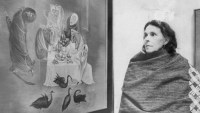
Leonora Carrington was strikingly beautiful with ‘the personality of a headstrong and hypersensitive horse’ (according to her friend and patron Edward James); and she fled from her family, renouncing a life of privilege and ease to pursue her calling as an artist. Joanna Moorhead deplores the fact that she is ‘not much more than a footnote in art history’. But she has long been a legendary figure (among recent devotees, apparently, Madonna and Björk); in Mexico, where she lived and worked for most of her life, she is a national treasure; and for the feminist she is a heroine and her art ‘a modern woman’s codex’.

Two small boys in the sea

From our UK edition

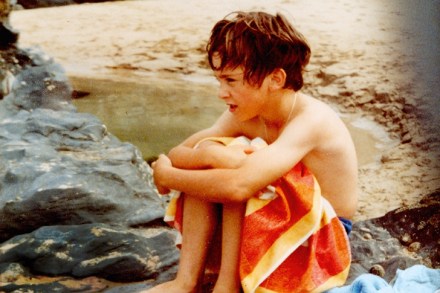
An estimated 400,000 people drown annually worldwide, 50 per cent of them children. Roughly 150 drownings occur in the UK. In the 1970s, the RNLI station at Port Isaac on the north Cornish coast responded to ‘about 30 shouts a year’, reckons the novelist Richard Beard. On 18 August 1978 at 2.30 p.m. a maroon rocket went up with a great whoosh 800 feet into the summer sky to summon the coastguard. In the language of the rescue services, there was a ‘swimmer in the water’. Ninety minutes earlier, Beard, then aged 11, was on a nearby beach with his brother Nicky, aged nine. On holiday from Swindon, the Beard family had had a picnic and had finished playing a game of beach cricket and were packing up to leave.

The pleasures of reading aloud

From our UK edition

pkkkfffffffrrrffff-ffff! pkkkfffffffrrrffff-fff! Hobble leg, hobble leg, Hobble leg owhmmm! Into the bottle of fluff, rubbed the stuff under! pkkkfffffffrrrffff-ffff! pkkkfffffffrrrffff-fff! This is the voice of Tennyson reading ‘The Charge of the Light Brigade’, as recorded by Thomas Edison in 1890 and phonetically or farcically transcribed in a novel by Nicholson Baker over a century later. Drowned in static, ‘valley of death’ sounds like ‘bottle of fluff’, ‘rode the six hundred’ becomes ‘rubbed the stuff under’ and ‘Hobble leg owhmmm’ is — of course — ‘Half a league onward’.

Buzzing bees and chocolate trees

From our UK edition

It is estimated that the world’s insects perform an annual pollination service for all humankind worth $215 billion. In return, every year, we run up a pesticide bill of about $40 billion to exterminate them (this doesn’t include the $10 billion costs in social and environmental damage wrought by the same chemicals). Why is it still such a reflex in our encounters with invertebrates to reach for the fly spray? Here are two great books that try to change our minds on creepy-crawlies. On the face of it, Dave Goulson has the more straightforward task. This is not just because the founder of Bumblebee Conservation over a quartet of books has perfected the art of turning the entomologist’s technical expertise into easy-reading everyman’s prose.

Fragments of the future

From our UK edition

Science fiction is not the first thing one thinks of in connection with the Polish poet Czeslaw Milosz, though the Nobel Prize for Literature has in fact been awarded for science fiction poetry — Harry Martinson’s Aniara was an epic about a spaceship. Then again, many English speakers probably don’t primarily associate Milosz with poetry either, but with The Captive Mind, his damning critique of the moral crisis of artists under authoritarian regimes.

An untouchable star

From our UK edition

This slight book comes with heavy baggage. In 2009, Rampling handed back a hefty advance for her contribution to a conventional authorised biography, and then used the Human Rights Act to prevent Barbara Victor from publishing anything based on their collaboration, on the grounds that it would violate her right to privacy. The Mail typically demanded to know ‘what can possibly remain untold in her audaciously open life’. What it meant was that, having been so extensively naked on-screen, Rampling had no business pulling down the shutters on her private life. But Rampling’s extraordinary sexiness has always derived from an immaculate meeting of exposure and reserve.

A unique literary phenomenon

From our UK edition

The Argentinian writer César Aira is a prodigy: at the age of 68 he has published, according to a ‘partial bibliography’ on Wikipedia, 67 novels (plus non-fiction, plays and translations into Spanish from four languages). It’s a record made only slightly more believable by the fact that the novels are mostly around 100 pages long. ‘Automatic writing’ is often mentioned in the books themselves (Aira supposedly doesn’t revise much, or at all). In 1992, for example, he published five novels — a personal best which he nonchalantly repeated in 2011. Certainly, he glides through — or over —his stories, with the light irony and digressive versatility of Ovid, poet of the Metamorphoses.

Bird thou never wert

From our UK edition

The most appealing phoenix in literature is surely the eponymous bird from E. Nesbit’s 1904 classic, The Phoenix and the Carpet. A mysterious egg arrives in the children’s nursery on Guy Fawkes night (J.K. Rowling’s phoenix, ‘Fawkes’, is the clear literary descendant), and the five children, whose adventures unfold in an atmosphere of benign neglect, manage to set fire to the nursery — involving paraffin and fire-crackers — and trigger the rejuvenation of the mythical bird.

The saddest show on earth

From our UK edition

It’s the early 20th century, and two strange-looking boys, purportedly twins named Iko and Eko, are playing in a circus band in one of the many stopovers on the freak-show circuit running from Ohio to Texas. The brothers are ghostly pale, with thick white dreadlocks and red eyes — natural albinos who, when they are introduced by the sideshow huckster, are described as ‘ambassadors from Mars’ — and this makes them fairly valuable. Not as valuable as Grady the Lobster Boy, say, or Zip-the-What-Is-It?, a pinhead who had reputedly been found walking on all fours in Gambia (he was actually from New Jersey), but these ‘ambassadors from Mars’ are up there in the second tier of sideshow stars, above the giants and the dwarfs and the fat ladies.

Who’s the expert now?

From our UK edition

The title might be taken as a provocation. In the compressed language of digital media, white tears, like first-world problems or man flu, are an ersatz version of the real thing. More plainly, the gripes and complaints of white people are, according to certain social codes, unearned and inauthentic. This zeitgeisty novel gives us two men who are preoccupied to the point of mania by the question of authenticity: young white New Yorkers obsessed with the blues. They work as music producers, but this being the post-pop 21st century they are stuck with white novelty rappers. Carter, the richer of the two, prefers old black music, the more ancient-sounding the better. To his ears, the earliest stuff is ‘more intense and authentic than anything made by white people’.

Dreaming of wide open spaces

From our UK edition

On the website of the Australian National University in Canberra, emeritus professor of history Barry Higman lists his research interests as food sciences, cultural studies and historical studies, with a particular interest in The world history of food over the last 5,000 years; the global history of domestic servants in the modern world; the history of the Jamaican landscape; the history of Australia as a flat place; and the history of islands and insularity. This rather unusual breadth of interests suggests either that Professor Higman is a very curious man indeed or a complete academic fraud. Fortunately, for the sake of the future of higher education in south-eastern Australia, it’s the former. Flatness is the uneven, fascinating work of a true scholar enthusiast.

Back to basics | 30 March 2017

From our UK edition

Tim Parks is a writer of some very fine books indeed, which makes it even more of a shame that his most recent novel is flat, grim and (like its narrator) interesting only to itself. His main theme is adultery, a subject he explored in his wonderful novel Europa (1997), in the short story collection Talking About It (2005), and in the thoughtful essays of Adultery and Other Diversions (1998). But in recent years he has become the laureate of a certain kind of seedy, middle-aged infidelity, and In Extremis is single-minded to the point of obsession: anorak and dirty mac in one. The problem might be that he is simply too productive. In Extremis is a loose sequel to Thomas And Mary (2016) a novel that explored the breakup of a marriage from a range of narrative perspectives.