Book review

The city of ugly love

From our UK edition

Cuba’s gorgeous, crumbling capital has always been a testing ground for writers. That heady combination of revolution, cocktails, sex and unpainted mansions seems somehow to set literary pulses racing. Trollope, Hemingway and Graham Greene all described it with verve, but there’s also plenty of dross. The city certainly charmed me, and, a few years ago, I thought I’d add to the pulp with my own contribution. I started courting London’s Cubans, and even had the ambassador to lunch. But despite some intriguing gossip (e.g. that Che Guevara was no fun at parties, and utterly deadpan), I abandoned the whole idea. It seemed to me that Havana was about to change forever, and that whatever I wrote would be old hat before the ink was dry.

A great awakening

From our UK edition

One afternoon in August 1978, Geoffrey Howe and Leon Brittan were flying from Beijing to Shanghai. They were on the last leg of what was for both of them the first of many official visits to China. Soon they would be ministers in Margaret Thatcher’s first government, but at the time they were still in opposition. As first secretary in the British embassy, I was accompanying them, and I told them that I had heard on the grapevine that Holy Trinity’s Anglican cathedral in Shanghai was in the process of being reopened after 12 years in which every place of worship in China had been closed, and every faith persecuted. ‘Roger, that cannot be right,’ Geoffrey Howe declared; ‘this is a communist country.

The books the Nazis didn’t burn

From our UK edition

For one who has, since boyhood, regarded the secondhand bookshop as a paradise of total immersion, it is quite shocking to discover Albatross, an unknown imprint from the English literary past. Before Albatross there was Tauchnitz, the Leipzig firm which for 100 years cornered the market in English language books outside the territories of the British Empire and the USA. One often comes across Tauchnitz and I have two of its editions: a Thomas de Quincey, with a stamp from a circulating library in Lausanne; and a Ruskin, with one from a British club in Portugal. I only keep them as curiosities, because normally I avoid Tauchnitz editions: cheap boards with awful print on awful paper.

Pets in the Blitz

From our UK edition

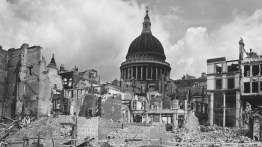
War Horse, by way of book and play and film, has brought the role of horses in war into the public consciousness. Even before it, there was the erection of an Animals in War Memorial on Park Lane, paid for by an impressive list of aristocrats under the leadership of commoner Jilly Cooper. But what of pets, or what Professor Hilda Kean prefers to call ‘companion animals’? Not long ago, in Paddington, I was walking my own dog when accosted by an incredibly old man who said that he had lost his dog during the war. ‘Oh,’ said I, with my eyebrows raised. ‘Yes, we lived on the Wirral peninsula, and since we were close to Ireland, which was neutral, there was a fear that the Nazis would invade from there, so the beaches were mined. My dog was blown up by one.

Flee or die

From our UK edition

Every nation has the right to control its borders, but we in the West are getting a bit too comfortable dehumanising other humans for failing to fill out forms in triplicate before fleeing the carpet-bombing of their cities. In recent months, Theresa May has rejected Calais’s child refugees; Donald Trump has seemingly tried (unsuccessfully, twice) to ban Muslims; and Australia has gone full ‘Dickensian judge’ and chucked its refugees on a prison island.

Ripping yarns

From our UK edition

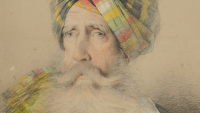
In the 1860s, when British visitors first began to explore the high altitude pleasures of Kashmir, it was not just the beauties of the valley and the cool, pellucid waters of the Dal Lake which took their breath away. Living there was a legendary relic of an earlier age, who quickly became an object of pilgrimage for the curious sahibs puffing away at their cheroots on the sundecks of the houseboats. Alexander Gardner was, in the words of his latest biographer, John Keay, ‘a beturbaned colonel of uncertain nationality with a chequered past and a hole in the throat’.

Signs and spellsnich

From our UK edition

On 25 February 1980, Roland Barthes, the great French intellectual, was run over by a laundry van in Paris. He died from his injuries a month later. This book — Laurent Binet’s second novel — proposes that it was not an accident; that Barthes had just come from lunch with the Socialist candidate for the forthcoming French presidential elections, François Mitterrand, and that he was in possession of an extremely important document, one which gave detailed instructions on the seventh function of language.

Love under wraps

From our UK edition

It’s an important subject: the existence of a permanent and significant minority within London’s life. Gay men and lesbians have always been there, leaving — or taking care not to leave — traces of their existence. But for the historian, a difficulty arises: often the only evidence lies in their occasional brushes with the law. We often know nothing about how gays lived in each other’s company. Letters were destroyed; diaries were scrupulously kept free of anything that could lead to a conviction; and lives were reconstructed around the fictions of a bachelor chambers, or two ladies sharing. How many devoted footmen to bachelor barristers were actually lovers of decades?

In a dark forest

From our UK edition

In his mid-forties Will Ashon realised he was adrift and confused, confronted by the situation Dante described in the Divine Comedy: ‘In the middle of our life’s path/ I found myself in a dark forest.’ Ashon’s dark forest was metaphorical to begin with — conscious of ageing, dis-satisfied with his career in the music industry, wondering where to turn — but it became literal as he sought answers by exploring Epping Forest, the vast ‘shadow of London’ near his home in Walthamstow.

When will we ever learn?

From our UK edition

In 2012, sugar became more dangerous than gunpowder. According to the historian Yuval Noah Harari, of the 56 million people who died that year, 620,000 did so by the hand of their fellow humans: 120,000 in war and 500,000 from crime. By contrast, 1.5 million died from diabetes. Harari’s wry observation adds weight to Steven Pinker’s assertion in The Better Angels of Our Nature (2011) that humans are on a trajectory towards peace and non-violence. But wars in the Middle East, Afghanistan, across the Sahel and Yemen; Russian and Chinese irredentism; nuclear threats from North Korea; Trump’s belligerency, not to mention the asymmetry of terrorism, render urgently relevant the continued study of war. In War: An Enquiry, the philosopher and ethicist A.C.

Burning issues | 4 May 2017

From our UK edition

Set discreetly into a wall in Smithfield, amid the bustle and bars of this rapidly gentrifying part of London, is a memorial raised by the Protestant Alliance in 1870 commemorating the men and women who died agonisingly nearby, roasted alive for refusing to abjure their new-found reformed religion. Nimble intellectual footwork was needed across the 16th century of Tudor rule to keep the fires of Smithfield at bay. In the reign of Henry VIII, orthodox Catholicism was temporarily set aside to allow the monarch a divorce, in order to get his thigh across the reform-minded Anne Boleyn. Henry himself, however, remained resistant to the new faith.

Cinderella in China

From our UK edition

She was a foundling in her own family, shunted to adoptive parents for two years, then to the edge of China, to a fishing village on the East China Sea, and to a furious, alcoholic grandfather and a grandmother sold at 12 into marriage for some pottage, and never given a name. Is that colourful enough for you? But there is more: the life story of the young Chinese filmmaker and novelist Xiaolu Guo makes Cinderella’s seem bland. The hovel she lived in until she was seven was on Anti-Pirates Passage. Her grand-father, a failed and bitter fisherman, lost his livelihood in the 1970s, when the Chinese state collectivised fishing and stole everyone’s boats.

A husband to die for

From our UK edition

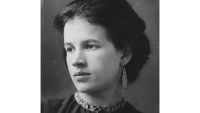
What will we do when there are no longer caches of letters to piece together and decipher; only vague memories of myriad emails? We will be like butterfly hunters flailing around with our nets, hoping to catch some rare specimen with glittering wings among the detritus of daily exchanges. The letters of Ida Nettleship, first wife of the arch-bohemian Augustus John, are a case in point: gathered together here from diverse sources by her granddaughter Rebecca John and expertly introduced by John’s biographer Michael Holroyd, they constitute a rare epistolary treasure trove.

Climb trees and grow a beard

From our UK edition

A few years after Walt Whitman brought out the first edition of Leaves of Grass (it didn’t do well), he wrote a column on ‘Manly Health and Training’ for the New York Atlas. His pieces were published under a pseudonym, Mose Velsor, and have only recently been connected to Whitman by a graduate student at the University of Houston, who discovered them on microfilm. (Unless this whole thing is a joke — it’s a little hard to tell.) Boxtree has cherrypicked from over 47,000 words of manly advice to produce a cod-retro book along the lines of the Ladybird Book of the Hangover or the Ladybird Book of the Midlife Crisis or the Ladybird Book of the Hipster. In fact, the Manly Health guide is a bit like all of them.

Suspension of disbelief

From our UK edition

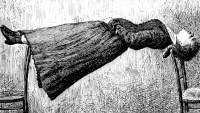
The history of modern medicine is a roll call of brilliant minds making breakthrough discoveries. We rarely hear about the losers, but Wendy Moore has chosen to write the extraordinary story of a massive medical fiasco: the craze for mesmerism which gripped Victorian London in 1838. The practice of using the ancient technique of hypnosis for medical purposes takes its name from the 18th-century German physician Franz Mesmer. The mesmerist of Moore’s story was a society doctor called John Elliotson, a man who has been almost forgotten today. Elliotson was a self-made physician who rose quickly to the top of his profession. Clever, tough and ambitious, by the age of 40 he was professor of medicine at London University.

The fearful forties

From our UK edition

In an early chapter of All Grown Up, the narrator Andrea says to her therapist: ‘Why is being single the only thing people think of when they think of me? I’m other things, too.’ ‘Tell me who you are, then,’ says the therapist. And so Andrea tells her that she’s a woman, a New Yorker, that she works in advertising as a designer, that she’s a daughter, a sister and an aunt. In her head, she adds: ‘I’m alone. I’m a drinker. I’m a former artist. I’m a shrieker in bed. I’m the captain of the sinking ship that is my flesh.’ We meet Andrea when she’s 39, asking herself, with increasing desperation, ‘What next?

On the trail of a lost masterpiece

From our UK edition

On 27 May 1939, the German liner St Louis docked in Havana with 937 passengers on board: all but a handful of them were Jews in flight from the Third Reich. After a dismal farrago of diplomatic obstruction, bare-faced corruption among local officials and the incitement by Nazi propaganda of anti-Semitic prejudice ‘even’ (as Leonardo Padura sorrowfully puts it) ‘among the open and happy Cubans’, only a score of refugees could disembark. The US refused entry to the rest. Their ship of despair sailed back to Europe.

Fighting talk, but little action

From our UK edition

On 11 May 1937, at the Gare St-Lazare in Paris, Ernest Hemingway said goodbye to a friend who was leaving Europe. Like Hemingway, John Dos Passos had been in Spain to support the Republic in its civil war against the fascist Franco. But he became disillusioned when the Soviets (also fighting against Franco) murdered someone he knew. As the train was about to leave, Hemingway asked Dos Passos not to report the event. Dos Passos refused: what was the point of fighting a war for civil liberties if you destroyed those liberties in the process? ‘Civil liberties, shit,’ replied Hemingway. ‘Are you with us or are you against us?