Rose Prince

Cook books for a colourful Christmas

From our UK edition

‘When people see the word “chef” on the cover of a cookbook, it can set off alarm bells. It’s intimidating, I get it,’ says Ben Lippett, a former chef. The statement does make one wonder. When does a cook become a chef or a chef become a cook? Recently I sulked, I don’t know why, when a friend introduced me as ‘a chef’. It is an estimable compliment, surely suggesting one is better than a good professional cook. But I have never put in all those hours. With his book How I Cook (HarperCollins, £26), Lippett reminds me of the early Nigel Slater. He is a wonderful mentor to get you started if you seriously want to become a good home cook, but one who will not saddle you with an Instagrammer’s furbellows.
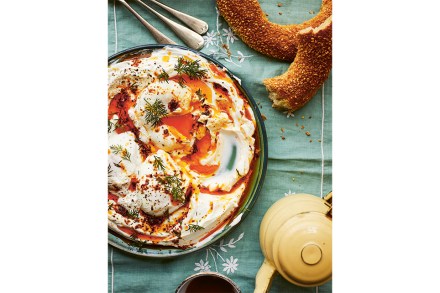
Turkish delights: the best of the year’s cookbooks

From our UK edition

‘Recipes are like magic potions. They promise transformations,’ says Bee Wilson in her introduction to Sylvia Plath’s Tomato Soup Cake (Faber, £12.99), a collection of classic authors’ recipes. You have to pray that tinned tomato soup will indeed be transformed into something nice-tasting, or that Noel Streatfeild’s filets de boeuf aux bananas will not be as revolting as it sounds. Not much hope of that, I’m afraid – but this is more of a book to enjoy reading without tasting. Some of the writers confess to failing miserably in the food department. ‘I am a very bad cooker, as the children put it,’ warns Beryl Bainbridge, as she launches into a heartless recipe for violently boiled mince.

A choice of this year’s cook books

From our UK edition

What a relief to find ourselves in a non-faddy cook book year. We are not being encouraged to chew only plants, ferment everything, grow burgers in labs or devour insects. It’s not that I don’t look for answers to how we should eat to survive the future, but I know a thing or two about the human appetite and no scheme seems any more sustainable than the way the West eats now. The answer is there – and always has been – but it’s adrift. In The Lost Supper: Searching for the Future of Food in the Flavours of the Past (Greystone Books, £19.99), Taras Grescoe identifies the crucial ingredient: diversity.

A choice of this year’s cook books

From our UK edition

The revolving doors of the 1990s’ restaurant scene saw a cast of great characters, sadly now on the wane. One of the so-called ‘modern British’ movement’s greatest champions, Terence Conran, has departed; we have lost Alastair Little and Andrew Edmunds, and only last month Joyce Molyneux, of Carved Angel fame. Who? What? If you never ate in Little’s Frith Street restaurant, lapped Simon Hopkinson’s deliciousness at Bibendum or indeed revolved through the doors into Rowley Leigh’s Kensington Place, you will wonder what I am on about.

On the wild side

From our UK edition

The terroir of the Kentish coast is faultlessly represented in The Sportsman (Phaidon, £29.95), a book of recipes from an acclaimed pub restaurant in the village of Seasalter, close to Whitstable. On the bill of fare (it’s that English) you will find slip soles and thornback ray, salt marsh lamb and oysters, seaweeds of all sorts, wild berries, venison and much else from this landscape with its watery edge. The food is seasoned with home-panned sea salt and the kitchen churns its own butter. The Sportsman’s chef-proprietor,Stephen Harris, writes that terroir is a troublesome word that has come to mean too many things, especially with wine. The French have perhaps deliberately mystified it, he says.

Lockdown creations: the best of the year’s cookery books reviewed

From our UK edition

‘I may, one day, stop making notes and writing down recipes,’ Nigel Slater says in A Cook’s Book (Fourth Estate, £30). Please don’t. This is his 16th book and his writing feels as fresh as it ever did. I remember cutting out his recipes from Elle Magazine three decades ago, and I do not believe he has ever put pen to paper without wanting his ideas to work for others. Mountains of good food must have been set on tables and shared by people as a result, because Slater is a master of his trade. ‘A recipe must work. Otherwise, what’s the point?’ he says. Quite; though a cynic would add that the genre is full of recipes that either don’t work or never quite resemble the glories of a book’s images.

Sunshine on a plate: the year’s best cookbooks

From our UK edition

In the dark days of a terrible winter, Elizabeth David began writing her first book, about Mediterranean food. The timing should have been wrong. People enduring post-war rationing would rather not think about sunlit shores and dishes of bright food, surely? But oh, how depressed, broke Britain lapped up A Book of Mediterranean Food when it was published in 1950. David’s prose and recipes ‘flew’ readers to Greece, Italy, the south of France and Egypt, stirring up an appetite for garlicky seafood stews, saffron-suffused pilaffs and artichokes dipped in anchoiade. In an echo, 70 years on, I have found my thoughts wandering to places that currently cannot be visited except via their dishes.

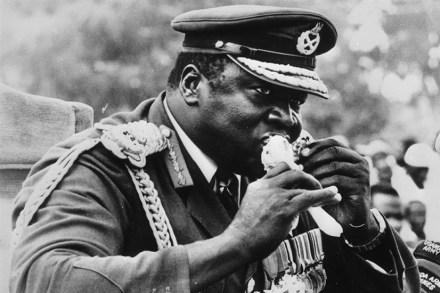
When Idi Amin threatened to shoot the cook

From our UK edition

Private chefs keep many secrets and are expected to go to their graves without sharing a morsel of gossip about their employers. Whether cooking for a pop star, tycoon or member of a royal family, chefs must guarantee confidentiality. Chatter can be career-ending or lead to lawsuits. For a few such cooks, revelations could even end in execution. When the Polish journalist Witold Szablowski came up with the winning idea of writing a book about what some of the world’s most notorious dictators ate, it proved a difficult task. Finding just a few living examples of their chefs took more than two years; persuading these individuals to tell their secrets even longer. Many years after their former bosses had died or been deposed, they were still afraid of their past.

Make it an applefest this Christmas — the best of the year’s cookbooks

From our UK edition

If it were not for a banker with a hangover, we would not have Eggs Benedict. Or so one of the creation stories goes. One morning in 1894 Lemuel Benedict walked in to the Waldorf Hotel, New York, feeling a bit rough. He asked the Maître D’, Oscar Tschirky, for hot buttered toast, bacon, two poached eggs and — crucially — a ‘pitcher’ of hollandaise sauce. This story is recounted in Signature Dishes that Matter (Phaidon, £35), a chronology of 200 or so inventions, from gelato (ice cream) in 1686 to Claude Bosi’s ‘duck jelly’ in 2017. Put together by seven food critics with global knowledge, this is a truly gorgeous book to own and to give to that friend or relative who dines out like a collector.

Pure and mostly simple

From our UK edition

A long and messy business is how the chef Rowley Leigh explains his preferred way of eating. Picking at a crab, for example, or eating raw young broad beans straight from the pod. He applies the same phrase to cooking. That too is messy, but not all the recipes in his new book take ages to make. Long, I thought as I gratefully lapped up Leigh’s wisdom, applies more to the time needed to become not just a fount of knowledge but also a man of very good tastes. You could include grumpy in the title of A Long and Messy Business (Unbound, £25); but I trust the advice and judgment of grumpy (not angry, mind) cooks. It is a great cookbook, as much for what irritates Rowley as what doesn’t.

Fast or feast

‘Tell me what you eat and I shall tell you what you are.’ The best known adage in food literature, penned by the French politician and gastronome Jean Anthelme Brillat-Savarin, divides all of us generally: the gourmands from the picky, the greedy from the careful, one nation from another, one culture from the next. Laura Shapiro’s book about six famous women and their ‘food stories’ made me want to re-read a few biographies for those food moments. Shapiro claims that food in life stories is undervalued as a subject, considering how much time people spend eating.

A feast in every sense

From our UK edition

After reading Gastrophysics: The New Science of Eating, you might, as I did, sit for a bit wondering what a chef is, exactly. We think of chefs as cooks, people in charge of a kitchen, ingredients, pan and heat, who hopefully produce great dishes of food. But this is apparently an outdated concept. For chefs who want to make their name in the world now, the expression of their art must exceed the nourishment on the plate. Cooking can only take a dish so far in order to make it memorable, claims Professor Charles Spence. ‘No matter how exquisitely executed,’ he adds. Whoa! I can still recall the taste of my mother’s sublime steak-and-kidney pudding from 20 years ago. Spence is an eminent scientist at the department of experimental psychology at Oxford University.

Christmas cookbooks

From our UK edition

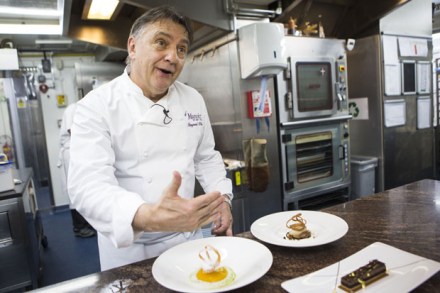
New books by Raymond Blanc and Pierre Koffmann retell the truth that British food came back from the brink. If it were not for the émigré chefs, I hate to think what we would be eating in British restaurants now. Fishfingers à la King, with pea jelly ring? Such horrors existed, or let’s say they were perpetrated, in the 1970s, by Sainsbury’s recipe cards, the Good Housekeeping Institute and in the books of that serial offender Robert Carrier. An embarrassment of showboat dishes are in Anna Pallai’s 70s Dinner Party: The Good, the Bad and the Downright Ugly of Retro Food (Square Peg, £9.99).

Apples for our eyes

From our UK edition

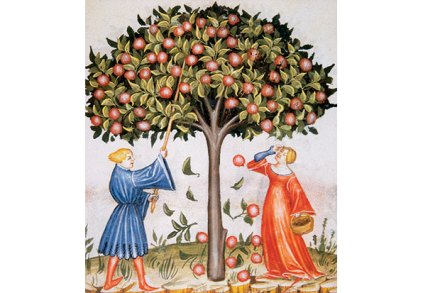
Apple Day, on 21 October, is a newish festival, created in 1990, by the venerable organisation, Common Ground. Intended to be a celebration of the apple, its purpose is also to raise awareness of the importance of apples in landscape, ecology and culture. All over the country there will be many revels where you can taste apple varieties, jellies, chutneys and drinks; try apple-bobbing, take apples from your own garden for identification by experts, buy apple trees and all sorts. These are charming festivities, much better behaved than the ancient cider-makers’ ritual, wassailing.

Food of love

From our UK edition

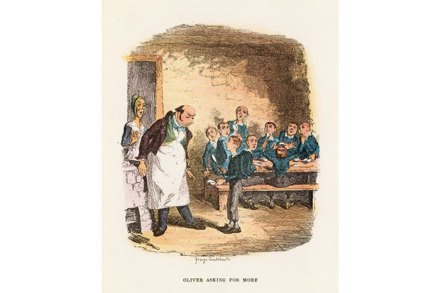
Modern Britain scratches its head over children who are overfed, not underfed, while guilt-ridden mothers stand accused of feeding children badly even if they are not obese. These are not insignificant troubles since childhood obesity is set to cost the NHS many millions in years to come. But as a new exhibition at the Foundling Museum in London will show, infant and child nutrition is not a new science and the challenge of nurturing, not least keeping children alive before the age of five, was taken just as seriously two centuries ago as it is now. Feeding the 400 is the first show at the museum, built on the site of the former Foundling Hospital (established in 1739, and closed in 1954), to examine how the many young boys and girls in the hospital were nourished.

Woolton’s war

From our UK edition

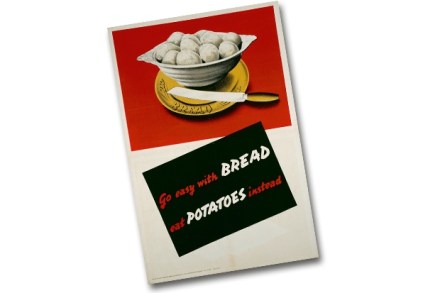
In wartime the housekeeping is a nightmare. While fighting Napoleon in Spain the Duke of Wellington sent an infuriated letter to the government in Whitehall. He complained that they had asked him to account for a petty cash deficit of one shilling and ninepence, and a ‘hideous confusion as to the number of jars of raspberry jam issued to one cavalry regiment during a sandstorm…’. The Duke, more concerned with training soldiers to fight, would not have got on too well with Lord Woolton, the British government’s Minister of Food in the second world war, whose office had the most onerous catering job in history.

Carrots — and no stick

From our UK edition

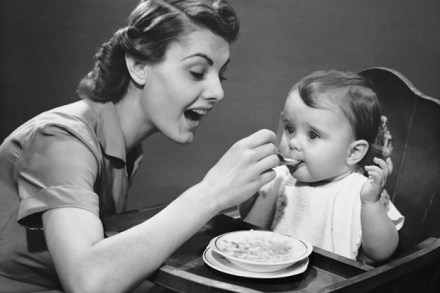
Never mind teaching children to cook: they need to be taught to eat. Obvious? Totally, but this is the choosing part of eating, not the chomping and swallowing we are born to do. Yet, terrific survivors that omnivores have proven to be, they do not know poison from medicine unless told so. So, if you were a cave baby all those eons ago, your cave parents would have pointed out the poisonous berries from the nutritious ones, and later on taught you which animals to hunt. Today’s infants face rather more complicated food lessons, and their parents a horrendous task if they are to bring up a brood with good eating habits and perhaps more importantly a relationship with food that is just as healthy.

A cure for Christmas: the pleasure (and perils) of preserves

From our UK edition

My family knows that once the flaming pudding is on the table, late on Christmas Day, all meals will be picnics. Bar a few potatoes flung into the oven to bake, all cooking stops and eating becomes a forage into a squirrelled hoard of treats: the jars, tins, balsawood boxes and less pretty but functional vacpacs, inside which lie the delicate results of ‘cures’ achieved using sugar, salt, booze or smoke. Preserves are as much a part of my Christmas as the big fat bird and Brussels sprouts, only I find them far more interesting. Often they are memories of past Christmases. We recall the specialities our forebears once loved; the image of an elderly relative eating plums in brandy while watching the telly.

The best new cook books include recipes for Toad-in-the-hole, braised Pilot Whale and seal soup

From our UK edition

Timing is everything, and few cookbooks come at an apter moment than Mamushka (Mitchell Beazley, £25) by the excellently named Ukrainian-born Olia Hercules. It is too easy to pun on her strengths, but in these flamboyant recipes and stories, Hercules lifts up not just the cooking of her country but that of others in the former Eastern Bloc out of grey culinary oblivion. ‘Mamushka’ is an invented word, used by Hercules to describe the strong women in her life; her mother, aunts and cousins, not all Ukrainian but with roots in Bessarabia, Siberia, Armenia and Uzbekistan. All were great cooks, and Hercules says she includes very few of her own recipes. This food is as special as Hercules promises — and she writes beautifully about it, too.

Romance of the old kitchen garden

From our UK edition

Considerable areas of our memory are taken up with food: it might be the taste of Mother’s sponge, the melting texture of an aunt’s buttery pastry or something recent, like the flavour of the first spoonful of a sour and nutty south-east Asian dish. Especially good meals are recalled with the same clarity as revolting school dinners and the stench of stale fish — we can conjure aromatic memories with ease thanks to the olfactory nerve, the brain’s cache of stored eating experience that helps us to tell good from bad when choosing what to eat. Jennifer A. Jordan, an associate professor of sociology at the University of Wisconsin, believes we should be remembering more than just the sensual pleasures of eating, however.