Book review

The gull’s way

From our UK edition

In 1978, Adam Nicolson received three Hebridean islands as a 21st birthday present from his father, Nigel. The Shiants, each about a mile long, were uninhabited, with just one rat-infested bothy: not everyone’s idea of paradise. But, precisely because human beings had neglected them, wild life flourished — the islands were ‘thick with the swirl of existence’, thrumming with life and death, suffering and triumph, ferocity and conquest. Sea Room (2002) is Nicolson’s rousing love lilt to the Shiants, for him the most beautiful place on earth.

The last great pandemic

From our UK edition

The symptoms of the Spanish flu could be ghastly. Perhaps Laura Spinney should have chosen her title with more care because rather than becoming pale and interesting, as with tuberculosis, frequently the flu’s victims turned completely black before dying. ‘It is hard,’ one US army doctor observed, ‘to distinguish the colored men from the white.’ The pandemic is often thought of as a forgotten catastrophe. That is despite its monumental scale. The death toll, which peaked in the autumn of 1918, is variously estimated to be between 50 million and 100 million — far exceeding the 17 million fatalities of the Great War. But have we really forgotten the Spanish flu — and, if so, why? Spinney is both a novelist and science writer.

Forty years of comfort-eating

From our UK edition

In 2015 a pair of linen drawers belonging to Queen Victoria sold at auction for over £12,000. In old age Queen Victoria swathed herself in wraps and loose gowns which artfully concealed her figure, and her official photographers were ordered to photoshop her outline. But these knickers with their 45” waistband make plain that the 5’-queen was borderline obese. Annie Gray has written a culinary biography of Queen Victoria which tells us what she ate. Breakfast was a hearty meal, often featuring lamb chops. For dinner Victoria ate rich French food, and her menus were always written in French. No plain Mrs Beeton-style cooking for the queen. Dinner began with a choice of soups.

The war in the shadows

From our UK edition

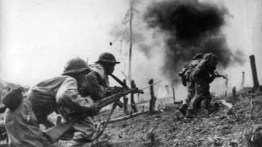
I once spent an evening, back in the mid-1980s, with William Colby, the legendary spy and director of the CIA. I was an undergraduate at the time, and the CIA’s Iran–Contra debacle was in the news. Lured by the agency’s mystique, I was eager to ask him about the fabled Phoenix programme he directed — a top secret initiative to target and eliminate Viet Cong who had infiltrated South Vietnamese villages, often conducted by Americans who had crossed over some invisible line, leaving behind them the normal life that comprised my world. To my disappointment, Colby demystified Phoenix. He was very proud of the programme, and while he never said so, I distinctly remember feeling convinced by him that the CIA should have run the whole war in Vietnam.

Perfect, gentle Knight

From our UK edition

I once asked Baroness Manningham-Buller, the former head of MI5, what she did to relax. Nailing me to the wall with her no-nonsense look, she said: ‘I keep sheep.’ A similar association with the animal kingdom resounds through Henry Hemming’s excellent new life of Maxwell Knight, the famous spymaster and possible archetype for Ian Fleming’s ‘M’. Knight’s family and friends observed that, at an early age, he had a particular way with animals that allowed him to bring them under his spell. As a young man he kept a menagerie in his small London flat consisting of a bulldog, a bear and a baboon.

Home from the hill

From our UK edition

As well as being a leading architectural historian Mary Miers is an editor at Country Life. For her latest book she has mined the magazine’s unmatchable picture library and the photographs are by Country Life regulars Simon Jauncey, who lives in Highland Perthshire, and the late Paul Barker, who sadly died before publication. His memory is duly saluted. Crucially the author is a Highlander by birth and domicile. Every week she commutes between London and her Black Isle home and she summers on South Uist. She knows the Highlands and Islands, or the Gàidhealtachd, from top to bottom: from Balmoral and the Highland balls of the Northern Meeting to crofters’ kitchens and island ceilidhs.

Moments of absurdity

From our UK edition

The bestselling humourist and New Yorker essayist David Sedaris is renowned for an almost hypnotic deadpan drollery and maybe especially for The Santaland Diaries, his uproarious account of earning part-time cash as a department store Christmas elf. Now he is bringing out an edited version of his personal diaries. It’s the first volume of two, taking us from his days as a broke student, stoner and young gay man in North Carolina and Chicago, through to the years of literary fame and success in New York and Paris as the new century dawns — a distinction worn lightly. Fans, semi-fans and non-fans (I am midway between the first two categories) may well crack open this book in search of David Sedaris’s private reality.

Cold comfort | 25 May 2017

From our UK edition

All animals, Scott Carney tells us, seek comfort. But human beings are a bit different. We don’t need to spend much time actively seeking it. He’s right: it’s all around us — in your nice warm house, your air-conditioned car, your shoes, your bed, the temperate shopping mall you visit. Here in the affluent west, we eat comfort food in comfortable chairs, and then we recline on cushions, tweaking our dimmer switches and thermostats and adjusting the brightness on our screens. Good for us, you might think. We can ‘control and fine-tune our environment so thoroughly that many of us can live in what amounts to a perpetual state of homeostasis’.

The ruin of a ruin

From our UK edition

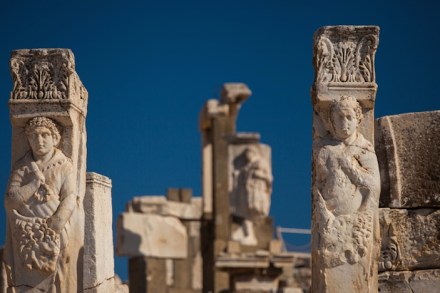
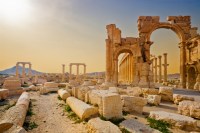
In the welter of Syrian bloodshed, why should we remember the death of a single man? Because he was the archaeologist Khaled al-Asaad, tortured and beheaded by Isis two years ago when they destroyed the remains of Palmyra, one of the world’s most important ancient cities. Their victim was its director of antiquities. In an icy fury, Paul Veyne, a French expert on Palmyra, has dedicated this comprehensive, passionate, but concise book to the memory of the murdered Syrian scholar. In it he relates thousands of years of Palmyra’s history, describing those who lived there and pausing only briefly to underline what monsters Isis were to smash the site.

Homer Simpson in a chasuble

From our UK edition

This is one of the most remarkable, hilarious, jaw-droppingly candid and affecting memoirs I have read for some time — not since, perhaps, Dave Eggers’s A Heartbreaking Work of Staggering Genius or Rupert Thomson’s This Party’s Got to Stop. Patricia Lockwood is a poet — dubbed ‘The Smutty-Metaphor Queen of Lawrence, Kansas’ — who, after unexpected and costly medical bills, was forced to move, with her husband, back to her parents’ home. Her mother is more than mildly neurotic, fretting over things like children jumping out of windows in imitation of Superman.

The fount of all knowledge

From our UK edition

Somewhere around the middle of the 17th century our modern concept of the museum began to take shape. Until then the cabinet of curiosities formed by a prince or a dilettante was on show solely to his friends or to scholars deemed worthy of having it unlocked. Nothing in the way of a systematic catalogue existed to help them navigate the gallimaufry of odd objects filling its shelves and cupboards. A Japanese netsuke button, an Arawak headdress and a handkerchief soaked in the blood of Charles I could be found nestling beside a stuffed alligator or a bezoar stone, calculus from an animal’s stomach held to possess magical curative powers.

Soaring and singing

From our UK edition

Whether it’s Coleridge’s nightingale or Petrarch’s, Ted Hughes’s wren or Shelley’s skylark, Helen Macdonald’s hawk or Max Porter’s crow, literature is measured out in warbles and wingbeats — metaphors that have long since broken free of their originals, birds made not of sinew and bone but ‘ink and sentiment’. Richard Smyth’s A Sweet, Wild Note brings these black and white creatures back into colour, gives them science and geography, acoustics and ecology as well as poetry, bringing all these disciplines to bear on one question: what do we really hear when we hear birds sing?

Paradise or prison?

From our UK edition

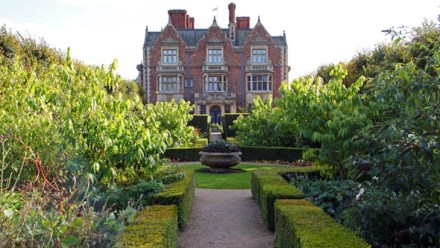
This daintily dress-conscious and rewardingly heavyweight novel is set mainly in a half imaginary stately home in Oxfordshire. The story begins in 1663, jumps forward to modern times and then back to 1665. On all occasions, our attention is less on the actual house, Wychwood, than on the power of nature, whatever’s left of the surrounding primeval forest, ornamental lakes-in-the-making, majestic vistas and, above all, the ‘monstrously expensive’ wall or ‘the great ring of stone’, built, or being built, around its park. Those featured include the original landscape designer Mr Norris, his silk-coated, high-heeled employer Lord Woldingham and later the silk-and-chiffon-clad Rossiters, who rule the roost in the 1960s.

Fallen idols

From our UK edition

David Hepworth is such a clever writer — not just clever in the things he writes, but in the way he has conducted his career. A decade older than me, he too started out at the New Musical Express; but he went on to take Smash Hits to glory as editor, to launch Just Seventeen, Empire, Mojo and Heat, and remains the only person to have won both the PPA’s writer of the year and editor of the year awards. His previous book, Never a Dull Moment: 1971, The Year that Rock Exploded, was a great critical and commercial success.

No ordinary judge

From our UK edition

Justice McCardie was anything but a conventional High Court judge. He left school at 15 and was called to the bar at 25. After ten years of provincial practice he turned down the offer from Joseph Chamberlain of a safe Conservative seat, although politics was then the conventional highway to the bench (unlike now when it is a cul de sac). He also rejected an offer of silk, after withdrawing an earlier application which he thought the lord chancellor had been too slow to consider, and was, on the initiative of H.H. Asquith, the then liberal prime minister, appointed to the bench at 47 — the youngest of his generation — and the first junior to receive such promotion for over a century.

Not-so-sweet 16

From our UK edition

I like novelists who don’t try to do everything in their novels, but just to do something well. This is what Francesca Segal achieves in The Awkward Age, published four years after her book, The Innocents, won the Costa First Novel Award. She takes six characters — widowed, middle-aged Julia, her teenage daughter Gwen, her grandparents-in-law Philip and Iris, her new American boyfriend James, and James’s teenage son Nathan — and plonks them in sturdy houses in Hampstead, sets the clock, and lets the story play out. Gwen and Nathan are now forced to share a dwelling. Like a good piece of Bach, what unfolds has an inevitability to it but manages also to be surprising at every moment.

Escapism for boys

From our UK edition

Jack Higgins’s writing routine was said to start with dinner at his favourite Italian restaurant in Jersey, followed by writing through the night until dawn, when he rounded off the working day with a glass of champagne and bacon and eggs. With his estimated lifetime sales of 250 million copies, his routine seemed to work. Len Deighton, on the other hand, takes a more austere view of his craft, arguing that the biggest dangers for a writer are alcohol and praise. He has a weakness for writers’ gadgets, though — in 1968, he leased an IBM Magnetic Tape Selectric Typewriter weighing 200lbs. The front window of his house had be to removed in order to deliver it. That’s true dedication.

Gold and dust

From our UK edition

Timbuktu. Can any other three syllables evoke such a thrill? For travellers, explorers and historians of Africa, the ancient desert city, one-time fabulously rich centre of the Saharan caravan trade and bookish haven for bibliophiles, is one of the great destinations — a place that manages to out-Mecca Mecca in its remote attraction. Leave aside the less romantic truth that the city’s a bit of a dump these days and don’t spoil the fun. The legend lives on. And that’s the point really. There are two Timbuktus, as Charlie English explains at the outset of this excellent book. There’s the real city, a scraggy outpost in northern Mali and, if we’re honest, something of a disappointment.