Book review

Ever decreasing circles

From our UK edition

‘The area’s isolation has given it a strong sense of community and independence,’ runs the Wikipedia entry on New Addington. The presence of the library, youth clubs, leisure centre, shops, churches and street market enables locals to lead full lives in many ways. The Addington Community Association has provided an important hub for the community. It has been notable for its local gangs. John Grindrod’s illuminating and enjoyable Outskirts is in part a memoir about growing up in New Addington, in part an intimate family history, and in part a history-cum-gazetteer of the green belt, along with a meditation on its uncertain future. My strong suspicion is that most Spectator readers, even if Londoners, barely know where New Addington is, let alone have been there.

Nazis and the dark arts

From our UK edition

When he came to power Hitler had a dowser scour the Reich Chancellery for cancerous ‘death rays’. Before flying to Scotland Rudolf Hess had his horoscope drawn up by a personal astrologer. Himmler backed research on the Holy Grail and medieval devil worship (‘Luciferism’) and sent an SS expedition by the explorer Dr Ernst Schafer to Tibet in 1938 to investigate the ancient Indo-German ‘Aryan’ origins of Buddhism. Himmler also founded the SS Witches Division, which collected evidence in eastern Europe in the second world war that Teutonic ‘wise women’ had been persecuted and burnt in a Jewish-Catholic Inquisition plot against volkisch German culture and blood.

Sisters in scandal

From our UK edition

In our age of elasticated leisurewear, ready meals and box sets on telly, it is exhilarating to read about people who would come down to dinner in peacock-feather head-dresses, swathed in large snakes and dripping ornamental chicken blood. The Marchesa Casati has a loyal cult following and her bizarre style still influences fashion designers; but by placing her alongside two sisters in scandal in this triple biography, Judith Mackrell has done something very clever and entertaining. The author, the Guardian’s dance critic, has already championed controversial women in her multiple biography Flappers and in Bloomsbury Ballerina, about Lydia Lopokova. Now she recounts the lives of three wildly ambitious yet vulnerable women with page-turning pace and intelligence.

In praise of neigh-sayers

From our UK edition

Wallace Stevens gave us ‘Thirteen Ways of Looking at a Blackbird’. The German scholar Ulrich Raulff, in this meaty book about the history of man’s partnership with horses, gives us many more than 13 ways of looking at a horse. Horses have had ‘more meanings than bones’, he writes. And those meanings have been central to the human experience since pre-history. Evidence from the abraded teeth of horse skeletons indicates that man first slipped a rope into a horse’s mouth as long ago as 3,700 BCE. Horses are what Raulff calls ‘converters’: they can unlock the energy in plants and make it available for man’s use.

Days of frantic strumming

From our UK edition

‘It was easy, it was cheap, go and do it,’ sang the Desperate Bicycles on their self-funded debut single in 1977, summing up the punk belief that you didn’t have to be the world’s best musician before getting up on stage or making a record. Twenty years earlier, a previous generation learned a similar message from the skiffle explosion, which put guitars in the hands of many future members of the key British rock groups of the Sixties. It therefore seems appropriate that a musician first inspired by seeing The Clash has eventually written a book about skiffle.

Gilded prostitution

From our UK edition

‘An English peer of very old title is desirous of marrying at once a very wealthy lady, her age and looks are immaterial…’ This desperate advertisement in the Daily Telegraph in 1901 was a barometer of the impoverishment of many British aristocrats following the Long Depression of 1873–80; dependent on agriculture, the landed gentry continued to reel from those seven consecutive failed harvests. Meanwhile, America’s prairies and railroads had never produced so much wheat, cattle, oil or wealth.

Mad matrons and horrid housemistresses

From our UK edition

It’s not often that books make me laugh aloud. Even books I’m officially finding funny often do no more than make me smile, or emit a sharp soundless puff of breath from the nostrils. But this book made me guffaw. Normally, only P. G. Wodehouse has that effect. It’s tragicomedy, really.

Rescuing an Irish gem

From our UK edition

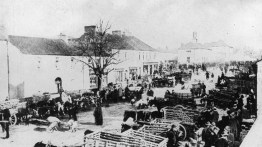
This large and splendid book is more in the nature of a grand illustrated guidebook than a historical monograph. Hundreds of photographs cover every aspect of Abbeyleix today, the magnificent Georgian house 60 miles south-west of Dublin — its contents, the garden and demesne, not to mention the owner’s family and friends. It makes a fascinating insight into the revival of the Irish country house in recent decades, as bankers, lawyers and entrepreneurs have taken on Irish estates and shaken them out of their 20th- century slumberous (or violent) decline. William Laffan has produced a well written overview of one of the more spectacular contemporary resurrections.

The bridge of size

From our UK edition

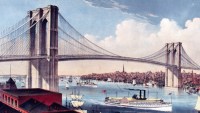
Before Brooklyn exceeded it in cool, Manhattanites spoke dismissively of BNTs. These were the Bridge ‘n’ Tunnel folk, the out-of-towners who needed civil engineering to help them reach social nirvana. The ambitious critic Norman Podhoretz, a master of self-invention, was one such. His notorious Making It (1967) begins: ‘One of the longest journeys in the world is... from Brooklyn to Manhattan.’ But since 1883 the journey over the East River has only been 5,989 feet, although physical distance was not the measure that pained Podhoretz. That’s the total length of Washington Roebling’s Brooklyn Bridge, the first connection between the outer boroughs and the elite ‘New York’.

A man with an agenda

From our UK edition

What’s this? An autobiography by Stuart Hall? Wasn’t he one of the guys who put the Eng. Lit. departments out to grass by arguing that it was senseless to talk about fictional characters as if they were real people when the truth was that real people were fictional constructs? Indeed he was; but don’t go thinking that just because Hall embarked, shortly before his death in 2014, on writing his life story, that he’d given up on the decentred subject. As he remarks early on in Familiar Stranger, despite our need to grasp our inner being, ‘we’ll never be ourselves’. It’s a nice line. It’s also a rare moment of clarity in a memoir that can be as cloudy and windy as a Turner sea study.

First signs of thaw

From our UK edition

The Twentieth Congress of the Communist Party in February 1956 passed off entirely without incident. Speeches on the next five-year plan were applauded and Stalin’s pet agronomist Lysenko made his customary appearance to denounce bourgeois genetics. A visiting communist from Trieste, Vittorio Vidali, noted his envy of two Uzbek party members who sat reading short stories throughout the proceedings. By late on Friday, the Congress was over, except for the announcement of one additional closed session the following morning. How many delegates skipped this dreary-sounding extra session? Any that did missed the single pivotal moment in the history of the Soviet Union.

Lessons and games

From our UK edition

‘Kokkinakis banged your girlfriend. Sorry to tell you that, mate,’ the Australian tennis player Nick Kyrgios remarked to his opponent Stan Wawrinka during a match in Montreal in 2015. He was referring to Thanasi Kokkinakis, who had partnered Wawrinka’s girlfriend in mixed doubles. After Kyrgios’s remark, Wawrinka’s game went to pieces, and he soon retired from the match with a ‘back problem’. Was Kyrgios’ gambit unethical? That is the sort of problem that occupies David Papineau in this mixed bag of essays. Papineau, a philosophy professor at universities in London and New York, is obsessive even by the standards of sports obsessives.

Pirates and puritans

From our UK edition

In The Growing Pains of Adrian Mole, Sue Townsend’s hapless teenage diarist, reeling from the news that Argentina has just occupied the Falkland Islands, fails to locate the archipelago on his world map. Eventually, his mother comes to the rescue and discovers it ‘hidden under a crumb of fruitcake’. If general awareness of the Falklands before 1982 was somewhat limited, as Townsend slyly implied, it pales into complete insignificance in comparison with the all-but-forgotten former British territory of Providence. This is a place I have to confess to never having heard of before picking up The Island that Disappeared. My ignorance is one thing and, according to Tom Feiling, common enough.

Immaculate conceptions

From our UK edition

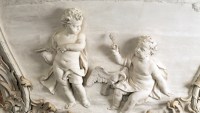
Some 30 summers ago we were staying at a famously beautiful villa outside Turin; our hostess was — indeed is — renowned for her superb taste and distilled perfection of every aspect of douceur de vivre. Each night we dined in a different sylvan setting — under inky trees, in flower-filled gardens and in 18th-century rococo salons, amid porcelain bouquets of those selfsame flowers. Another room, with candles lighting the chinoiserie panelling, is forever incised in my mind, not only for the decor but for the last course.

Towering tree of God

From our UK edition

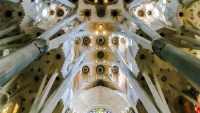
In his biography of Gaudí, published in 2001, Gijs van Hensbergen opined that ‘we should never try to finish the Sagrada Família, otherwise we undo the web of power that is elaborately woven into this mysterious religious spell’. But he now appears to take the view that it should, and will, be finished by 2026, the centenary of Gaudí’s death (though the sculpted decoration will take considerably longer to complete). If indeed this extraordinary building is ‘topped out’ in nine years’ time, it will have taken 144 years to build, which is a good deal less than many medieval cathedrals (Toledo’s took more than 250 years).

A cursed house

From our UK edition

Beyond the patricide and even the incest, the horror of the Oedipus myth lies in its insistence that our fates are not ours to change. And yet the story itself is far from unalterable, having been handed down in multiple variants — something that Natalie Haynes knows very well as a classics scholar. Now Haynes has written her own version of the tragedy, finding new space in the narrative by looking at it through the eyes of two characters neglected by antiquity: Oedipus’s mother/bride Jocasta and their youngest daughter Ismene. We meet Jocasta as a clever 15-year-old girl married off to old King Laius of Thebes, in what her grasping father declares ‘the best deal of [his] life’.

Brava Bella

From our UK edition

I like Bella Pollen for her open-mindedness, self-deprecation and verve. Given her early success as a fashion designer — top client Princess Diana — her memoir is extraordinarily modest. Now in her mid-fifties, she has also published five novels — one, Hunting Unicorns, a bestseller. Unusually, this had a dead narrator, and Meet Me in the In-Between also begins with an unearthly creature — a ‘demon’ sexual predator, who won’t leave our memoirist alone. It also deals with writer’s block.

Every horror imaginable

From our UK edition

The group of kidnapped women were terrified. They had been brought back to the camp as booty and were being urged to convert to Islam with machetes pressed to their necks. They did their best to gabble words that sounded like the prayers they were being taught before one fighter noticed a captive with a swollen belly. ‘I’m not pregnant,’ she insisted, spreading her hands over her belly in an instinctive reaction that only showed she was lying. The most senior of the armed men, who looked barely 20 years old, ordered her to lie down on the ground. ‘We don’t bring any Christian babies into the world here,’ he screamed.