Jonathan Keates

The fount of all knowledge

From our UK edition

Somewhere around the middle of the 17th century our modern concept of the museum began to take shape. Until then the cabinet of curiosities formed by a prince or a dilettante was on show solely to his friends or to scholars deemed worthy of having it unlocked. Nothing in the way of a systematic catalogue existed to help them navigate the gallimaufry of odd objects filling its shelves and cupboards. A Japanese netsuke button, an Arawak headdress and a handkerchief soaked in the blood of Charles I could be found nestling beside a stuffed alligator or a bezoar stone, calculus from an animal’s stomach held to possess magical curative powers.

How to survive the rain-sodden Welsh Marches

From our UK edition

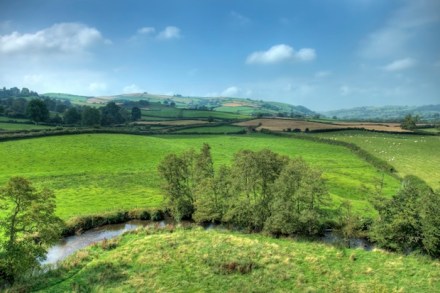
The Welsh Marches, gloriously unvisited amid their wooded hills and swift-flowing streams, have remained mysteriously off-limits to the sort of novelist eager for territorial rights to a particular landscape or locality. Apart from Bruce Chatwin’s On the Black Hill and Mary Webb’s torrid 1920s sagas of heartache and claustrophobia in field and farmhouse, fiction has mostly steered clear of Wye, Teme and Clun and their adjacent mountains. Along comes Laura Beatty, however, not to trouble this haunting remoteness but to use it, with subtle obliquity, as a grid for mapping the emotional lives of her twin heroines, women divided by nearly four centuries.

Music & Monarchy, by David Starkey – review

From our UK edition

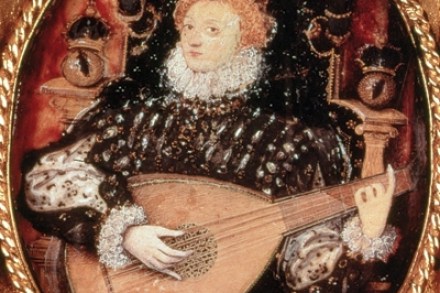
British royalty, considered from a purely mechanistic angle, cannot function adequately without music. Deprived of marching bands, trumpeters and choristers or even of those ever so well-mannered regimental ensembles which dispense selections from favourite musicals at an investiture or a garden party, the royal performance would lose much of its authenticity. Playing the king in this country has always depended on being able to do the whole shtick to the right tunes. If, from time to time, a genuinely gifted or truly inspired composer should become available, so much the better. Dash and panache for parties and parades, decorous gloom for funerals and the occasional wedding anthem or victory Te Deum sound more like the real thing when knocked off by a Purcell, a Handel or an Elgar.

A holy terror

From our UK edition

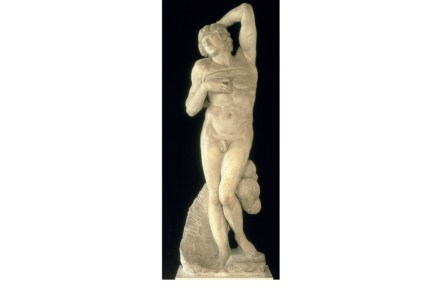
In the summer of 1520, Michelangelo Buonarotti wrote a letter of recommendation on behalf of his protégé, the painter Sebastiano del Piombo, to Cardinal Bibbiena, an influential figure at the court of Pope Leo X. The testimonial carried some weight, for Michelangelo was by now Italy’s most admired sculptor, with what are nowadays called ‘signature achievements’ such as the David, the Pietà and the Dying Slave to his credit. Seven years earlier, what is more, he had completed the magisterial decoration of the Sistine Chapel ceiling, among the most ambitious  projects in the history of painting, for Pope Julius II.

Wizard of the Baroque

From our UK edition

Not content with being the greatest sculptor of his age and one of its most gifted architects, Gian Lorenzo Bernini had some talent as a painter and draftsman. Surviving self-portraits reveal him as the possessor of a positively overstated physique du role. In its most youthful incarnation the face has an air of presumption and entitlement which adulthood will darken with a combativeness that is almost wolfish. Even in the chalk drawing made around his 80th birthday (now in the Royal Collection at Windsor) the glance, under bushy white eyebrows, still smoulders and the slightly parted lips seem poised to challenge or command.

Follow your star

From our UK edition

In these straitened times it looks as if a great many more hours of most people’s days will have to be spent waiting in queues. In these straitened times it looks as if a great many more hours of most people’s days will have to be spent waiting in queues. The perfect companion for such a penitential exercise is the Divine Comedy of Dante Alighieri. Should you be able to read Italian, get hold of the pocket version known as the Dante Minuscolo Hoepliano, originally issued in 1904 by the enterprising Milanese publisher Ulrico Hoepli, with excellent notes by Professor Raffaello Fornaciari of Florence University and now in its umpteenth printing.

Bach’s life examined

From our UK edition

Music all too easily disarms our critical faculties. Composers need protection from those grovelling adorers who refuse to distinguish good from bad in their idol’s oeuvre or even to acknowledge his occasional lapses into doodling and bombast. The fawning which began during Wagner’s lifetime for example, scarcely discouraged by the cult object himself, has since become a veritable psychosis, divorced from any worthwhile musical or aesthetic criteria. Schubert has likewise suffered from the dim religious light cast over his achievement by drooling worshippers, too ready to ignore the inconsistencies of his wayward talent or its periodic lapses into twaddling prolixity.

Not so serene

From our UK edition

Is there anything original left to say about Venice? Probably not, but that doesn’t stop the books from coming, tied in, as they mostly now are, with a television series. Is there anything original left to say about Venice? Probably not, but that doesn’t stop the books from coming, tied in, as they mostly now are, with a television series. In this context I dream of programme-makers courageous enough to eschew tacky carnival masks or mood-shots of gondola beaks reflected in muddy ripples, with Vivaldi mandolins wittering cosily over the soundtrack, but it aint gonna happen, alas. How about the areas of La Bella Dominante most visitors are too rushed or incurious to explore?

Darwin — from worms to collops

From our UK edition

By all accounts a modest and retiring example of his species, Charles Darwin would surely have been more astonished than flattered by the honours done him during this year’s bicentennial celebrations. By all accounts a modest and retiring example of his species, Charles Darwin would surely have been more astonished than flattered by the honours done him during this year’s bicentennial celebrations. An avalanche of major exhibitions, international conferences, TV and radio series — everything, indeed, short of a movie starring Brad and Angelina — is accompanied by a perfect tsunami of books made saleable by association with the bald, bearded sage of Down House.

Living the legend

From our UK edition

My Judy Garland Life, by Susie Boyt The story of Judy Garland is a magnificent example of the truth that life imitates art. Things would surely have been different had she stuck to being Frances Ethel Gumm of Grand Rapids, Minnesota. As it was, the trajectory of her life under the stage name she assumed at the age of 12, as part of a travelling vaudeville act, had a blighted glamour more appropriate to verismo opera than to the cinema screen. Complete with an abusive father and drunken mother, five marriages, abortion and attempted suicide, the entire scenario transcended the wildest aspirations of melodrama. The irony of a drug overdose carrying off The Wizard of Oz’s cute little Dorothy, mascot of can-do America, offered a final ghastly flourish to the story.

Grandmother’s footsteps

From our UK edition

The Island that Dared, by Dervla Murphy Up the airy mountain, down the rushy glen, where the deuce can we go without Dervla Murphy getting there before us? This miracle of ubiquity has rattled from end to end of the Andes, tracked the Indus to its source, ridden a mule through Ethiopia and a bicycle across Romania. If her curiosity, stamina and resourcefulness are remarkable, so too is her modesty, a virtue not always uppermost among travel-writers. She demands no special praise from us for having endured the rigours of her various journeys and this lack of ego-preening lends a greater authenticity to the overall atmosphere.

A hostage to fortune

From our UK edition

Mugging, according to a popular theory, is a consensual act. Split seconds before the assault takes place victims supposedly establish some sort of complicity with their attackers, thus turning the robbery into a contractual arrangement. The same principle is just as easily applied to political assassination. Along the lines traced by Hardy’s famous poem ‘The Convergence of the Twain’, which suggests that the Titanic and the iceberg had actually been waiting to bump into each other, the hated tyrant seeks some kind of consummation in the thrust of a dagger or the discharge of a bullet.

Cities of the coast

From our UK edition

In the days when English counties were untouched by the dead hand of central government rationalisation, odd little chunks of them used to fetch up in neighbouring shires, appearing as little green or brown blobs, defiantly labelled ‘part of Leicestershire’ or ‘part of Somerset’. The Mediterranean sometimes seems like a larger version of this topographical oddity. Officially it is part of the Atlantic, an awkward remnant of what was formerly a vast marine depression stretching far into central Asia. But who beside its shores has felt depressed for very long? The Atlantic is where we go for granite and fog, grey waves and annihilating icebergs, to be overwhelmed by ‘l’immense démence de la mer’, as Victor Hugo called it.

Spartans did it wearing cloaks

From our UK edition

However loaded or coded, ‘Greek love’ is one of our more misleading cultural terms of convenience. It refers to an aspect of classical civilisation whose existence many people continue to find either embarrassing or reprehensible. Even now Hollywood chooses to present Achilles and Patroclus as best buddies US-Army style rather than as lovers unabashedly showing what Aeschylus, in a lost play about them both, calls ‘reverence for awesome thighs’ and is careful to excise all but the most oblique homosexual nuances from a screen portrayal of Alexander the Great.

The bad boy comes of age

From our UK edition

As the biopic comes back into fashion — think Kinsey, think A Beautiful Mind — somebody might consider the life of Roman Polanski as perfect big-screen material. Its component elements are the stuff of box-office dreams. Holocaust survival, dodgy sex, motiveless murder, a liberal sprinkling of celebrity, plenty of photogenic locations — the Oscar-winning script is in the bag. Its star, as Christopher Sandford’s biography suggests, boasts unfathomable reserves of chutzpah, and his recent epiphany at the Venice Film Festival was a reminder of how much life the old dog still has left in him. Polanski’s resilience was tested early, with the dispatch of his Jewish parents to Auschwitz and Mauthausen.

The undiscovered county

From our UK edition

Worcestershire is England’s most undervalued county. Sauce, Elgar and cricket, not necessarily in that order, are what most people associate with the name. Otherwise it is that place we cross on our way to Herefordshire, its far smarter western neighbour, or the territory glimpsed on either side of the M5 as we whiz northwards to Birmingham, whose sprawl has chewed up a sizeable part of the ancient shire. Among those small towns which ‘heritage’ enthusiasts like to claim as a distinctive English speciality, Pershore, Upton and Bewdley must be among the most spectacularly unvisited.

Into the Norwegian wood

From our UK edition

Here is a remarkable novel, one which appears to be about nothing in particular, featuring barely half a dozen characters, several of whom have no names. Hardly anything happens. A boy dies, a man gets shot, another boy is given a new suit, and that, more or less, is that. There is a good deal of description, though of the plainest kind, several emotions are registered after an understated fashion, but the author makes no attempt at centring these elements on a complicated plot. Having reached the middle of the book in the perfectly comprehensible expectation that Something Really Important will take place if only we hang on long enough, we are scarcely surprised when after all it doesn’t.

A golden age for ghouls

From our UK edition

The 17th century was the heyday of the English ghost. Up and down the kingdom during those ‘distracted times’ of the Gunpowder Plot, Civil War and Commonwealth, spectres, revenants and phantoms were at their most restless and fretful. Church bells rang without human agency, invisible armies clattered to and fro in the darkness, drummers sounded a ghoulish tattoo through midnight bedchambers, a whole menagerie of ectoplasmic beasts terrified kitchenmaids or sent children into hysterics.

How at last we got it together

From our UK edition

Stand in the Corinthian portico of the National Gallery’s main building and look due south beyond Nelson’s Column into Whitehall. Your gaze lights upon Hubert Le Sueur’s Baroque equestrian statue of King Charles I, and if your eyesight is especially keen, you might just glimpse a projecting corner of Inigo Jones’s Banqueting Hall. In this trio of eye-catchers lies the fons et origo of our national collection, at least according to Jonathan Conlin in the opening pages of The Nation’s Mantelpiece. For scarcely had Charles stepped out from the Banqueting Hall for his beheading in 1649 than his stupendous assemblage of pictures, with its Raphaels, Titians and Mantegnas, was broken up and sold.

One of those who simply are

From our UK edition

‘I don’t want to act with you ever again,’ Katharine Hepburn told John Barrymore after appearing with him in A Bill of Divorcement. ‘I didn’t know you had,’ came the smart rejoinder. Hollywood stars divide into those who do and those who are. The divine Kate, with her sawn-off cheekbones, narrow eyes and weird Yankee version of a Southern drawl — ‘Yow owuld foowul!’ she shouts at Henry Fonda in On Golden Pond — belongs firmly in the latter category. None of her performances, not even in The African Queen or Guess Who’s Coming to Dinner, involves overmuch histrionic ingenuity. The woman on the screen is all the more entertaining for doing her usual shtik as the feisty, crap-cutting amazon staking her claim on male territory.