Alexandra Coghlan

Robin Holloway lambasts some of our most beloved composers

From our UK edition

Irreverent, outspoken and unfailingly opinionated, with knowledge as broad as his vocabulary, Robin Holloway is exactly the person you’d want to sit next to at a concert. The warmest of interval chardonnays would spontaneously chill and fizz at his exhilarating put-downs; the music would be brighter, clearer and more compelling for his idiosyncratic analysis. But travel companions are a different breed. Would you set out on an odyssey through the history of western music with him as your sole guide and companion? Holloway is a fixture of British classical music – as a significant composer, teacher of other yet more significant composers and, since 1975, one of the longest standing members of Cambridge University Music Faculty.

Cello explains how music helped escape a certain death at Auschwitz

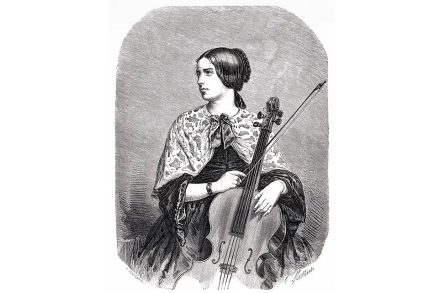
Bees and mammoth bones, a shipwreck, horse urine (preferably female), a seventeenth-century craftsman and a twentieth-century genocide. Playing an extended narrative game of Only Connect in her latest book, the musicologist Kate Kennedy takes a bird’s-eye view of four lives and five centuries as she turns her own instrument, the cello, into a prism. Part history, biography and auto-biography, with digressions into anthropology, acoustics and aesthetics and an intriguing cast of characters, Cello sings richly. But you have to be willing to lgo on the journey. Has publishing reached peak personality-stakes?

cello

Saved from certain death at Auschwitz – by playing the cello

From our UK edition

Bees and mammoth bones, a shipwreck, horse urine (preferably female), a 17th-century craftsman and a 20th-century genocide. Playing an extended narrative game of Only Connect in her latest book, the musicologist Kate Kennedy takes a bird’s-eye view of four lives and five centuries as she turns her own instrument, the cello, into a prism. Part history, biography and auto-biography, with digressions into anthropology, acoustics and aesthetics and an intriguing cast of characters, Cello sings richly. But you have to be willing to go on the journey. Has publishing reached peak personality-stakes?

Pure Puccini: an opera lover’s melodramatic family history

From our UK edition

‘If a horse is born in a stable, does it bark like a dog?’ By the time the Duke of Wellington’s famous question (‘If a man is born in a stable, does that make him a horse?’) made its way down to the young Michael Volpe, growing up in a fractured Italian family on the ‘streets and railway tracks... estates and football terraces’ of 1970s west London, it was mangled almost beyond recognition, bent and twisted into a surreal new shape. But the spirit of Wellington’s question remained, burrowing into a boy with one foot in the stable and one beyond, his very name a contradiction of identity: the blandly Anglicised, Sunday-best ‘Michael’ at odds with the sly, sinuously Italian ‘Volpe’ – fox.

Harping on the music of our ancestors

From our UK edition

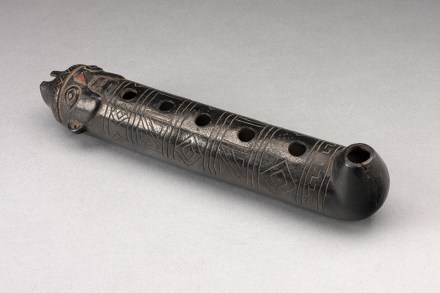
It’s one thing to sit in a comfortable armchair and see the world in a grain of sand. It’s quite another to hear it in a muddy shard of bone, a spool of wire or even an oddly shaped hole in the ground; to go searching for its voice on the sea bed, deep in the ice, beneath deserts, woods and cities. Music archaeology, Graeme Lawson wryly explains, is often the study of ‘small and largely unexceptional fragments’: objects ‘we might easily have kicked out of the way’. And yet the magic, he demonstrates, is all the greater when these fragments begin to connect, slowly coalescing into sounds and stories extending back some four million years, beyond the beginning of civilisation itself.

The popularity of ‘Amazing Grace’ owes much to its melody

From our UK edition

Type ‘Amazing Grace’ into YouTube and you can cancel any other plans you might have had for the day. Page after page serves up everything from Elvis Presley to Pavarotti, Gospel choirs and winsome Celtic lovelies, folkies in fabulous knitwear and X Factor finalists strenuously proclaiming their surgically enhanced faith; even an American president. There are arrangements for electric guitar, steelpan orchestra, bagpipes or (God help us) beginner flute ensemble. Saved from the storm, Newton was aware of ‘a sense of the amazing grace that snatched me from ruin’ All of which suggests that James Walvin’s Amazing Grace is a book landing in fertile soil.

Travels in Italy with the teenage Mozart

From our UK edition

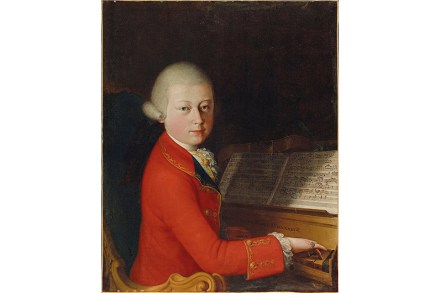
Between the ages of 13 and 17, Mozart made three trips to Italy, spending some two-and- a-half years in ‘the country at the heart of the opera world’. He would never return as an adult. His mature Italian operas – The Marriage of Figaro, Don Giovanni, Così fan tutte, La Clemenza di Tito – can be traced directly back to these formative teenage encounters and experiences in Bologna, Venice, Rome, Florence and Naples. So argues Jane Glover in Mozart in Italy. A follow-up to 2005’s Mozart’s Women, the book is a lively account of journeys which the composer shared (mostly) with his father Leopold.

The relationship between self and singer

From our UK edition

The professional performer is the tree in the philosopher’s human forest. If there’s no opportunity to sing or act or dance in front of an audience, are they still a performer at all? In the spring of 2020, when most of his colleagues shrugged and started making banana bread, the tenor Ian Bostridge took an altogether more existential approach to isolation, writing a series of lectures for the University of Chicago exploring the relationship between self and singer, silence and song. Now they form the basis of his latest book. Song & Self is a slim volume. Early on, Bostridge invokes the essay’s origins in Montaigne – the idea of essayer (to try), the form as a space for experimentation and exploration, for provisional attempts rather than finished thoughts or arguments.

Why are women composers still disregarded?

From our UK edition

Did you know that throughout the 19th century and well into the 20th it was considered a ‘biological impossibility’ for women to sustain the kind of abstract thought required for serious musical composition? Or that in the 1910s women in London could be compelled to sit separately from men in concert halls, sometimes even denied entry if not in academic dress? How about the fact that the Halle Orchestra summarily dismissed all its female members in 1920? Or that from 1952 to 1962 only eight works by women were performed at the Proms? For a bonus point, can you name the year – the decade, the century, even – in which the first opera by a woman was staged at the Vienna State Opera? (The answer is 2019.

From precocious child to polymath – Stephen Hough’s life is full of singularity

From our UK edition

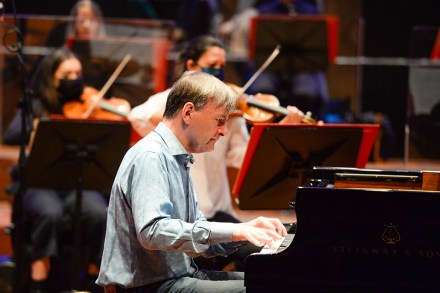
At what point did the ponderous autobiography get edged out by the slinky elliptical memoir? Perhaps around the stage we all realised that, as Stephen Hough puts it, ‘a complete autobiography is usually boring or indecent. It’s the person at the dinner table who just won’t stop talking’. There’s certainly no holding forth (though perhaps just a little indecency) here.

Musings on harmony, melody and rhythm

From our UK edition

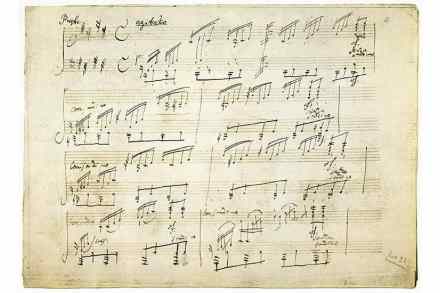
Every Good Boy Does Fine – a banal phrase that also just happens to be the key to limitless wonder. You may have learned it, like Tom Stoppard, as Every Good Boy Deserves Favour, or perhaps as the rather more tension-fraught Every Good Boy Deserves Food (whose sinister implication haunted more of my childhood than I ever confessed to my parents). Whichever it is, this mnemonic for the notes that fall on the lines of the stave in the treble clef is where music begins for most of us: the key that turns hieroglyphs into sound and, eventually, meaning. So it was for Jeremy Denk.

The history of music – at breakneck speed

From our UK edition

From Ladybird’s The Story of Music (a dinky 50 pages, generously illustrated) to Richard Taruskin’s five-volume epic The Oxford History of Western Music, the history of classical music has been sliced and stretched in print to fit every possible length, format and agenda. Andrew Gant’s Five Straight Lines joins the cluster of works jostling and elbowing at the midpoint of these extremes. The Oxford-based academic (whose previous books on carols and hymns have introduced us to a genial, approachable narrator, with a welcome glint in his eye), shouts no provocative argument or USP from his cover, makes no novel claims for his survey. This is, quite simply, a narrative of music from the beginning to the now.

Bach’s Cello Suites represent a spiritual meditation — from the Nativity to the Resurrection

From our UK edition

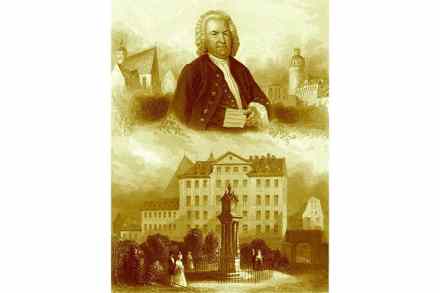
‘One player on four strings, with a bow.’ That’s what Bach’s six Cello Suites boil down to, says Steven Isserlis. It sounds simple enough, until you add more than 100 editions and 200 recordings into the equation, not to mention countless books, chapters and articles all wrestling with a work Isserlis calls ‘a Bible’ for cellists. And this tussle isn’t just a lofty question of meaning or interpretation either: we’re still arguing about the actual notes. Suddenly the numbers no longer add up. The cellist Isserlis released his award-winning account of the Cello Suites in 2007.

The finest Falstaff you’ll see this summer

From our UK edition

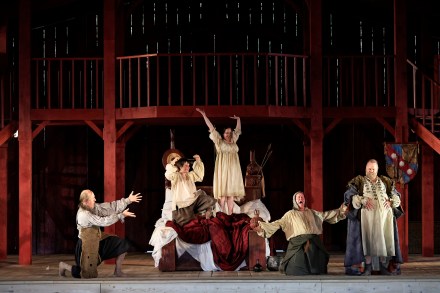
Comedy’s a funny thing. No, seriously, the business of making people laugh is as fragile, as mercurial as cryptocurrency — a constellation of shifting risk factors, many beyond control, any of which can kill a joke deader than Dogecoin. Opera is already at a disadvantage. Timing — comedy’s accelerant of choice — is predetermined, dictated by the demands of unwieldy choruses and slow-moving sets, pinned down to the second by a score whose creator may be anything but a natural comedian. Just ask Verdi, whose early farce Un Giorno di Regno was such a comprehensive flop that he gave up the genre altogether for almost an entire career. But at 75, all but retired after a sequence of bloody tragedies, the composer returned for one last shot at comic victory.

You’ll shrug where you should marvel: Garsington’s Amadigi reviewed

From our UK edition

When you think of Handel’s Amadigi (in so far as anyone thinks about the composer’s rarely staged, also-ran London score at all) it’s as a magic-opera. Sorcerers and sorceresses do battle in a fantasy land not found on any map. The stage directions alone are enough to stir the commercial loins of any 18th-century impresario. Enchanted palaces are ‘split asunder’, caves transformed into ‘beautiful palaces’, monsters ‘ascend from the bowels of the Earth’ and a chariot ‘descends covered in clouds’.

Josquin changed musical history – why don’t we hear more of him?

From our UK edition

Stepping into the Sistine Chapel, the choir loft is probably the last thing you’d notice. ‘Loft’ is, frankly, a stretch for what amounts to a small alcove with a wooden bench, carved out of the chapel’s wall. But if you made your way up there and ran your hand over the stone you’d feel something unexpected. Etched into the wall in haphazard graffiti are hundreds of names. In most cases the carvings are all that remain of centuries of singers from the papal choir. But one is different: ‘JOSQUINJ’. Chances are it’s the only surviving signature of Josquin des Prez — a composer whose name and legacy are carved just as deeply into the history of music itself. This August marks the 500th anniversary of Josquin’s death.

Where to start with the music of Ethel Smyth

From our UK edition

I’m reminded of an old Irish joke. A tourist approaches a local for directions to Dublin. The local, after much teeth-sucking and head-scratching, eventually replies: ‘Well, I wouldn’t start from here…’. The news that, 75 years after her death, English composer Ethel Smyth has won a Grammy Award for her last large-scale work The Prison is as excellent as it is unexpected. But it’s also frustrating because, well, if I were setting out into Smyth for the first time, I really wouldn’t start from there.

Astonishing, relentlessly pleasurable rediscovery – tantric opera: Luigi Rossi’s Il Palazzo incantato reviewed

From our UK edition

I don’t say this lightly, but after 20 years of opera-going, Luigi Rossi’s Il Palazzo incantato might just be the most baffling opera I’ve ever seen. And I’ve seen Stockhausen’s Licht. It starts with 27 named roles and originally featured no fewer than ten castrati among its cross-dressing, all-male cast. This operatic game of Twister was premièred in Rome in 1642, where it originally played out over seven scintillating hours and nearly 3,000 verses of poetry written, incidentally, by the man who would go on to become Pope Clement IX.

From ancient Greece to TikTok: a short history of the sea shanty

From our UK edition

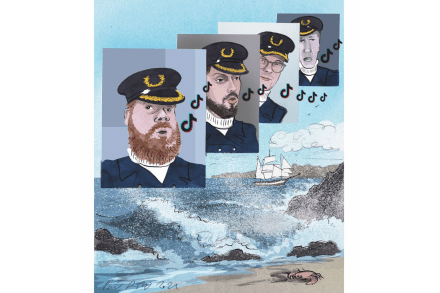
Many things are now normal that would have seemed unlikely a year ago. But even in this strange new world the sudden rise of the sea shanty is, perhaps, strangest of all. It all started in December when Nathan Evans, a postman from North Lanarkshire, posted a video of himself online — a lone figure filmed in no-frills close-up, hoodie high under the chin, beanie pulled down to the eyes — singing the 19th-century whaling song ‘Wellerman’. A trickle of views became a storm, thousands turning to millions (now billions) and just like that sea shanties went from kitsch, Last Night of the Proms novelty to global phenomenon. The song went viral — the centre of a new internet craze: #ShantyTok. Fast forward a few months and Evans, whose song went to No.

Another cracking take on the opera film: Marquee TV’s Turn of the Screw reviewed

From our UK edition

I’m still waiting for the Royal Opera to step up. Nearly a year into the Covid crisis and what do they have to show for it? One stonking concert staging of Ariodante, a couple of gala-ish performances and some operatic scraps. Where’s the creativity? Where’s digital ingenuity, the willingness to experiment, reinvent, adapt? Where, frankly, is opera? When companies with a far greater reliance on box office than the heavily subsidised Royal Opera can do their bit — look at Grange Park’s tireless stream of content, ENO and Scottish Opera’s various car-park Bohèmes, English Touring Opera’s monodramas and song cycles, Glyndebourne’s Offenbach-in-the-garden — it’s hard not to feel frustrated.