John Gimlette

The world’s best wrecks and ruins

From our UK edition

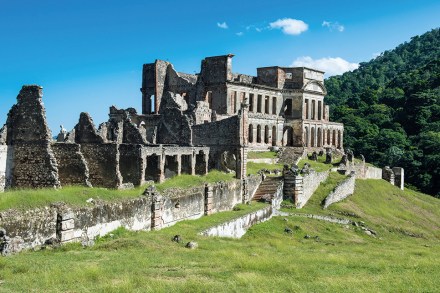
Ruins, shipwrecks and lost cities are endlessly intriguing. I once went to Kolmanskop in Namibia and found myself wondering quite what it was that was so alluring. At one level it’s just a rather dowdy German town out in the desert, abandoned in 1956. But what’s special there is the sand and the way it has sifted through halls and kitchens and up the stairs. It’s as if a little bit of our history had somehow ground to halt and got left behind. Fordlandia, built in the heart of Amazonia in 1928, is now quietly crumbling away as the forest returns The travel writer Oliver Smith has a neat phrase for these places: ‘enclaves of the past’. In his Atlas of Abandoned Places, he offers us 50 wrecks and ruins, all exquisitely photographed and mapped.
It’s time to stop sneering at metal detectorists

From our UK edition

As a teenager growing up in Cheshire I had a metal detector. Although I was slightly ashamed of it, I found all sorts of intriguing things: shrapnel, a French coin, a Khartoum Racing Club key ring, an adze and a silver brooch in the shape of a lobster. All went well until I found a second world war bomb in Tatton Park. They had to call out the army, and I got a Grade A bollocking. People hated metal detectors. Since then I haven’t given them much thought; but Nigel Richardson has. An acclaimed travel writer, he was grounded by the Covid pandemic and, like many of us, began to reflect on the course life had taken. It worried him that he was rootless: the northern kid who went to boarding school in Sussex, the ‘citizen of nowhere’, without tribe or peers.

Do we still need explorers today?

From our UK edition

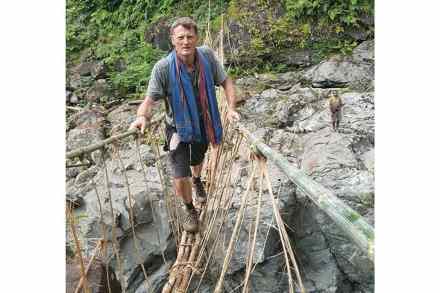
In November 2017 Benedict Allen found himself at the centre of a media frenzy. He’d been in Papua New Guinea (PNG) on a one-man expedition and hadn’t been heard of for weeks. Declaring him ‘lost’, several papers turned on him, accusing him of being overprivileged and imperialistic. One even suggested the whole thing was a stunt. It didn’t help that he was picked up by a helicopter, sent by the Daily Mail. This was a story the paper’s rivals wanted to spoil. Explorer is Allen’s account of that journey and how it all began. It’s no excuse or apology, but is written with anger and passion. The story begins in adolescence, with a boy who was idealistic, stubborn and determined to travel the world alone and in his own way.

A tomb with a view

From our UK edition

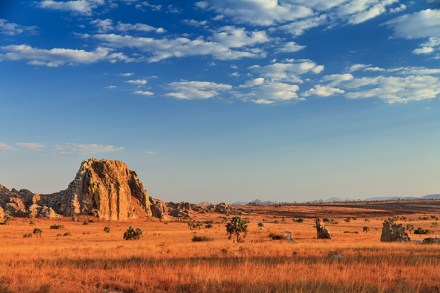
Death is not the end but the beginning of a long, hard climb. At least that’s what the Bara people believe. No sooner have your bones been scraped clean than you’re off, into the Isalo Massif. Fortified with rum, your relatives will shin up the cliffs to find the perfect niche, at heights of up to 4,000ft. The greater you were, the higher they’ll climb. Occasionally they’ll fall, and there will be more rum, more climbing and more coffins. But eventually, you’ll be properly dead, enjoying eternity from the top of the world. For outsiders, it’s a tricky business, getting to Isalo. For a start, Madagascar is stupendously big and empty. It has a road network no greater than Jamaica’s and yet it’s 53 times the size.

The city of ugly love

From our UK edition

Cuba’s gorgeous, crumbling capital has always been a testing ground for writers. That heady combination of revolution, cocktails, sex and unpainted mansions seems somehow to set literary pulses racing. Trollope, Hemingway and Graham Greene all described it with verve, but there’s also plenty of dross. The city certainly charmed me, and, a few years ago, I thought I’d add to the pulp with my own contribution. I started courting London’s Cubans, and even had the ambassador to lunch. But despite some intriguing gossip (e.g. that Che Guevara was no fun at parties, and utterly deadpan), I abandoned the whole idea. It seemed to me that Havana was about to change forever, and that whatever I wrote would be old hat before the ink was dry.

New York: Dives of the artists

From our UK edition

Fernand Léger’s old studio now has squatters living on the doorstep. They’re an unusual sight in the new New York, especially around Bowery. These ones, at no. 222, are African and live in a huge cardboard box decorated with industrial plastic. As a pioneering modernist, Léger would have appreciated their geometry — and poverty. He’d have been less sure about the building opposite: the New Museum of Contemporary Art. It’s covered in silvery mesh, and looks like a giant speaker with a fishing boat dangling off the top. How, he might wonder, had art become so extravagant and obscure? Poor Léger, he needn’t worry.

Bad news from paradise

From our UK edition

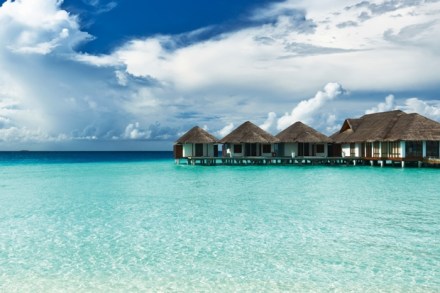
Suddenly, the Maldivians are in the news. Earlier this year, they locked up their first democratically elected president, and just recently they declared a state of emergency. It never used to be like this. The Maldives was just a place you saw in brochures, looking expensively turquoise. It has a population no bigger than Barnet (350,000), and 99 per cent of the country is covered in water. Until recently, even its neighbour, Sri Lanka, hardly seemed to notice it. During my time in Colombo, visiting Maldivians were merely a source of idle curiosity. They flew into town either to pick up a secular education or to get roaring drunk. It did make you wonder what went on at home. Well, now J.J. Robinson has some of the answers.

Sugar and spies

From our UK edition

These days, there are few countries as obscure and exotic as Suriname. Perched on the north-east coast of South America, it has the same population as Cornwall but is over 40 times the size. Ninety per cent of it is covered in jungle, and new species are always tumbling out of its darkness (mostly bugs and purple frogs). The current president, Desi Bouterse, is a convicted cocaine smuggler, and during his term in office he has stood trial for multiple murders. Meanwhile, in the country’s pretty little capital, Paramaribo, they speak 20 languages and maintain 15 Marxist parties, all saying something different. During my time there, a caiman would often creep out of the park at night and eat the city’s dogs. Even stranger, all of this began with an English colony.

New York: Literary ghost tour

From our UK edition

Deep below West 52nd Street is a massive stash of booze. The cops never found it during Prohibition, and it belongs to the 21 Club. Famous for its sumptuously New Yorky dishes (like filet mignon with kumquat vinaigrette), 21 is a real boys’ den. Dark and plush, the subterranean rooms are festooned with intriguing junk: footballs, helmets, a model torpedo boat given by JFK, and a smashed racket from McEnroe. There are even 25 paintings by Remington, left by debtors during the depression. But oddly it isn’t a club at all. Anyone can go there, provided they’ve got a fat wallet and hollow legs. You just need to book (www.21club.com; 212 582 7200), otherwise you’ll be slugging it out with a banker. ‘How did you hide the booze?’ I asked.

How many positions are there in the Kamasutra?

From our UK edition

Numbers, as every mathematician knows, do odd things. But they’re never odder than in the human context. Ever since we crept out of the swamps, we’ve been making numbers lucky, fearsome, ominous and even sacred. Across the cultures, we’re nuts about numbers, with little thought for logic. Take 23, for example. In 1960, William Burroughs met a sea captain who, after exactly 23 years at sea, was lost with all hands. The same day, Flight 23 was reported lost in Florida. After that, Burroughs became obsessed by the portentousness of 23, and others followed. At last, 23 was exposed; it’s the psalm of choice at funerals; in ancient Chinese tradition, it meant ‘breaking apart’. There were plenty of other ominous 23s.

Gaza stripped bare

From our UK edition

Imagine a piece of land: sandy, roughly rectangular, and about the size of the Isle of Wight. It is surrounded on three sides by desert and hostile neighbours, and on the fourth by the sea. Although almost 1.7 million live in this space, nothing except essentials is allowed in or out. It’s under blockade. By sea, even its fishing boats are sprayed with sewage or gunfire and, around its land border, there’s a ‘free-fire zone’ a kilometre wide. Meanwhile, its buildings have been so enthusiastically shelled that, sometimes, whole ceilings just suddenly give way. Although this dystopia isn’t part of anywhere else, it’s not — officially — a country either. Even its name sounds utterly ravaged. This is the Gaza Strip.

Little house on the pampas

From our UK edition

It’s hard to tell Argentina’s story without moments of despair. Even those who are fond of this country — like me — can struggle to identify the bright spots in its history. It’s been a tale of genocide, shrinking borders, pointless wars, hyper-inflation and vicious dictators. Even the end of the second world war brought little joy, given that Argentines had spent much of it egging on the Nazis. Part of the problem has been one of grandiose expectations. A century ago, Argentina believed itself on the brink of greatness, its fortune built on meat. Immigrants arrived in their millions, and a few — like Aristotle Onassis — became unhealthily rich.

Pink pigs in Paraguay – Shiva Naipaul Prize, 1997

From our UK edition

John Gimlette, the award-winning travel writer and author of four books, was the winner of the Spectator/ Shiva Naipaul Memorial Prize for travel writing in 1997. The judges of that year, which included Sebastian Faulks, were unanimous in their choice. To learn more about the Shiva Naipaul Memorial Prize, and how you can enter, click here. To read John Gimlette's recent blog on what winning the prize meant to him, click here.   Pink pigs in Paraguay John Gimlette ALL THAT summer Asuncion had been gripped by a good murder. The body of a 14-year-old boy, horribly mutilated by a blow-torch, had been discovered in a wealthy suburb.

The most important taxi ride I’ve taken

From our UK edition

The Shiva Naipaul Memorial Prize, which The Spectator has just relaunched, is awarded for travel writing that gives 'the most acute and profound observation of a culture alien to the writer'. Here, its 1997 winner John Gimlette, whose most recent book has been shortlisted for the Dolman Prize, tells us what winning the award meant to him.  To find out how you can enter the Shiva Naipaul competition, whose other previous winners include Hilary Mantel and Miranda France, click here. To read John's winning entry from 1997, click here.    The most important taxi I've taken John Gimlette I’m utterly delighted that the Shiva Naipaul Prize is back up and running.  It’s completely changed my life, and I hope it will do the same for others.

A corner of every English field, forever foreign

From our UK edition

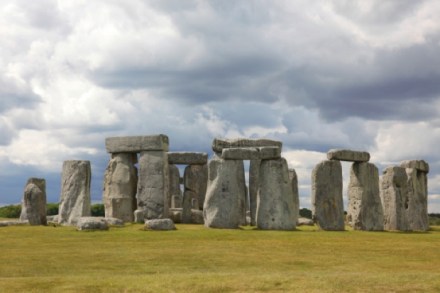
The story of the English countryside is richly exotic. We’ve always known that foreigners have shaped this land: traders, settlers and, most importantly, invaders. But scratch the surface, and the detail is remarkable. Who’d have guessed that the so-called ‘Amesbury Archer’ (a 4,000-year-old corpse, found near Stonehenge) actually started life in the Alps? Or that Neolithic England was a hub of European trade? What’s more, archaeologists now think that our landscape was formed not by the Romans (as previously thought) but during the Bronze Age.Back then, a huge, mysterious and varied population had deforested the countryside, tamed it, tilled it and made themselves rich. All the Romans did was make it theirs.

The mark of cane

From our UK edition

Sugar transformed our world. From its origins in New Guinea, this tall sappy grass initially made slow progress around the globe. It reached India in 500 BC, and then travelled harmlessly to Persia, arriving 1,000 years later. But, in the early 15th century, it reached Europe, and suddenly everything changed. Sugar would become the catalyst for the greatest and most rapacious expansion that humankind has ever seen. Europeans couldn’t get enough of it, and were soon rearranging the world. No longer was foreign adventure a matter of pilfering and persecution; by the early 1600s, the newly emerging seapowers were competing for land.

The world according to ants

From our UK edition

The South American rain forest is the perfect environment for a dank, uncomfortable thriller. It’s brutally competitive; life is thrillingly vulnerable; you can’t safely touch or taste anything, and, beyond a few yards, you can see nothing at all. Even Amerindians are anxious in this environment, and credit it with all manner of horrors. In my own experience, it is, in every sense, a spine-tingling environment. So novelist Edward Docx has chosen well in the setting for his dark tale. It’s not a complex plot but there’s the constant feeling that you’re not seeing the whole picture, and that nothing is quite as it seems. Docx is a master of disquiet, and brilliantly captures the bewildering effect of the forest.