Michael Beloff

Kate Andrews, Adam Frank, David Hempleman-Adams, Svitlana Morenets and Michael Beloff

From our UK edition

40 min listen

On this week’s Spectator Out Loud: Kate Andrews argues vice-presidential nominee J.D. Vance is more MAGA than Trump (1:27); Adam Frank explains how super-earths could help us understand what life might look like on another planet (5:15); David Hempleman-Adams recounts his attempt to cross the Atlantic on a hydrogen ballon (14:31); from Ukraine, Svitlana Morenets reports on the battle to save Kharkiv (20:44); and, Michael Beloff takes us on a history of the Olympics (30:12).  Presented by Patrick Gibbons.
Will the Olympics ever be politics-free?

From our UK edition

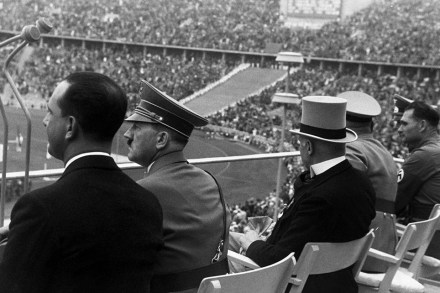
The modern Olympics, first held in Athens in 1896 in a genuflection to their Grecian predecessors, was the creation of Pierre de Coubertin, a French aristocrat. As this septet of books shows from allusive angles, Coubertin’s best known quotation – ‘the most important thing in the Olympic Games is not winning but taking part’ – must rank as a paradigm example of a precept more honoured in the breach than the observance. It is rivalled only by his anticipation that the Games would be ‘a vehicle for increasing friendly understanding among nations’. In an elegant series of vignettes entitled Aux Armes! Sport and the French: An English Perspective (Fairfield Books, £9.

Behind the top 20

From our UK edition

This is a story of resurrection. A mere three decades ago, club football in England was a professional game largely and listlessly run by amateurs. Fans shuffled in decreasing numbers to obsolete stadia redolent of pie and pee. Lives were lost in the tragedies of Bradford, Hillsborough and Heysel. The sport was scarcely entertainment; it was certainly not a business. Yet today the Premier League is the world’s richest sporting brand. How this happened is a tale told with much verve and some wit by two experienced sports journalists.

Law and disorder

From our UK edition

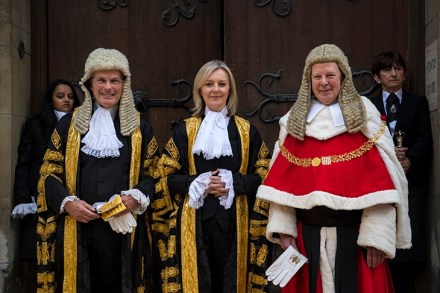
Sir Stephen Sedley read English at Cambridge and Lord Dyson Classics at Oxford. Both switched to law and achieved high judicial office, the former a senior Lord Justice of Appeal, the latter as Master of the Rolls. Both were effective advocates as well as admired judges (not always the case). Both clearly enjoyed these two distinct stages in their legal careers (again not always the case). These volumes are not judicial memoirs (though each contain fragments of autobiography), but compendia of the author’s views on a variety of legal issues, notably the appropriate distribution of governmental power in British society.

The real wizard of Oz

From our UK edition

What makes a barrister famous? At one time, many of the best advocates were also prominent politicians, whose day job was in court and who moonlighted in the Commons — think F.E. Smith. But it is impossible today to double up with any distinction. As long as capital punishment survived, public attention also attached to those great defenders who rescued their clients from the noose — think Edward Marshall Hall. But English judges no longer don the black cap to pronounce the sentence of death. Geoffrey Robertson, the author of this riveting memoir, ticks the boxes which guarantee the reputation of the modern celebrity silk: chiefly, a concentration on the fashion-able area of human rights, with a special interest in press freedom, making him a hero of the left-wing media.

No ordinary judge

From our UK edition

Justice McCardie was anything but a conventional High Court judge. He left school at 15 and was called to the bar at 25. After ten years of provincial practice he turned down the offer from Joseph Chamberlain of a safe Conservative seat, although politics was then the conventional highway to the bench (unlike now when it is a cul de sac). He also rejected an offer of silk, after withdrawing an earlier application which he thought the lord chancellor had been too slow to consider, and was, on the initiative of H.H. Asquith, the then liberal prime minister, appointed to the bench at 47 — the youngest of his generation — and the first junior to receive such promotion for over a century.

Trump’s greatest legacy could be his power to reshape the Supreme Court

From our UK edition

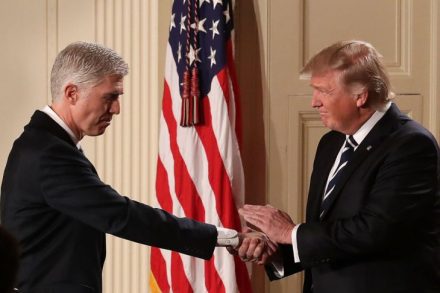
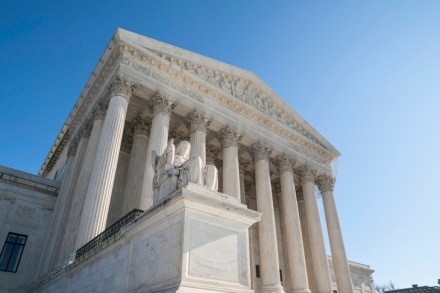
James D. Zirin is an experienced litigator as well as the host of a popular television talkshow. In this provocative polemic he uses skills developed both from behind the bar and in front of the camera to mount the charge that the US Supreme Court is a political court. How far does his evidence support his claim? In 1803 Chief Justice Marshall invented the doctrine of judicial review, by which the Supreme Court had the right to strike down Acts of Congress and executive action as inconsistent with the constitution. Inevitably, it then became involved in issues that were heavily political. In 1857 the court upheld the property rights of slave owners. In 1896 it created the separate but equal principle. In 1954 it outlawed segregation.

Another challenge for Trump

From our UK edition

James D. Zirin is an experienced litigator as well as the host of a popular television talkshow. In this provocative polemic he uses skills developed both from behind the bar and in front of the camera to mount the charge that the US Supreme Court is a political court. How far does his evidence support his claim? In 1803 Chief Justice Marshall invented the doctrine of judicial review, by which the Supreme Court had the right to strike down Acts of Congress and executive action as inconsistent with the constitution. Inevitably, it then became involved in issues that were heavily political. In 1857 the court upheld the property rights of slave owners. In 1896 it created the separate but equal principle. In 1954 it outlawed segregation.

Running the triple crown

From our UK edition

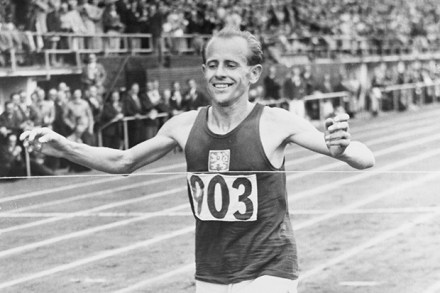
The story of the Czechoslovak runner Emil Zátopek is a tale from athletics’ age of innocence. Without the aid of qualified coaches, state-of-the-art equipment or ‘performance-enhancing’ drugs, Emil Zátopek set no fewer than 18 world records over distances between 5,000 and 30,000 metres with a style memorably described as that of ‘a man wrestling with an octopus on a conveyor belt’: all eccentricity above the waist, all efficiency below it. Brought up in poverty, he ate when he could and what he could, and treated beer as a prototype isotonic drink.

The devils’ advocate | 25 June 2015

From our UK edition

Jeremy Hutchinson was the doyen of the criminal bar in the 1960s and 1970s. No Old Bailey hack or parvenu Rumpole, he was the son of Jack, a distinguished practitioner in the same field, and Mary, a Bloomsbury Strachey. An Oxford undergraduate who acquired a criminal record along with a PPE degree (he accidentally shot a policeman with an air pistol), married first to Peggy Ashcroft, he moved throughout his life in the upper echelons of English liberal intellectual society, and was elevated, while still in practice, to the House of Lords. The brief biographical sketch at the outset of this book, littered with names of those whose paths he crossed, including T.S.

How did English football get so ugly?

From our UK edition

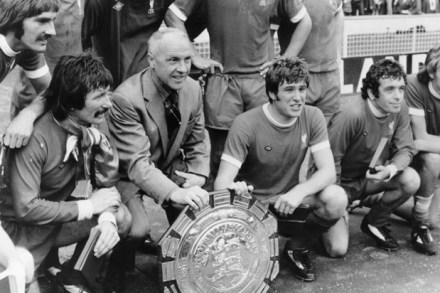
Bill Shankly, the manager of Liverpool FC in the club’s halcyon days of the1960s and 1970s, once said: ‘Football isn’t just a matter of life and death, it’s far more important than that.’ But as David Goldblatt shows in this penetrating study, it was a sport then in apparently terminal decline.The deaths in the next decade of so many fans at Bradford from fire, and at Hillsborough from suffocation, exposed both its obsolete infrastructure and and anachronistic governance. It had few friends in high places and no ready access to funds. In 1963 the maximum wage of £100 per week had been abolished.

For Roger Bannister, the four-minute mile was just the start

From our UK edition

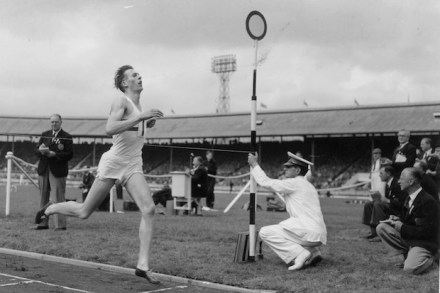
The title of this reflective and readable memoir refers to the author’s lifetime interests in sport and medicine — tracks which advanced not in parallel but with intersections. Few will be unaware that Roger Bannister was the first man to run a mile in under four minutes. The image of him breasting the tape scarcely needed reproducing on both the front and back cover of his book; even 60 years on, this moment is firmly imprinted on the country’s psyche. But how many will also be aware of his contribution to the study of the autonomic nervous system — or even what that system is, unless tempted to turn to Brain and Bannister’s Clinical Neurology, an 800-page encyclopaedia?

The vengeance of Alex Ferguson

From our UK edition

For a quarter of a century Sir Alex Ferguson bestrode football’s narrow world like a colossus. Like his predecessor knight-manager, Sir Matt Busby, he ensured that it was England’s third city that was home to its top football club. His avowed aim in this reminiscence is to explain ‘some of the mysteries in my line of work’. In that he certainly succeeds. One does not need to know anything about football to recognise that Sir Alex knows everything about it. It is no more necessary to have been a great advocate to become a great judge than it is to have been a great player to become a great manager.

What makes someone the fastest man on earth?

From our UK edition

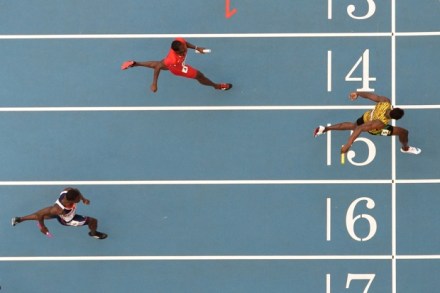
What makes someone the fastest man on earth? The current tenant of the informal title held by such sporting icons as Jesse Owen and Carl Lewis starts with a version of the pastoral. Here is Usain Bolt as a child of nature, running free in the wilderness near the remote village that was his birthplace in Jamaica, plucking yams from the ground and bananas from the trees, body-building by carrying buckets of water home from the stream, and kept on the straight and narrow by regular ‘whoop-ass’ from his father. But nature needed nurture, and life suddenly became more serious. ‘The Champs’, a national competition for schoolchildren which had a profile equivalent to the Cup Final in Britain, was Bolt’s launch-pad.

One to admire

From our UK edition

The English Bar is no longer immune to the celebrity culture. There are lawyers’ equivalents to Hello! magazine and the Oscars ceremony; lists of the 100 most, top ten, five to follow, proliferate. But peer and public recognition do not always coincide. To that rule Michael (or more usually Mike) Mansfield is a notable exception. He is indisputably the most high- profile barrister of his generation, both within and beyond the profession, and for that reason alone his memoirs, published to celebrate what he claims to be his retirement from practice, were always likely to be of interest. Expectations are amply fulfilled.

Wit and wisdom | 14 March 2009

From our UK edition

Judicial biography is out of fashion: Lord Chancellors apart, the lives of the bewigged great and good are confined within the narrow boundaries of the Dictionary of National Biography. Judicial autobiography is too often driven more by the self-esteem of the authors than the intrinsic interest of the subject. Anthony Lentin convincingly establishes his subject’s claim to resurrection. Born John Andrew Hamilton and of Mancunian middle-class origins, the future Viscount profited from an education at two great forcing houses of talent, Manchester Grammar School and Balliol. Called to the Bar by the Inner Temple, he was no instant success either in London or on the Northern Circuit. For many years he earned a living by his pen, not his tongue.

They are made a spectacle unto the world

From our UK edition

In four years London will host its third Olympic Games. It is the first time it will have done so as the winner of a competition between bidding cities as fierce – and some say as suspect – as any that take place in the stadium. Before that London was volunteered as a stage only by default. In 1908 Italian civic rivalry and the eruption of Vesuvius subverted the chance of Rome. In 1948 the ravages of war postponed the choice of Helsinki. 2012 is the natural date for comparative studies of past London Games; but four writers have chosen to jump the literary gun. Three concentrate on the Games of 1908.

That sweet city

From our UK edition

What do they know of Oxford who only Oxford know? Justin Cartwright, a raw colonial from South Africa, arrived as a prospective law student at Trinity in the mid- Sixties. Now, a prize-winning novelist, he has contributed to a series ‘The Writer and the City’ and succumbed for a second time to charms which he found irresistible on first and fresh acquaintance. What do they know of Oxford who only Oxford know? Justin Cartwright, a raw colonial from South Africa, arrived as a prospective law student at Trinity in the mid- Sixties. Now, a prize-winning novelist, he has contributed to a series ‘The Writer and the City’ and succumbed for a second time to charms which he found irresistible on first and fresh acquaintance. He makes his apologies at the outset.

Oxford needs inspiration

From our UK edition

Three days ago I demitted the presidency of Trinity College to which I had been elected exactly 30 years after ceasing to be a short-term college lecturer there. Oxford then, Oxford now? Tempora mutantur, but plus c’est la même chose. Oxford University is an association of independent colleges with a distinctive tutorial system or it is nothing special; but the college community and tutorial system are both under strain. The dons of yesteryear, who lived not only in but for the college, are all but extinct. College offices are no longer shared out among the Fellowship, but have become the province of professionals.

Sharing the pinnacle

From our UK edition

One-to-one conflict injects adren- alin into sport. For a period, inevitably finite, a pair of rivals will elevate themselves above their contemporaries, and produce contests which will divide not only cognoscenti, but also the community at large, into two camps. This book is about one of the most magnetic of such contests for primacy waged over a decade and a half, between Chris Evert and Martina Navratilova for the unofficial title, Queen of Women’s Tennis. What makes such a rivalry truly memorable? The talents of the pair must be equal but separate — equal because otherwise the outcome would be predictable; separate because even if unpredictable it would be tedious.