Book review

The Russian literary celebrity who begged Tolstoy to spare Prince Andrei

From our UK edition

Nadezhda Alexandrovna Lokhvitskaya was a literary celebrity in pre-revolutionary St Petersburg. She chose the pen-name ‘Teffi’ because it was androgynous, and because it was the kind of name a ‘lucky’ fool would have; in Russia, fools were held to tell truths, albeit obliquely. ‘Teffi’ wrote for newspapers, most notably the Russian Word. By 1911 she was writing more fiction than journalism; her short story collections achieved instant popularity. In 1919 the Russian Word was closed down. Teffi was evacuated, ending up, like so many ‘lesrusses’, in Paris. She never returned to Russia, except in her stories. Teffi’s fame evaporated almost immediately after her death in 1952.

Genghis Khan was tolerant, kind to women – and a record-breaking mass-murderer

From our UK edition

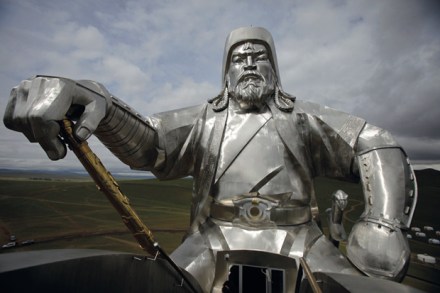
Genghis Khan, unlike most Mongols in history, is a household name, regularly misappropriated as a right-wing totem. If we recall the genocidal killing sprees of, say, Stalin and Mao, perhaps it would be more historically accurate to say ‘to the left of Genghis Khan’. In the popular imagination he is the despot’s despot, a one-man killing machine who led his army of mounted archers to triumph after triumph, terrorising and slaughtering by the million to carve out an empire that stretched from the Caspian to the Pacific. His martial conquests place him in the top trio of world conquerors, alongside Alexander the Great and Tamerlane.

A gangster called Capitalism and its vanquisher The Common Good

From our UK edition

Once upon a time, a powerful unkillable beast menaced the nation. It had to be tamed. It could only be tamed by a robust ethos of the common good. This gradually emerged: a new democratic spirit was born! But soon critics popped up, complaining about aspects of the new order, calling it stifling, limiting, pompous and dated. They gained power: the fools uncaged the beast! For three decades it has trampled all over public life, declaring the profit motive to be the only realism; it has unbalanced industry, empowered reckless bankers, and forced public services to dance to its commercial tunes; it has utterly subverted the left, which dared not challenge it, but rather trusted that it would bring universal benefits.

You’ll never look at dried pasta in the same way again

From our UK edition

A calculated ordinariness unites the protagonists in Graham Swift’s new collection of short stories. In each of these mini fictions, as in his novels, Swift revisits his conceit of the narrator as man (or woman) on the Clapham omnibus. Invariably he endows these blank ciphers with aspects of the extraordinary — percipience, insight or understanding — or exposes them to feelings and events which place them in extraordinary positions and offer them opportunities to behave remarkably while remaining apparently run of the mill. Swift revels in the trappings of Pooterishness while denying his protagonists Mr Pooter’s silliness. His vision may be contrived but it never patronises.

A paean to the British passion for our very own ‘castles’

From our UK edition

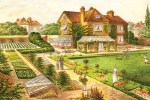
‘Phlogiston’ is an interesting, if obsolete, word. Of Greek origin, it referred to the ‘fire-making’ quality thought to be present in, among other things, the ashes gathered by London dustmen. In the mid-18th century these ashes were mixed with earth and even ‘excrements taken out of the necessary houses’ to create the vast numbers of bricks needed for the explosion of house-building taking place at the time in London and elsewhere. The dramatic rise in building is pivotal to this densely detailed observation of the British obsession with their ‘home’ and ‘comfort’ which, we’re told, Robert Southey describes as particularly English and untranslatable.

It’s not just Putin who misses the Soviet empire. President Bush did, too

From our UK edition

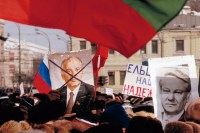
Vladimir Putin calls it ‘the greatest geopolitical disaster of the 20th century’, a viewpoint which explains much of his recent behaviour. Few others anywhere in the world, particularly people who live around Russia’s borders, would agree that the collapse of the Soviet Union was anything to lament. From Riga to Tbilisi and from Kiev to Tashkent, Christmas Day 1991, when Mikhail Gorbachev resigned as leader of the USSR and the Red Flag was lowered from the Kremlin, remains a day to celebrate. With nearly a quarter of a century’s hindsight it still seems astonishing that a great superpower and, with it, an entirely different way of looking at the world — Soviet-style communism — disappeared almost overnight and with practically no bloodshed.

The soundtracked novel that won’t sit still

From our UK edition

The Emperor Waltz is long enough at 600 pages to be divided, in the old-fashioned way, into nine ‘books’. Each book has a date, sliding from 1922 to 1979 to next year to 203 ad to last month. This might suggest an overly systematic novel in the mode of David Mitchell’s Cloud Atlas or Eleanor Catton’s Booker Prize-winning breezeblock The Luminaries. But Hensher has always been a writer with a wandering, curious eye (on its most exhilarating display in 2011’s King of the Badgers), and The Emperor Waltz is a novel that, despite its superficial restraints, won’t sit still.

Caught between Marx and a monster

From our UK edition

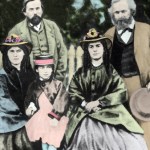
‘Curious to see Mrs Aveling addressing the enormous crowd, curious to see the eyes of the women fixed upon her as she spoke of the miseries of the dockers’ homes, pleasant to see her point her black-gloved finger at the oppression, and pleasant to hear the hearty cheer with which her speech was given.’ So Labour MP Robert Cunninghame Graham described Karl Marx’s youngest daughter, Eleanor, giving a speech to 100,000 demonstrators in Hyde Park at the height of the 1889 dock strike. ‘Brilliant, devoted and beautiful,’ agreed the trade union leader Ben Tillett. ‘During our great strike she worked unceasingly — a vivid and vital personality, with great force of character, courage and ability.

The cruellest present you could give a hated old in-law

From our UK edition

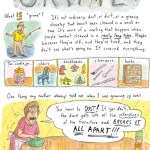
It takes a special sort of talent to be able to make drawings of your own 97-year-old mother on her deathbed funny. The person with that gift is Roz Chast. Subscribers to the New Yorker will already be familiar with her marvellous cartoons, which often feature elderly and over-neurotic parents shouting dire imprecations to their rather dazed and mild-looking adult offspring. Their warnings tend to concern such mortal perils as crossing the road, running to answer the telephone or touching the handrail on public transport (the germs!). The subjects are from Brooklyn, but the appeal is universal: visiting a friend in Athens the other day, I saw a Chast cartoon stuck to the fridge door. Can’t We Talk About Something More Pleasant? is a graphic memoir of Chast’s own parents.

Lillian Hellman lied her way through life

From our UK edition

Lillian Hellman must be a maddening subject for a biographer. The author Mary McCarthy’s remark that ‘every word she writes is a lie, including “and” and “the”’ wasn’t far off. Navigating through the hall of mirrors that Hellman left behind, trying to sort fact from self-aggrandising fiction, seems to have worked Dorothy Gallagher into a fury. Perhaps this book is her revenge. One of America’s most successful playwrights, Hellman had her first Broadway hit before she was 30. She was a close friend of Dorothy Parker and her long-term lover was Dashiell Hammett. Ardently left-wing, she was summoned before Joseph McCarthy’s House Un-American Activities Committee to answer questions about her links with the Communist party.

From Edwardian idyll to meetings with Nehru: the life of Lady Ursula D’Asbo

From our UK edition

This is the Real Thing, an evocative account of English upper-class life throughout the 20th century. It begins amidst the Edwardian feudal splendours of Belvoir Castle, where Ursula d’Abo spent much of her childhood with her beloved grandfather ‘Appi’. At the coronation of George VI she was a maid of honour to the Queen. During the second world war she worked with 2,000 women making bullets. Postwar life was hardly less varied and amazing, with an other-worldly stay in princely India, and meetings with Nehru. Married life at West Wratting Park and Kensington Square, two beautiful Georgian houses she restored, was followed in her widowhood by five years with Paul Getty at Sutton Place.

What are the Chinese up to in Africa?

From our UK edition

Few subjects generate as much angst, or puzzlement, among Western policymakers in Africa as China’s presence on the continent. In his new book, China’s Second Continent, the American journalist Howard French recalls meeting US officials in Mali to sound them out on the matter. Instead, he finds himself barraged by questions. ‘It would really be useful for us to know what the Chinese are up to,’ one American official tells him. ‘So far we’ve been limited to speaking with them through translators. We’ve got very little idea about any of this.’ Grasping the range and scale of China’s activities in Africa is indeed a tall order. Commercial deals are cloaked in secrecy. Immigration statistics from African countries are poor.

Doctor Zhivago’s long, dark shadow

From our UK edition

For most Russians, Boris Pasternak is one of their four greatest poets of the last century. For most Anglophone readers, he is the man who won the Nobel Prize for Doctor Zhivago. The first four chapters of The Zhivago Affair give a full picture of Pasternak’s life and the Soviet literary world up until the early 1950s, when Zhivago was nearing completion. Pasternak was born in Moscow in 1890, into an assimilated and highly cultured Jewish family. His father was a painter, his mother a concert pianist; among the family’s friends were Leo Tolstoy, Sergey Rachmaninov and Rainer Maria Rilke. Pasternak wanted first to be a composer, then a philosopher — but by the age of 22 he understood that his vocation was poetry.

Having a moral compass just gets in the way of being smart

From our UK edition

Steven D. Levitt was a Harvard economist who specialised in politics and spent a lot of time watching cop shows on TV. Then he had an idea: why not switch from politics, which he found dull, to crime? Soon he was studying the crack cocaine economy. Stephen J. Dubner was the guitarist in a rock band called the Right Profile. But he didn’t like the rock’n’roll lifestyle; he was a bookish type. So he became a journalist, got a job at the New York Times, and found himself interviewing a go-ahead Harvard economist who had written interesting stuff on the crack cocaine economy, among many other fascinating things. This, of course, was Levitt. Dubner made a suggestion: why not write a book together, based on Levitt’s work?

Maigret’s new clothes – this month’s best new crime novel, published 1931

From our UK edition

The publisher has whipped up a tsunami of excitement around The Truth About the Harry Quebert Affair (translated from the French by Sam Taylor; MacLehose, £20, Spectator Bookshop, £16). More than two million copies have already been sold. Its author, Jöel Dicker, is apparently ‘Switzerland’s coolest export since Roger Federer’.The novel, which is billed as a literary thriller, has been garlanded with ecstatic reviews and prizes on the continent. It’s the story of a young, successful but blocked writer who tries to re-energise his muse by visiting Harry Quebert, the Great American Novelist who put him on the road to fame. Harry lives in a beachside house in Maine.

J.K. Rowling is just too nice – and too lucky – to satirise publishing

From our UK edition

J.K. Rowling’s second novel under the Robert Galbraith moniker is a whodunit set in the publishing industry. This isn’t a rare set-up for crime fiction. Authors, no matter how grungy and streetwise they pretend to be, spend most of their time doing dreary things with people they dislike in the name of selling books. They are itching to put their agents, publishers and fellow authors on the page so that they can slay them. Thing is, if you’re the most famous author in the world, bearing a grudge against publishing might look a bit ungrateful. Rowling realises this and adjusts her approach accordingly. The Silkworm is a soft, toothless, inept novel with a kind heart. Our private eye Cormoran Strike is back.

The cold, remote plateau of Vichy France where good was done

From our UK edition

It is with a heavy heart that I pick up anything to do with the Holocaust. Not because it’s wearisome or too familiar, or because — in Solzhenitzyn’s memorable phrase — you need only a mouthful of seawater to know the taste of the ocean. No: my reluctance to contemplate that world, even as a distant spectator, is because it was so awful and the detail so compelling that I’ll be unable to put the book down. It will echo inside my skull for as long as I inhabit one. So it is with this vivid account by Caroline Moorehead of remote mountain villagers high up in France’s Massif Central during the second world war.