Book review

The threat from Russia’s spies has only increased since the fall of Communism

From our UK edition

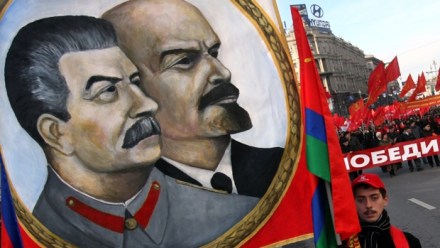
‘No, we must go our own way,’ said Lenin.  The whole world knows him as Vladimir, while he was in fact Nikolai. ‘Nikolai Lenin’ was the party alias of Vladimir Ilyich Ulianov, a terrorist leader and psychopath whose ideas changed the history of the greater part of the 20th century. This era ended on 26 December 1991 with the collapse of the 74-year-old Soviet Union, founded by Lenin, who seven years after the Bolshevik revolution died of syphilis, only to be succeeded by Stalin. ‘Stalin’ was also an alias. The Soviet dictator’s real name was Ioseb Vissarionovich Jugashvili, born into the family of a Georgian cobbler. His education, which he never finished, was limited to a theological seminary.

The mad, bad and sad life of Dusty Springfield

From our UK edition

Call me a crazy old physiognomist, but my theory is that you can always spot a lesbian by her big thrusting chin. Celebrity Eskimo Sandi Toksvig, Ellen DeGeneres, Jodie Foster, Clare Balding, Vita Sackville-West, God love them: there’s a touch of Desperate Dan in the jaw-bone area, no doubt the better to go bobbing for apples. It is thus a tragedy that Dusty Springfield’s whole existence was blighted by her orientation, which explains ‘the silence and secrecy she extended over much of her life, and her self-loathing’. One glance at her chin should have revealed all — but the Sixties was not a fraction as liberated and swinging as people now assume.

The robber baron who ‘bought judges as other men buy food’

From our UK edition

The robber barons of the gilded age, at the turn of the 20th century, were the most ruthless accumulators of wealth in the history of the United States, and none of them was less handicapped by moral scruples than W.A. Clark. He was up there near the pinnacle of acquisitiveness with Rockefeller but was not as legendary in popular imagination. While other pioneers were searching for gold, Clark developed copper-mining at the most opportune time, when there was a great and growing demand for copper for electrical wiring. The copper lode he discovered in Butte, Montana, produced 11 million tons and earned the town its nickname ‘The Richest Hill on Earth’. In those days, US senators were appointed by the state legislators, rather than elected.

Kaiser Wilhelm’s guide to ruining a country

From our UK edition

The role of personality in politics is the theme of this awe-inspiring biography. This is the third volume, 1,562 pages long, of John Röhl’s life of the Kaiser. It has been brilliantly translated — the labyrinth of imperial Germany navigated by many headed subdivisions in each chapter — by Sheila de Bellaigue. The fruit of what Röhl calls a ‘dark obsession’ with the Kaiser, it had its origin when, writing about Germany after the fall of Bismarck at the apogee of social and institutional history in the 1960s, he realised that he was analysing not a modern government but a court society. Personalities and dynasties were as important as classes and parties.

Lenin, Hitler, Sloane Square – a Polish noble’s 20th-century Odyssey

From our UK edition

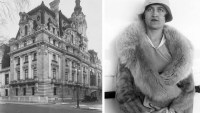
If Vincent Poklewski Koziell has really drunk as much as he claims in this book I doubt he would be the spry and handsome 88-year-old to be seen bicycling around Sloane Square that he is today — a slight fall having proved no impediment to his progress. He came from a grand family of diplomats on his mother’s side. She, Zoia de Stoeckl, was clearly ravishingly pretty and became, aged 18, a maid of honour to the last empress of Russia. Vincent’s father derived from what he describes as ‘run-down Polish nobility’ (only 56 peasants); but the family seems to have had an astonishing ability to rise, phoenix-like, from successive reverses, a huge fortune disappearing overnight in the Russian revolution.

Main villain: the aftermath of war

From our UK edition

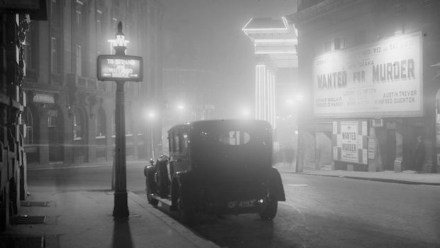
Most crime novels offer a curious kind of escape, to places that jag the nerves and worry the mind. Their rides of suspense give a good thrill, but it’s rarely a comfortable one. If it’s cosy detection we’re after, we usually look to the past, as Dylan Thomas clearly did: ‘Poetry is not the most important thing in life… I’d much rather lie in a hot bath reading Agatha Christie and sucking sweets.’  Rennie Airth, with his series of John Madden mysteries, provides a middle way, and one that in many ways feels altogether nobler. The Reckoning is the fourth of Madden’s cases. It sees our man in retirement from his role in Scotland Yard, a few years after the conclusion of the second world war.

The British countryside in prints and paper-cuts

From our UK edition

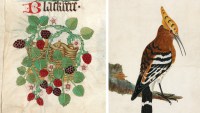
The Yale Center for British Art holds the largest collection of British art outside the UK. An impressive collection it is too, largely bequeathed by Paul Mellon of the American banking dynasty. He holidayed in England as a child before the first world war and, having developed a taste for ‘dappled tan cows in soft green fields’, began acquiring British works on natural history as a young man. In this book, Elisabeth R. Fairman, a curator of rare books at Yale, has gathered images, largely from the collection, of all that the British countryside has to offer, recorded by artists and naturalists from the 16th century to the present day. The sheer beauty of some of the watercolours, prints and paper-cuts is astounding.

Daring? No. Well written? Yes

From our UK edition

This has all the appearance of a book invented by a publisher. Two years ago W. Sydney Robinson published an excellent biography of the Victorian newspaperman W.T. Stead. How best to follow this? No attractive subject for another full-scale biography suggested itself. Why not therefore fill in time by writing long essays on four worthies from the generation that followed Stead? And so we have: ‘A Daring Reassessment of Four Twentieth Century Eccentrics: Sir William Joynson-Hicks, Dean Inge, Lord Reith and Sir Arthur Bryant.’ The only trouble is that the reassessment is not particularly daring and the characters hardly at all eccentric.

John Wayne, accidental cowboy

From our UK edition

I’m not making a picture [The Green Berets] about Vietnam, I’m making a picture about good against bad. I happen to think that’s true about Vietnam, but even if it isn’t as clear as all that, that’s what you have to do to make a picture. It’s all right, because we’re in the business of selling tickets. It’s the same thing as the Indians. Maybe we shouldn’t have destroyed all those Indians, I don’t know, but when you’re making a picture, the Indians are the bad guys. — Mike Wayne, producer of The Green Berets, starring his father, John Wayne The words above appeared in a 1968 issue of Esquire magazine above a colour drawing of Wayne’s father in blue cavalry uniform and green beret, astride a stagecoach.

How good an artist is Edmund de Waal?

From our UK edition

For Edmund de Waal a ceramic pot has a ‘real life’ that goes beyond functionalism.This handsome book (designed by Atelier Dyakova) at the mid-point of his career, raises the question: ‘How good an artist is he?’ It is discursive, comprising essays by A.S. Byatt and Alexandra Munroe, short stories by Colm Tóibín and Peter Carey, an elegant photographic essay by Toby Glanville, a look at de Waal’s life to date by Emma Crichton-Miller and a piece by the man himself. ‘I am a potter who writes,’ de Waal said in a 2000 article in the Ceramic Review, although since then his book The Hare with Amber Eyes has carried his celebrity round the world. Is he a domestic potter or is he now making for museums and galleries?

The age of the starving artist

From our UK edition

What remains of art is art, of course; and what chiefly interests us is the creative talents of a painter or a sculptor. What we forget is that the work of art wouldn’t be there without some kind of engagement with the brutal forces of money. James Hamilton’s riveting book is a richly detailed study of how, in Britain in the 19th century, artists and a small army of opportunists, art lovers, collectors and businessmen of all sorts used their ingenuity to turn the visual arts into money.

The author’s father didn’t want you to read this book. It’s hard to understand why

From our UK edition

There were several times when reading A Dog’s Life that I felt as if I’d fallen into a time warp. It starts with a quote on the cover from Hugh Massingberd: Holroyd is ‘a brilliant writer blessed with perfect pitch’. Nothing wrong with that, except that Hugh, alas, is no longer in a position to review books, having died seven years ago. The book itself, a novel closely based on Holroyd’s own family, was written in the late 1950s but never published in the UK after his father took violent exception to the way he’d been portrayed. He also warned that publication could well kill Holroyd’s elderly aunt. Under the circumstances, he decided it might be prudent to withdraw it. At this distance, it’s hard to see what all the fuss was about.

The ultimate guide to Cornwall

From our UK edition

Before writing this review I spent an hour looking for my original Pevsner paperback on Cornwall, published in 1951 (the first in the ‘Buildings of England’ series). It was falling apart, but I always took it with me on an architectural jaunt, together with my father John Betjeman’s Shell Guide to Cornwall, of course. The two books were good companions. The Pevsner was littered with notes in the margin, made by my dad, like ‘absolute balls,’ ‘what?’ or ‘wrong’ underlined. (I did not find the tattered book and can only conclude that some light-fingered book dealer has stolen it within the last year.) Admittedly there were inaccuracies but with no official buildings ‘list’ at the time, Nikolaus Pevsner was out on his own.

From slaves’ rectums to porn vids, there are few places people haven’t tried to conceal secret messages

From our UK edition

John Gerard, a Jesuit priest immured in the Tower of London in 1597, and tortured by being hung from manacles until he temporarily lost the use of his arms, was a resourceful as well as courageous fellow. Dependent on the kindness of his jailer, a warder named Bonner, for such intimacies as washing, dressing and shaving, Gerard also persuaded the turnkey to bring him a bag of oranges. Regaining the use of his hands, he employed the fruit for two purposes: to fashion crosses and rosaries from the discarded peel, and to make invisible ink from the juice.

The long and disgraceful life of Britain’s pre-eminent bounder

From our UK edition

In his time, Gerald Hamilton (1890–1970) was an almost legendary figure, but he is now remembered — if at all — as the model for the genial conman in Christopher Isherwood’s novel Mr Norris Changes Trains (1935). ‘There are some incidents in my career, as you doubtless know, which are very easily capable of misinterpretation,’ Arthur Norris tells the book’s narrator, and Hamilton affected to be deeply shocked by the assorted vices attributed to his fictional alter ego. He nevertheless exploited the connection throughout his long and disgraceful life. When Isherwood met him, Hamilton (né Souter) was employed in Berlin by the Times as its German sales representative.

This diary of a prime minister’s wife offers a front-row seat to the Great War

From our UK edition

When Margot Asquith’s name crops up these days, it is usually in a retelling of the story about her meeting Jean Harlow, sexy star of the silver screen, who repeatedly called her Margotte. Eventually, Margot became irritated. ‘No, my dear,’ she corrected. ‘The “t” is silent, as in Harlow.’ It’s a good story, but apocryphal and, I was always told by those who knew her (she was my great-grandfather’s second wife), quite untypical of her. No matter. She had plenty of good lines that were unquestionably her own, as this diary vividly attests. She was at her best when analysing friends and enemies, which were sometimes interchangeable categories.

Why movie musicals matter – to this author anyway

From our UK edition

Do movie musicals matter? Most readers, even those who love them, will embark on Richard Barrios’s short history of the genre with the thought: not much. They’ll very likely, I’m afraid, finish it holding much the same opinion. But not mattering much doesn’t prevent the best film musicals from being captivating. This is a book by someone who is indeed captivated: a love letter for the best of musical cinema and a blown raspberry for the worst.