Ben Hamilton

… and soon will be

From our UK edition

Edmundsbury, the fictional, sketchily rendered town in which the action of this novel takes place, is part of a social experiment — its inhabitants lab rats for a digital overhaul that goes beyond surveillance. Everything they do is measured, tracked and recorded in exchange for treats, such as heightened security and increased download speeds. Sam Byers focuses on a handful of characters who are aware, to varying degrees, that something is badly wrong. Displaced Londoner Robert is a journalist with fading ethics, striving for ‘clickbait gold’, but needled to distraction by a persistently critical below-the-line commenter calling herself Julia. Quickly we discover that Julia is a persona adopted by Robert’s girlfriend, Jess.

Snowy days in Saratoga Springs

From our UK edition

Alan Querry, the central figure in James Wood’s second novel, is someone who, in his own words, doesn’t ‘think about life too much’. His peculiar surname may recall the brooding, godforsaken Querry of Graham Greene’s A Burnt-Out Case, but this Querry — who lives in ‘the poshest part of Northumberland’ — isn’t much troubled by God’s presence or absence: ‘he had a notion that “the question of God” might all have been more or less sorted out in his lifetime, like Cyprus or polio.’ Called upon to visit his daughter Vanessa in upstate New York, Alan stops along the way to meet his younger daughter, Helen, and they make the journey together to snowy Saratoga Springs.

Who’s the expert now?

From our UK edition

The title might be taken as a provocation. In the compressed language of digital media, white tears, like first-world problems or man flu, are an ersatz version of the real thing. More plainly, the gripes and complaints of white people are, according to certain social codes, unearned and inauthentic. This zeitgeisty novel gives us two men who are preoccupied to the point of mania by the question of authenticity: young white New Yorkers obsessed with the blues. They work as music producers, but this being the post-pop 21st century they are stuck with white novelty rappers. Carter, the richer of the two, prefers old black music, the more ancient-sounding the better. To his ears, the earliest stuff is ‘more intense and authentic than anything made by white people’.

The trouble with actors

From our UK edition

A Girl is a Half-formed Thing, Eimear McBride’s acclaimed, prize-winning debut, felt like a one-off, not the beginning of a career. Its prose style — a staccato, Beckettian rush — was a good match for the subject of burgeoning womanhood amid grief and exploitation. But it was also very intense — so much so that before the novel’s end the language started to break apart, as if McBride had, with her very first book, reached beyond the limits of her voice. Yet here we are with a second novel and another young female Irish narrator with an unconventional syntax. This narrator (unnamed, like all the characters, until late in the novel) has escaped her family and moved to London to attend drama school.

Scratching a living

From our UK edition

John Gross’s The Rise and Fall of the Man of Letters: English Literary Life since 1800, a standard text for anyone set on a life of writing about books, was intentionally truncated, ending its chronology before Gross’s own time of eminence. Two decades after the book’s publication in 1969, Gross explained in a new afterword that he had not wanted to comment on his peers and colleagues, for fear of misunderstanding or offence. A perfectly justifiable approach, but it made the book uncomfortably tantalising for those who prefer their gossip to be at the expense of the living. The Prose Factory is dedicated to Gross, and partially overlaps with The Rise and Fall, beginning in 1918.

Pessimism keeps breaking in

From our UK edition

State-of-criticism overviews and assessments almost always strike a bleak note —the critical mind naturally angles towards pessimism — so it can be worthwhile occasionally to announce that, against expectations, despite everything, literary criticism is still alive and in print. Recent technological and economic threats have not been as damaging as the so-called theory wars of the 1970s and 1980s, and while theory does colour some recent fiction (treated with ironic humour by Jeffrey Eugenides, say, or with cramped loyalty by Tom McCarthy), critics outside the academy now act as though it has been vanquished through institutional assimilation; the models are Edmund Wilson and Clive James, not Derrida and de Man.

Fact, fiction or farce? The American comic novel is becoming increasingly hard to define

From our UK edition

The American comic novel is going through an odd phase. Just lately it seems like anything funny must sneak in behind an abstruse metafictional edifice, deployed, I suspect, by insecure authors who want to retain their jobs as teachers of creative writing. 10:04, Ben Lerner’s lopsided but often electric second novel, is the latest example of the comic genre via subterfuge, sprinkled with tricks and played so deadpan you might not know when to laugh. The narrator, who shares a first name with the author, is a resident of a New York City that is battered by storms, vulnerable to hurricanes and hipsters.

The soundtracked novel that won’t sit still

From our UK edition

The Emperor Waltz is long enough at 600 pages to be divided, in the old-fashioned way, into nine ‘books’. Each book has a date, sliding from 1922 to 1979 to next year to 203 ad to last month. This might suggest an overly systematic novel in the mode of David Mitchell’s Cloud Atlas or Eleanor Catton’s Booker Prize-winning breezeblock The Luminaries. But Hensher has always been a writer with a wandering, curious eye (on its most exhilarating display in 2011’s King of the Badgers), and The Emperor Waltz is a novel that, despite its superficial restraints, won’t sit still.

J.K. Rowling is just too nice – and too lucky – to satirise publishing

From our UK edition

J.K. Rowling’s second novel under the Robert Galbraith moniker is a whodunit set in the publishing industry. This isn’t a rare set-up for crime fiction. Authors, no matter how grungy and streetwise they pretend to be, spend most of their time doing dreary things with people they dislike in the name of selling books. They are itching to put their agents, publishers and fellow authors on the page so that they can slay them. Thing is, if you’re the most famous author in the world, bearing a grudge against publishing might look a bit ungrateful. Rowling realises this and adjusts her approach accordingly. The Silkworm is a soft, toothless, inept novel with a kind heart. Our private eye Cormoran Strike is back.

If you prefer banal symbols freighted with meaning to plot, Nicola Barker is your woman

From our UK edition

Readers familiar with Nicola Barker’s hyper-caffeinated style will be surprised by the almost serene first few chapters of her latest novel. It’s 1984 and we are in Pett Level, Hastings, a marginal location even by Barker’s standards (previous novels have been set in Luton, Ashford, and the Isle of Sheppey), and a well-travelled man named Franklin D. Huff is investigating a series of events that took place there many years earlier. The events themselves are nebulous. Something about miracles, romantic affairs, and a saintly child deformed by thalidomide. Before Huff can find any answers, though, countryside serenity is replaced by the quirks of Barker’s reckless imagination. As is usual with Barker’s fiction, the story is a blurb-writer’s nightmare.

Don’t mock pro wrestling. Today’s TV is made in its image

From our UK edition

Earlier this month, when a 54-year-old man with the birth name James Brian Hellwig died of a suspected heart attack outside a hotel in Arizona, a million boyhood fantasies also clutched their chests and fell to the ground. To fans – and former fans – of professional wrestling, Hellwig was The Ultimate Warrior, the man who defeated Hulk Hogan at Wrestlemania VI and taught a generation of scrawny kids to nurture their own inner Warrior. Some of us never forgot that poignant lesson, and there’s evidence Hellwig never forgot either. Despite his obvious lack of in-ring talent (enough time has passed since his death that we can admit he wasn’t the greatest athlete) he believed in his own character until it bled into his civilian life.

The talent and tragedy of Richard Pryor

From our UK edition

The troubles of Richard Pryor’s life are well known — from his childhood in a brothel to his self-immolation via crack pipe — but arranged in a biography their impact is renewed. So grotesque was his upbringing that an early encounter with a dead baby in a shoebox warrants but a single sentence in David Henry’s and Joe Henry’s addictive, frenzied book (Furious Cool, Algonquin Books,£17.99, Spectator Bookshop, £16.19). The authors are fans who have the tendency to swoon, and they hold back from condemning Pryor’s numerous wrong turns (he was a serial wife-beater who fled responsibility wherever he found it). But that hardly matters when there’s so much to pack in.

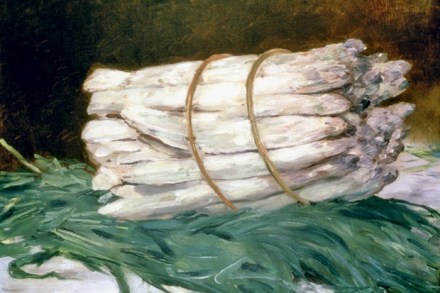
Do Manet’s asparagus remind you of your struggling long-term relationship?

From our UK edition

In calling their book Art as Therapy Alain de Botton and John Armstrong have taken the direct route. They’re not waiting for us to interpret their motive: their title tells us everything. Art, the theory goes, can help us improve our psychological state in a way that’s progressive and cumulative. It can assist our relationships, our careers, our money concerns. Art is a tool which ‘compensates us for certain inborn weaknesses, in this case of the mind rather than the body’. It is a ‘therapeutic medium’, and it should be treated as such. This means that galleries, instead of arranging works by period or style, should place art in emotive groups, based around how they can reform and enrich our own lives.

The Interestings, by Meg Wolitzer – review

From our UK edition

Thick, sentimental and with a narrative bestriding four decades, Meg Wolitzer’s The Interestings feels above all like a Victorian novel, one which finds itself as comfortable in our time as it would have been 150 years ago. It’s an American story ruled by classic English themes. Fate, coincidence, class and envy are what bind — and in some cases disperse — the six central characters. It begins in the mid-1970s, in Spirit-in-the-Woods, a summer camp for young people interested in the performing and visual arts. Run by a couple of bohemians, the camp is supposed to be an approximation of utopia, or, as one character remarks, the opposite of Lord of the Flies.

A Bright Moon for Fools, by Jasper Gibson – review

From our UK edition

Harry Christmas, the central character of this bitterly funny debut novel, is a middle- aged, overweight alcoholic, with no friends and no prospects. After marrying a woman and running off with her money, he flies to Venezuela. He justifies this in two ways, the first sentimental, the second pragmatic. He wants to visit the country of his deceased first wife’s family, and he wants to escape the Rot. The Rot can be defined as everything that Christmas doesn’t like about England (or, we soon learn, about the world in general). This turns out to be a long and varied list. He despises the indoor smoking ban and sport, but he also can’t stand scatter cushions and people who make quotation marks with their fingers.

A consummate craftsman

From our UK edition

It is rare to encounter a writer whose work can be so neatly divided into two halves. George Saunders is known as a satirist with an interest in consumerism and the technology of the near future, but occasionally he will publish moving, sometimes brutal social realist tales. Early stories such as ‘Christmas’ were like strange, dirty artefacts among the glossier SF-tinged material. Tenth of December is such a strong collection because the wackiness is mostly kept at bay. These are stories about people who are trying to do the right thing in an ungrateful world, and there is less of the shrill goofiness that comprised much of his previous collection, In Persuasion Nation.

A way to somewhere else

From our UK edition

Since his suicide in 2008 at the age of 46, David Foster Wallace’s influence on contemporary literature has expanded to the point where even writers who haven’t read him struggle to keep out of his shadow. Traces of his style can be found every time a young writer uses a compound conjunction, or a comically extended footnote. Every Love Story is a Ghost Story, the first biography of Wallace, has the difficult task of chronicling his life and work while we are still coming to terms with their impact. Born in the American Midwest to liberal and academic parents (the kind who read Ulysses to each other before bed and tolerated their teenage son’s pot-smoking), Wallace was unusually clever from the start. D.T.

You can run, but you can’t hide

From our UK edition

Stuart Evers’ debut short-story collection was called Ten Stories About Smoking, but even readers who are aware of this might be astonished by the multitude of burning cigarettes in his first novel, If This is Home. His characters smoke constantly, as if they are in the Forties film noir Out of the Past, where Robert Mitchum and Jane Greer are apparently incapable of breathing except through cigarette filters. Evers’ novel, also in common with Out of the Past, deals with grim secrets and failed personal reinvention. When Mark Wilkinson flees England and his non-descript northern town for New York City he seems at first to be leaving only the scraps of a misspent youth behind. He makes one close friend in New York and eventually changes his name to Josef Novak.