Book review

Recipe for a modern baker: first, move to Hoxton

From our UK edition

If I were the kind of person who invited people to come and have a bite to eat that very evening — and you’ve got to watch it in London, where people are inclined to draw themselves up to their full height, even by email, to ask what sort of sad case you think they are to imagine they’re free right now as opposed to in six weeks’ time — well, I’d reach for the Morito cookbook (Ebury, £26, Spectator Bookshop, £20).


The breasts that launched Les Fleurs du Mal

From our UK edition

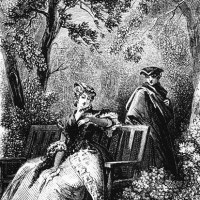
This novel is based on the life of Charles Baudelaire and the relationship he enjoyed — or endured — with his Haiti-born mistress, his Black Venus, Jeanne Duval. We first see him in 1842, a young poet of 20, making his dandyish way through the slums of Paris to meet his friends at a cabaret theatre for an evening of wine and hashish. Here he will encounter for the first time his future muse. She is voluptuous, in a long red dress, singing risqué songs. In no time he is unlacing her boots and preparing to squander the legacy which he is shortly expecting. However, there are, as the author shows us, three people in this relationship, and the third one is Baudelaire’s mother.

Those weren’t the days

From our UK edition

If you wanted a brief epigraph for Linda Grant’s recent fiction, then five words from Dorothy Parker might well do the trick: ‘Time doth flit/ Oh shit.’ Certainly, there aren’t many writers who seem so astonished, even affronted, by life’s tendency (admittedly a strange one) to pass by more quickly than you ever imagined. Her previous novel, We Had It So Good, followed a group of students from the Oxford of the late 1960s to the present day, where they were bewildered to find themselves in the unthinkable position of being quite old. Now her new one does the same with a group of students from the York of the early 1970s. Inevitably, then, the two books do have similar themes, as youthful ideals come up against the annoyingly intractable world.

An old soldier sees through the smoke of Waterloo

From our UK edition

There is a very nice story of a dinner for Waterloo veterans at which Alexandre Dumas — ‘Dum-ass,’ as the Antarctic explorer Taff Evans would have him — was for some reason present. I can’t remember now the exact wording of the exchange between them, but Dumas had clearly spent so much of the evening sounding off about the battle as if he knew what he was talking about that a French general at the far end of the table could finally take no more. ‘But my dear Dumas,’ he protested, ‘it wasn’t at all like that! And remember, we were there!’ ‘Precisely, mon général,’ came back the reply. ‘You were there, so how could you possibly know?’ Gordon Corrigan is more than a chip off the old Dumas block.

A pork-pie and Capri-Sun fuelled hike around England’s moors

From our UK edition

‘No, no’ I said, when The Spectator’s literary editor rang up, ‘I’m sure you must be able to find someone who really wants to read another postcolonial analysis of the figure of the North African in English literature.’ But the book turned out to be about the other kind of moor, so I said yes, though not without some anxiety that it might be like Eeyore’s Gloomy Place: Rather Boggy and Sad. Luckily, William Atkins’s book, though it acknowledges that moors can be bleak, isolated and unforgiving, especially for permanent residents and those scraping a living off the land, is on the whole quite cheerful.

A Labour MP defends the Empire – and only quotes Lenin twice

From our UK edition

In a grand history of the British empire — because that is what this book really is —  you might expect more hand-wringing from a historian and Labour MP who has previously written a life of Engels. But despite quoting Marx half a dozen times (and Lenin, twice!) there is something about the idea of empire that excites Tristram Hunt. And this is a book about ideas, for all that it is rich in architectural description, economic fact and colourful anecdote. It describes how — and indeed when and where — the imperial ideology shaped and reshaped itself.

Not quite romantic fiction, or literary fiction, or commercial fiction – but still quite good

From our UK edition

Elements of Raffaella Barker’s new novel, her eighth for adults, suggest commercial fiction: a narrative that oscillates between the aftermath of the second world war and the present day, and two failsafe locations, Cornwall and the Norfolk coast. But From a Distance is not commercial fiction. Barker’s narrative is sparingly studded with quotations, but this is not literary fiction either. There is a strong love interest, which does not blossom into romantic fiction. Barker’s novel is a hybrid, enjoyable, ultimately heart-warming. It lacks the freshness and charm of the earlier Hens Dancing, but recalls some of its vividness and forensically detailed scrutiny of family life. In 1946, Michael, a demobilised soldier, avoids returning to his prewar life.

The queen, the cardinal and the greatest con France ever saw

From our UK edition

You usually know where you are with a book that promises the story ‘would violate the laws of plausibility’ if it appeared in a novel, and that’s in deep trouble. In the case of How to Ruin a Queen, however, this is a boast with a surprising amount of substance to it. You could make it up — just about — but you’d probably have a very sore head afterwards. In 1786 Cardinal Louis de Rohan, Grand Almoner of France and scion of one of the country’s leading families, went on trial accused of having stolen a 2,800-carat diamond necklace. This was serious enough, but what was far more serious was that he was accused of having appropriated the Queen’s name to do so.

A Pole’s view of the Czechs. Who cares? You will

From our UK edition

When this extraordinary book was about to come out in French four years ago its author was told by his editor that it was likely to fail miserably. As Mariusz Szczgieł explains, the doubts were reasonable. No one was sure if anybody in the west would be interested in what a Pole had to say about the Czechs: ‘A representative of one marginal nation writing about another marginal nation is unlikely to be a success.’ But in 2009 Gottland won the European Book Prize (a serious award; the late Tony Judt’s Postwar won it the previous year) and it has been well received throughout the continent.

A horse ride from Buenos Aires to New York? No problem!

From our UK edition

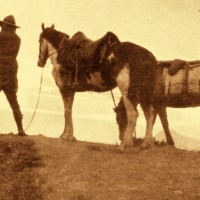
Aimé Tschiffely was what I have seen in other contexts called a ‘doublehard bastard’. In the middle of the 1920s, this Swiss-born schoolteacher at the age of 30 feared that he was getting stuck in a groove and that he wanted ‘variety’. So he set out on a solo horse-ride from Buenos Aires to New York City. Tschiffely wasn’t even much of a horseman at this point. But he had the notion that the wild Criollo horses of Argentina — descendents of the Spanish horses transported to the continent by the Conquistadors in the 16th century and brought to excellence by their survival in that unforgiving environment in the centuries since — were the hardiest horses for long riding in the world. Everyone else thought he was mad.

How to survive the rain-sodden Welsh Marches

From our UK edition

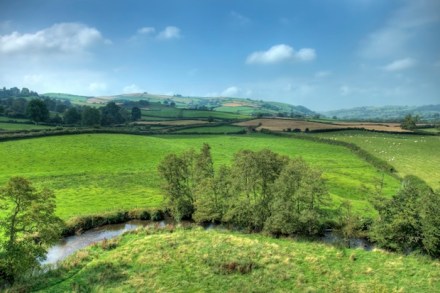
The Welsh Marches, gloriously unvisited amid their wooded hills and swift-flowing streams, have remained mysteriously off-limits to the sort of novelist eager for territorial rights to a particular landscape or locality. Apart from Bruce Chatwin’s On the Black Hill and Mary Webb’s torrid 1920s sagas of heartache and claustrophobia in field and farmhouse, fiction has mostly steered clear of Wye, Teme and Clun and their adjacent mountains. Along comes Laura Beatty, however, not to trouble this haunting remoteness but to use it, with subtle obliquity, as a grid for mapping the emotional lives of her twin heroines, women divided by nearly four centuries.

Read this book and you’ll see why our meadows are so precious

From our UK edition

This book is a portrait of one man’s meadow. Our now almost vanished meadowland, with its tapestry of wildflowers, abundant wildlife and rich human history, has long attracted English writers. Modern meadow books are usually copiously illustrated in colour to reach the coffee-table market, but John Lewis-Stempel bravely relies on lively elegant prose. His thoughtful, discursive, often humorous and always enjoyable narrative conveys a vital message, for one cannot overemphasise how important are these last ancient meadows. They are a cultural heritage and vital store of biodiversity, not least the genetic variation of grasses, clovers and other forage plants.

When the English cricket team toured Nazi Germany – and got smashed

From our UK edition

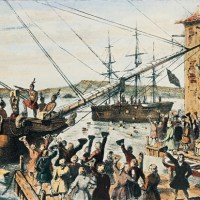
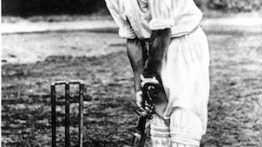
Why have the Germans never been any good at cricket? This entertaining account of the MCC’s 1937 tour to the Fatherland gives some clues. Any country po-faced enough to have a ‘Society for the Encouragement of Playing Ball’ will struggle from the start. Certainly the Germans back then seemed to understand neither cricket’s equipment (‘why so much luggage?’ asked one reporter of the tourists) nor its terminology — later, during the war, letters home from British PoWs about games at their camp were censored because ‘OMWR&A’ was thought to be code. It actually stood for ‘overs, maidens, wickets, runs and average’.

If you prefer banal symbols freighted with meaning to plot, Nicola Barker is your woman

From our UK edition

Readers familiar with Nicola Barker’s hyper-caffeinated style will be surprised by the almost serene first few chapters of her latest novel. It’s 1984 and we are in Pett Level, Hastings, a marginal location even by Barker’s standards (previous novels have been set in Luton, Ashford, and the Isle of Sheppey), and a well-travelled man named Franklin D. Huff is investigating a series of events that took place there many years earlier. The events themselves are nebulous. Something about miracles, romantic affairs, and a saintly child deformed by thalidomide. Before Huff can find any answers, though, countryside serenity is replaced by the quirks of Barker’s reckless imagination. As is usual with Barker’s fiction, the story is a blurb-writer’s nightmare.

The Paris of Napoleon III was one big brothel – which is why the future Edward VII loved it

From our UK edition

Stephen Clarke lives in Paris and writes book with titles such as 1,000 Years of Annoying the French. Dirty Bertie is a book in the same line — a comic history which manages to combine his brand of jaunty, bawdy humour (not mine, I confess) with being genuinely informative about French history. Clarke claims that there is a gap in the biography of King Edward VII. Biographers have not said nearly enough about Bertie’s jaunts to Paris. He is absolutely right about this. To Bertie’s British biographers Paris is a collection of clichés about grandes horizontales and a few well-worn anecdotes.

Reliving the most famous last stand of the French Resistance

From our UK edition

Published to mark the 70th anniversary of the Battle of Vercors, perhaps the most famous stand of the French Resistance in the second world war, there is an awful inevitability to this book. Tragedy looms like the great plateau itself, overshadowing the individual stories of the people who lived, fought and died in these mountains. The strategic and tactical failings that led to their defeat run like strata through the history: a lack of clarity in Allied communications; failure to deliver sufficient heavy weapons or reinforcements; the mistaken use of a guerrilla army as a fixed, defensive force and, above all, the tendency to let diplomacy and politics trump military common sense.

The best new children’s books

From our UK edition

A children’s author and illustrator, Jonathan Emmet, created a stir recently by saying that women are effectively gatekeepers of children’s books — chiefly picture books. They constitute the majority of the buyers, reviewers and prizegivers – and the result is that boys are shortchanged. Too few pirates and dragons — or the wrong sort — and too little peril, too little technology, too little non-fiction. Naturally, he’s had to spend a good deal of energy since explaining no offence was intended. Actually, I think he’s right, and not just about picture books.