Book review

Lillian Hellman lied her way through life

From our UK edition

Lillian Hellman must be a maddening subject for a biographer. The author Mary McCarthy’s remark that ‘every word she writes is a lie, including “and” and “the”’ wasn’t far off. Navigating through the hall of mirrors that Hellman left behind, trying to sort fact from self-aggrandising fiction, seems to have worked Dorothy Gallagher into a fury. Perhaps this book is her revenge. One of America’s most successful playwrights, Hellman had her first Broadway hit before she was 30. She was a close friend of Dorothy Parker and her long-term lover was Dashiell Hammett. Ardently left-wing, she was summoned before Joseph McCarthy’s House Un-American Activities Committee to answer questions about her links with the Communist party.
From Edwardian idyll to meetings with Nehru: the life of Lady Ursula D’Asbo

From our UK edition

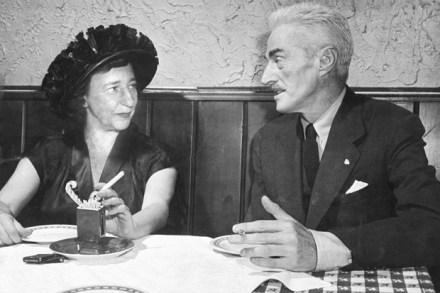
This is the Real Thing, an evocative account of English upper-class life throughout the 20th century. It begins amidst the Edwardian feudal splendours of Belvoir Castle, where Ursula d’Abo spent much of her childhood with her beloved grandfather ‘Appi’. At the coronation of George VI she was a maid of honour to the Queen. During the second world war she worked with 2,000 women making bullets. Postwar life was hardly less varied and amazing, with an other-worldly stay in princely India, and meetings with Nehru. Married life at West Wratting Park and Kensington Square, two beautiful Georgian houses she restored, was followed in her widowhood by five years with Paul Getty at Sutton Place.

What are the Chinese up to in Africa?

From our UK edition

Few subjects generate as much angst, or puzzlement, among Western policymakers in Africa as China’s presence on the continent. In his new book, China’s Second Continent, the American journalist Howard French recalls meeting US officials in Mali to sound them out on the matter. Instead, he finds himself barraged by questions. ‘It would really be useful for us to know what the Chinese are up to,’ one American official tells him. ‘So far we’ve been limited to speaking with them through translators. We’ve got very little idea about any of this.’ Grasping the range and scale of China’s activities in Africa is indeed a tall order. Commercial deals are cloaked in secrecy. Immigration statistics from African countries are poor.

Doctor Zhivago’s long, dark shadow

From our UK edition

For most Russians, Boris Pasternak is one of their four greatest poets of the last century. For most Anglophone readers, he is the man who won the Nobel Prize for Doctor Zhivago. The first four chapters of The Zhivago Affair give a full picture of Pasternak’s life and the Soviet literary world up until the early 1950s, when Zhivago was nearing completion. Pasternak was born in Moscow in 1890, into an assimilated and highly cultured Jewish family. His father was a painter, his mother a concert pianist; among the family’s friends were Leo Tolstoy, Sergey Rachmaninov and Rainer Maria Rilke. Pasternak wanted first to be a composer, then a philosopher — but by the age of 22 he understood that his vocation was poetry.

Having a moral compass just gets in the way of being smart

From our UK edition

Steven D. Levitt was a Harvard economist who specialised in politics and spent a lot of time watching cop shows on TV. Then he had an idea: why not switch from politics, which he found dull, to crime? Soon he was studying the crack cocaine economy. Stephen J. Dubner was the guitarist in a rock band called the Right Profile. But he didn’t like the rock’n’roll lifestyle; he was a bookish type. So he became a journalist, got a job at the New York Times, and found himself interviewing a go-ahead Harvard economist who had written interesting stuff on the crack cocaine economy, among many other fascinating things. This, of course, was Levitt. Dubner made a suggestion: why not write a book together, based on Levitt’s work?

A divine guide to Dante

From our UK edition

Reading Dante is an experience of a lifetime. You never come to the end of it. But,  like Dante himself, at large in the frightening wood, you need a companion for the journey, and it is difficult to imagine one more enlightening than Prue Shaw. The Emeritus Reader in Italian at the University of London, she has been lighting up the genius of Dante for us all her professional life, especially his politics. But this book is just as accessible to a general reader as it would be a source of wonder and envy to scholars. It is mainly concerned with the Comedy, but it expounds much of Dante’s other work.

Maigret’s new clothes – this month’s best new crime novel, published 1931

From our UK edition

The publisher has whipped up a tsunami of excitement around The Truth About the Harry Quebert Affair (translated from the French by Sam Taylor; MacLehose, £20, Spectator Bookshop, £16). More than two million copies have already been sold. Its author, Jöel Dicker, is apparently ‘Switzerland’s coolest export since Roger Federer’.The novel, which is billed as a literary thriller, has been garlanded with ecstatic reviews and prizes on the continent. It’s the story of a young, successful but blocked writer who tries to re-energise his muse by visiting Harry Quebert, the Great American Novelist who put him on the road to fame. Harry lives in a beachside house in Maine.

J.K. Rowling is just too nice – and too lucky – to satirise publishing

From our UK edition

J.K. Rowling’s second novel under the Robert Galbraith moniker is a whodunit set in the publishing industry. This isn’t a rare set-up for crime fiction. Authors, no matter how grungy and streetwise they pretend to be, spend most of their time doing dreary things with people they dislike in the name of selling books. They are itching to put their agents, publishers and fellow authors on the page so that they can slay them. Thing is, if you’re the most famous author in the world, bearing a grudge against publishing might look a bit ungrateful. Rowling realises this and adjusts her approach accordingly. The Silkworm is a soft, toothless, inept novel with a kind heart. Our private eye Cormoran Strike is back.

Only tourists think of the Caribbean as a ‘paradise’

From our UK edition

A couple of years ago in Jamaica, I met Errol Flynn’s former wife, the screen actress Patrice Wymore. Reportedly a difficult and withdrawn woman, her life in the Caribbean (apart from the few details she cared to volunteer) could only be guessed at. The Errol Flynn estate, an expanse of ranchland outside Port Antonio, was grazed by tired-looking cattle. ‘Haven’t we met before?’ Wymore said to me as I walked into her office after knocking. ‘You remind me of someone I know.’ I took in the riding crops and spurs hanging on the wall. After eight years of marriage, in 1958 Wymore had divorced Flynn, who died the following year at the age of 50 having more or less boozed himself into the grave.

The gentle intoxications of Laurie Lee

From our UK edition

He was always lucky, and he knew it: lucky in the secure rural intimacy of the upbringing described in Cider with Rosie; in the love of some passionate, clever women, whose guidance and support get rather less than their due in As I Walked Out One Midsummer Morning; and in having survived the Spanish civil war — the subject of A Moment of War — despite seeing action (though on his part this involved more seeing than action) in the terrible last battle of Teruel, and being imprisoned three times as a suspected spy. Behind and beyond all that, he was lucky in his gifts: charm, which included a knack for emotional escapology; artistic skill — he drew, painted and was an agile violinist; and above all verbal fluency.

Thug, rapist, poetic visionary: the contradictory Earl of Rochester

From our UK edition

Despite being an earl, Rochester is very nearly a major poet. His poems and letters were torn up by a zealous mother after his death, bent on destroying anything obscene or scandalous. A good deal was lost, but a lot was passed from hand to hand, copied and recopied (it was never printed in Rochester’s lifetime). His full development as a poet cannot be traced, but some of what survives is tantalisingly rich, and has fascinated many subsequent writers. He is one of those rare poets who come to mean much more to later generations. ‘Upon Nothing’ bears a bleak relationship to the end of Pope’s ‘Dunciad’, and, very powerfully, to Hardy’s poem on the sinking of the Titanic, ‘The Convergence of the Twain’.

You know something’s up when MI6 moves its head office to Croydon

From our UK edition

Alan Judd’s spy novels occupy a class of their own in the murky world of espionage fiction, partly because they blend two elements of the genre that are rarely seen together. First, they are grounded in a wholly plausible version of the intelligence community, where decisions evolve in Whitehall committee rooms and the wiles of politicians and bureaucrats are just as important as the machinations of moles. Secondly, their central characters often recall an older tradition of gentlemen patriots that goes back to John Buchan’s Richard Hannay. The combination shouldn’t work but in Judd’s novels it does. These elements meet in the character of Charles Thoroughgood, who has already appeared in three earlier books, first as a soldier and later as an MI6 officer.

The Australian literary icon who fooled her family

From our UK edition

There aren’t many places you can get shouty about Proust without losing your job. The Lane Bookshop in Perth, Western Australia, is one of them. As an undergraduate, I’d pitch up there for work on Saturday mornings with as much song in the heart as a hangover allowed. Because for me the Lane wasn’t just a shop, it was a salon. The young staff, all writers, were encouraged (and fed, when cash was scarce) by the kind owners. Debates sparked between the shelves. And great Australian novelists came in to buy the books. The late Elizabeth Jolley was one of these. She must have been 80 when I last saw her, bird-thin with fiery eyes. Whenever she walked down the stairs, an awed hush descended.

The man who loathed emoticons – especially :)) as it reminded him of his double chin

From our UK edition

Paul O’Rourke, the narrator of Joshua Ferris’s third novel, is a dentist who spends his days staring into the murky recesses of his patients’ mouths. Despite encouraging them to floss, he is himself a man of curiously ingrained habits. Averse to the digital age and oddly superstitious, he stockpiles VHS recorders and watches the Boston Red Sox with a plate of bland chicken and rice, always careful to avert his eyes from the sixth innings. His small Park Avenue staff implore him to get with the times and develop a website for the practice; but Paul is a Luddite with no interest in kowtowing to a culture of smartphones and over-sharing. So when a well-produced website mysteriously appears and tweets under his name, he is understandably perturbed.

Stephen King – return of the great storyteller

From our UK edition

Stephen King’s latest novel, Mr Mercedes, is dedicated to James M. Cain and described as ‘a riveting suspense thriller’ — a phrase so closely approaching 100 per cent semantic redundancy (a non-riveting thriller? A thriller entirely free of suspense?) that it tells us precisely nothing. All it does is declare that the reader will keep turning the pages. Which we will. That’s what King makes us do. Except Mr Mercedes isn’t, on the surface, a thriller; and you can bet that the consensus will be that King is writing what will be called ‘off-piste’. It’s a slender book, by his standards — only 400 pages — you can get it in your briefcase. There’s nothing particularly weird.

No special pleading needed for this disabled Dutch master

From our UK edition

To discover an ‘unknown’ is the dream of anyone connected with the arts and in Johannes Thopas (c.1626-1688/95) we have just that. This book catalogues the exhibition now transfering from Aachen to the Rembrandt House Museum, Amsterdam (12 July–5 October). The curator is Rudi Ekkart, who discovered Thopas’s meticulous lead-pencil (plumbago) drawings on parchment as an art-history student in the early 1970s, when he had unlimited access to the University of Leiden’s famous drawing collection. After that he kept a record of everything to do with the artist, which now finds formal acknowledgment. Other recognised Dutch artists who were deaf and dumb have shown that a normal life could be profitably pursued.

Hillary Clinton’s autobiography seems destined to join her husband’s – in a bin marked ‘Free’

From our UK edition

Last year a Washington-based journalist called Mark Leibovich wrote This Town, a book whose thesis was, roughly, that Washington-based journalists are terrible people. Leibovich’s book exemplified a trend among self-described Beltway insiders who decry as venial and insipid the trivialities they spend their lives reporting. Sounds a bit precious, I know, not to mention suicidal. But it’s supposed to be waggish and endearing and ironical. The latest victim of this coprophagic tendency is Hard Choices, Hillary Clinton’s third book. Barely a week after its publication, with over a million copies in print, it has already been written off by the hacks who spent months doing potted F.R.