Banking

Ed Miliband’s ‘One Nation Economy’ speech: full text and audio

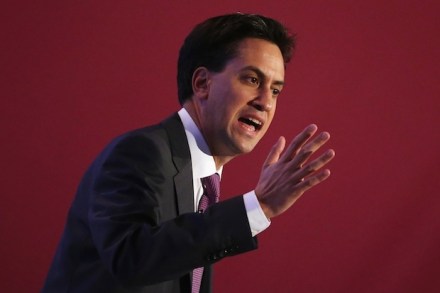
listen to ‘Ed Miliband's ‘One Nation Economy’ banking reform speech’ on Audioboo Today I want to tell you what the next election is about for Labour. It is about those families who work all the hours that God sends and don’t feel they get anything back. It is about the people who go to bed anxious about how they’re going to pay their bills. It is about the parents who turn to each other each night and ask what life their sons and daughters are going to have in the future. It is about those just starting out who can’t imagine they will ever afford a home of their own. It is about the most vulnerable in our country who feel they are just being tossed aside.

Any other business: Oh dear… perhaps Standard Chartered isn’t as dull as it looks

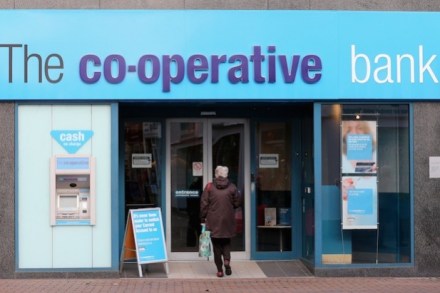
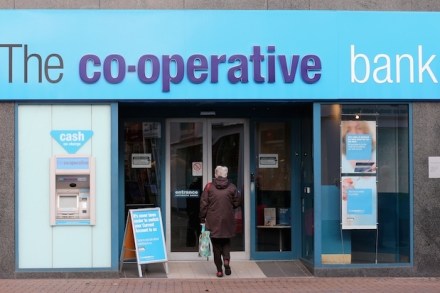
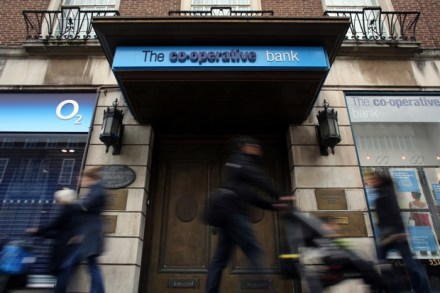
The cautionary tale of the Co-operative Bank, its black hole and its naughty chairman has recently taught us that if a financial institution has the reputation of being dull, earnest and set in its ways, it probably isn’t. The collapse last year of Switzerland’s oldest private bank, Wegelin & Co — whose boss once claimed that being small and provincial made it ‘easy to avoid the deadly emotions of greed and fear’ — was another example. Attention now turns to Standard Chartered, an overseas commercial bank that has long had the reputation of sticking cautiously to the mode of business in which it has historic roots, notably in Asia, and has seen off repeated takeover approaches from others jealous of its franchise.

Who’s really to blame for the Co-op Bank crash?

The naughty Reverend Flowers will be a comic footnote in the history of the financial crisis — but no more than that. In terms of making ministry relevant to modern congregations, you’ve got to take your hat off to a man of the cloth who knows his ‘Charlie’ from his ‘ket’ (for the uninitiated that’s a horse tranquilliser) and likes to unwind after a tough select committee hearing with a ‘two-day, drug-fuelled gay orgy’. But it must be obvious that neither the FSA nor his own colleagues thought him anything other than a figurehead when he emerged through the Co-operative hierarchy to become a director of the Co-op Bank in 2009, and its chairman a year later.

Martin Vander Weyer: The Reverend is just a funny sideshow — here’s who to blame for the Co-op mess

The naughty Reverend Flowers will be a comic footnote in the history of the financial crisis — but no more than that. In terms of making ministry relevant to modern congregations, you’ve got to take your hat off to a man of the cloth who knows his ‘Charlie’ from his ‘ket’ (for the uninitiated that’s a horse tranquilliser) and likes to unwind after a tough select committee hearing with a ‘two-day, drug-fuelled gay orgy’. But it must be obvious that neither the FSA nor his own colleagues thought him anything other than a figurehead when he emerged through the Co-operative hierarchy to become a director of the Co-op Bank in 2009, and its chairman a year later.

Ireland’s back, and luck had nothing to do with it

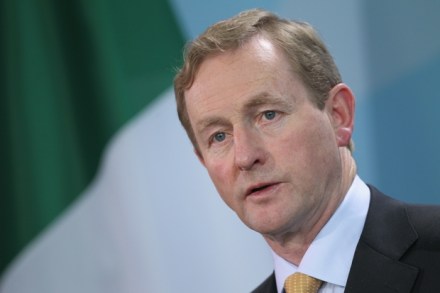
My man in Dublin calls with joy in his voice to tell me ‘the Troika’ — the combined powers of the EU, the European Central Bank and the IMF — have signed off Ireland as fit to leave their bailout programme and return to economic self-determination. This is a remarkable turnaround in just three years since I visited the Irish capital in the midst of rescue talks — to find a nation in shock, staring at an €85 billion emergency loan facility that equated to €20,000 per citizen, a collapsing banking system and a landscape scarred by delusional, never-to-be-finished property developments.

Now the economy is recovering, is it a good idea to buy Poundland shares?

‘Satan seizes control of saintly bank’ would be a fair summary of much of the coverage of the deal that has rescued the crippled Co-operative Bank from oblivion, or ‘resolution’ as it is technically called. In order to avoid that fate, the parent Co-op Group has had to inject £462 million into the bank while accepting a reduction in its own equity stake to 30 per cent. Dominant among the holders of the other 70 per cent will be a group of hedge funds from New York and Los Angeles who may or may not represent the prince of darkness but are certainly looking for what Co-op Group chief Euan Sutherland calls ‘recovery value’.

There’s a revolution — in banking

In 1925 Winston Churchill, then Chancellor of the Exchequer, famously declared that he wished to see ‘finance less proud and industry more content’. In the light of the financial crisis, much the same refrain has been heard from policymakers and politicians over the past five years. How are we to avoid repeating the mistakes of the past? And how might the financial sector reinvent itself for the future? I wish to argue there are grounds for optimism. Out of the ashes of the financial crisis a new type of banking is emerging. Old business models are being rewritten and new entrants are driving change. Indeed, it’s possible that the financial sector is in the early throes of a miniature revolution, the like of which has swept through a number of other industries recently.

Martin Vander Weyer: Bad news for pawnbrokers. Is that good news for the rest of us?

While attention has focused on the sudden ubiquity and alleged iniquity of payday lenders, boom and impending bust has infected another part of the short-term credit sector. For the very reason that the global economy is recovering, Britain’s pawnbrokers are in trouble. Pawnbroking traces its history to the Medicis, but owes its traditional image in this country to Charles Dickens: ‘Of the numerous receptacles for misery and distress with which the streets of London unhappily abound,’ he wrote in 1835, ‘there are, perhaps, none which present such striking scenes as the pawnbrokers’ shops.’ Today’s UK market leader H&T, formerly Harvey & Thompson, opened for business on Vauxhall Bridge Road in 1897.

This isn’t a property bubble – it’s a reason to improve London’s transport

Everyone —including me, if I’m honest — has been talking about a new property bubble. But is it for real? London house prices are rising at an annual rate of almost 10 per cent, and shares in the capital’s bellwether back-from-the-dead estate agency Foxtons soared on their stock market debut last week. Yet according to the Office for National Statistics, the national rise is just 3.3 per cent, the average price of a home having only recently regained its pre--credit-crunch peak. -Outside the South-East, and hotspots such as oil-rich Aberdeen, the pattern is largely flat or even falling.

Bet on Royal Mail, not Twitter

Royal Mail delivers to 29 million UK addresses; last year it generated £9 billion of revenues, of which £324 million remained as profit before tax; and it is likely to be valued at £3 billion in its privatisation share sale, indicating a price-earnings ratio modestly below ten. Twitter — the microblogging phenomenon beloved of self-admiring celebs, but now so ubiquitous as a mode of communication that it is compulsory for British ambassadors abroad — has 200 million users and is expected to generate revenues of just £365 million this year, maybe twice that next year. Twitter says it’s profitable but has so far kept its accounts private, and is nevertheless likely to be valued at £6 billion-plus in its forthcoming flotation.

Welcome back, TSB: your founder’s spirit is alive and well and living in Airdrie

A big hello to the revived Trustee Savings Bank — the spin-off of 631 Lloyds branches that were going to be sold to the Co-operative Bank to fulfil EU conditions for the bailout of Lloyds after its catastrophic takeover of HBOS. The new entity starts life with 4.6 million personal and small-business customers, a clean balance sheet, no investment banking arm and no foreign skeletons in its cupboard. That all sounds promising, but those of us who have long argued for a break-up of mega-banks and a return to relationship-driven high-street finance will watch closely to see whether the new TSB’s slogan, ‘Welcome back to local banking’, turns out to be just that, or a real mantra for change.

Charm-y Carney shows his bookish side

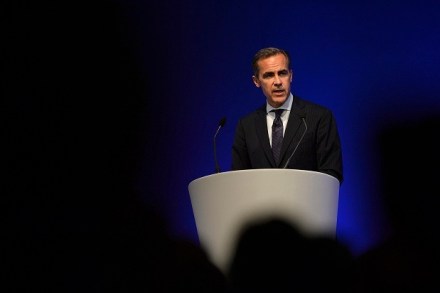
Mark Carney’s charm offensive continues. I hear that the new governor of the Bank of England was laying it on thick last week when he bumped into Faisal Islam, Channel Four’s Economics Editor, after he gave his first public speech. ‘Don’t you have a book out?’ The Canadian smoothy asked Faisal, who offered to send him a copy. ‘Well I've got an idea, how about I buy one?’ The charmer cooed. ‘I’d be honoured, governor.’ Faisal beamed. ‘Hey,’ replied the governor, ‘I said I’d buy it; I didn’t say I’d read it!

Unpaid internships turned me into a banker – but I still think they’re a good thing

My thanks to ‘AndyB’, the only reader who posted an online comment on my column last week. It was ‘Don’t you ever go on holiday?’ and the answer is yes I do, and here I am deep in the Dordogne, glass of rosé to hand, lunch on the terrace in prospect, scanning cyberspace for some fizzing ingredients to make an Any Other Business cocktail. Upbeat economic news from home, led by ‘CBI lifts growth forecast amid optimism’, merely adds to the mellowness of mood. As for local issues to raise the pulse, there isn’t even a decent ruckus to be had over shale gas, since François Hollande has barred all exploration of it beneath French soil.

Whisper it, but the big banks are finally getting their houses in order

By and large it was a good week for the big banks — underpinned by encouraging news from the wider economy, in which every little uptick brings a few more zombie borrowers back to the land of the living. Lloyds returned to profit, promised to start paying decent dividends again and declared itself oven-ready for return to the private sector, with the market anticipating an immediate sale to institutions of a first tranche of the taxpayers’ 39 per cent stake. HSBC reported varied performance around the world but still clocked up a fat result for the half-year — and asked the Vatican to close its account as part of a sweep against money laundering.

Dear Justin Welby – here’s how you can really take on Wonga

I’ve been in the pulpit again, this time to salute the centenary of the death of Charles Norris Gray, a formidable Victorian vicar of my Yorkshire town of Helmsley. Gray was a social activist with strong opinions on everything from sanitation to election candidates, and he did a great deal of good for his parish — so I’m not averse to the idea of churchmen intervening in worldly affairs, and I think Archbishop Justin Welby was right to highlight the parasitical nature of ‘payday lenders’ such as Wonga, even if he was subsequently embarrassed to discover that the Church of England was an indirect investor in it.

The free market didn’t kill Detroit: blame bad managers and worse unions

One of the best articles I ever commissioned as an editor was an account by James Doran of a road trip from the steps of the New York Stock Exchange to the back streets of Detroit in October 2008, at the nadir of the financial crisis. At his destination, Doran found a shocking vista of empty, vandalised factories, all once ‘bit-part players in the now dying auto industry… The desolation was so complete that it hardly seemed real.’ Five years on, the city of Detroit is bankrupt with $18 billion of debts, its population has shrunk to 700,000 from a peak of more than two million, leaving mostly the poor, black and unemployed behind, its public services have disintegrated, and the count of abandoned homes and buildings has risen to 78,000.

Stephen Hester was pushed out of RBS for telling politicians the truth

Quite a spell of bowling from the Chancellor last week, skittling Stephen Hester’s stumps at RBS and causing Paul Tucker of the Bank of England to walk even before the new Canadian umpire had time to raise his finger. The kindest thing to be said about Hester’s innings (enough of the cricket already) is that he made a pretty good stab at bringing RBS back from the dead in the face of fierce political pressure, given that he was never really the right man for the job.

George Osborne’s Mansion House minefield

George Osborne is expected to respond to the Parliamentary Commission on Banking Standards's final report in his Mansion House speech this evening. The report is hefty and packed with recommendations, but there are two areas where the Chancellor will find himself treading a particularly tricky path. Both the proposal to defer bonuses and introduce a criminal offence of reckless misconduct in the management of a bank are designed to encourage responsibility and a greater regard of the consequences of bad behaviour. But Osborne will know that they also pose a threat to the success of the city. He will need to consider what effect deferring some remuneration for up to 10 years will have on London's competitiveness as a financial centre.

What the Banking Commission report says about…

...bad bankers The commission wants to encourage greater personal responsibility, through making it clear with whom the buck stops for each key area within a bank, and sanctions including a criminal offence of reckless misconduct in the management of a bank. The report emphasises that it would be rare to secure a conviction under this offence, but that it would apply 'in cases involving only the most serious of failings, such as where a bank failed with substantial costs to the taxpayer, lasting consequences for the financial system or serious harm to customers'. It also recommends that the PRA and FCA be able to put banks into 'special measures', where the organisation will make a commitment to address concerns identified by the regulator.

George Osborne’s Lloyds sale will be all about votes – just as Mervyn King warned

When a politician’s speech is spun ten days in advance, you know there’s trouble behind the scenes. Next week’s Mansion House dinner will be seen by City attendees principally as a farewell to Sir Mervyn King — and journalists present (including your columnist) will be timing the ovation to see how it compares with Eddie George’s full five minutes in 2003. But we learn that the Chancellor is ‘poised’ to use the occasion to ‘signal’ a public offer of Lloyds Banking Group shares that could raise up to £17 billion and mark a turning point in the post-crisis clean-up of the banking sector. By giving discounts to small investors, it might also swing votes away from Ukip.