Banking

Inquiry debate leaves acrimonious atmosphere

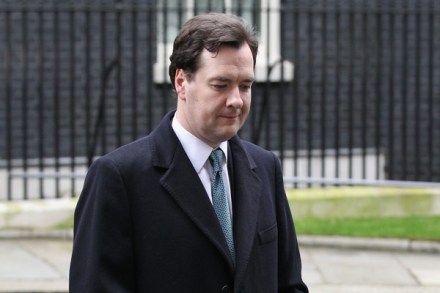
Following the vote just now, there will be a parliamentary inquiry into the Libor scandal. Andrew Tyrie, chairman of the Treasury select committee, will chair it because Ed Balls has agreed that Labour will participate in it as long as it concerns about membership and the secretariat are addressed; presumably, this means that Labour will argue that as it is a joint committee of both House there should be no government majority on it. The debate, though, has left an atmosphere of acrimony behind. It was noticeable that during the vote, Ed Balls walked past George Osborne who appeared to be trying to engage him in conversation.

The View from 22 — chancellor on the charge

Did those around Gordon Brown create the conditions for the Libor fixing scandal? According to George Osborne, the answer is yes.  In his cover feature this week, James Forsyth speaks to the Chancellor of the Exchequer, who takes aim at his opposite number, stating those in the last government were 'clearly involved.' In our latest View from 22 podcast, James discusses how the trail may lead to these key figures from the last government: 'During the 2008 financial crisis, it seems there was a concerted effort to keep Libor low. This prevented banks from being nationalised. But it also raises the question of whether anyone from the last government was involved in these attempts to keep the Libor rate down.

Osborne and Balls are playing high stakes on Libor

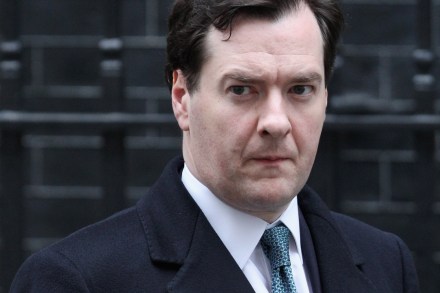
The exchanges between Balls and Osborne just now are some of the most heated and most personal in parliamentary memory. I suspect that Balls would now not offer to cook Osborne ‘my 14-hour pulled pork South Carolina barbecue. I’d know he, as an American aficionado, would truly appreciate it’. The cause for this row is George Osborne’s interview in the new issue of The Spectator. The following paragraphs have sent Balls into a rage: 'If exonerating the Bank is his first priority, his second is tying this scandal to the last government. He starts by blaming the regulatory system devised by Brown and Balls for allowing these abuses to happen.

A Jubilee moment of historic significance

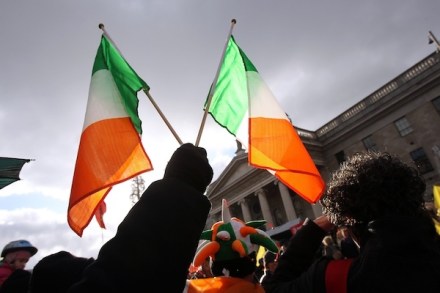
Martin McGuiness will meet Her Majesty the Queen and shake her hand in Northern Ireland. This is a seminal moment. It does not change McGuiness’s commitment to a united Ireland, but it is a strong statement from the Republican side that bygones are bygones. It is also a sign, perhaps, that the sacrifices Britain made over the Bloody Sunday Inquiry where worthwhile, because McGuiness is making a brave sacrifice by doing this: there will be those who condemn him for it. It is also significant that the Palace has achieved this. The conflict in Northern Ireland and the dark historical relations between Britain and Ireland are causes close to the Queen’s heart; and she has made peace and reconciliation a mission of her reign.

Osborne, competitiveness and confidence

George Osborne will formally unveil the government’s banking reforms in a speech at Mansion House later this evening. The reforms are in line with the recommendations of Sir John Vickers’s Independent Banking Commission (ICB), as laid out by the Treasury, which published this White Paper earlier today. For those who’ve forgotten, Vickers suggested splitting retail and investment banking through a Glass-Steagall-type ‘ring-fence’ mechanism that would protect retail, SME deposits and overdrafts while commanding that the ring-fenced part of the bank is not dependent on other departments for liquidity.

Basel III and the EU’s strange desire not to compete

Greece is the centre of European attention, but as George Osborne met with other EU finance ministers today there was another issue bubbling in the background — Basel III. This had been brewing for a while and is yet one of those matters that threatened to isolate Britain from the rest of the EU (though some would argue this is a good place to be). The Chancellor this morning appears to have agreed to the Basel III accord, which stipulates the amount and quality of capital that banks are required to keep. But this was after much haggling — and an Osborne outburst where he said signing on to the original banking capital rules would make him look ‘like an idiot’ — saw amendments being added.

Fears heighten as the Eurocrisis rumbles on

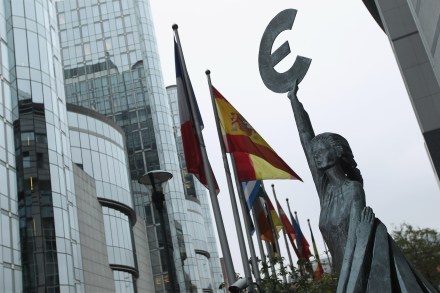
For all the coverage of hacking, pasty tax and the like, the continuing crisis in the eurozone remains the most significant political story. Until it is resolved, it is hard to see how the UK returns to robust economic growth. I suspect that the market reaction to a Hollande victory will be limited as it is already pretty much priced in. Those expecting a degringolade will be disappointed. However, if Hollande does actually try and implement some of his more extreme ideas, the markets could take fright. What is far more worrying than France is Spain. There’s a growing sense of inevitability that the Spanish banks will need a bailout before the autumn.

From the archives: the fall of Saloman Brothers

Back in August 1991, Michael Lewis examined the disintegration of his ex-employer — investment bank Salomon Brothers — for The Spectator. His semi-autobiographical story, Liar's Poker, went onto to become an international best seller. Here is the article in full for CoffeeHousers: The Judgement of Salomon, Michael Lewis, The Spectator, 24 August 1991 We never be told the truth about what happened at Salomon Brothers over the past few years. I'm not even sure that it matters. The firm has admitted to breaking the rules in five separate US Treasury auctions, to fraudulently using the names of its customers, and to submitting an illegal bid for $1 billion worth of US Treasury bonds as a 'practical joke'.

From the archives: Rowan Williams on capitalism and idolatry

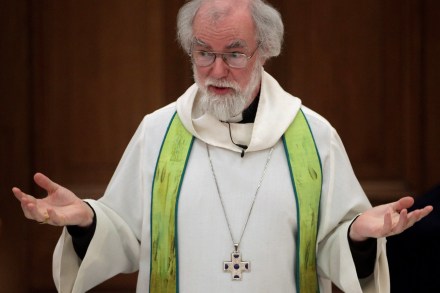
To mark today’s news that Rowan Williams will be stepping down as Archbishop of Canterbury, here’s a piece he wrote for The Spectator during the financial crash of 2008: Rowan Williams, Face it: Marx was partly right about capitalism, 24 September 2008 Readers of Anthony Trollope will remember how thoughtless and greedy young men in the Victorian professions can be lured into ruin by accepting ‘accommodation bills’ from their shifty acquaintances. They make themselves liable for the debts of others; and only too late do they discover that they are trapped in a web of financial mechanics that forces them to pay hugely inflated sums for obligations or services they have had nothing to do with.

How Mervyn King’s role has changed

A week devoted to Mervyn King and his eight-year reign at the Bank of England sounds like pretty turgid stuff. But, already, the series that has started in the Times (£) this morning — building up to an interview with the man himself — is anything but. Here, for instance, is a snippet from one of its articles, by David Wighton, on how Mr King reacted to the crumbling of Northern Rock: ‘As the plight of Northern Rock and other banks worsened, Sir John Gieve and Paul Tucker were urging Sir Mervyn to act, but he would not budge. “He mocked them as ‘crisis junkies’ and more or less accused them of enjoying it,” one former official says. Sir Mervyn took a different approach.

Project Merlin may not wield a magic wand

Are Project Merlin's lending targets just a myth? On the basis of today's figures it's still rather hard to tell. The arrangement between the government and the banks did yield £214.9 billion of gross lending to businesses in 2011 — against a target of £190 billion, and a 20 per cent increase on 2010. But net lending also declined in every quarter of the year. And the target for lending to small businesses of £76 billion was missed by £1.1 billion.  The banks have put this shortfall down to fewer small businesses coming forward for credit — and there's actually some truth in that. This survey suggests that small businesses did indeed withdraw their begging bowls as the year progressed.

Transcript: Stephen Hester on bankers and bonuses

This morning, the chief executive of RBS Stephen Hester appeared on Radio 4's Today programme to discuss the recent furore over his bonus. Hester revealed he nearly resigned over the crisis and agreed that bankers have been making too much. Here's the full transcript for CoffeeHousers. James Naughtie: Banker without a bonus? You might say he’s a lonely figure in his business; he’s Stephen Hester, Chief Executive of the Royal Bank of Scotland. The public furore about executive pay in a bank that’s 83% owned by the taxpayer caused him to forego the bonus he was awarded this year in the form of more than three and a half million shares, worth probably about a million pounds.

Peston: Hester will not take bonus

Stephen Hester’s decision to waive his bonus, revealed by Robert Peston just after 10 o’clock, will be a source of great relief to David Cameron and George Osborne. A story that could have dragged on for weeks, undermining their argument about fairness has just lost most of its potency. Ed Miliband, though, will be able to claim — with some justification — that it was the threat of a Commons vote on the matter that led to Hester renouncing his bonus. But this isn’t quite the end of this business. There’s now the question of what happens to the bonuses for other members of staff at RBS and then there is next year’s round. There’s also the whole issue of RBS’ status.

When one euro is worth more than another

Faisal Islam has a very interesting report from Davos on how at least one bank no longer believes that a euro from Ireland, say, is worth the same as one from Holland or Germany. He writes that: ‘A leading European bank has begun to account for euros differentially, by nation state. That is to say, they are differentiating a risk to euros that originate in a potentially defaulting country from that of a euro-cert. They, in effect, have invented the concept of a German, Greek and Irish euro. Now we accept that government debts from these nations are different. The idea that a bank treats cash differentially, is an incredible development.

Miliband’s proximity problem

Ed Miliband is on unusually assertive form this morning. His observation in the FT that ‘my speech to Labour’s annual conference was not — I think it is fair to say — universally well-received’ is not, I think, intended self-deprecatingly, but rather self-congratulatory, as though he were the only politician calling for a ‘responsible capitalism’ at the time. And he's repeated that suggestion elsewhere: in a short statement for Which?, and in a Labour briefing document — entitled Who is he trying to kid? — that has been filtered around the crowd at David Cameron's speech. Ed is trying to crash Dave's party, and bring it crashing down. Like I say, he's being unusually assertive.

Your three-point guide to today’s RBS report

After months of delay, and much hounding by The Spectator's Select Committee Chairman of the Year, Andrew Tyrie, the Financial Services Authority has finally released its report into the wheezing collapse of RBS in 2008. At 452 pages it is a behemoth of a document, and too much for me to have fully digested yet. But a few points stand out at first glance: 1) Don't blame us, blame Gordon. The Tories are making much of the fact that only three politicians are mentioned in the report: Tony Blair, Gordon Brown and, most relevantly, Ed Balls. And they're not mentioned in a particularly flattering context, either. All three are quoted to partially justify the FSA's regulatory approach in the run-up to the RBS debacle.

From the archives: Fall of the Rock

Yesterday, George Osborne announced the sale of Northern Rock to Virgin Money. Here, to mark the occasion, is the piece Allister Heath wrote on the bailout of the bank in 2007: Northern Rock: morally hazardous, Allister Heath, 29 September 2007 First we heard about 'sub-prime mortgages'; then it was 'collateralised debt obligations'; now it's the turn of 'moral hazard' to appear on the Ten O'Clock News. Jolted out of prosperous complacency by market turmoil, the public has started to care about economics: strange jargon and obscure concepts previously familiar only to investment bankers are going mainstream.

Osborne sells off the Rock

‘Sir Richard Branson set to buy Northern Rock.’ So read the headlines in November 2007 — and now they're finally true. It has been announced this morning that Virgin Money is going stump up £747 million to return the bank to the private sector. This, says George Osborne, ‘is an important first step in getting the British taxpayer out of the business of owning banks.’ By the looks of it, Virgin will be paying less than they would have done four years ago, but they have also had to make various assurances about how they will handle the Rock. When Branson's bid failed in 2007, and the bank was nationalised, it was because the government started worrying about what they saw as 'extortion' on Virgin's part.

The Italian domino effect

For all the debate about Theresa May and border security, the big news has not been at Westminster today. Instead, people have been watching what is happening in Italy. For it is far from certain that Europe, or the Western world for that matter, has a bucket bigger enough to bail out a country that owes more than Greece, Ireland, Portugal and Spain do combined. As the New York Times reports, the European Central Bank is reluctant to step in and start buying Italian bonds because it fears that its previous bond buying efforts have simply enabled the Italians to avoid necessary reforms. It feels that only market pressure will make the Italians actually act. But this is a dangerous game to play because if Italy falls, France will be left teetering on the brink. BNP Paribas has 12.

The paucity of the “99 per cent”

A week may be a long time in politics, but it is no time at all in protest. As the inhabitants of Parliament Square have demonstrated, even a decade is as nothing so long as you have a constantly morphing cause, a council with no balls, and a small but steady stream of acolytes. Last weekend I watched a bridal party sneak in through the side entrance of St Paul's Cathedral. This weekend I went back, curious to see whether the protest that had kept them from entering through the main door had located a point yet. Walking up from Fleet Street the first sight that greets the visitor is a large banner saying 'root out usury.' A surge of Presbyterian nostalgia powered through me. Perhaps I could identify with this protest after all?