Banking

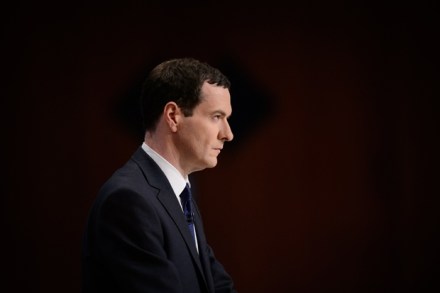
Why the real winner from George Osborne’s ‘Google tax’ could be Nigel Farage

George Osborne’s promise to crack down on multinational companies’ avoidance of UK taxes by the use of impenetrable devices such as the ‘Double Irish’ and the ‘Dutch Sandwich’ certainly has the support of this column. I have long argued that the ‘fiduciary duty’ (identified by Google chairman Eric Schmidt) to minimise tax bills within the law for the benefit of shareholders has to be balanced against a moral duty to pay at least a modicum of tax in every profitable territory.

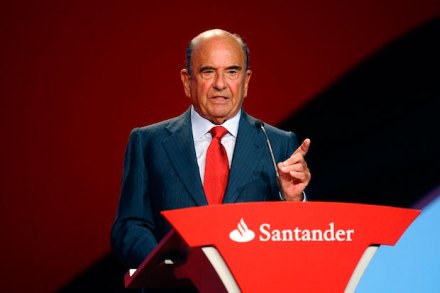
Santander’s secret: to conquer the world, stay like a small-town bank

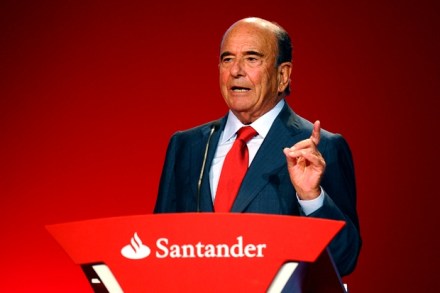
Four years ago, I wrote that I knew no dark rumours about Santander, the rising force in UK high street banking, but that history taught me banks which expand rapidly and globally ‘always come unstuck in the end… partly because the challenge of risk control across such vast portfolios becomes impossible… Banks that have been driven by one powerful personality also tend to lose management grip, and start finding skeletons in cupboards, as the big man comes to the end of his tenure.’ The big man in question was third-generation chairman Emilio Botín — who died in post last week, aged 79.

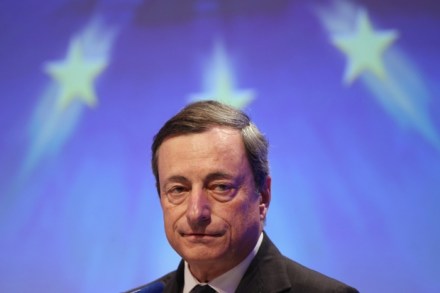
Europe’s leaders worship Mario Draghi. They should listen to him instead

European Central Bank President Mario Draghi secured a place in history by his demonstration, on 26 July 2012, of the power of words in a financial crisis. Not long in office, he had already shown willingness to act firmly, averting a liquidity crunch by providing three-year lending facilities for European banks. That day, he told a conference in London: ‘Within our mandate, the ECB is ready to do whatever it takes to preserve the euro. And believe me, it will be enough.’ While the rest of the speech was an opaque metaphor about the euro as a bumblebee — ‘a mystery of nature because it shouldn’t fly but instead it does’ — ‘whatever it takes’ was clear enough to steady the bond market and ease borrowing costs of eurozone governments.

Why a City job should be graduates’ last resort

August is the season for conversation about career choices. Every holiday party seems to include new graduates or next year’s graduands in need of grown-up advice. Many yearn to be pastry chefs, having devoted their student years to watching The Great British Bake Off. Some want to be journalists, and I tell them it’s more fun than having a secure job with a decent income. Happily I’ve only met one young man this summer who wants to go into financial PR, the métier in which I believe Satan himself did his first internship.

The man who could sell the British public on fracking

Iain Conn, who will succeed Sam Laidlaw as chief executive of Centrica, would have been a dead cert for the top job at his current employer, BP, were it not for the Deepwater Horizon oil rig disaster in the Gulf of Mexico in April 2010. The subsequent PR fiasco terminated the BP career of the then chief executive Tony Hayward — who seemed crushed by the episode, but recovered to make a double fortune at Genel Energy and Glencore. Had Hayward served a full term, Conn (BP’s head of refining and marketing) would almost certainly have followed him. As it was, BP found it more politic to appoint an American, Bob Dudley, to repair relations in Washington while simultaneously arm-wrestling with the Kremlin-connected oligarchs who were BP’s co-investors in Russia.

Even Switzerland is turning lefty. Am I going to have to move to Wyoming?

 Gstaad I am looking out of my window at the green landscape and forested mountains rising beyond, as peaceful a scene as there is in this troubled world, but this is Switzerland, a country that hasn’t fought a war in 700 years, resisting both Napoleon and Hitler through friendly persuasion and by having banks that don’t talk. No longer. The new big bully on the block, Uncle Sam, in cahoots with the vermin that is the EU, is forcing the Swiss to open up and spill the beans. What I don’t get is why the Swiss are lying down and playing dead. Sure, they have all sorts of referendums, but the government keeps signing treaties with the depraved bureaucrats of the most successful criminal enterprise invented by man, once upon a time known as the Common Market.

I know how ineffective sanctions are – but these ones just might work

‘Sanctions,’ said Kofi Annan, ‘are a necessary middle ground between war and words.’ Neither the EU nor the US will deploy troops or missiles to defend Ukraine against Russian-backed separatists, while Vladimir Putin basks in hostile Western words and turns them to domestic advantage. That leaves sanctions as the only means of seeking to influence him. But do they work? Evidence is not persuasive: in 200 cases studied by academics in Washington, from the League of Nations action against Italy’s aggression in Abyssinia in the mid-1930s to Russia’s assault on Georgia in 2008, sanctions were judged successful in one third of cases; in many of those, success was ‘partial’.

Forecasting is a mug’s game – but I was right about the economic revival

‘Perhaps I should shift my prediction to 23 July 2014,’ I wrote in April 2012. ‘That’s the opening of the Commonwealth Games in Glasgow, and we must all start thinking positively about it.’ I was talking about the moment when the nation would at last shake off its economic gloom, which I had previously pinned to the opening of the London Olympics. But that spring we fell back into negative GDP territory (avoiding a technical two-quarter ‘double dip’ only when the first-quarter result was revised upwards to zero) and I felt obliged to ‘elasticate my timetable’. Since the beginning of last year we have had 18 months of robust growth — but pundits less cheerful than me have continued to report a persistent absence of feelgood.

‘Dark pools’ are just another conspiracy of bankers against the public

It was at the Mansion House dinner last year that a City gent two seats away announced himself to be the custodian of one of London’s ‘dark pools’. The phrase sounded pleasingly Tolkienian but his first explanation — an electronic exchange in which large share transactions are completed in total privacy — dispelled the charm. My reaction was sharp enough to make the Downing Street spin-doctor between us fiddle nervously with his Twitter feed. If institutional investors can shift blocks of stock on the quiet, without moving public markets, what happens to the normal process of ‘price discovery’ between buyers and sellers? Surely small investors are being ripped off? Sounds like another market abuse to me, I shot along the table.

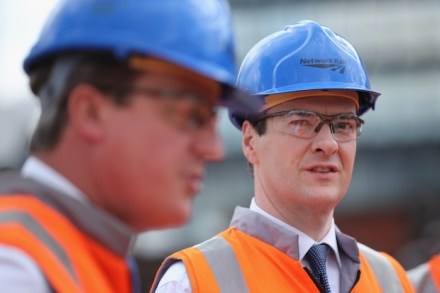
George Osborne’s cynical grab for northern votes (and why I’m for it)

When John Prescott used to wax garrulous about a ‘superhighway’ from Hull to Liverpool, everyone assumed it was a wheeze to spray southern taxpayers’ money across the region he saw as his power base. When George Osborne decided to ‘start a conversation’ this week about a super-city along the same route, an English equivalent of Germany’s Ruhr valley connected by yet another decades-away high-speed rail project, everyone assumed it was about recapturing votes in northern conurbations where Tory MPs and councillors are an endangered species.

What Ed Balls told the bankers

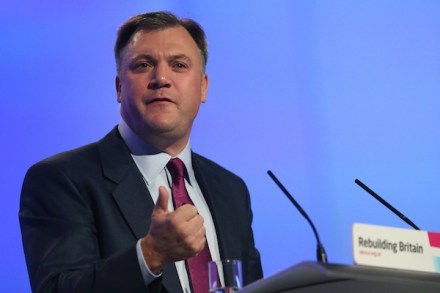
Ed Balls knows how to talk to bankers. Having been Gordon Brown’s right hand man and City Minister under the last government, he is well known in the Square Mile—and far more popular than you might think. Earlier this month, Balls was to be found having lunch at HSBC’s private bank in St James. He was there to address the chairmen of the UK banks. Those present left this private lunch with the distinct impression that Balls was presenting himself as a restraining influence on Ed Miliband, and someone who could protect them from some of the Labour leader's more radical policies. Balls made clear to the group that he was a 'sceptic' of regional banking.

How ancient Athens beat tax avoidance

The taxman will soon be ordering those planning dodgy tax avoidance schemes to declare them beforehand and pay the full tax on them up front. Only if HMRC finally decides the scheme is legal will the tax rebate be allowed. This is a very Greek principle, which could help with the problem of bankers’ bonuses. The 4th century bc Athenian tax system was very progressive: only the richest paid any at all. In times of war, those with a certain value of declared property were liable for an emergency tax (eisphora), levied at 1 or 2 per cent. These wealthy Athenians — numbered in the thousands — were grouped into ‘tax partnerships’, and the state assessed what each partnership had to contribute.

The return of oil price anxiety is a timely reminder to get fracking

‘Iraq turmoil sends crude oil prices to nine-month high’ is the sort of headline that used to send shivers down economists’ spines, especially if it appeared on the same page as ‘Europe faces gas shortage as Russia cuts Ukraine supply’. How worried should we be at the current turn of events in the energy world? Since Iraq’s new insurgency kicked off, the price of a barrel of Brent Crude has blipped from $105 to $115 — nothing to panic about — but the more pessimistic analysts are talking of a further $30 rise if Iraqi oil flows of 3.6 million barrels a day (representing about 4 per cent of global demand) are seriously disrupted.

Are we killing investment banking? And if we are, should we care?

Do we really mean to kill investment banking, or are we trampling it by accident in a fit of righteous zeal? By ‘we’ I mean politicians, regulators and public opinion, and by ‘kill’ I mean rendering it unattractive or unviable for any shareholder-owned financial business except on the most limited scale — and as uncertain a career choice as, say, Liberal Democrat politics or freelance journalism. The announcement last week of a radical scaling back of Barclays’ trading and deal-making arm has stoked a debate that had been smouldering for some time; for background reading, I recommend recent articles by Philip Augar in the FT and Frances Coppola in Forbes.

Why the bankers’ bonus debate is not going away

A bouquet to Alison Kennedy, ‘governance and stewardship director’ at the Edinburgh-based pensions provider Standard Life, for leading the rebellion of Barclays shareholders against the bank’s decision to pay increased bonuses of £2.4 billion, far outstripping dividends to shareholders and despite a fall in profits. At last week’s AGM, 34 per cent of shareholders refused to endorse the board’s remuneration report after Kennedy declared herself ‘unconvinced’ that the bonus pot was ‘in the best interests of shareholders’ and warned of ‘negative repercussions on the bank’s reputation’.

Any other business: The friends of Putin taking home gold from the Sochi Olympics

Imagine if the BBC’s excitable commentators had been asked to cover the building of Sochi’s facilities, rather than the Winter Olympics themselves. ‘Yeesss!!’ Ed Leigh might have yelled, ‘That’s the 21st construction contract for the big lad from St Petersburg, Arkady Rotenberg. Seven point four billion dollars’ worth, a new Olympic record — more than the entire cost of the 2010 Vancouver Games! How cool is that for the 62-year-old who was Vladimir Putin’s boyhood judo partner? Up next, the $9.

Where I’m looking for the next great banking blow-up

A reader likens me to Dr Pangloss, the quack philosopher in Voltaire’s Candide who insisted that ‘all is for the best in the best of all possible worlds’ even after he was reduced to a syphilitic beggar. It’s true that I tend to regard positive indicators — a 22-year high in the BDO index of business expectations, a CBI statement that ‘we’re starting to see the right kind of growth’ — as a pattern of recovery, rather than a mirage in a minefield. But rest assured I’m also on constant alert for ‘black swans’, those change-making events that (so we learned from a more modern thinker, Nassim Nicholas Taleb) come out of the blue and have to be rationalised afterwards.

Richard Branson deserves (some) respect

Tom Bower’s first biography of Sir Richard Branson, in 2000, was memorable for its hilarious account of the Virgin tycoon’s accident-prone ballooning exploits — and for its trenchant thesis that he had ‘toppled from his perch onto a slippery, downward path’, both in business and personal reputation. But what Bower depicted as ‘the beginning of the end’ for the bearded self-publicist turned out to be rather the opposite. Since the turn of the millenium, Branson has blasted into the stratosphere; not literally, since his equally accident-prone venture in commercial space travel has so far failed to take off, but in the sense that he has attained ever more rarified levels of global celebrity.

Any other business: The £1 bet that built a 1,000-strong company

At a charity lunch in Manchester, I meet a cheerful ‘engagement manager’ from AO.com, formerly Appliances Online, a fast-growing internet seller of fridges and washing machines headquartered at Horwich near Bolton. The job title is new to me: it turns out to mean engaging the company’s workforce in ways that help them enjoy their jobs and feel valued. Their employment package features a £4-a-month ‘healthcare cash plan’ including dentistry, days off for charity work, gym memberships and a 50 per cent subsidy for ‘any social activity our staff fancy, so long as it develops their skills and is done by more than four people’.

Any other business: How François Hollande let France miss the global recovery train

I’ve always respected stationmasters, but that sentiment is not universally shared. A distinguished friend of mine across the Channel described François Hollande the other day as ‘un chef de gare, sans aucune dignité’ — and it’s not difficult to picture the little president, peaked cap awry, trousers unbuttoned, haplessly waving his whistle as the last train à grande vitesse departs for the Eurotunnel laden with talented compatriots who see no future in France. As modern socialist leaders go, Hollande is beginning to make Gordon Brown look statesmanlike. Nicknamed ‘Flanby’ after a cheap custard pudding, he has left decision-making to his ragbag of ministers and done nothing to steer France towards economic recovery.