Banking

‘Bankers’ was not a documentary. It was a BBC hit job

I like bankers. They’re an honest lot. All of us like money, but only they are upfront about it. I once witnessed a conversation between three financiers that started with them comparing their cars, then their houses, then their helicopters. None of the shilly-shallying you find at a society cocktail party, where people slyly suss out your income on the basis of your profession, your postcode, your accent and the school you went to — these bankers went straight to unvarnished one-upmanship. Such frankness can be refreshing. I like bankers because, these days, somebody has to. The second episode of Bankers (Wednesday), the BBC2 three-part documentary that’s just ended, started off in such a mean-spirited way I actually felt sorry for financial traders.

Why Mark Carney’s Canadian success story may be about to fall apart

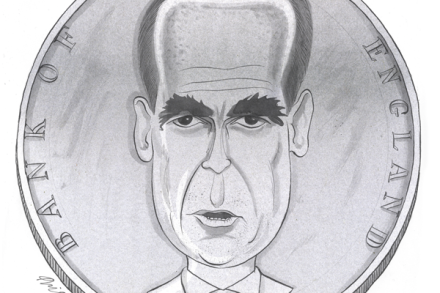
No Bank of England governor has ever been installed in office with quite so much advance hype as Mark Carney. When he moves from running to the Bank of Canada to his new office in Threadneedle Street, expectations will be running high. Carney arrives with a reputation as a master of economic strategy, a man who can single-handedly steer an economy through the most treacherous of waters, and get a country growing again with a few deft strokes of monetary magic. Certainly, George Osborne has invested his hopes in him. During Carney’s time as governor in Canada, the country was ‘acknowledged to have weathered the economic storm better than any other major western economy’, he said on announcing the appointment.

British banking would be poorer without a Co-operative challenge

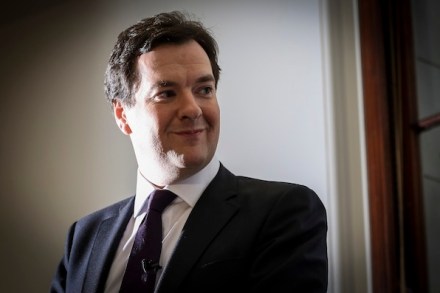
When the Manchester-based Co-operative Bank was announced last July as the buyer of 632 Lloyds branches, tripling the size of its own network, I hailed the news as a step forward for  ‘banking biodiversity’. In February, George Osborne was still praising the deal, codenamed Project Verde, as one that would ‘shake up the established players’. But last month it fell apart — and the superfluous Lloyds outlets, which Brussels insists must be disposed of as a condition of the 2008 Lloyds-HBOS merger, are now likely to be repackaged as a revived Trustee Savings Bank.

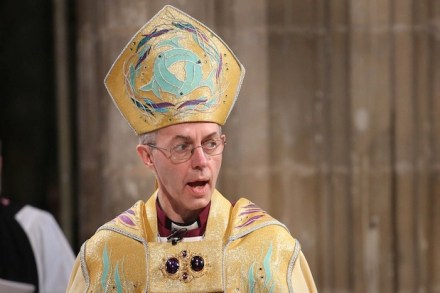
Bishop of London Richard Chartres on bankers, Occupy and Justin Welby

You may have gathered from last week’s column that I’ve been cruising the Med in search of fresh subject matter. It’s the sort of cruise that includes a programme of lectures, and the star turn on that front has been the Bishop of London, Dr Richard Chartres, enjoying a change of pulpit after his much-praised sermon at Lady Thatcher’s funeral. I had been struck by a passage in that address about the ‘prior dispositions’ required for a healthy market economy: ‘the habits of truth-telling, mutual -sympathy and the capacity to co-operate’. So as we steamed across the Ionian Sea I sent a note to the bishop’s cabin asking whether he’d care to elaborate, and he agreed to meet me in the library for tea (this really is a posh boat).

Angela Merkel’s domestic imperative

The Cyprus situation has demonstrated that until the elections in the autumn, Angela Merkel’s primary focus is on a domestic audience. She clearly wanted to show that Germany is now prepared to take a far tougher line. As Open Europe notes the need for this is fast becoming the consensus view in Germany. So, the question now for the Eurozone is will we see any more crunch moments this side of the German election? If we do, then I think we could see the end of the Euro. The Cypriot parliament’s rejection of the initial bailout deal, at the insistence of the voters, shows that there is a limit to the pain that the weaker Eurozone economies are prepared to take for economic and monetary union.

Bankers: I like them — somebody has to

I like bankers. They’re an honest lot. All of us like money, but only they are upfront about it. I once witnessed a conversation between three financiers that started with them comparing their cars, then their houses, then their helicopters. None of the shilly-shallying you find at a society cocktail party, where people slyly suss out your income on the basis of your profession, your postcode, your accent and the school you went to — these bankers went straight to unvarnished one-upmanship. Such frankness can be refreshing. I like bankers because, these days, somebody has to. The second episode of Bankers (Wednesday), the BBC2 three-part documentary that’s just ended, started off in such a mean-spirited way I actually felt sorry for financial traders.

So the Cypriots cop it for having fallen for the honeyed promises of the EU

I had forgotten about Cyprus. I suppose it was lodged somewhere near the back of my mind as a cheap British Mediterranean satrapy usefully divided into two: a southern bit, where our chavs went on holiday, and a northern bit where our criminals hide out from the filth. I was dimly aware that we had allowed them, some time ago, to go their own merry way and that since had followed a predictable descent into barbarism, yet another Ottoman invasion and some sort of coup effected by the useless Greeks. And that’s it, really.

In Cyprus as in Britain, the prudent must pay for others’ folly – but not like this

The Cypriots are the authors of their own misfortune, having turned their banking system into a rackety offshore haven for Russian loot and lent most of the proceeds to Greece. But it was madness on the part of bailout negotiators to shake confidence in banks across the eurozone by trying to impose a levy on deposits held by even the smallest Cypriot savers, in what was presumably an attempt to cream off a layer of ill-gotten foreign cash. And even if the proposal has been radically watered down by the end of the week, we now know the European powers-that-be are prepared to pull this device out of their toolbox if the subject government is too weak to resist.

Europe’s cap on bankers’ pay is merely a harbinger of the Great Persecution to come

‘Possibly the most deluded measure to come from Europe since Diocletian tried to fix the price of groceries across the Roman Empire,’ was Boris Johnson’s assessment of the proposal to cap bankers’ bonuses at 100 per cent of base salary, or 200 per cent with shareholders’ approval. This blunt exercise in market interference was tabled by a committee of MEPs led by a British Lib Dem, Sharon Bowles (perhaps in revenge for the fact that she didn’t win the Bank of England governorship, for which she applied) as a condition of agreeing a new set of bank capital reforms. With the support of all member states other than the one most affected — that’s us — and despite token resistance from George Osborne, it will now pass into EU law.

Losing the plot | 28 February 2013

Who got the most out of the credit crunch? Security guards, repossession firms, bailed-out banks and, of course, playwrights. Anders Lustgarten is the latest to cash in on five years of global misery with If You Don’t Let Us Dream, We Won’t Let You Sleep. The play, like the title, is effortful, disjointed and cumbersome. In the first half, a gang of fatcat bankers sets up a new financial instrument, Unity Bonds, which will generate profits from socially useful behaviour. This intriguing idea is sidelined in the second half. The action moves to a squatter camp where the banking system is about to be put on trial. Lustgarten assumes, no doubt correctly, that the audience is more in sympathy with anti-capitalists than with high finance.

The losers of the Libor scandal

The Treasury Select Committee published its stinging report into Libor today, and it makes uncomfortable reading for all involved. 'That doesn't look good,' committee chair Andrew Tyrie said when describing the failure of both the FSA and the Bank of England to spot the manipulation at the time. His committee's report also pointed out that things did not look good for Bob Diamond's 'highly selective' evidence, either, saying: 'The committee found Mr Diamond's attempt to subdivide the later period of wrongdoing [following his telephone conversation with Paul Tucker] neither relevant nor convincing.

Libor isn’t working

The Financial Services Authority's Martin Wheatley will take one of the first steps to cleaning up the banking industry's reputation after the Libor scandal today when he publishes an initial discussion paper on his review of Libor. Wheatley is likely to confirm what it appears Sir Mervyn King, his deputy Paul Tucker and Angela Knight of the British Bankers' Association already suspected back in 2008: that Libor as it currently stands is 'no longer fit for purpose'. The FT reports that Wheatley will suggest scrapping Libor altogether and replacing it with a rate based on actual trades that would be overseen by a new independent body. This would remove the 'incentive to manipulate' Libor that Timothy Geithner highlighted.

Boris on the warpath on Standard Chartered

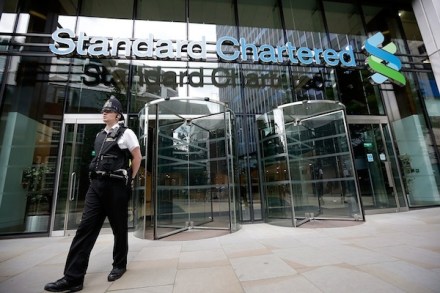
Boris Johnson is the Spectator's diarist this week, and as you'd expect, his piece in tomorrow's magazine is full of wonderful Borisisms including cyclists who 'wave their bottoms at each other like courting pigeons' and 'luscious gold doubloon'. But the Mayor of London also launches an attack on America and the way 'some New York regulator' has set upon Standard Chartered. He writes: I mean, what is all this stuff about Standard Chartered? This British bank has generally enjoyed a high reputation for probity (as these places go) until yesterday, when some New York regulator apparently denounced Standard as a 'rogue institution'. Well, if people have broken the law of this country, then by all means bang them away.

Cesspits and the City

It's becoming difficult to predict just when the period of remorse and apology for bankers really will be over. Bob Diamond claimed that it had finished in January 2011, and found to his cost this summer that this was not true. The Libor scandal that cost the Barclays boss his job wasn't the only unpleasant thing to crawl out of what Vince Cable described as the 'cesspit' in the City of London, though. Today Standard Chartered's shares fell by 16 per cent following allegations from US regulators that the bank had covered up £160bn worth of transactions with the Iranian government. And at Southwark Crown Court this morning, Jessica Harper, head of fraud and security for digital banking at Lloyds bank admitted a £2.4 million fraud.

RBS next in line for Libor heat

The Guardian has published an interview on its site with Stephen Hester in which the RBS chief executive predicts his bank is facing a huge fine for its part in the Libor fixing scandal. He says: 'RBS is one of the banks tied up in Libor. We'll have our day in that particular spotlight as well.' Hester can to a certain extent afford to be upfront about what is coming down the line for his bank. Even though it was clear from the start that there were other banks wading around in this swamp, Barclays took the majority of the flak as the first one to be fined. There might be another round of emails about bottles of Bollinger to feast upon, but the revelations will not be as shocking the second time around.

The odd omissions from the banking inquiry

The difficult birth of the parliamentary inquiry into Libor and banking standards continued today with a controversy over which members of the Treasury select committee have been appointed to it. To general surprise, Andrea Leadsom, one of the better questioners on the committee, has been left off. This is particularly odd given that she is a former banker with real knowledge of the industry. John Mann, the pugnacious Labour MP, has also not made the cut. He has responded by labelling the coming inquiry a ‘whitewash’. What makes Leadsom’s omission particularly odd is that the Tory MP selected to join Tyrie on the inquiry is Mark Garnier, who is also a member of the 2010 intake. So, this is not a question of parliamentary seniority.

After LIBOR, why tolerate central banking?

&"Did you encourage them to make up the made up thing to their own advantage?” That’s how one Twitter correspondent paraphrased a question to the Deputy Governor of the Bank.  The LIBOR scandal has exposed the institutions and culture of the City to popular scrutiny as never before.  The population is reacting with justified incredulity to the absurdity it is finding.   LIBOR submissions from Barclays and everyone else were based not on the rate at which they would lend, not on what they actually had to pay to borrow, but on what they said they thought they might have to pay. On the face of it, that is the flakiest of the three possible metrics. What system of financial regulation could cope with the inherent moral hazard?

Tucker denies Labour leant on Bank over Libor

So Labour ministers did not 'lean on' the Bank of England to encourage lowballing of Libor rates, according to Paul Tucker. The Deputy Governor of the Bank told the Treasury Select Committee this afternoon that he had held conversations with officials about how able Barclays was to fund its operations. This is the exchange between Pat McFadden and Mr Tucker. McFadden asked whether any minister had tried to 'lean on' him over Libor: 'Absolutely not.' Asked whether Shriti Vadera had leant on him: 'I don't think that I spoke to Shriti Vadera throughout this whole process.' Ed Balls? 'No' Other ministers?

Tucker’s down on his luck

'This doesn't look good, Mr Tucker.' Andrew Tyrie made this observation towards the end of his Treasury Select Committee's evidence session with Bank of England Deputy Governor Paul Tucker. He was talking about the minutes of a meeting in 2007 which suggested Tucker was aware of the lowballing of Libor, but he might as well have been summing up the witness's hopes of taking the reins as the Bank's next Governor. Tucker insisted he was not aware that lowballing was taking place, but the minutes themselves said: 'Several group members thought that Libor fixings had been lower than actual traded interbank rates through the period of stress.' John Mann leapt on this, saying the minutes quite clearly referred to 'people submitting returns below what in fact were the traded rates'.

QCs could be the solution to the banking inquiry row

There are, though partisans don’t want to admit it, problems with both a judicial inquiry and a parliamentary inquiry into the Libor scandal and the wider culture it has revealed. A judicial inquiry would drag on and, judging by the Leveson Inquiry, there’s no guarantee that the judge would understand the industry he’s meant to be examining. But, as yesterday demonstrated, the standard of questioning at any parliamentary inquiry is going to be patchy.   John Thurso, a Lib Dem member of the Treasury select committee and one of the most respected MPs, has been out floating a compromise solution. His idea is that the Joint Committee should have the power to take on QCs.