American foreign policy

Shenzhen was kabuki theater

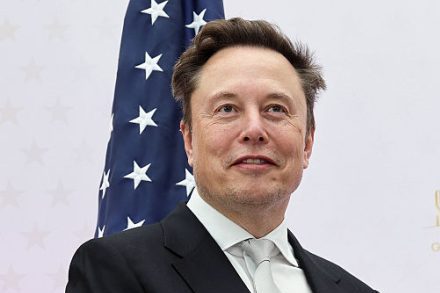
Vladimir Putin did not get to carve up the world at today’s historic summit in Shenzhen with Donald Trump and Xi Jinping. But he got the next best thing, which was a photo opportunity. Plus, warm words of friendship from Donald Trump. And from the Chinese side, the validation that Xi still values the two inheritances of Cold War superpower status that Russia has hung on to – a large nuclear arsenal and a permanent seat at the UN’s Security Council.  Best of all for Putin – and most shocking to Trump’s critics – was the moment when Trump called Putin “my friend” and promised that they would do “a lot of wonderful things” together.
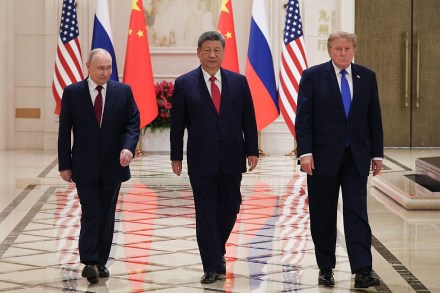
shenzhen

Trump is cynical and shocking about Ukraine – but is he also right?

What does “victory” in Ukraine mean – or “defeat?” Can there be lasting peace without justice? Direct talks between Russia, the US and Ukraine will finally commence in Abu Dhabi early next month, marking the beginning of the end of this bloody war. As Kyiv and Moscow, plus their respective allies, prepare to thrash out the details of a grand bargain, it’s vitally important to clarify what we mean by “victory” or “capitulation,” as those terms get thrown around by politicians observing the war’s closing act. A hot mess of false starts, betrayals, Russian dissembling and European denunciation lies ahead.

ukraine

Ukraine is much weaker without access to Starlink

The full-scale war in Ukraine began with fast, armored advances that covered hundreds of miles in weeks. Then drones began finding tanks and other vehicles in their hideouts, destroying them before offensives could get going. By 2024, both sides had largely given up on armored warfare. A 19-mile-wide “kill zone” now straddles the front line, with drones spotting and striking anything that moves. The front line has barely shifted. Ukraine recently found a way to get tanks back into the fight, raising the prospect of a new phase in the conflict. But those innovative tactics could be under threat, following interruptions to Ukraine’s use of the Starlink satellite network.

ukraine

Putin can smell Washington’s desperation

Donald Trump has staked a big chunk of his political credibility on finding peace in Ukraine – and by doing so in partnership with Vladimir Putin, and on the Kremlin’s terms. But is Putin ready to play ball and help save Trump’s backside, politically and economically? The answer is yes: Putin will probably play along with small gestures like partial ceasefires and prisoner releases. But when it comes to the big stuff like actually stopping what Putin calls his "special military operation," the Kremlin is likely to stick to its guns and ignore Trump’s special pleading while it continues pulverizing Ukraine’s cities.

donald trump russia

Has Trump changed sides on Ukraine?

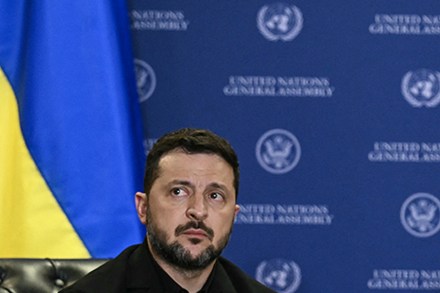
Has Donald Trump effectively changed sides in the Ukraine war? Over just a few tumultuous days, Trump’s already rocky relations with Volodymyr Zelensky have tumbled into something close to irreconcilable breakdown. After Trump announced that he would be de-sanctioning Russian diesel exports in an attempt to lower global prices, Zelensky had the temerity to call him “weak.” Trump responded bluntly that “it’s time for Ukraine to get a new president,” then squarely (and unfairly) blamed Zelensky’s continued strikes on Russian oil refineries for an international fuel price spike.

ukraine
NATO

Revealed: NATO’s plan to combat Russia

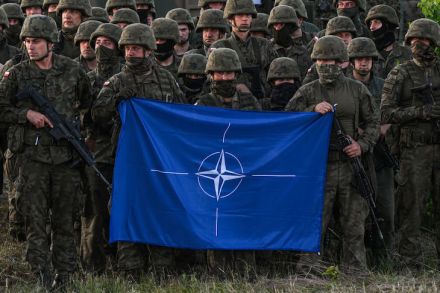
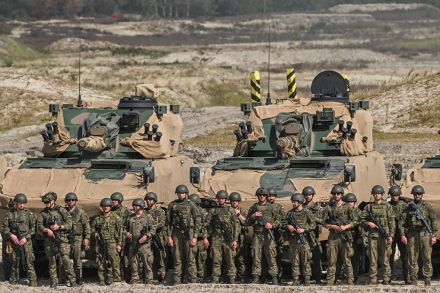
Amid the Sturm und Drang of Donald Trump’s White House and Pete Hegseth’s Pentagon, General Alexus Gregory "Grynch" Grynkewich laid out what he terms NATO’s “Theory of Victory.” This is a concept of operations that will “block the initial attack... blunt it and prevent further advance. And, if required, break the enemy’s forces and the operational war fighting system that is arrayed against us.” In short: Block, Blunt and Break. General Grynkewich was careful not to point fingers but the location of his talk, at the Warsaw Security Forum, left no doubts as to who the potential ‘adversary’ General Grynkewich is both SACEUR (Supreme Allied Commander Europe, NATO’s lead operational commander) and USEUCOM, the commander of all US troops in the European theater.

Lithuania tells America to move in

From our US edition

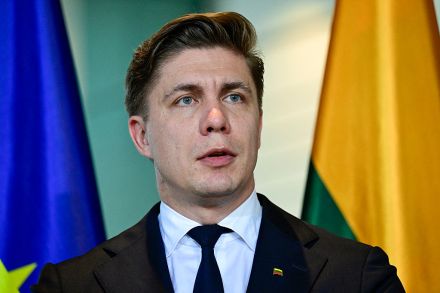
On Monday, President Trump was asked whether the US would consider a permanent military base in Lithuania. “They are friends of mine. They are great people. So we will certainly look at it.” That was enough encouragement for Lithuanian’s Prime Minister Mindaugas Sinkevičius, who then announced Lithuania would cover its cost. “@POTUS only needs to make a political decision and Lithuania is ready to cover the associated costs. ”, he announced on X. This is not simply another smaller European country keen on more American security guarantees.

lithuania

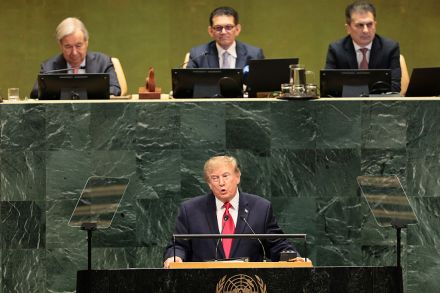
Trump’s UN speech was a blasé affair

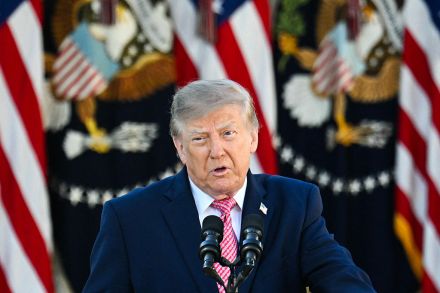
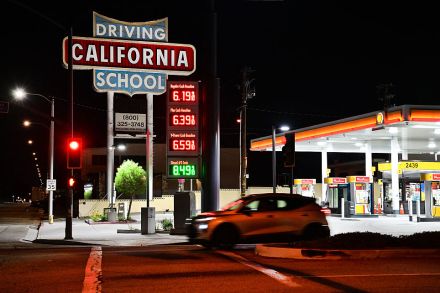
Donald Trump remains on a renaming tear. During his Tuesday morning address to the United Nations, he declared that his administration will now “officially” call artificial intelligence “super intelligence” and government documents – “and hopefully the worlds” – will substitute “SI” for “AI.”  SI has long stood for Sports Illustrated, but Trump went on to muse “let’s see if I have any power. Maybe I do and maybe I don’t. We’re gonna find out pretty soon.” Indeed we are. The truth is that Trump was appearing at a somewhat ticklish moment for him. The latest polls have his popularity somewhere between 29 to 32 percent. Gas and diesel prices are soaring. Hamburger hovers at around $8 a pound.

un trump

Peace in Ukraine – or more war in Eastern Europe?

From our US edition

"GREAT NEWS," hollered @realDonaldTrump on Truth Social yesterday. "Thanks to the bold leadership of my friend, Karol Nawrocki, President of Poland, major progress is being made toward establishing a US Army base in Poland." A lot is going on on Europe’s Eastern Front. The Polish Prime Minister Donald Tusk declared around the same time that Russia is planning "hybrid strikes using drones and missiles against countries supporting Ukraine, including Poland.

ukraine

The Houthis are complicating Trump’s already failing war

To lose one Middle East sea lane vital for the global economy may be regarded as a misfortune; to lose both looks like carelessness. As every armchair strategist knows, Donald Trump has lost free passage through one strait: Hormuz. Last week he let another slip from his grasp, Bab al-Mandeb, taken by Tehran’s allies, the Houthis. More than a quarter of the global oil supply could now fall under Iranian control – and Trump's war is more doomed than ever.  For those confused about Middle Eastern waterways, a look at the map... The Strait of Hormuz, conduit for a fifth of the world’s oil, is east of Saudi Arabia and south of Iran. All the way over on the other side of Saudi Arabia, on its western coast, is the Red Sea leading down to the Bab al-Mandeb Strait.

houthis

In Iran, America is being sucked deeper into an unwinnable war

From our US edition

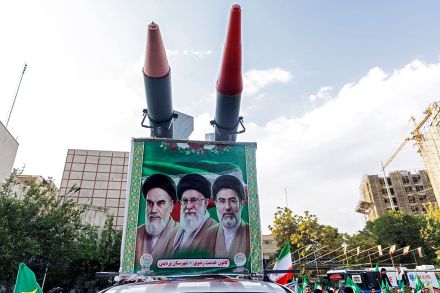
Tehran knows it does not need to defeat the United States in a conventional war. It can instead exploit the vulnerabilities of America and its Sunni Gulf allies by opening up new fronts. With shipping in the Strait of Hormuz disrupted, Saudi Arabia has been transporting oil via the Red Sea and keeping global energy markets just about under control. But that alternative Red Sea route is now being threatened and the economic consequences are becoming considerably more serious. Iran’s mullahs are widening their war with the US not only through direct attacks, but through their Shia allies and proxies across the Middle East. Earlier this month, the Iran-backed Houthis seized strategically important territory across Yemen’s Red Sea coast.

Oil at $100 a barrel is a disaster for Trump

From our US edition

When Donald Trump's political obituary comes to be written, none of his colorful phrases over the years will seem quite as outrageous as his remark in June, when the Consumer Prices Index hit 4.2 percent: "I love the inflation." He later claimed that he meant he loved the inflation figures because they weren't as high as they could have been. But that isn't going to wash: he had scorned the very people who had voted for him, and for whom inflation is a very big deal, by dismissing inflation as something unimportant.  He won't be making the same mistake, presumably, now that oil prices have hit $100 a barrel once more, for the first time since July.

oil

How Denmark’s royals could help defend Greenland from Trump

Donald Trump’s bloviation about Greenland has been near-constant since he became president elect in November 2024. In the intervening period, the demands for the territory's acquisition have varied in tone and substance, from menacing statements to social media memes that are best thought of as bizarre. The response from both elected governments of Denmark and Greenland has been a consistent rejection of Trump’s demands. Meanwhile, European NATO allies have rallied around the Danish Prime Minister, Mette Frederiksen, who came through a hard-fought election in March this year. Frederiksen used last month's NATO summit in Ankara to reiterate that Copenhagen was ready and willing to defend the territorial integrity of the Kingdom of Denmark.

greenland

How will harsh sanctions on Iran play out?

If you control the world’s largest economy, as the US does, and if your enemy depends on exports to the West, as Iran does, it should hardly be a surprise when the big economy decides to use its commercial and financial leverage.   That is exactly what the US is doing – and this week it announced it would ratchet up the pressure substantially. Some sanctions were already in place, most notably restrictions on Iran’s oil exports, enforced by the US Navy. What’s new is that those sanctions will be supplemented by a full range of additional sanctions on commercial and bank transactions routed through third countries.

iran sanctions

Why is Trump unhappy about military drills with South Korea?

Donald Trump has instructed his Secretary of War, Pete Hegseth, to “substantially reduce” joint military exercises between the United States and South Korea. The two countries have had a bilateral defense agreement since 1953, and it was in defense of the government in Seoul that 36,500 American service personnel gave their lives during the Korean War. (It is worth noting that, despite the signing of an armistice at Panmunjom in July 1953, the conflict is technically ongoing.) Trump’s hazardous decision to downgrade military cooperation with and support for South Korea has come as a surprise.

south korea

Is Donald Trump becoming the new Jimmy Carter?

One day President Trump wants to dial down hostilities with Iran. “We’re low-keying” the conflict, he said Sunday. A day later, though, he was keyed up. After Tehran demanded reparations from Washington as part of its attempt to resurrect June's Memorandum of Understanding, Trump said on Truth Social that it was the Iranians who should: Compensate America for all of the people that they have killed and gravely wounded with their roadside bombs and many conflicts, for which they are famous, as led initially by General Soleimani, including the families of those killed on the USS Cole, and thousands of others killed in combat. Now it is Trump who has become a hostage of Tehran The problem is simple. For all his bluster about staring down the mad mullahs, Trump is on the run.

carter

There’s no good outcome for this groundhog-day war

From our US edition

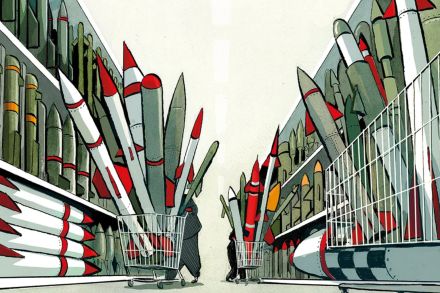
Since the end of the Cold War, America has been the world’s supreme power. The idea that the United States could be taken down militarily by any other country is simply implausible. US invincibility, indeed, has spawned the concept of asymmetric warfare: instead of trying to overwhelm an enemy, you prod relentlessly at its weak points. This has changed the world from one in which organized warfare would break out between the major powers from time to time to one where peace has to be maintained against the constant hum of terrorism and guerrilla action. It comes as a shock, then, to learn that the US has apparently all but run out of long-range precision missiles.

missiles

Marco Rubio’s defense spending call is nothing new

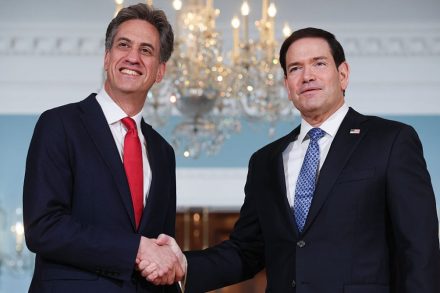
This week Ed Miliband made his first trip to Washington DC since becoming Andy Burnham’s Foreign Secretary. He is 56 now, an MP of more than 20 years’ standing in his fourth cabinet role, yet there is something both boyish and gauche about him: the eternal younger brother. How would he fare as Britain’s envoy to President Trump and the cult of MAGA? Miliband had been invited to Washington by Secretary of State Marco Rubio after the pair met at an Association of South East Asian Nations foreign ministers’ conference in the Philippines last month. It had been rumored that the Trump administration was disappointed at Burnham’s selection of Miliband as Foreign Secretary, insofar as it is possible to imagine President Trump displaying much interest in the matter at all.

ed miliband marco rubio

Will Hamas really disarm?

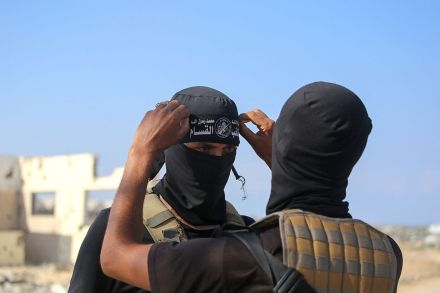
No one imagined that Hamas would voluntarily hand over its weapons and turn to politics and peace in the Gaza Strip. Even when President Trump announced his Board of Peace and 20-point plan toward a settlement to end the war with Israel, the sticking point, every analyst insisted, would be the disarmament of an organization designated a terrorist group by the United States, Britain, the European Union, Australia and many other nations. It’s unlikely that Hamas will cooperate unless Israeli troops withdraw as per the agreement Now, after months of negotiations – involving Trump’s two Middle East envoys, Egypt, Qatar and Turkey – and without any fanfare, the seemingly impossible has been achieved.

hamas

Colombia’s transition is being brokered on the Potomac

From our US edition

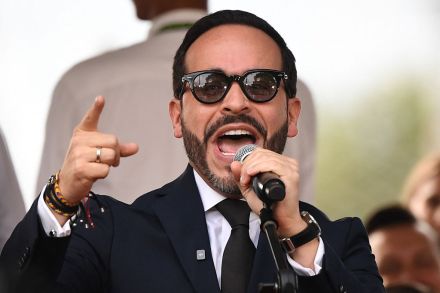
It is another sweltering afternoon in Washington, and the room at the Atlantic Council is filling with businessmen and diplomats for a speech already ten minutes late. José Manuel Restrepo, Colombia's vice-president-elect and a former finance minister, is no stranger to the venue: since last fall he has been a senior fellow at the Atlantic Council. But the think-tank polish sits on top of a crisis back home. In June, the right-wing outsider Abelardo de la Espriella won Colombia's presidency by a whisker – some 250,000 votes out of 26 million – beating the chosen candidate of the outgoing president, Gustavo Petro.  Petro, the country's first leftist leader and a former guerrilla, has refused to accept the result.

Colombia