Books and Arts

The literary appeal of the English upper classes

“However British you are, I am more British still,” said the American expatriate novelist Henry James, explaining his fascination with all things aristocratic and Anglo. It’s a type of fascination that’s only gathered steam over the years. A grand representative of the establishment, Lady Anne Glenconner, sold thousands of copies of her first book, Lady in Waiting, in the US, and recently discovered that her (admittedly predominantly homosexual) American fanbase has taken to throwing Lady Glenconner-themed costume parties. Meanwhile, Carla Kaplan, whose biography of Jessica “Decca” Mitford, Troublemaker, went on sale at the end of last year, discovered that Decca, known as “the Queen of the Muckrakers,” has a manic following among cowboys and long-haul truckers.

Why does Taxi Driver still resonate?

Even if you haven’t seen the movie, you probably know the macabre legacy of Martin Scorsese’s early masterpiece Taxi Driver. Released 50 years ago this month, the tale of the eponymous cabbie Travis Bickle, played by Robert De Niro, still has something potent to say about what can happen when a brooding loner finds himself adrift amid the menace and jammed chaos of New York’s streets with a .44 Magnum for company. Perhaps one of the reasons Taxi Driver resonates with so many people is because of this human void that lies at its center. At one time or another, we’ve all felt as alone as Travis Bickle.

Taxi Driver
coppola

Coppola, Lucas and Spielberg’s outsized impact on 1970s cinema

For any serious lover of cinema, the 1970s were both a golden decade and the beginning of the end of film as an art form. After the permissiveness and countercultural impact of the 1960s, a whole generation of new filmmakers emerged, many of whom remain household names. These men – and they were almost exclusively men – produced work that shook up expected norms and took the medium in new, thrilling directions. It is impossible to list all the pictures and their directors who made this difference, but there are good reasons why they remain celebrated today. And then Star Wars came along in 1977 and changed the trajectory of the industry forever.

marty supreme

Marty Supreme mirrors Timothée Chalamet’s desire

Recently, Timothée Chalamet gave the world a refreshing show of ambition when, after winning a SAG award, he said that “the truth is I’m really in pursuit of greatness. I know people don’t usually talk like that, but I want to be one of the greats.” Ambition perhaps turned into arrogance when, during an interview for his new film, Marty Supreme, Chalamet noted that during the last few years, he’s been handing in “top-of-the-line performances... I don’t want people to take it for granted. This is really some top-level shit.

The golden years of David Bowie

This year marks the anniversaries of two of David Bowie’s most compelling and powerful albums: 1976’s Station to Station and 2016’s Blackstar. Given that they are often – rightly – described as Bowie’s crowning artistic achievements, amid severe competition from his other releases, they also have the intriguing fillip that both were originally released in January: a fortunate time for the musician, who was born on January 8, 1947, even if it was also the month in which he finally departed this Earth. Yet the comparisons between Station to Station and Blackstar, which came out 40 years apart, are far more pervasive – and persuasive – than the serendipity of their release dates.

david bowie

A vibrant, partial look at Gabriele Münter

Recognition can be late in coming for many artists, but perhaps especially so for women whose originality and talents too often become overshadowed by their more famous romantic partners. Museums are often eager to put on shows making this very argument as women artists are rediscovered. Sometimes the thesis succeeds; other times, it does not. The latest of these is the case of the German artist Gabriele Münter (1877-1962), whose reputation, until recent decades, rested less on her own body of work than on her long-time connection to her mentor and lover, the Russian expressionist Wassily Kandinsky (1866-1944). The Guggenheim Museum’s exhibition, Gabriele Münter: Contours of a World, attempts to rectify the imbalance.

The inside story of how America got to the Moon

On March 16, 1966, Neil Armstrong and David Scott became the first astronauts ever to dock with another spacecraft when they linked their Gemini 8 capsule to the uncrewed Agena target ship. However, the cheers had barely died down at Mission Control Houston when Scott realized they had a problem. The conjoined spacecraft had begun a gentle leftward pitch. Armstrong and Scott watched in horror as the capsule’s gentle pitch became a tumbling motion that increased, turning the craft into a centrifuge. In desperation, Scott undocked the two ships before gravity ripped them apart. But Gemini 8 continued to spin faster. At 60 revolutions per minute, the astronauts began to slip into unconsciousness.

This Tucker Carlson biography is a chronicle of an era

Tucker Carlson may be the most divisive man in America, a human tuning fork vibrating at frequencies that delight half of the country and drive the other half demented. Few public figures inspire such simultaneous loyalty and loathing. To his admirers, he’s a truth-teller with a preternatural instinct for cultural anxiety. To his critics, he’s a fabulist with a talent for setting fires and selling the smoke. This tension – this strange mix of menace and magnetism – is what Jason Zengerle captures in Hated by All the Right People, a biography that becomes, almost inevitably, a portrait of the contemporary conservative movement itself.

George Saunders’s thoroughly Dickensian novella

George Saunders’s luminous new novella Vigil begins with a fall of a kind – lower-key, sinless and very funny: “What a lovely home I found myself plummeting toward, acquiring, as I fell, arms, hands, legs, feet, all of which, as usual, became more substantial with each passing second.” With the fallen narrator landing headfirst, ass “in the air and fresh new legs cycling energetically,” the story’s tone is set. Though explicitly modeled after Charles Dickens’s A Christmas Carol, Vigil is quintessentially Saunders in its combination of user-friendly stylistic innovation, straight-faced satire and a deep dive into Big Moral Questions.

How Fatima Bhutto’s dog saved her from a toxic relationship

Americans who are concerned with heightened levels of political violence should understand that we are fortunate compared with Pakistan, whose most visible political family, the Bhuttos, have a history that makes even that of the Kennedys look tame. One survivor, journalist Fatima Bhutto, born in 1982, encapsulates the family tragedies. Her grandfather, the charismatic prime minister Zulfiqar Ali Bhutto, was executed under trumped-up charges by the government serving the man who deposed him, army chief Zia-ul-Haq. Her uncle, Shahnawaz Bhutto, died in mysterious circumstances, possibly murdered, at the age of 26.

How mediocrity took over the Grammys

Is music getting worse? Rick Beato is a musician, producer and critic with more than five million YouTube subscribers. His answer would be: yes, pretty much. In a recent video, he compares the 2026 Grammy Song of the Year nominees to those of 1984. There are a few bright sparks among the slate of new songs, but Beato regards most of them as derivative, unoriginal and unlikely to be remembered past the end of the awards show. In contrast, 42 years on, all the 1984 nominees – Michael Jackson’s “Beat It,” The Police’s “Every Breath You Take” and Lionel Richie’s “All Night Long” among them – are firmly embedded in the popular music canon. One could ask the same question about science: has it gotten worse? My answer, I have to say, reflects Beato’s for music.

To see, or not to see Hamnet?

In 1966, the actor Raphael Montañez Ortiz staged his one-man show Self-Destruction at London’s Mercury Theatre. Intermittently screaming “Mommy! Daddy!,” Ortiz tore the clothes from his body, doused himself with baby powder, lay down in a diaper, downed a few bottles of milk and began vomiting profusely. Plastic bags were then distributed to members of the audience, who were encouraged to follow suit. Montañez Ortiz’s performance gave the psychologist Arthur Janov the idea to create primal scream therapy, a psychiatric fad that once counted John Lennon and Yoko Ono among its followers.

hamnet

Our Mount Rushmore

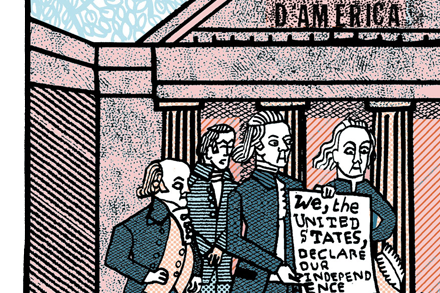
Personally, I regard Mount Rushmore as an excrescence on the mountain and a monument to the horror that Edward Abbey called industrial tourism. Beyond that, it is an expression of a naive piety and a patriotic sentimentalism that no longer exists in America. Matthew Davis correctly views the presidential sculptures carved into the face of Mount Rushmore in the Black Hills of South Dakota by Gutzon Borglum in the 1920s and 1930s as very much a period piece, an expression of popular American patriotism in the early decades of the 20th century. His “biography” of the mountain is equally a cultural work reflective of its time. Preeminent among Davis’s concerns in writing this book was to determine, “What is a memorial for?

rushmore

Nicolas Sarkozy’s inside story from Parisian prison

Nicolas Sarkozy’s prison memoir is a slender book about a short sentence that nonetheless makes for compulsive reading. It is unintentionally comic, occasionally moving and almost always politically calculating. This, despite the weight of its author’s self-importance, moral evasions and intermittent self-awareness. Sarkozy, 71, was sentenced to five years for criminal conspiracy linked to Libyan money in his 2007 presidential campaign. He served less than three weeks in Paris’s La Santé prison before being released under judicial supervision to finish his punishment at home, pending an appeal to be heard in March. He used the time efficiently, producing more than ten pages of writing a day. The result is a compact 200-plus-page chronicle of noise, bad showers and damaged pride.

sarkozy
night manager

Why has it all gone wrong for The Night Manager?

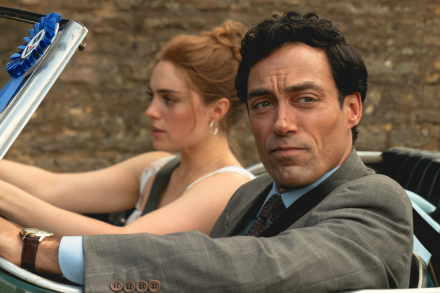
The Night Manager is finally back after ten years with three major drawbacks: no Elizabeth Debicki for the sex scenes; no Tom Hollander for the comedy scenes; and no Hugh Laurie for the evil-kingpin-in-his-toothsome-mountaintop-lair scenes, I nearly claimed. But only because at the very beginning of the new season the Laurie character’s grizzled body is identified by Olivia Colman (in her most irritating performance ever, as a dowdy but capable MI6 officer with a gratingly suburban accent). And I didn’t want to spoil the coming plot twist in case any of you were foolish enough to have fallen for this blatant case of Chekhov’s misidentified corpse.

Behind Wes Anderson’s infamous sensibility

Woody Allen once sardonically described the fans of his films as being divided between those who liked the “early, funny ones” and the later, darker pictures. Much the same might be said of another famous WA: Wes Anderson, who has established himself as one of American cinema’s most significant auteurs despite no longer living in the country – he hops between England and France. Like most auteurs, his films are more succèss d’estime than they are succèss de box office, but he has the cream of Hollywood lining up to work with him and commands respect among actors young and old. Anderson is rightly celebrated – or castigated – as a visual stylist, but he has enormous flair as a screenwriter Anderson’s visual sensibility is infamous.

The depth of Edmund de Waal

“I’m very, very proud of making pots,” says Edmund de Waal. “I don’t call myself a conceptual artist.” He is putting the finishing touches to an exhibition of ceramic sculptures at Gagosian’s Beverly Hills gallery. Around the walls are sleek, tiered vitrines filled with porcelain vessels, along with a sequence of smaller gold-painted boxes – “reliquaries,” as de Waal calls them, inspired by the early Renaissance master Duccio. “I hate the word minimalism. I find it completely useless as a term.” In the last 20 years, de Waal has risen from the status of a humble ceramicist to become one of Britain and America’s leading contemporary artists, best known for his multipart installations of pots.

The pedants’ revolt

The scene is the imperial palace on the Palatine Hill in Rome in the 2nd century. The philosopher Favorinus is waiting to greet the emperor Hadrian when a grammarian corners him and launches into a lecture on the grammatical qualities of the word penus, meaning “provision.” “Well and good, master, whatever your name is,” Favorinus replies wearily. “You have taught us more than enough about many things of which we were indeed ignorant and certainly did not ask to know.” A thousand years later, the Muslim polymath Ibn al-Jawzi tells of an Arabic grammarian, notorious for punctilious use of archaic language, attempting to negotiate with a carpenter. “What is the price that this pair of doors costeth?” the scholar asks.

Intellectuals pedants

Crucible’s complex picture

The beginning of Crucible, the writer and Oscar-nominated director John Sayles’s eighth novel, opens with a feint. A couple of journalists are taken for a mock-perilous test drive at the presentation of Henry Ford’s latest automobile. On their return, what starts as a humorous Q&A becomes increasingly restrictive as it becomes clear there is to be one narrative only: the company’s, or rather, the founder’s. This familiar combination of showmanship and control may feel ubiquitous now, but the audacity of Ford and the outrage he provoked was to change the face of American industry.

crucible