Iram Ramzan

Iram Ramzan is a journalist and commentator. Her Substack is iramramzan.substack.com

Why Shahid Butt might win in Birmingham

From our UK edition

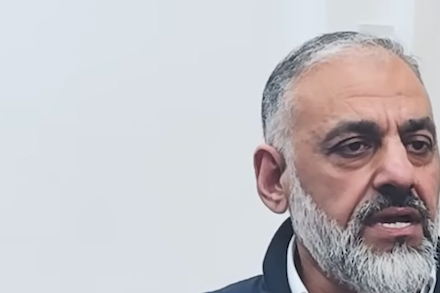
It’s the end of the working day on a Friday, and punters are steadily beginning to fill up Sparkhill’s last remaining pub. Landlord Mark McDwyer pulls another pint of Guinness (only £4.60), our conversation punctuated by the thwack of pool balls from the table behind us.  'This is the headquarters of the Birmingham Pool League,' he says proudly. His parents, immigrants from Ireland, bought McDwyers’s in an auction in 1997. 'It’s a thriving pub. There aren’t enough people living in the area so a lot of our customers come from outside.' Competition is hardly fierce. At one point, there were 23 pubs in Sparkhill. Pensioner Tom Kilmartin describes the place as 'an oasis within a desert of despair'.
Who cares if Robert Jenrick can’t pronounce Kemi Badenoch’s name?

From our UK edition

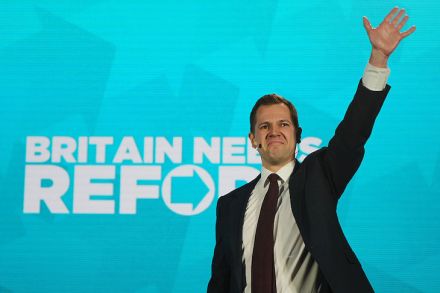
Kemi Badenoch, I can feel your pain. Nope, not the feeling of being knifed by a former colleague –but having your name mangled beyond recognition. The Tory leader has pointed out, with admirable restraint, that 'there’s no ‘bad’ in my name' There is a particular kind of silence that arrives just before someone mispronounces your name – the flicker of hesitation, the calculation, the internal conflict over the decision to even attempt it. My name is Iram. It means garden in paradise (I know, right?), yet it’s hellish for some people to pronounce. It is short, phonetic, yet routinely transformed into Imran, Eye-ram, or some other curious innovation. In emails, I’m frequently misgendered altogether. 'Dear Mr Ramzan,' some correspondents have written.

Iranians feel emboldened – but protestors are paying a heavy price

From our UK edition

For the past fortnight, Rozita (not her real name) has been out on the streets of Tehran, calling for an end to the Islamic Republic. The 37-year-old witnessed the anti-riot police shooting indiscriminately at her fellow citizens. 'They don’t think about who or where they are shooting. I’ve been beaten up by them many times before,' she tells me. Fortunately, Rozita’s quick on her feet. She learned her lesson from the Woman, Life, Freedom protest in 2022. Rozita was hit in the face with tear gas and she needed medical treatment, which she still takes to this day. She was also shot with plastic bullets. She would have been hit with real bullets had it not been for the quick-thinking of a young man nearby, who bore the brunt.

The mullahs’ grip on Iran is failing

From our UK edition

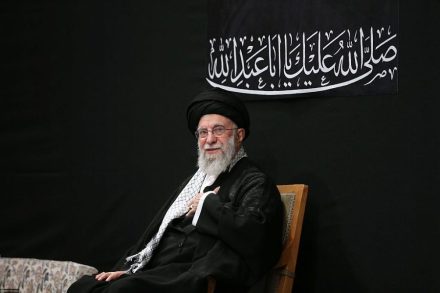
Mahsa Amini was killed by Iran’s morality police on 16 September 2022. Her only ‘crime’ was wearing ‘improper hijab’. The 22-year-old Kurdish woman’s death galvanised the ‘Woman, Life, Freedom’ protests that shook the Iranian regime. Three years on, the anger behind the protests remains. On the anniversary of Amini’s death, residents of Tehran chanted ‘Death to the dictator’ (referring to the Supreme Leader Ayatollah Khamenei) from rooftops and windows, and shopkeepers in Mahsa’s hometown of Saghez, in Kurdistan province, went on strike.  This week, I’ve been speaking to Iranian exiles in Britain. For Ellie Borhan, a 43-year-old Iranian exile and activist, Mahsa’s death marked a turning point. ‘Something switched on inside me,’ she says.

Do Druze Lives Matter?

From our UK edition

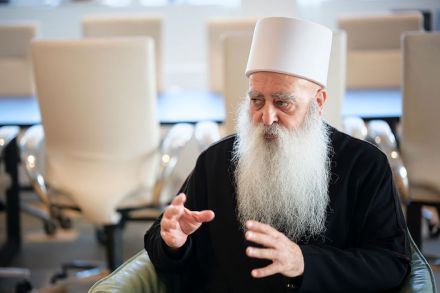
It’s not even 10am, but already the Galilee sun is prickling the back of my neck. I’m standing outside a war room set up in the community centre of the village of Julis, watching a delegation of 200 Druze men arrive. One by one, they make their way up the steep path – most dressed in their trademark black robes, baggy trousers, and white hats. They’ve come from across northern Israel to plead for their people on the other side of the border, where a quiet massacre has been unfolding in southern Syria. 'Tomorrow it could be Europe or the US. These extremists will get stronger, and they will murder each and every one of us.' Since the overthrow of Bashar al-Assad last year by Islamist-led rebels, Syria has been consumed by sectarian violence.

Reform’s motherland, Meloni’s Italian renaissance & the adults learning to swim

From our UK edition

46 min listen

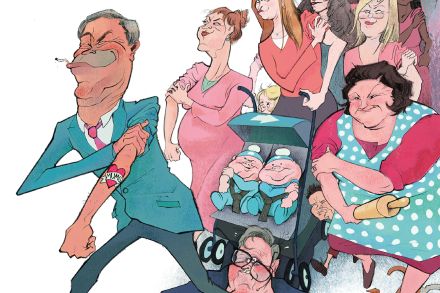
First: Nigel Farage is winning over women Does – or did – Nigel Farage have a woman problem? ‘Around me there’s always been a perception of a laddish culture,’ he tells political editor Tim Shipman. In last year’s election, 58 per cent of Reform voters were men. But, Shipman argues, ‘that has begun to change’. According to More in Common, Reform has gained 14% among women, while Labour has lost 12%. ‘Women are ‘more likely than men… to worry that the country is broken.’ Many of Reform’s most recent victories have been by women: Andrea Jenkyns in the mayoral elections, Sarah Pochin to Parliament; plus, there most recent high profile defections include a former Tory Welsh Assembly member and a former Labour London councillor.

I’m learning to swim – at 37

From our UK edition

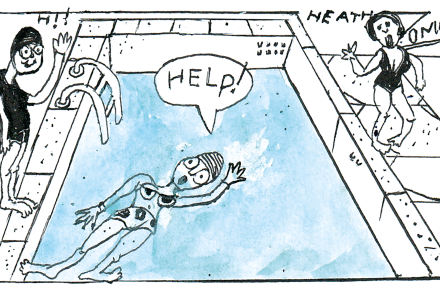
It’s humiliating to admit that at 37, I can’t swim. I’ve spent most of my life embarrassed about not having a skill familiar to most children. It’s not as though I can blame never having had lessons. I did. Each week, with my nine-year-old classmates, I would trundle off to our local leisure centre in Oldham for compulsory classes. I didn’t hate them, but I didn’t exactly enjoy them either. My limbs flailed and I disliked that stench of chlorine. Any skills I picked up by the end of the year atrophied. I found myself returning to the pool with increasing infrequence. My insecurities deepened, turning into an insurmountable, all-encompassing fear of the water.

Petroc Trelawny, Gareth Roberts, Tom Lee, Leyla Sanai and Iram Ramzan

From our UK edition

28 min listen

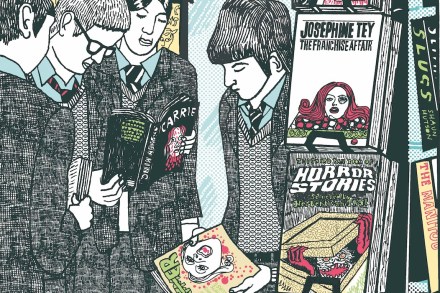
On this week’s Spectator Out Loud: Petroc Trelawny reads his diary for the week (1:14); Gareth Roberts wants us to make book jackets nasty again (6:22); Tom Lee writes in defence of benzodiazepines (13:44); Leyla Sanai reflects on unethical practices within psychiatry, as she reviews Jon Stock’s The Sleep Room (19:41); and, Iram Ramzan provides her notes on cousin marriages (24:30). Produced and presented by Patrick Gibbons.

Trump shock, cousin marriage & would you steal from a restaurant?

From our UK edition

39 min listen

This week: Trump’s tariffs – madness or mastermind?‘Shock tactics’ is the headline of our cover article this week, as deputy editor Freddy Gray reflects on a week that has seen the US President upend the global economic order, with back and forth announcements on reciprocal and retaliatory tariffs. At the time of writing, a baseline 10% on imports stands – with higher tariffs remaining for China, Mexico and Canada. The initial announcement last week had led to the biggest global market decline since the start of the pandemic, and left countries scrambling to react, whether through negotiation or retaliation.

Why I said no to marrying my cousin

From our UK edition

There’s a joke that does the rounds about a Pakistani couple who get a divorce. After their union is dissolved, one of them says to the other: ‘Well, at least we’re still cousins!’ I feel slightly guilty whenever I laugh, yet there is some truth to it. I remember at my secondary school how Pakistani girls would, shortly after they’d completed their GCSEs, find themselves married off to a cousin from ‘back home’ just so their husbands could get a British passport and send money back to their families.  I was relieved my family never brought up the subject with me at that age. And then one day, to my horror, they did. I would have been 19 or 20, when my mother told me it was my late grandmother’s wish for me to marry her nephew (my second cousin) in Kashmir.

The shame of the Parkfield school protesters

From our UK edition

An estimated 600 children were withdrawn for the day from a primary school in Birmingham last week. A rather disturbing video has since been circulating on social media, showing scores of Muslim parents with their young children in Birmingham, shouting “shame, shame, shame”. What has caused such a reaction? Parkfield, a primary school in Saltley, teaches a programme called No Outsiders which is designed to encourage children to be “happy and excited about living in a community full of difference and diversity”. It covers issues such as race, gender, ability, sexual orientation, gender identity, age or religion. One part of the programme, on LGBT rights, offended some Muslim parents who saw it as a promotion of homosexuality.

‘Someone had to stand up’

From our UK edition

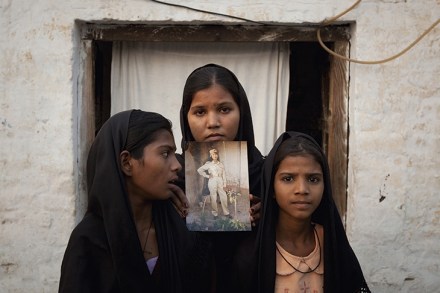
Saif ul-Malook greets me in the hallway of his daughter’s home. Pakistani hospitality dictates that a guest should not go hungry, so there are plates of samosas, kebabs and biscuits. I am also of Pakistani heritage, so know that etiquette dictates that I must politely refuse a few times — or until I can no longer ignore my rumbling stomach. Malook was flown out of Pakistan, because his life was in danger. Since leaving the country, he has kept a low profile in his daughter’s home, a modest detached house in a cul-de-sac off a busy road in a UK city. He asks for the location not to be revealed. The reason his life is in danger is because Malook was a key figure in one of the most renowned cases in recent times.