Music

Fatal flaw

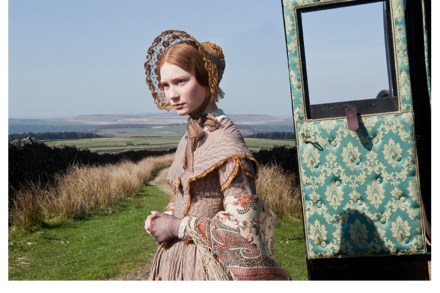
I love the story of Jane Eyre more than life itself, which has never been much cop but, infuriatingly, I could not love this adaptation. I say ‘infuriating’ because what it does right it does very right. It is stunningly mounted, for example, with ferocious landscapes and howling winds and the sort of storms that split skies open. But what it does wrong is fatal, and the error is this: it just isn’t passionate or sexy enough. It is Jane Eyre with all the awful weather but minus the throb of erotic impulse. Jane and Rochester’s first kiss must, surely, be the most longed-for kiss in all of English literature — at last, a forbidden love expressed! — but when it happens here I did not feel a thing. I checked and double-checked but no, nothing.
Lucky charms

I have just finished a book (writing one, not reading one, you fool) and, as ever, I am hoping that it’s good enough and people will like it. Can you ever know? In this respect, and in quite a few others, it’s a little like a band putting out a new album, which they may have been working on for years, which they feel they have put their whole life into, and which goes out there to be judged by others who (let’s be entirely frank here) may not have their best interests at heart. This must apply particularly to someone like Bryan Ferry, who works obsessively for years and years on a record until it gleams in the moonlight, only to have it reviewed by some spotty herbert who listens to it twice and says he much prefers early Roxy Music.

Inspired by Mahler

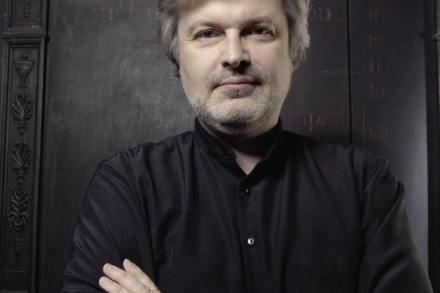
The Bamberg Symphony Orchestra will be giving the concluding two concerts of this year’s Edinburgh International Festival under its chief conductor Jonathan Nott. The Bamberg Symphony Orchestra will be giving the concluding two concerts of this year’s Edinburgh International Festival under its chief conductor Jonathan Nott. The programmes aren’t what you might expect from one of Germany’s leading orchestras, but then very little is typical about the Bamberg Symphony Orchestra. It will be performing Messiaen, Bartók and Ravel.

In times of trouble

This year is the 500th anniversary of the death of Tomás Luis de Victoria, whose work, as I have written before, I consider to be the most moving High Renaissance music there is. This year is the 500th anniversary of the death of Tomás Luis de Victoria, whose work, as I have written before, I consider to be the most moving High Renaissance music there is. But we could have had little idea how the world’s tragedies would follow the Tallis Scholars around, making performances of his ineffable six-voice Requiem as useful as they have been appropriate. From the earthquake in Christchurch, New Zealand, through the disaster at Fukushima to the bombed restaurant in Marrakesh and the murderous performance recently in Oslo, my troupe and/or I have been there or thereabouts.

Blighted by Dylan

Is it true that Bob Dylan is 70? I would never have guessed: there has been so little about it in the newspapers. No doubt he is out on the road right now, on his never-ending tour, murdering his old tunes with a relentless indifference, unbothered by what his fans might think. But you have met a Dylan fan. You might well be a Dylan fan. They are not like the rest of us. It is 20 years or so since I saw Dylan live but I have never forgotten the experience. The most serious trainspotters were down at the front, making sheaves of notes. Others cheered a song they knew Dylan hadn’t played for seven years, four months and 18 days. Someone who had missed the fourth night in the run of seven was ostracised by his fellows.

Musical mockery

They’re back. In August the capital fills with bored, dim-witted, half-naked semi-vagrants who have nothing to do here but get in the way of Londoners who do have things to do here. Tourism is an invitation to robbery. If you aren’t going to a place to work, you’re going there to get worked over. The rites of mob travel invert all the natural obligations of xenophilia. Natives become swindlers and their victims happily connive in the evacuation of their own purses. No one objects because it’s understood that a tourist isn’t a visitor in the proper sense. He’s in London but not engaged with it. He’s half here and half at home.

On a slow night

American trio Low are what you get when a band evolves far from the established music scenes of laidback California and buzzing NYC. Fronted by husband and wife Alan Sparhawk and Mimi Parker, their sound evokes the relative isolation and five-month winters of their native Duluth, Minnesota, with glacial tempos and minimal arrangements, laced with almost folky two-part harmony. Now, nine albums into their career, they can sell out the Barbican’s main hall. American trio Low are what you get when a band evolves far from the established music scenes of laidback California and buzzing NYC.

Tim Rice: a hard graft to success

When one thinks of Tim Rice, one doesn’t exactly picture a man who has had a tremendous struggle to make it to the top. When one thinks of Tim Rice, one doesn’t exactly picture a man who has had a tremendous struggle to make it to the top. He met Andrew Lloyd Webber in 1965, wrote several world-conquering hit musicals with him, and later moved on to Disney where he got a slice of the action on Beauty and the Beast and The Lion King, among others. Unlike his former colleague, who has so often appeared driven and troubled, Rice has always given every impression of enjoying life greatly. But it wasn’t always plain sailing as a fascinating CD makes clear.

Present imperfect

Handel’s Rinaldo, the product of a composer of 25, we should remind ourselves, is not thought, nowadays, to be a masterpiece even by the most fervent Handelians, though when it was first produced in 1711 it was wildly successful, thanks to acres of coloratura and some very elaborate scenic effects. Handel’s Rinaldo, the product of a composer of 25, we should remind ourselves, is not thought, nowadays, to be a masterpiece even by the most fervent Handelians, though when it was first produced in 1711 it was wildly successful, thanks to acres of coloratura and some very elaborate scenic effects.

Happy anniversaries

There has been much to celebrate in Barcelona this week for musicians of a certain bent. The Medieval and Renaissance Music Society held its annual international conference there, which gave the delegates the opportunity to celebrate the musicologist Bruno Turner’s 80th birthday, as well as the 20th anniversary of the foundation of Musica Reservata Barcelona and the 400th anniversary of the death of the Spanish composer, Victoria. The city may be more associated with architects (Gaudí) and painters (Dalí and Miró) than with musicians, but it knows how to stage a pachanga when the pressure is on. The only disappointment was that Rafael Nadal, who was born in Majorca and so is a Catalan speaker, did not win Wimbledon.

Rubies and pearls

It’s so rare I want to shout about anything from the rooftops but I do want to shout from the rooftops about The Ruby Dolls and their latest show, Rubies in the Attic, which takes cabaret and shapes it into something so original that if you can catch it you must. It’s so rare I want to shout about anything from the rooftops but I do want to shout from the rooftops about The Ruby Dolls and their latest show, Rubies in the Attic, which takes cabaret and shapes it into something so original that if you can catch it you must. The Dolls, whom I caught at the Riverside Studios in Hammersmith, are four women — Jessica Sedler, Tara Siddall, Jenny Grove and Susanna Fiore — who dress glamorously in the Forties style (oh, if only I could wear red lipstick like that!

Talented exports

If the atmosphere in Tokyo at the moment is relatively radiation-free — it is said to be less than in the cabin of the aircraft which flew us here — the mood among the local population is one of getting on with life. If the atmosphere in Tokyo at the moment is relatively radiation-free — it is said to be less than in the cabin of the aircraft which flew us here — the mood among the local population is one of getting on with life. Apparently, they collectively held their breaths (and stopped drinking the water) for about 24 hours at the time of the earthquake, and then turned what was left of their attention to abusing the Tokyo Electric Power Company. One of the things they have got on with is attending concerts of Western music.

Taking Time

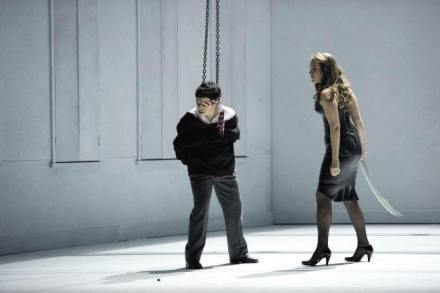
James MacMillan has a string of large-scale choral and orchestral works to his name, and last month saw the première of his chamber opera Clemency at Covent Garden. One wonders, then, how he makes time to write a new, small-scale choral piece for the re-opening of St Patrick’s Church in Soho Square. James MacMillan has a string of large-scale choral and orchestral works to his name, and last month saw the première of his chamber opera Clemency at Covent Garden. One wonders, then, how he makes time to write a new, small-scale choral piece for the re-opening of St Patrick’s Church in Soho Square.

Getting to know him

Here’s a strange thing about Johann Sebastian Bach. Here’s a strange thing about Johann Sebastian Bach. You can be devoted to his work, love it more intensely than any other music, yet never get round to hearing some of his most awe-inspiring compositions, or even know what you’re missing. There are dozens — literally dozens — of pieces of 24-carat Bach whose names are known only to professional musicians and scholars and are barely represented in the recording catalogue: you might find two good digital performances of them, maybe three. Bach wrote at least 400 Church cantatas, of which half are missing.

Crowded house

In ‘Poetry of Departures’, in which Philip Larkin imagines escaping his existence as a librarian for a life of wild daring and adventure, he writes: We all hate home And having to be there; I detest my room, It’s specially-chosen junk, the good books, the good bed. In ‘Poetry of Departures’, in which Philip Larkin imagines escaping his existence as a librarian for a life of wild daring and adventure, he writes: We all hate home And having to be there; I detest my room, It’s specially-chosen junk, the good books, the good bed. And my life, in perfect order. It is, he concludes, ‘reprehensibly perfect’. I wish I could say my life was so well organised.

Moving with the times

It is inevitable that a festival the size of the Proms should become a showcase not just for the artists taking part, but also for the way classical music is perceived more generally. There would be no point in a public services’ provider such as the BBC launching such an enterprise every year if it didn’t deliver what people wanted. And indeed it is clear that it matters very much to the BBC how many people do actually attend these concerts: the blurb is as full as ever of figures showing how last year was a ‘record-breaking’ year; and now how this year there were ‘376 tickets sold every minute during the first hour of BBC Proms booking’. Buzz, buzz, buzz.

Volume control

Thousands of years ago, in or about 1977, I remember reading the intemperate jazzer Benny Green writing about Genesis, whose years of commercial success were just beginning. Green was not impressed. ‘It’s all very loud bits and very quiet bits,’ he said, or words to that effect. You can just imagine his customary wasp-chewing grimace of lofty contempt. But then everyone over a certain age hated pop music in those days, and senior jazzers were often wheeled out to express the silent majority’s view. Green’s comment hit home with me partly because, at the time, I adored Genesis, and partly because he was right. It was all very loud bits and very quiet bits. That was the fun of it.

My kind of band

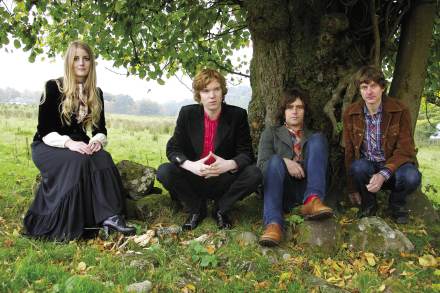
In the aftermath of an early-evening thunderstorm on a baked Easter weekend, Trembling Bells took the stage in a Lewisham pub. They seemed like visitors from another time. It wasn’t quite clear which, but the most evident contender is the early Seventies, and it’s no surprise that Joe Boyd, the celebrated producer of Nick Drake and Fairport Convention, referred to them as ‘my kind of band’. In the aftermath of an early-evening thunderstorm on a baked Easter weekend, Trembling Bells took the stage in a Lewisham pub. They seemed like visitors from another time.

The great divide | 23 April 2011

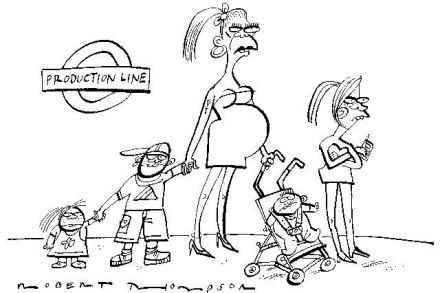
It seems to me that society can now be divided into three different types of people on principles that have nothing to do with class, wealth or status, and everything to do with one’s ease — or lack of it — with modern technology. It seems to me that society can now be divided into three different types of people on principles that have nothing to do with class, wealth or status, and everything to do with one’s ease — or lack of it — with modern technology. In this arrangement, my parents, who live comfortably in Surrey with two cars in the drive and a delightful garden, would belong to the underclass. They have no computer at home, would have little idea how to use one if they did and even struggle with mobile phones.

Marathon man

It rapidly became inevitable that my annual trip to Fukushima would be cancelled: I was due to go less than a week after the earthquake. No explanations were asked for and none was given. After all, every contract I have ever signed has included a standard clause about force majeure — it is always taken for granted and assumed it will never be invoked — and here suddenly I was presented with the most complete definition of that phrase I could ever expect to encounter. The job in question was to judge the all-Nippon Choral Competition, which I had done for the previous three years. In so doing I had got to know not only the town of Fukushima and its delights, but also the people who run the Symphony Hall there, including the prefect of the province.