Music

Middle age angst

I need something new to listen to, and I need it now. But for some reason the latest CDs I have bought are not casting the right spell, and all the old albums I return to out of desperation sound worn and weary to my ears. We all have these little phases. Maybe there’s something in the air. (Call out the instigator, because there’s something in the air.) Maybe love is in the air. (Everywhere I look around. Love is in the air, every sight and every sound.) At least I am not walking in the air. This is getting serious. (I can feel it coming in the air tonight, oh Lord.) What if you realised, one day, that there simply wasn’t any more music that the mind can take? What if you reached saturation point? I worry about this.
This charming man

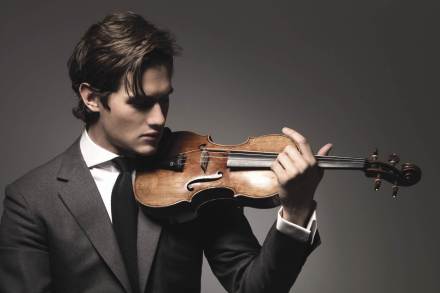
Charlie Siem, the half-British, half-Norwegian violinist, only came to the virtuosic style late in his development (‘probably because I was lazy’, he explains, not convincing me for a moment); but when he did he was hooked. His new, self-titled album (Warner Classics) is, ostensibly, a homage to the virtuosic tradition established in the early-19th century by Paganini, who once proclaimed, ‘I am not handsome, but when women hear me play, they come crawling to my feet.’ Siem, who is currently the global face of Dunhill, does not have that problem.

Shop talk

Last Friday I popped into Gramex, the world’s best second-hand classical CD and record shop, just behind Waterloo Station. Last Friday I popped into Gramex, the world’s best second-hand classical CD and record shop, just behind Waterloo Station. The owner took one look at me and declared, ‘This gentleman is tired. He needs a cup of tea and a Belgian bun.’ Before I had time to reply he dashed into the bakery opposite. Two minutes later I sat there, sticky bun in hand, while he put the kettle on. They wouldn’t do that in HMV. Actually, I suspect they won’t be doing anything in HMV by this time next year.

Trip switch

The drugs don’t work sung the Verve on one of their best songs, and I’m feeling the same myself at the moment. The drugs don’t work sung the Verve on one of their best songs, and I’m feeling the same myself at the moment. The stash in my bedside cabinet aren’t drugs of the recreational variety but anti-depressants that I have been taking, on and off, but mostly on, for 30 years now. Depression for me always starts with acute anxiety and sudden rushes of panic.

Rock on

In December 1956, Johnny Cash, Jerry Lee Lewis, Elvis Presley and Carl Perkins met at the recording studios of Sun Records in Memphis, Tennessee. And Million Dollar Quartet, at the Noël Coward Theatre (booking until 1 October), charts this memorable get-together with 90 minutes of rock’n’roll played and sung by a not-exactly lookalike group of four — plus a few extras. In December 1956, Johnny Cash, Jerry Lee Lewis, Elvis Presley and Carl Perkins met at the recording studios of Sun Records in Memphis, Tennessee. And Million Dollar Quartet, at the Noël Coward Theatre (booking until 1 October), charts this memorable get-together with 90 minutes of rock’n’roll played and sung by a not-exactly lookalike group of four — plus a few extras.

Remembering Rafferty

It should no longer come as a surprise when old pop stars keel over and die. Ten years ago, obituary columns were dominated by heroes of the second world war, with the occasional member of the Carry On cast included for light relief. Nowadays, barely a day passes without some old heavy metal singer croaking, and a funk guitarist or two. The shock, if there is any, is that so many have survived so long. Brian Jones, Janis Joplin, Jimi Hendrix and Jim Morrison were all 27 when they died, and years later Kurt Cobain secured his legend by hanging himself at exactly the same age, conscious that, if he had waited another year, his surviving relatives might not have been able to eat. Even if they make it through the tricky twenties, pop stars rarely seem to make old bones.

Gimme Patti

‘Hi,’ said Patti Smith, giving us a slightly awkward wave. ‘You know it’s really great here, by the sea. The air is so fresh. You guys are really lucky.’ Well, we felt lucky, sitting inside the iconic De la Warr Pavilion in Bexhill of all places, within touching distance of our collective icon. ‘Hi,’ said Patti Smith, giving us a slightly awkward wave. ‘You know it’s really great here, by the sea. The air is so fresh. You guys are really lucky.’ Well, we felt lucky, sitting inside the iconic De la Warr Pavilion in Bexhill of all places, within touching distance of our collective icon. Blessed, though, would be nearer to the truth, so close was this to a religious experience.

Passing pleasures

I was in New York the other week, furtively sneaking into a preview of the doomed new Spider-Man musical, which features music from Bono and The Edge of U2. Just typing the infinitely silly names of those two humour-free and tiresomely bombastic rock stars makes me feel irritated, but not nearly as irritated as the $65-million show itself, with its pretentious and sometimes downright incomprehensible storyline, and a score that contains nothing approaching a decent tune. Spider-Man is one of the biggest fiascos I have endured in more than 30 years of reviewing theatre, and so po-faced that it doesn’t even achieve ‘so-bad-it’s-good’ status.

‘I play to middle England’

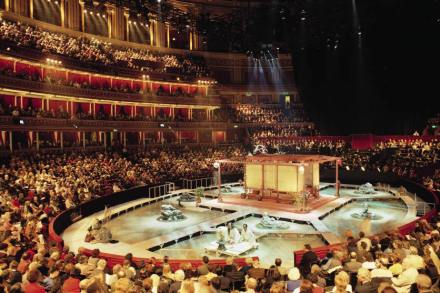
Raymond Gubbay is a hard man to avoid. Especially at Christmas. Last year Raymond Gubbay Ltd presented roughly 600 concerts, of which 180 were part of his annual Christmas Festival and he lived up to his festive catchphrase: ‘You want carols? We’ve got carols.’ Gubbay’s packaging of live classical music has been amazingly successful. He came up with the idea of Vivaldi by candlelight played by men in wigs. His regular Johann Strauss galas are a big hit, as is Strictly Gershwin, and his own-brand laser-lit Classical Spectaculars. The genial man with the Midas touch is famous, too, for his operas at the Albert Hall, where Madam Butterfly is about to return. It comes complete with a 60,000-litre pond, which turns the place into a giant Japanese garden centre.

Massed voices

The news that Decca will release a recording of Striggio’s colossal Missa Ecco sì beato giorno on 7 March promises an oxymoronic treat for some of us. The news that Decca will release a recording of Striggio’s colossal Missa Ecco sì beato giorno on 7 March promises an oxymoronic treat for some of us. There we were, on the stage of the Albert Hall in the 2007 Proms, the new scores in hand, giving the world première of just this piece. A recording was repeatedly discussed at the time, but in the end it was decided that the cost of such an endeavour was too high for the quality of the music. It was thought it would flop.

Hungry for novelty

My first — and so far only — proper job in journalism was, many years ago, as a staff writer on a kids’ computer-games magazine. My first — and so far only — proper job in journalism was, many years ago, as a staff writer on a kids’ computer-games magazine. We were pretty good for what we were, but if we had a flaw it was that we were obsessed, absurdly and often fruitlessly, with being the first magazine to feature some new game that absolutely no one was talking about, usually because they hadn’t finished writing it yet. It was my introduction to a particular kind of journalistic mindset: the belief that what is new, what is now, is intrinsically more fascinating than anything else. Have you heard blah blah band? Have you seen blah blah film?

Pill-popping pianist

What would Glenn Gould’s playing have sounded like if he hadn’t chomped his way through bucketloads of Valium? It’s not a question that is asked in Genius Within, a much-praised documentary about the tortured Canadian pianist that has just been released in Britain. What would Glenn Gould’s playing have sounded like if he hadn’t chomped his way through bucketloads of Valium? It’s not a question that is asked in Genius Within, a much-praised documentary about the tortured Canadian pianist that has just been released in Britain. But perhaps it should have been. In the nine months before his death at the age of 50 in 1982, Gould consumed more than 2,000 pills of every variety.

Labour of love | 22 January 2011

I have long believed that a part of you dies in winter and doesn’t come back to life until you feel the sun on your face and a mid-westerly breeze in the air. I have long believed that a part of you dies in winter and doesn’t come back to life until you feel the sun on your face and a mid-westerly breeze in the air. We must take comfort where we find it in these dark days and I have recently discovered a splendid pick-me-up that might just get you through the next couple of months with a spring in your step.

Timeless miracle

Dotting through the list of composers’ anniversaries in 2011, I was struck both by the number of people mentioned and by the utter lack of fame of almost all of them. Dotting through the list of composers’ anniversaries in 2011, I was struck both by the number of people mentioned and by the utter lack of fame of almost all of them. Where on earth do the compilers of the Classical Composers Database find these people, most of whom are too dead to write in and represent themselves? But, like all lists, this one is not without interest. The first named is D. Dinis (1261–1325), King of Portugal, who apparently was the earliest troubadour in the Portuguese language. I wonder if his political opponents dubbed him ‘the minis’.

Whine merchants

Some albums you love instantaneously, others you have to work at. And, just occasionally, an album comes along that you know that you will love if only you can hear it enough times. Except that you won’t. You will keep on playing it, and still you won’t really like it, and still you will keep on playing it. Mine at the moment is the one by Mumford & Sons, the amusingly posh raggle-taggle folk group (all called Oli and Ben), who enjoyed a wondrous 2010, selling loads of records and wowing festival audiences (all called Oli and Ben). If only they could write a decent tune, they might be quite good. Last week I was perilously close to throwing in the towel, and putting on an old Steely Dan record instead, when it suddenly occurred to me: it’s the voice.

Festival: City of music

Lucerne is a city with powerful musical associations, the most celebrated being Wagner’s living there for the six years between 1866 and 1872, the most tranquil of his life, in Haus Triebschen, now a magnificent Wagner museum. Lucerne is a city with powerful musical associations, the most celebrated being Wagner’s living there for the six years between 1866 and 1872, the most tranquil of his life, in Haus Triebschen, now a magnificent Wagner museum. But he had visited before, most notably in 1859, when he finished Tristan und Isolde in the Hotel Schweizerhof; but also in 1850, a visit recorded with surprising sympathy by Stravinsky, a late convert to Wagner, when he visited Lucerne for the last time in 1969: ‘I went from Triebschen to the Schwann Hotel for tea.

A golden age

Was there a golden age of English music a hundred years ago? From today’s vantage-point there probably was. Was there a golden age of English music a hundred years ago? From today’s vantage-point there probably was. The years 1910 and 1911 still excite the imagination as one contemplates the extraordinary richness of the new works that were being introduced to audiences in London and at festivals at that period. If you believed in the Zeitgeist, the spirit of the age, there was plenty to support you. The spirit was changing — ‘Rarely, rarely comest thou, spirit of delight’ was the ambiguous line by Shelley that Edward Elgar inscribed on the score of his Second Symphony.

Bring on the warmth

Cold weather demands warm music. To which end I am delighted that Mojo, the monthly rock magazine for the more gnarled music fan, has chosen as its album of the year Queen of Denmark by John Grant. As we all know to our cost, albums adored by music magazines tend to be more rigorous and admirable than enjoyable, but this one is as warm and welcoming as a hot bath, a cup of mulled wine and an enormous cheque all rolled into one. Mr Grant, who is 41, gay, from Denver and very gloomy, is the former lead singer of a band called The Czars.

MacMillan’s loyalty

In the first week of September, the Scottish composer James MacMillan sat in the ‘composition hut’ in the backyard of his Glasgow house, finishing the music he’d been commissioned to write for the Pope’s Mass at Westminster Cathedral. In the first week of September, the Scottish composer James MacMillan sat in the ‘composition hut’ in the backyard of his Glasgow house, finishing the music he’d been commissioned to write for the Pope’s Mass at Westminster Cathedral. ‘I’m enjoying it — oh, the triumphalism!’ he wrote on his blog. He wasn’t kidding. Two weeks later, as the small, frail figure of Benedict XVI processed into the cathedral, a fanfare sounded over his head.

Box of delights

Sitting on my desk as I write are two objects of wonder and delight. They are a pair of box sets from the Deutsche Grammophon label celebrating the company’s 111 years of existence. An odd anniversary to celebrate, you might think, and I suspect the real reason is that the marketing men somehow forgot the centenary and are catching up late, with the rather lame excuse that the number 111 ‘enjoys a special kudos in musical circles’ because Op. 111 was Beethoven’s last piano sonata. The first box was released last year, and very quickly sold out. By the time I became aware of it, you could only lay your hands on second-hand copies selling for eye-watering prices. It was such a success, however, that DG has recently reissued it, along with a second collection.