Music

Out and about

We are already more than halfway through January and I am still managing to stick heroically to my new year’s resolution. This is to keep smoking throughout 2012 — with a particularly large intake of nicotine and tar planned for the dreaded Olympic Games when everyone will be banging on about the glories of physical fitness. There will be no end of temptations to quit, of course. I was at a wonderful dinner party over the festive period, held, romantically, in a candlelit, lovingly restored vintage railway carriage. When I announced I was going to nip outside for a fag, the hostess looked at me with a mixture of disbelief and horror, as if I had proposed shooting up heroin or molesting a young child.
Unfinished business | 21 January 2012

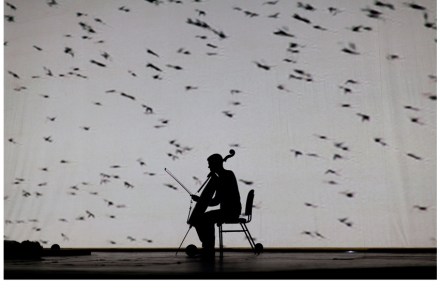
The phrase ‘community drummers’ strikes fear into me. When I read it in the programme notes for Survivor, Antony Gormley’s collaboration with Hofesh Shechter, premièred at the Barbican, I paused a beat. The elder cerebral artist paired with the young passionate choreographer: so what exactly is this? In the ladies afterwards I heard the disparaging phrase ‘GCSE work’. Was it music? Was it theatre-making? Was it even dance? There is no narrative to speak of, but a series of sketches using 139 drummers, a band of string players, guitarists, a cameraman and six dancers, among others. A figure shelters in a bathtub. Cannonballs drop from a height on to the stage.

Kate comeback

What is Christmas for, exactly? For me, it’s a time of reflection and of sudden dawning realisation. Reflection on the year’s new music, and the sudden dawning realisation that I have hardly heard any of it. Not that I think it matters. Newness isn’t everything, or even very much, and there’s no reason why anyone should feel obliged to keep up with all the new releases, which is almost a job in itself. Far easier to let the songs worth hearing shake themselves free from the vast knobbly mass of tripe, drivel, Coldplay comebacks and Noel Gallagher solo albums. The good stuff will always find your ears in the end.

The 40-part challenge

Embedded somewhere in the Christmas story no doubt is the idea of much being contained in a small space — or Multum in parvo as the restored road signs leading into Rutland have it. The opposite, which I will leave you to chisel into Latin for yourselves, presumably gets less attention in the Bible, yet nicely sets up any discussion of the current interest in writing choral music for 40 voices. A performance of any 40-part piece is likely to guarantee a big crowd. Like dinosaurs, they attract attention merely on account of their size, though unlike these forebears they need a quite exceptionally large brain to control their bulk. The problem for the composer is obvious: how to make something interesting of such a massive canvas.

Heavenly voices

It seems that Christ was born with the sound of choral music in his ears. That, at any rate, is what is to be deduced from many of the works of art that the manger scene has subsequently inspired. There is the holy family gathered round the crib, gold and lapis lazuli everywhere, beneficent animals kind of smiling at the smiling Christ child and, raised rather above all this, angels singing. Perhaps officially they are sexless — Wikipedia isn’t very discursive on the gender of the cherubim and seraphim — but as far as I can see they look like girls and are meant to be men. This makes for all sorts of interesting speculation, not least in the matter of what they sounded like.

Sounds for a cool Yule

One of the unwritten rules in our house is that Christmas should never be mentioned until a few days before the big day. Mrs Spencer gets into a state in the run-up to the festive season, not least because, as a teacher at the Royal Ballet School, she has rehearsals of The Nutcracker to attend at Covent Garden, in which the school’s pupils always appear, as well as end-of-term reports to write. When she is in the thick of all this, the idea of writing Christmas cards, buying presents and planning the catering brings on acute anxiety attacks, and if I so much as mention how much I am looking forward to the festivities all hell can break out. But secretly I am looking forward to it, tremendously.

Singing siblings

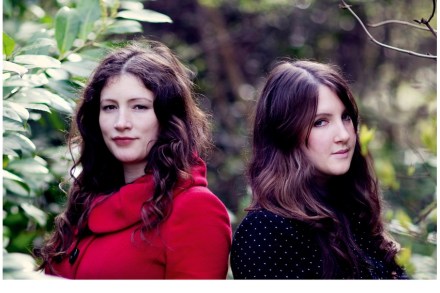
The Unthanks couldn’t have chosen a more fitting venue for the first night of their current tour than St James’s Church, Piccadilly; just as it’s all too easy for passers-by, eyes glued to the bright lights, to overlook this relic of the 17th century, one could be forgiven for missing The Unthanks’ distinctive breed of folk music amid the barrage of predictable tales of nightclub romance filling the airwaves. But sisters Rachel and Becky Unthank still managed to pack the pews. Where does our nationwide fascination with singing siblings come from? The Gallaghers had us on tenterhooks every time they bickered; Jedward seem to be building a career on nothing more than shared DNA; and now groups of sisters everywhere are transforming solo songs into family singalongs.

The joy of Spotify

Like a few who have ploughed through the Steve Jobs biography, I am now heartily tired of early adopters, those strange men who are always at the front of the queue at the Apple shop when some dismal new gewgaw is coming out. I myself am a classic late adopter, discovering the new and exciting only when it’s old and worn out. I had a CD player years after everyone else; a tribesman in Papua New Guinea was the only person to have an iPod after me; and now I am faintly obsessed by Spotify, the music-streaming service out there on the internet, wherever that is. For a mere £9.99 a month, which is just under a tenner more than I want to pay, you can play any piece of music it has stored in its large computers any number of times, and it has extraordinarily large computers.

Brain gain

The arrival of the composer Eric Whitacre and his family in London as permanent residents brings a ray of Californian sunshine to our cloud-bedraggled lives. American musicians who have chosen to move to Europe to work have always made an interesting group, headed by jazz players of the calibre of Josephine Baker and Sidney Bechet. Of course they had reasons for seeking work elsewhere which do not apply to the very white Whitacre. But, given that at a casual glance the US appears to offer so much opportunity to everyone, why come all this way? In Whitacre’s case I get the impression that he really likes the UK.

Sound and vision | 19 November 2011

The 20th century was a century of musical revolutions. One of the last and most audacious ignited 50 years ago on the east and west coasts of America. And in a small but significant way The Spectator played a part in fanning the flames. In 1968 a young critic and early-music specialist by the name of Michael Nyman was sent out by the magazine to review a new work by Cornelius Cardew, a little-known British maverick. What struck Nyman about Cardew’s new piece, The Great Learning, was how different the musical language was from that of the complex and angsty European avant-garde. ‘It was very gentle, it was very modest, it wasn’t trying to make a huge technical statement,’ Nyman once explained.

Pump up the volume

It occurs to me sometimes that this column is, essentially, one long and painful confessional. I admit to enjoying all this unfashionable and uncool music so others don’t have to. ‘Ah, the man who likes Supertramp,’ someone once said to me at a party, just before he was stabbed by an unknown assailant. No one would say anything so sneering or discourteous to an actual member of Supertramp, current or former, which suggests that their fans must suffer on their behalf. My own suffering includes the purchase of their double live album, Paris, in or around 1980. In this they play note-perfect renditions of their hits, with added applause. If I still had the receipt, and the shop that sold it to me still existed, I would have half a mind to ask for my money back.

What’s in a name? | 5 November 2011

There was a time when ‘classical music’ meant something you could put your finger on. It denoted the musical period between roughly 1750 and 1800, when Haydn, Mozart and many others wrote symphonies, concertos and instrumental pieces with a sense of form and grace that were likened to the art and architecture of Classical Greece and Rome. And it sat happily between two other important musical periods, the Baroque and the Romantic. Everybody knew where they stood. Not any more. Nowadays, for some people, ‘classical music’ probably means the same as ‘highbrow music’ — something that’s not for them. Otherwise it has become a catch-all phrase or term that nearly everyone else uses without ever trying to define it.

Box of delights | 22 October 2011

I don’t know about you but I have to steel myself these days to turn on the Today programme in the morning. There is always the terrifying prospect that an infuriatingly overexcited Robert Peston will come on, barely able to contain his glee as he reports that one’s own bank or pension fund has just gone spectacularly bust. And when that dire day comes, as I increasingly fear it will, Peston will doubtless be followed by a sanctimonious government minister who will inform us that we are all going to have to work until we are 80 before we can receive our meagre state pensions. What’s scariest of all, I find, is that when one runs into people who really understand money, they always seem to take the most apocalyptic view of all.

Bewitched

The Biophilia live show at Harpa, Reykjavik is another cog in the complex wheel that makes up Björk’s eighth album, which is not simply a collection of nice songs, but a concept record about nature, a series of educational apps and a showcase for its specially created instruments. The performance is, however, where it all comes to fruition, with the extensive thinking behind it distilled into the joy of putting on a show. Björk is the star attraction of the Iceland Airwaves annual music festival, and there’s a particular magic at seeing her not only perform in her home town, but her 20-strong girls’ choir, too, who add a dance element as well as backing vocals, stomping and singing in their glittering costumes with chaotic synchronicity.

Ideal marriage

In all the heavier-duty excitement of Liszt’s anniversary I had failed to register that W.S. Gilbert expired 100 years ago; and, perhaps just as significant, the copyright of the D’Oyly Carte opera company expired 50 years ago. I am old enough to remember the fuss which that moment provoked — the highbrows hoping to kill off the whole dreadful phenomenon there and then; the not so high, including Harold Wilson and Spike Milligan, trying to extend it. The company muddled through to 1982, but finally the Arts Council had had enough, and a lot of well-educated people heaved a sigh of relief that the Savoy Operas had finally passed into history. They were premature in their heaving. For a few years, the tradition did indeed seem to be down and out.

Giving it some Elbow

What with one thing and another, I had rather lost track of what Sting was up to. Still on the lute? Moved on to nose flutes? Thrash metal rereadings of back catalogue? It turns out that he has taken to the road with an orchestra, in a heroic stand against the bitter frugality of these gloomy times. Drummers don’t cost much, and bassists come cheapest of all, but a whole orchestra has to be fed and watered, housed in very nearly sanitary conditions, transported by lorry from one location to the next and, apparently most tiring of all, listened to, as none of them ever stops talking. Sting obviously has ‘people’ to do all this, as he lolls between venues in his carbon-neutral luxury rickshaw, but the expense must be considerable.

All that jazz | 8 October 2011

The human voice has always been celebrated as one of the most direct forms of musical and personal expression. This is especially true in jazz, where improvisation is such a key element. We so often listen to singers ‘baring their soul’, revealing something ‘deep within’. The human voice has always been celebrated as one of the most direct forms of musical and personal expression. This is especially true in jazz, where improvisation is such a key element. We so often listen to singers ‘baring their soul’, revealing something ‘deep within’. And Georgia Mancio (above), jazz singer and curator of the ReVoice!

Classical affair

Before Stephen Fry walked on to the stage at the Barbican on Monday to take part in a discussion on the place of classical music in today’s society, he asked his Twitter followers to suggest new names for what he sees as an off-putting label, ‘classical’. The replies that flowed in were typically informed and astute: ‘shit, outdated, irrelevant, dead’. ‘This is the scale of the problem we face,’ he lamented. James Rhodes (above), the concert pianist with a knack for shunning the stereotype of the straight-backed, tailcoated performer, put it another way: ‘Walk into HMV (if you can find one), and if you ask for classical music, they shunt you down to the basement like you’ve asked for midget pornography.

Understanding Boulez

What was it Sir Thomas Beecham said about Stockhausen? ‘I’ve never conducted any of his music, but I once trod in some.’ So far as I know, Beecham never commented on the work of Pierre Boulez, but I’m sure his verdict would have been the same. Both composers adopted a modernist language that is politely described as ‘uncompromising’. Until his death in 2007, Stockhausen stoutly maintained this refusal to compromise (except on the question of accepting subsidies, always a flexible principle for the avant-garde).

Metal head

CNN recently referred to Birmingham as ‘the unlikely birthplace of heavy metal’. The Birmingham Museum and Art Gallery is hosting an exhibition entitled Home of Metal (until 25 September). All the gnarly-mouthed, guitar-thrashing kings of metal hail from the Black Country: Black Sabbath, Judas Priest, Napalm Death. Walsall boy Noddy Holder, lead singer of semi-metal band Slade, thinks it is because, in the Sixties, many Black Country men worked in sheet metal. ‘The pounding of machinery contributed to the atmosphere of what became metal,’ he says. As for that distinctive wail, Holder says it’s down to the ‘smoke and soot’ that makes the Black Country black. ‘That must have given rise to our style of singing.