Music

Proms promise

On first opening a new Proms prospectus, the enthusiastic amateur immediately looks for the things that are there, the things that are not there and, a mixture of the two, the things he hopes will be there. What I hope for every year goes roughly like this: the Berlin and Vienna Philharmonics (yes to both); a big operatic production (two this time, one each from the Royal Opera and ENO); one or two Really Famous (and preferably Really Old) artists (Barenboim, Boulez, Dutoit, Gergiev, Haitink, Perahia); some big anniversaries to be celebrated (Debussy, Delius, Cage, Knussen and Goehr — a middling crop); symphonies by Bruckner and Mahler (three each); some top early music (very little); Saint-Saëns’s Third Symphony (no).

Magic of New Orleans

More than 11 years after getting sober, memories of my more disgraceful drunken nights can still make me blush with shame. Waking up in a police cell with no idea how I came to be there was a low point and so was being discovered unconscious in the pouring rain under the shrubs in a neighbour’s garden. In the mercifully rare moments when I find myself dreaming of a drink, it is the thought of such dark times that helps keep me on the straight and narrow.  But of one long drunken night I have only the fondest if admittedly befuddled memories. It happened in 1996 on a press junket. Disney was opening its new animated film of The Hunchback of Notre Dame not in Paris, but in New Orleans, with its famous French Quarter.

Paternal pride

It is a glorious moment in the life of any music-loving parent when your progeny develop their own fierce musical tastes, and start looking rather askance at yours. My case may be extreme, as my two children have had to put up with my music for years. As previously mentioned in these columns, my tinnitus makes it all but impossible for me to work in complete silence, and I have become accustomed to playing up to a dozen CDs a day to get anything done. As a result, daughter (12) and son (10) find other people’s houses eerily quiet, even if someone is digging up the road outside and a Boeing 747 is strafing the rooftops. Maybe surprisingly, exposure to unceasing pop music has not put them off it for life. Instead, they seem to have noticed that I like A Certain Sort Of Thing.

Period piece

Opera North’s latest and most ambitious outreach project is a new production of Rodgers and Hammerstein’s Carousel, which will end its tour with a month’s run from mid-August at the Barbican. The second performance in the Grand Theatre Leeds went down very well, and I’m sure that the whole run will be a great success.  My own fairly negative reaction seemed so discrepant that I have been watching and listening to various versions since, but with no more favourable reaction. The Opera North programme book, lavish but unhelpful, put my back up by quoting more than once an American critic’s assertion that ‘if it weren’t so enjoyable, one might be tempted to call it opera’.

Counting the cost | 3 May 2012

The arrival of the Proms prospectus, with its glamorous pictures of the stars of today, makes me wonder how much those very palatable-looking people are costing the BBC. The question is prompted by the style of the photography — the sexing up of the Weapons of Mass Destruction dossier has nothing on how string players enjoy curling round their instruments. It is all a far cry from the stolid, besuited look classical musicians used to affect, as if one could trust them to get their passagework right while delivering mature interpretations of intellectually taxing repertoire. The modern version says nothing if it doesn’t say expensive. The issue of what the leading names in classical music can charge was addressed recently in an article in Classical Music magazine.

 Everlasting love

A few weeks ago, feeling stale and stressed, I escaped to our dilapidated cottage in Dorset for a few days on my own. When I was younger, and especially when I was drinking heavily, I often felt ill at ease in my own company, but these days I get on quite happily alone, though I sometimes worry that I talk to myself too much, and wonder whether I am going slightly mad in my old age. I once read that it’s OK to talk to yourself, but there might be cause for concern if you find that you are answering yourself back. I do that all the time. If I am going mad at least it is a contented kind of dottiness, and walking on the cliffs, eating seafood at the splendid Hive Beach Café in Burton Bradstock and drinking endless cups of PG Tips did me the world of good.

Tim on top

Tim Minchin swept the board at the Oliviers last Sunday. The Australian’s hit musical, Matilda, won a record seven gongs at the West End’s most prestigious awards ceremony. The rise of Minchin has been stratospheric. Just eight years ago he started out on the Melbourne cabaret circuit performing quizzical spoofs like ‘Inflatable You’, a ballad dedicated to a blow-up doll. He came to Edinburgh in 2005 and scooped the fringe award for Best Newcomer. His material mixes the topical, the cerebral and the unashamedly populist. ‘I get a huge thrill out of writers like Ian McEwan,’ he says, ‘someone very organised in their ideas. It’s what I aspire to, to be able to discuss ideas articulately and with clarity.

In the literary tradition

In recent years there have been a number of exhibitions of Keith Vaughan’s work in commercial galleries, and his prices at auction have climbed steadily, but no major show in the nation’s museums. Yet interest in his life keeps pace with the revival in his art (the standard biography of Vaughan, by Malcolm Yorke, is long out of print and avidly sought after), and 2012 as the centenary of his birth will see the publication of a new monograph, a catalogue raisonné of his paintings and an annotated volume of his final journals.

Early adopters

The death of Gustav Leonhardt at the age of 83 brings to an end the career of one of the giants of the early music movement. As an organist, harpsichordist and conductor he was long at the forefront of the experiments and revelations that the drive to perform music on period instruments made possible. He will be remembered for being fearless in his single-minded pursuit of what he thought his chosen repertoires required. And he was producing peerless recordings of those repertoires right from the beginning which — one forgets — was in the late ’40s. The term ‘early music’, and its demanding fellow traveller ‘authenticity’, have had a long innings.

Touching the void | 17 March 2012

In April, for the first time in ages, I am going to a wedding. At least it will make a change from all the funerals. The middle-aged pop fan feels this all the more deeply, because few of our favourite musicians seem to make old bones. Or, more accurately, they make old bones, but at three or four times the speed that everyone else does. Some of these rock deaths are relatively mundane: falling down stairs (Sandy Denny), car crashing into a tree (Marc Bolan), ski-ing into a tree (Sonny Bono). Others are bizarre. It was Chicago’s guitarist Terry Kath, of course, whose career came to a premature end during a boozy game of Russian roulette. ‘Don’t worry,’ he said, ‘it’s not loaded.

Spirit of Schubert

Every December, for the past decade, I have laid a red rose on Schubert’s grave in Vienna’s southern cemetery. What began as a gesture has become a custom, a way of giving thanks to the most lovable of all composers. Schubert may not be as great as Bach or Beethoven, who established the musical language of an entire culture, but no musician has touched so many hearts. Blessed Franz, holy Franz, immortal Franz: nobody, not even Mozart, has inspired such love. The details of Schubert’s last days are well known. In March 1827 he walked behind Beethoven’s coffin and, upon repairing to a local inn to toast the memory of the older man, raised his glass ‘to the one who shall follow him’.

The Boss without The Big Man

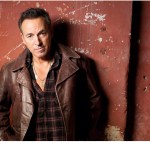
The main event in the E Street nation this month was not so much the release of the new Bruce Springsteen album as the litmus test live concert at Harlem’s legendary Apollo Theatre last Friday. How would The Boss cope without The Big Man, saxophonist Clarence Clemons, who died last year after suffering a stroke? Springsteen maintained that Clemons was irreplaceable. He’d been a fixture for four decades, a towering presence on stage and an integral component of the E Street sound. Two summers ago, I bumped into Clarence at a marina on Singer Island, Florida. As you do. Even though he was still frail following back surgery, he was an imposing figure, built like an NFL running back and with an aura the size of a solar system.

Anthems for the Queen

The Choirbook for the Queen, which has recently been launched, is a remarkable initiative, involving most of the leading Church musicians of our day and many philanthropists besides. The idea behind it is simple enough: to put together a collection of anthems (I use the word precisely) to celebrate the Queen’s Diamond Jubilee, with the added intention of showcasing ‘the excellence of choral writing and the continuation of the choral tradition by cathedral choirs and other choral foundations around the country’. Already in place is a plan for 80 of our cathedral and collegiate choirs to sing two of these anthems each this year, some to be broadcast on the BBC.

Parental guidance

Whisper it ever so quietly, but I think we might just be through the worst that winter has to throw at us. I’m writing this down in Dorset, and though there was a ferocious wind at West Bay, whipping up huge waves that broke spectacularly over the pier, and a peculiarly spiteful heavy shower, precisely angled so that the rain penetrated deep into my left ear as I walked along the prom, it was nothing like as cold as it has been. Better still, the roadside verges in our village of Netherbury are blessed with beautiful clumps of snowdrops, planted by the brilliant local wildlife photographer Colin Varndell and a team of volunteers, which lift the spirits whenever you see them. I no longer feel the need to crawl into bed and hibernate whenever I have any time off.

The Wow factor

Next month, a formidable band of women will take to the stage at the Southbank Centre for the Women of the World Festival, now in its second year. The line-up includes veteran Annie Lennox, who will perform with rising stars Katy B, Jess Mills, and Brit Award winner Emeli Sandé as part of an eclectic menu of music, comedy, poetry, debates and workshops that cover topics ranging from domestic violence to vajazzling. But if Eighties icons and trends in personal grooming leave you cold, there is plenty more on offer. Top of my list is Irish actress Lisa Dwan’s (above) adaptation as a one-woman play of Beside the Sea, a French novella by Véronique Olmi (published in an award-winning English translation by Peirene Press).

A deafening silence

One morning in 2007, the music critic Nick Coleman woke up to find that he was profoundly deaf in one ear. ‘The silence did not descend silently, however. It made a small sound. You might compare it to the sound of a kitten dropping on to a pillow.’ Within an hour this pffff had developed a pulse, and over the next few days it evolved into an unceasing clamour of clanks, zizzes and whistles. By now Coleman was in hospital and doctors were scratching their heads, as they usually do with tinnitus. I can remember the eyes of my doctor glazing over with boredom when I told him about my own tinnitus. When he heard that I wrote about music, and had been to far too many deafening gigs over the years, his disapproval hardened. A scribble on the pad, and I was on my way. Next!

The big push

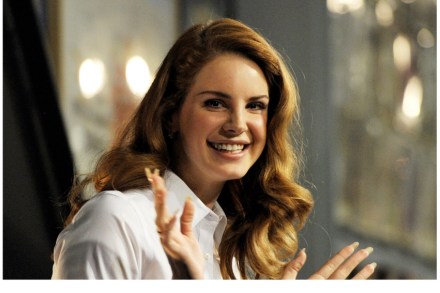
We are all just trying to make a living here, obviously. Musicians are no different. There are so many of them now, several generations of them, for the old ones never stop and new ones seem to appear every day. To make any impression at all, then, you need what sportsmen call ‘momentum’. That’s the mass of your talent multiplied by the velocity of hype. And so, each year, exciting young singer-songwriters are propelled into the public gaze, release records that aren’t quite as great as expected and are then mercilessly slagged off by everyone. This year it’s the turn of the young American singer Lana Del Rey, whose enigmatic ‘Video Games’ was a hit at the end of last year.

Easy listening | 11 February 2012

There is only one place these days where the music of Charles Villiers Stanford (1852–1924) sends its hearers into reliable ecstasy, and that is in choirs and places where they sing. Otherwise he is something of a bust. Despite having written seven symphonies, nine operas, 11 concertos (including three piano, two violin, a cello and a clarinet), eight string quartets and countless songs, piano pieces and other chamber works, he is now celebrated for a tiny fraction of his output. Stanford himself thought that to be renowned as a composer of Anglican Church music was not enough. He wanted to be measured alongside international (i.e., German) stars, and so went to Berlin to study with the leading teachers of the day, and in particular to meet Brahms.

A bite of the Apple

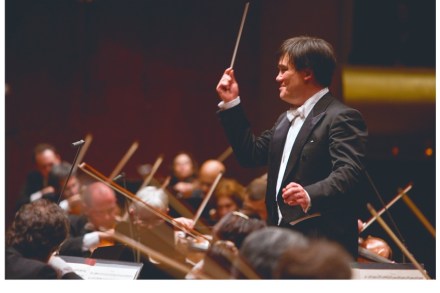
For the first time in its 170-year history, the New York Philharmonic Orchestra has a native New Yorker at the helm. Music director Alan Gilbert (above) brings the band to the Barbican this month for a brief residency that crams four concerts into a little over 48 hours, starting with a performance of Mahler’s Ninth on 16 February. Later concerts include the UK première of Polaris, a ‘Voyage for Orchestra’ by Thomas Adès, and Lang Lang tackling Bartók’s famously arduous Piano Concerto No. 2. The residency will also see small groups of musicians venturing beyond the concert hall to perform for residents of East London housing estates as part of the Barbican’s Front Room Concerts series.

Beyond the elite

There are few art forms with more colossal barriers to entry than classical music. Picture yourself finally plucking up the courage to go to your first classical concert. You arrive late, because at that gig last Saturday you had to sit through two ill-judged warm-up acts, an act of charity you’re not inclined to repeat; but here, even the slightest tardiness has you waiting outside until that gruelling pause, presumably marked in the programme, when the orchestra falls silent, the conductor slowly and disapprovingly turns to look at the doors, and you and a couple of other heathen shuffle in, mumbling about taxis and Bob Crow. What’s more, you go and clap after the andante, to the sneering delight of your more sonata form-savvy neighbours.