Music

Four recordings of Beethoven’s Ninth on a £10 app

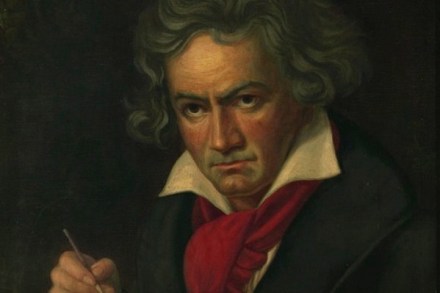
Last weekend my iPad sucked me deeper into Beethoven’s Ninth Symphony than I thought possible. Deutsche Grammophon and Touch Press have released an app devoted to the work that rendered me slack-jawed with wonder, like a Victorian on his first visit to a cinema. The app gives you four complete performances of the Ninth: by Ferenc Fricsay with the Berlin Philharmonic (1958); Herbert von Karajan with the same orchestra (1962); Leonard Bernstein with the Vienna Philharmonic (1978); and Sir John Eliot Gardiner with his preposterously named Orchestre Révolutionnaire et Romantique (1992). Icons for the performances are next to each other, and the gentlest touch will transport you to and fro. The technology is a marvel.


Chic’s Nile Rodgers on Daft Punk’s new single

Every new product, whatever it is, needs a bit of ‘buzz’, and indeed vast numbers of people around the world make a decent living trying to generate that ‘buzz’, while the rest of us spend much of our time trying to ignore it. Last week, though, much chatter was to be had in music-loving circles about the new single from Daft Punk, a French duo who make dance music and dress up as robots whenever they play live. I bought their 2001 album Discovery, which was awash with references to old soft-rock hits of the late 1970s, and was so influential you could hear blatant steals from it on countless chart hits from the subsequent decade.

Interview with the musician Paul Lewis

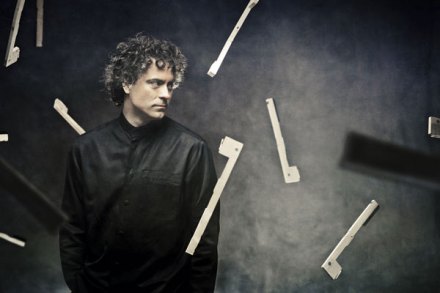
Being an English pianist must be a lonely calling at times. There is no native tradition like the ones that, say, German or Russian musicians are heir to, so many superb pianists have been unjustly overlooked. It used to be said of John Ogdon that, had he been born Ogdonski, in Minsk rather than Mansfield, his profile would have been greater. Perhaps; but would he have been a finer musician? If you were born in Huyton, the son of a docker, the odds against gaining international recognition are greater still. Yet, in his 42nd year, that is where Paul Lewis stands today as he approaches the final furlong of a three-year survey of Schubert.

Pick of the Proms

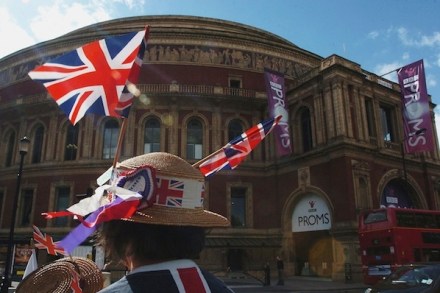
With the publication of this year’s Proms brochure it is clear that what was already large has just become larger; and what was already a smooth production has just got smoother. Whether this is sustainable growth, or even desirable growth, are questions for the future; but I think I’ve discerned one of the main reasons for the current expansion — Wagner’s anniversary. Verdi’s has had less impact. It is inconvenient when two great names share a year. Bach and Handel made 1985 difficult to manage, while Lassus and Palestrina caused some of us agonies of balance and regret in 1994. On both of those occasions, one composer got a larger bite of the cherry than the other, and so it is going to be this year.

Are today’s composers up to the challenge of writing sublime music?

When we describe music as ‘sublime’, what do we mean? For the Romans, sublimis signified greatness beyond measure. In the 18th century, Englishmen looked to The Spectator for clarification. Joseph Addison, in his Essay No. 339 of 1712, suggests that the sublime often achieves greatness without stirring up ‘pathetick’ human passions. The example he gives is Milton’s description, in Paradise Lost, of the Messiah looking down on his new Creation, ‘when every Part of Nature seem’d to rejoice in its Existence; when the Morning-Stars sang together, and all the Sons of God shouted for joy’. Whether a composition is sublime is essentially a matter of opinion.

The brilliant fun of Bryan Ferry’s The Jazz Age

When you can do anything you like, what do you do? In Bryan Ferry’s case, the answer seems to be ‘make a 1920s instrumental jazz record out of some of my old songs’. I have to admit that the mere idea of The Jazz Age (BMG), which is credited to The Bryan Ferry Orchestra, appealed to me not at all, and it seems that I wasn’t alone in this, for the record, released just before Christmas, reached only number 50 in the charts and may end up selling something adjacent to Bugger All. The first time you play it, it’s essentially a parlour game. Which one is ‘Slave To Love’? Is that really ‘Virginia Plain’? What on earth have they done to ‘Love Is The Drug’?

Richard Wagner at 200

‘The overpowering accents of the music that accompanies Siegfried’s funeral cortège no longer tell of the woodland boy who set out to learn the meaning of fear; they speak to our emotions of what is really passing behind the lowering veils of mist: it is the sun-hero himself who lies upon the bier, slain by the pallid forces of darkness — and there are hints in the text to support what we feel in the music: “A wild boar’s fury”, it says, and: “Behold the cursed boar,” says Gunther, pointing to Hagen, “who slew this noble flesh.” The words take us back at a stroke to the very earliest picture-dreams of mankind.

Parsifal at Salzburg Easter Festival

To hear Christian Thielemann conduct the Dresden Staatskapelle in Wagner’s ‘stage consecration play’, in Salzburg at Easter, proved a musical experience that could only deepen anybody’s love of this extraordinary opera. To see it was another matter, as it often is. But let us first praise the musicians who, guided by their conductor, gave it wings. At six minutes under four hours (battle-hardened Wagnerians will appreciate the timings) this was not a long Parsifal.

The ideal place to hear classical concerts

What sort of room do you prefer to hear classical concerts in? We have all got used to industrial-strength symphony halls and opera houses, capable of holding 3,000 people, with dry acoustics and omni-look interiors. As with art galleries around the world, once inside you could be anywhere: there is little to tell you which culture any particular one comes from, apart from the signs indicating the lavatories. The general public have come to accept the implicit anonymity of many halls, where individuality has often been sacrificed to size and comfort. Three thousand is a lot of seats, each occupant requiring good sight-lines and good facilities.

Beethoven at dinner parties: how to bluff it

I’ve just been reunited with a man whose pungent and patronising views on great composers have haunted me for more than 30 years. His name is Gervase Hughes, and I’ve discovered from Wikipedia that he was an upmarket travel agent who died in 1984. I had no idea, because I knew him only through his book Fifty Famous Composers, published as a Pan paperback in 1972, which mentions his short career as an opera conductor but not his main source of income, which was apparently ‘offering European tours in Rolls-Royce cars’. I lent Fifty Famous Composers (an expanded edition of The Pan Book of Great Composers, 1964) to a friend when I was at university, explaining that it was the wittiest and wisest introduction to the classical canon ever written. He promptly lost it.

If David Bowie really has returned to form, I’ll cry

I haven’t heard the David Bowie album yet, but the Amazon order is in and Postie has been alerted as to the importance of the delivery. How often these days do any of us feel so excited about an imminent release? The ten-year gap between Bowie albums might have something to do with it, but the 30-year gap between decent Bowie albums is probably more relevant. And all this is down to the excellence of the single. Gary Kemp of Spandau Ballet wept the first time he heard ‘Where Are We Now?’, and I was blubbing well into the song’s third or fourth week on Radio 2.

Class prejudice is keeping talented children out of classical music

Musicians have always had an uncertain social status in England, the traditional reactions varying from amused condescension to mild repulsion. The former was the old class-based judgment on men who had chosen to take up a profession which at best was associated with society women and at worst seemed menial; the latter directed towards brass players from rough backgrounds whose lips juggled pint pots with mouthpieces and not much else. The most respectable practitioners were probably organists, often referred to as ‘funny little men’, but taken seriously.

Making music

Since the birth of the peer-to-peer file-sharing service Napster in the late 1990s, the record industry has been the unwilling poster child for entire businesses being overthrown by the march of technology. The major labels, once all-powerful, now stand Ozymandias-like, looking out over their barren empires; an ailing HMV, long ago diagnosed as terminal, is finally in its death throes; and it looks increasingly unlikely that music will ever be paid for again. An industry that’s resorted to The X Factor is an industry in trouble. Michael Breidenbruecker is the co-founder of the music streaming and recommendation service Last.fm, one of London’s big tech success stories. ‘When we started in 2000,’ he says, ‘there was no market.

Why can’t the British pop industry launch new acts that last?

It’s all been happening in the pop world since I was last here. David Bowie released a new song, arguably his best in several decades. Wilko Johnson announced that he had terminal cancer, and a lot of men in their fifties wept for their own lost youth. HMV went belly up, and I ripped my £5 HMV voucher into shreds, hours before they decided they would honour the damn things after all. Is it my imagination, or have prices for CDs risen ever so slightly on Amazon these past few weeks? For them, I suppose, the job is done, and monopolistic practices can now creep in and grab hold of the market by the throat. A music lawyer I know is very pessimistic about the future of recorded music, not least because if there is no more money to be made, she won’t be making any either.

Changing habits

The question of who is going to buy EMI Classics has arisen once again in the past few days with the collapse of HMV. This followed on from the collapse of Comet, Jessops and Blockbuster, the film rental chain — all indicative of a fundamental shift in our purchasing habits. A spokesman for HMV, while delivering the bad news, characterised this shift as ‘seismic’, going on to opine that ‘it is quite heartbreaking to see all those great brands disappearing from the high street’. Whose heart was being broken was not made clear, since presumably we are all getting what we want by other means, but it is interesting that the HMV story has some of the same ingredients as the EMI one, in particular length of service and all the nostalgia that goes with it.

Rediscovering Spotify

All my life I’ve wanted to be able to write confidently about orchestral performances and I think I may have cracked it. So forgive me while I show off for a paragraph. In the last movement of Bruckner’s Seventh, Mariss Jansons and the Bavarian Radio Symphony Orchestra capture the jauntiness of the opening theme; there’s a twist of Haydn amid the grandeur. But it takes a long time for the brass and woodwind to settle down, and when Bruckner gathers his forces for a climax the conductor leans heavily on the gas pedal, as if he’s nearly missed a turning. No such problems with Karajan and the Berlin Philharmonic, where from the first bar the sheen of the violins tells you that every twist of the score has been mapped out, not to say ironed out, well in advance.

Wielding the axe

I’m sure I’m not alone in feeling a bit sorry for Mike Harding. The long-serving host of BBC Radio 2’s ‘folk, roots and acoustic’ show was given the heave-ho last month, and the far-from-underemployed Mark Radcliffe took his place last week. One might ask what Harding had done wrong, and indeed Harding has been asking it repeatedly. He says he was sacked by phone and given no sensible reason for his dismissal. Ah, the freelance life! I have been sacked so many times from so many supposedly cushy numbers that they all meld into one vast megasacking, but as far as I remember, they rarely give a reason, or at least they almost never give the real reason. On one occasion, though, someone did.

If the price is right …

The question of who is going to buy EMI Classics took up most of 2012 and seems destined to run well into the new year. Given that the catalogue in question is probably the most extensive ever put together, containing priceless recordings from the earliest days of so many great artists that it would be otiose even to start listing them in this confined space, you might think that here was the sale of the century let alone of the year. In fact, no one seems to want it. The reason for putting such a property up for sale is that Universal, which already owned much of the music industry, last March began negotiations to acquire EMI as well.

Chorus of approval

Is there anything more essential to one’s well-being than the sound of an English choir at evensong? Is there, for that matter, any word in our language more beautiful than ‘evensong’, with its evocation of architecture, music and the Anglican liturgy? This is the season to reflect on such matters. On Christmas Eve, Cambridge once again becomes the centre of the world for two hours as the choristers of King’s College celebrate the famous festival of carols and lessons and two days before, in St John’s, Smith Square, the choir of Trinity College will perform Bach’s Christmas Oratorio with the Orchestra of the Age of the Enlightenment. Moreover, they will be singing from memory.

The quiz biz

Come December, I often find myself writing a lot of quizzes. Not that I’m complaining: I love writing quizzes, and I really love being paid for writing quizzes. There’s a definite skill in crafting a decent question, and therefore considerable satisfaction in getting it right, tempered only by the unceasing fear of getting it completely wrong. (Like all writing, therefore.) All of us who toil in the quiz mines are naturally aware that we have our favourite subjects, our home territories if you like. I could go on writing increasingly abstruse questions about cricket or pop music far into the night, but I don’t, because the audience simply isn’t as interested in those subjects as I am. If you are a quizmaster, your job is to entertain people.