More from Books

Charming, cold and unreliable

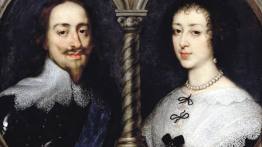
When you consider what a bloody mess the Houses of Lancaster and York made of the business, it is easy to see why, since the death of Edward the Confessor, the English have preferred to be ruled by foreigners. Normans, Angevins, Tudors, Stuarts, Hanoverians, anything to avoid having their own kind in charge. Arguably that great Welsh king, Henry VIII, was the last monarch to have personally directed the affairs of the nation, but Allan Massie has set out to show that Henry’s Scots successors, reigning over the larger realm of Britain, had a more pervasive influence. Descended from the high stewards of Scotland, the first Stewart (it was Mary Queen of Scots who Frenchified the spelling) to take the throne was Robert II, a grandson of Robert the Bruce, in 1371.

Some are born great

Are great sportsmen born with high talent, or do they win prizes through years of application? That question, as old as sport itself, forms the basis of this book, which tries to inform readers ‘how champions are made’. Are great sportsmen born with high talent, or do they win prizes through years of application? That question, as old as sport itself, forms the basis of this book, which tries to inform readers ‘how champions are made’. The author, a former Commonwealth table-tennis champion who is now a journalist, has investigated the subject thoroughly — too thoroughly, it might be said — but fails to make his case. For sport, like life, is odder than we think.

Taking on the turmoil

Nadine Gordimer is now in her mid-eighties. For as long as I have been alive, she has been the towering figure of South African literature, a fact recognised in l991 by the Nobel committee. This is a collection of her non-fiction over 60 years, running to nearly 800 pages. There is a belief, prevalent in South Africa, that she received the Nobel more for her politics than her literature. The distinction between politics and literature is to her absurd; she quotes with approval a maxim, ‘Once I am no more than a writer I will stop writing’. No writer, she says, should be required to separate the inner life from a perception of the outer world.

Recent crime novels | 29 May 2010

Tudor thrillers are thick on the ground nowadays but this one is rather special. The Bones of Avalon (Corvus, £16.99) is something of a departure for Phil Rickman, best known for his excellent Merrily Watkins series about a diocesan exorcist in contemporary Herefordshire. Here he writes in the first person as Dr John Dee, the astrologer, mathematician and adviser to Queen Elizabeth I. In 1560, William Cecil despatches him to Glastonbury, with his younger but more sophisticated friend Robert Dudley, to search for the bones of King Arthur. But Dee’s mission turns into far more than an attempt to strengthen the dynastic foundations of the Tudor dynasty: there’s a conspiracy against the Queen for him to contend with, and also something even darker lurking in the shadows.

Ready for take-off

In 1969 John Gross wrote a justly praised book, The Rise and Fall of the Man of Letters. The phrase seemed slightly archaic then, and is more so now. I was going to suggest that Gross is the last Man of Letters, but I find that Stephen Bayley describes me as that in the current issue of GQ magazine — and I’m that bit younger than Gross. As editor of the Times Literary Supplement, Gross took the brave decision to end back-biting anonymity and give his reviewers by-lines: that was revolutionary, not old-fashioned. If you said he was the best-read man in Britain, I doubt there would be many challengers. Eddie Mirzoeff, who produced the television classic Metro-land with John Betjeman, later made another film with the laureate.

Viewed from below

‘What’s Taki like?’ is a common response to my telling someone I’m a contributor to this magazine. ‘What’s Taki like?’ is a common response to my telling someone I’m a contributor to this magazine. People seem to think we regular contributors are jolly shipmates together, living out of hammocks in the hold. The prosaic truth is I’ve met Taki just twice, on each occasion at a Spectator party. The first time was on the steps at the old Doughty Street office while a mid-summer ‘At Home’ bash, measuring about a Force Nine on the Richter scale, was raging inside. Conscious of his career as an international black-belt karate champion, I bowed smartly and correctly, and shouted, ‘Oss, sensei!

Holy smoke | 22 May 2010

I have seen the last of the things that are gone, brooded the poet Padraic Colum. But then so have we all. We have seen them clustered outside the plate-glass doors of offices or under the flapping canvas awnings ouside pubs, these last irreconcilables inhaling in the wind and rain. And the crazy thing is that they are acquiring a tattered dignity, which presumably was the last thing the authorities and the doctors thought would result when they got their ban on smoking in enclosed public spaces. But what happens when their ranks thin, when eventually just one is left, as the last old Jacobite was left in some Paris café?

Cold comfort | 22 May 2010

A good story is made of bones. It’s the reader’s job to flesh it into intimacy. In Helen Simpson’s adventurous new collection, In Flight Entertainment, the best stories rattle like skeletons; the worst, squelch. The title piece is about a bullying businessman on a plane, up-graded to first class, pontificating: the scam of carbon-offsetting; the reason it’s pointless to stop using airplanes (‘In a word, pal — China!’); the inconvenience that the flight’s going to have to land in Iceland because some selfish guy in the seat across the aisle has just died. He’s brutally, comically awful. You long for him to die, gurglingly. Simpson, more sophisticated, lets him live, enrage you and get off at Chicago.

Last year is best

The Birth of Love, Joanna Kavenna’s first novel since her prize-winning Inglorious, is clever, ambitious and not wholly successful. The Birth of Love, Joanna Kavenna’s first novel since her prize-winning Inglorious, is clever, ambitious and not wholly successful. It is a tribute to her skill that she handles her four narrative strands without lapsing into confusion; the reader is deftly directed on a journey through time and place. The danger is that emotional resonance is sacrificed to an over-schematic insistence on concept. Her first story is based on historical fact. In 1865, Ignaz Semmelweis is confined to a Viennese lunatic asylum where he is barbarously treated.

The shape of things to come

Among writers of history a variety of genres flourish: they include battles, biographies and a significant date, such as 1066, 1492 or 1940. The television documentary maker, Denys Blakeway, has opted for 1936 in the belief that it was a better vintage, so to speak, than 1935 or 1937. Many Britons lived parallel lives, some in the new Ideal Home suburbs; a residue in what were euphemistically called Special Areas in the North East, South Wales and Scotland, as desperate then as they often are nowadays, even though the deprivation is not entirely material.

Short and sweet | 22 May 2010

This little book of limericks, some as hard and glittering as shards of mica but a few surprisingly pallid and limp, at once presents a puzzle: the real name of an author is no more likely to be Jeff Chaucer than the real name of the author of a play would be Billie Shakespeare. The first task that I therefore set myself was to attempt to discover the real identity behind the pseudonym. Accompanying the title there is also the name of Robert Conquest, writer of an introduction that, while I was reading it, seemed to be familiar, and that eventually turned out to be a revised version of a review for the TLS of a book on the limerick by William Baring-Gould.

The devil and the deep sea

The sea, the sea. Land-lubbers who write or read England’s history omit it from its heart. At least, we have done so since the aeroplane and electric communications reduced the maritime components of warfare and wealth and travel. The popular imagination banishes piracy, Adrian Tinniswood’s subject, to romance and comic-strips. So we are startled by its modern re-emergence as a major hazard and impediment on the African and Indonesian coasts. That development is much closer to the 17th-century predicaments recounted by Tinninswood than is the swashbuckling glamour of Captain Kidd or Errol Flynn. Then as now, great powers were taunted by seaborne flouters of international law and by their surreptitious political accomplices.

Officers, if not gentlemen

The execution for desertion of a young officer during the first world war goes disastrously wrong. What exactly happened? Who was there, and why have some of those involved met untimely deaths? This is the crux of a novel that is a marriage of who-done-it and commentary on the class-ridden attitudes of the early 20th century. The action takes place in the immediate wake of the war, when battle-damaged men try to adjust to civilian life. One of these, Laurence Bartram, is persuaded to try and find out why a fellow officer, John Emmett, has apparently committed suicide; the persuader is Emmett’s sister Mary — romance hangs in the air.

Lost and found | 22 May 2010

The winner of the Lost Man Booker Prize was announced this week. Tobias Hill, one of the judges, appraises the shortlist By the time you read this, the Lost Man Booker Prize will have been announced. You may know the winner, in which case you have the advantage of me. Though I judged the prize from longlist through shortlist, whittling down 21 novels to six, the ultimate decision isn’t mine to make: like the special 2008 Best of the Booker, the Lost Man Booker 1970/2010 will be determined by public vote. I’m afraid I find myself begrudging you the privilege. Dear reader, I hope you’ve chosen well. I hope you’re satisfied.

Genetics, God and antlers

‘Two things fill the mind with ever new and increasing admiration and awe, the oftener and more steadily we reflect on them: the starry heavens above and the moral law within.’ Oren Harman uses this quote from Immanuel Kant to open one of the chapters of The Price of Altruism, and it’s an observation that — after the steady reflection on moral law that Harman’s book invites and encourages — only seems more true by the end. ‘Two things fill the mind with ever new and increasing admiration and awe, the oftener and more steadily we reflect on them: the starry heavens above and the moral law within.

Not our finest hour

Ever since Edward II’s deposition and grisly murder in the dungeons of Berkeley Castle in 1327, his reign has always been regarded as a particularly embarrassing interlude in English history. Ever since Edward II’s deposition and grisly murder in the dungeons of Berkeley Castle in 1327, his reign has always been regarded as a particularly embarrassing interlude in English history. In 1908, when there was still some pretence that such subjects had a place in the classroom, teachers were advised that the period should be ‘passed over in discreet silence’. Not only was it one of fruitless civil war; Edward was also thought to have been a homosexual, who doted on favourites and was killed by a red-hot poker thrust into his anus.

The woman behind the god

The emperor Augustus was the original god/father. Julius Caesar was often referred to as ‘the divine Julius’, but his nephew (and adopted son) was the first Roman to have temples dedicated to him in his lifetime. If uncle Julius had died a natural death, or in some brave battle, the Roman upper class would never have suffered the decimation (and then some) which Caesar’s ‘son’ and heir visited upon it under the rubric of vengeful piety. His last and greatest enemies had had nothing to do with Caesar’s death. Mark Antony had been Julius’s number two and was actually Octavian’s brother-in-law; Cleopatra had been his uncle’s most passionate love.

Cherchez la femme

The 22nd Earl of Erroll, Military Secretary in Kenya in the early part of the second world war, was described by two of his fellow peers of the realm as ‘a stoat — one of the great pouncers of all time’ and ‘a dreadful shit who really needed killing’. The 22nd Earl of Erroll, Military Secretary in Kenya in the early part of the second world war, was described by two of his fellow peers of the realm as ‘a stoat — one of the great pouncers of all time’ and ‘a dreadful shit who really needed killing’.