on not answering
I was late for dinner not because I wanted to exercise restraint but because I wanted to hear them calling me
Though alcohol withdrawal is potentially fatal, booze has none of the media-confected glitz of heroin (imagine Will Self boasting of a Baileys Bristol Cream addiction). The 17th-century word for the sickness that follows excessive drinking — ‘crapula’ — effectively hints at the alcoholic’s sleazy kind of stupor. In his earlier years, Stephen King would drink
The last time the general reader was inveigled into the domestic intensities of the Wordsworth circle was by Frances Wilson in The Ballad of Dorothy Wordsworth. She engaged delicately with Dorothy’s inordinate love for her younger brother William, and seemed to think her passionate attachment was romantic and sentimental rather than sexual — though there
There are two ways of being a political journalist. One is to stay on the outside and try to avoid being compromised by too much contact with politicians. This approach comes at what many regard as an impossible cost. After all, the job of a journalist is to get stories and gain insight. Story-getting can
When Gordon Brown eventually became aware that his Downing Street was about to be engulfed in the Smeargate scandal, he called Damian McBride to try to get to the bottom of the story. The latter recounts the conversation verbatim in Power Trip, his tell-all book dedicated ‘to Gordon, the greatest man I ever met’. Brown
The Great War was an obscene and futile conflict laying waste a generation and toppling emperors. Yet here are two books that situate the horrors of trench warfare within a much larger perspective. One argues that the war had a forgotten ‘human face’. The other that it might all have had a very different outcome.
The Dreyfus Affair, the furore caused by a miscarriage of justice in France in 1894, is a source of perennial interest. It raises questions of national identity, political morality and personal integrity that are still relevant today with immigration, Euroscepticism and dodgy dossiers. It is also, as Emile Zola recognised, a gripping story: ‘What a
Geoff Nicholson is the Maharajah of Melancholy. The quality was there in his novels, it was there in his non-fiction book The Lost Art of Walking, and it’s there in the latter’s successor, Walking in Ruins (Harbour Books, £12.50). He savours the comfort to be gained from accepting decay as an inevitable part of life.
‘How could a man who has loved light and flowers so much and has rendered them so well, how could he have managed to be so unhappy?’ This was Claude Monet’s comment on seeing Van Gogh’s ‘Three Sunflowers’ (1888). There he put his finger on one of the enigmas of the Dutch painter’s tragic life.
What do women want? You might have thought the Wife of Bath had got this one sorted, but Daniel Bergner has brought science to bear on the perennial question. And the answer from this book is that what women want is not just sex but sex outside the confines of monogamy. You know the received
Alan Bennett once overheard an old lady say, ‘I think a knighthood was wasted on Derek Jacobi,’ and I know what she means. It’s strange how he has always been singled out for prizes and high honours — why not Ronald Pickup, Charles Kay, Edward Petherbridge, Frank Finlay or the late Jeremy Brett? Ian Richardson
Peter Snow explains that he decided to look into this extraordinary story when he realised how few people knew about it, and was inspired to write a book by the wealth and quality of eyewitness accounts from both sides. The result is superb. When Britain Burned the White House is an exemplary work of history
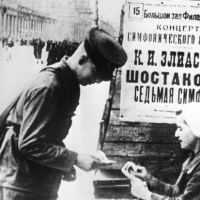
Simon Sebag Montefiore’s One Night in Winter begins in the hours immediately following the solemn victory parade that marked the Soviet Union’s victory over Nazi Germany — probably the high point of Stalinism. Two teenagers, dressed in 19th- century costume and members of a secret literary club called, aptly as it turns out, the Fatal
Mrs Thatcher was widely believed to have said that ‘any man over the age of 26 who finds himself on a bus can count himself a failure in life’. In fact there’s no evidence Thatcher ever said it — the most likely culprit is the Duchess of Westminster. Mark Mason loves buses, and doesn’t much
Is poetry in good enough health to be made fun of in this way? The irony is that this long, funny poem describing the incestuous peccadilloes of contemporary poetry’s social purlieus deserves to be read, and almost certainly will be read — and purchased — by far more readers than all but a few collections
There can be few characters in modern fiction more unpleasant than Paul-Jean Husson, the narrator in Romain Slocombe’s Monsieur le Commandant. Indeed, he is at times too nasty. If this otherwise compulsively readable novel about betrayal in Nazi-occupied France has a flaw, it lies in Husson’s irredeemable villainy, as if to make such a man
When John Drury, himself an Anglican divine, told James Fenton (the son of a canon of Christ Church) that he was writing about George Herbert, Fenton replied with gnomic brio ‘The poet!’ adding ‘Both in intention and execution.’ Herbert’s authentic lightness and strength, pathos and wit, alertness and sympathy have long been as precious to
After the success of their animal series of monographs, Reaktion Books have had the clever idea of doing something similar for plants. Writers are commissioned to investigate the botanical, historical, social and cultural aspects of individual plants, with volumes on oak and geranium already published, and yew, bamboo, willow, palm and orchid forthcoming. The structure
Confronted by this lavishly endorsed book — ‘compelling’ (David Lodge), ‘gripping’(John le Carré),‘thrilling’ (Jonathan Freedland) — I felt depressed. Two weeks ago, the New York Times’s savvy London correspondent accused the British of being obsessed with the Nazis. This might appear a case of pots and kettles: not for nothing did America’s widely watched History
Stage Blood, as its title suggests, is as full of vitriol, back-stabbing and conspiracy as any Jacobean tragedy. In this sequel to Arguments with England, his superb first volume of memoirs, Michael Blakemore presents us with an enthralling account of his five embattled years as an associate director of the National Theatre. When in 1970