More from Books

Why autocracy in Russia always fails in the end

Churchill was wrong: Russia is neither a riddle nor an enigma. Russians themselves concoct endless stories to glorify their country’s achievements and minimise its disasters and crimes. But the rest of us do much the same, as we try to explain Britain’s imperial history or the impact slavery still has on America’s revolutionary ideals. Russia is little harder to understand than anywhere else. But you need to separate the facts from the myths, as Mark Galeotti does in A Short History of Russia, an informative, perceptive and exhilarating canter through 1,000 tumultuous years. He starts with two founding events, each a mixture of fact and myth.
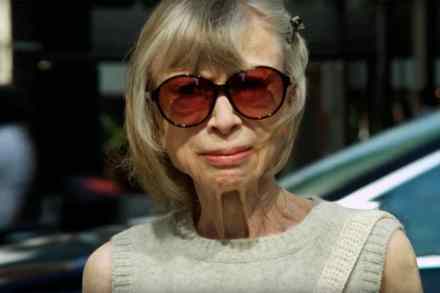
Joan Didion’s needle-sharp eye never fails

Most collections of journalism are bad. There are two reasons for this: one is that they are usually incoherent and the other is that they are, perversely, far too coherent. The pieces are pulled from their original contexts — newspapers, magazines — and thrown together with others they have no relation to beyond a common author. But (the too-coherent problem) most authors only have one or maybe two ideas to work through, so you end up doing the intellectual equivalent of walking a dozen rounds of the garden when you had hoped to be hiking off into a grand new landscape. I don’t know what Joan Didion’s one or maybe two ideas are, and I’m not sure she could even be boiled down to anything like that.

Algeria’s War of Independence still leaves festering wounds, two new novels reveal

In France, even the car horns yelled about Algeria. A five-beat klaxon blast — three short, two long — signalled Al-gé-rie Fran-çaise. In the early 1990s, I slunk into a rally held by Jean-Marie Le Pen in Nice to find that for the ranks of cropped, thickset pieds noirs in leather jackets, the bloodbaths and betrayals three decades back in Oran, Constantine or Algiers drove what they thought and how they voted. A generation later, Algerian migrants or returnees — Arab, Kabyle, European — now have second- and third-generation families. But the atrocity-littered independence war of 1954-62, and its gruesome aftermath, remain festering wounds.

Labour of love: producing the perfect loaf

Wheat flour, and the bread made from it, has been a recurring cause of concern for the British for centuries, with parliament passing laws to control the size of loaves and quantity of additives. The 1758 Act required bread to contain ‘genuine meal or flour, common salt, pure water, eggs, and yeast or barm, or such leaven as magistrates shall occasionally allow of’. Flour might be adulterated, mostly to whiten the bread; but rather than this being the work of a mad baker-poisoner it was more likely a response to a public that wanted not just the whitest bread but the cheapest, whitest bread.

Savage aperçus: Fake Accounts, by Lauren Oyler, reviewed

Lauren Oyler is viral and vicious. A critic with a reputation for pulling no punches, she is known for delivering refreshingly sane judgments of overhyped, commercially successful books. She is not alone in her ruthlessness — there are a number of critics who are at least equally ferocious about deflating promotional balloons, among them Merve Emre and Christian Lorentzen — but she is the hater who makes the greatest waves on the internet. She specialises in skewering vapid writing that takes its cues from social media, and her 2020 take-down of Jia Tolentino’s popular essay collection was shared so many times that the London Review of Books website crashed in the aftermath.

All good friends and jolly good company: life with the Crichel Boys

In the spring of 1945 three men pooled their resources in order to buy Long Crichel House, a former rectory built during the reign of Queen Anne in a secluded Dorset village. Desmond Shawe-Taylor and Edward Sackville-West were highly influential music critics, while Eardley Knollys, a former gallery owner, was now assistant secretary to the National Trust and a painter. The idea was for the three friends to live communally but each have their own parts of the house where they could work undisturbed and enjoy some privacy. The house was in fact large enough to accommodate not only a live-in butler and cook-housekeeper but, from 1949, a fourth partner, Raymond Mortimer, the leading literary and art critic of the day.

The true diplomat considers the future more than the present

The 17th-century diplomat Sir Henry Wotton said that an ambassador was ‘an honest man sent to lie abroad for his country’. It is a neatly punning definition. An ambassador is a messenger, who has to live (lie) abroad long enough to understand the interests, the preoccupations and the driving emotions of the people he deals with. He has to be honest if his own government and his foreign interlocutors are to trust him to manage their business effectively. He may occasionally have to be economical with the truth to further his government’s interests. If he doesn’t relish that, he can resign; few do. He may find himself disobeying his masters’ instructions if that is the only way he can achieve what they need.

A Romeo and Juliet-like tragedy in Uttar Pradesh

In the early hours of 28 May 2014 the bodies of two young girls were found hanging from the branches of a mango tree in the small village of Katra in India’s northern state of Uttar Pradesh. Their deaths caused outrage locally and attracted attention worldwide, as domestic and foreign media descended on Katra, the case gaining international notoriety less than two years after the gang rape of a young woman, Jyoti Singh, on a bus in Delhi in 2012. The Good Girls is a tragic tale, both in terms of what it reveals about village life and also about what women in India can expect in a society hidebound by tradition.

Geology’s dry, rocky road

There has been an argument recently on Twitter about how to do nature-writing. Should it involve the self? Should it be poeticised? Has the oh-my-oh-me-ism of recent nature books got out of hand? Can one not see a blackbird now without considering the nature of consciousness and the tragedy of existence? In short, shouldn’t the nature writers calm down a bit and become ‘more honest’, as one contributor to this row put it? Egregious sentences were quoted out of context. Angry and hate-filled expressions were used. The tone seemed wildly out of whack with the slightly technical question at hand — how to describe plants, places and animals — but was perhaps fuelled by something larger and more anxious.

Reality and online life clash: No One is Talking About This, by Patricia Lockwood, reviewed

Some writers — Jane Austen, for example — get to funny sideways, using irony and understatement. The American poet and essayist Patricia Lockwood isn’t one of them. She is straightforwardly hit-the-rubber-nail-on-the-head funny. There are punchlines, there are callbacks. On Twitter she is known for her zany ‘sexts’: ‘I am a living male turtleneck. You are an art teacher in winter. You put your whole head through me.’ In 2013 she went viral with her prose-poem ‘Rape Joke’, which was deliberately, powerfully not funny, yet still let in some killer laughs. (‘The rape joke it wore a goatee. A goatee.’) Her memoir Priestdaddy (2017) featured a hilarious, tender portrait of her guitar-shredding, gun-loving Catholic priest father.

A complex creation myth: Alexandria, by Paul Kingsnorth, reviewed

‘Challenging stuff,’ my wife remarked, having alighted on the page of Paul Kingsnorth’s new novel in which a character named el supplies several stream-of-consciousness paragraphs about a ritual dance featuring ‘big Birds runnin round Pole and fyr and mam and mother and all womyn and these big things all hummin’. Dystopian, or by the time you reach the final paragraph, maybe only utopian, Alexandria turns out to be set in the East Anglian fens a millennium or so in the future. Here lurk the last tattered remnants of a self-sequestered religious cult, their numbers steadily depleted by marauding ‘stalkers’, their destiny ever more uncertain.

CIA spies lose faith

With its grim John le Carré atmosphere, communist Eastern Europe in the late 1980s was a melancholy, out-at-elbow place. The Estonian capital of Tallinn crawled with Russian money-changers (‘Comrade, we do deal?’). The television in my hotel room was detuned from capitalist Finnish to Soviet channels, but I was able to pick up Miami Vice from across the Gulf of Finland. Guests were not allowed to visit the 21st floor, which officially did not exist. The KGB apparently had an office up there where they monitored Helsinki radio waves and the hotel’s 60-odd bugged rooms. Perhaps it is no coincidence that the wallet-thin Minox camera had been invented in Tallinn (by one Walter Zapp, in 1936). It was a favourite with Cold War spooks.

When poison is the cure: examining today’s processed meat

Who Poisoned Your Bacon Sandwich? is a much more sophisticated read than its lurid English title suggests. Guillaume Coudray’s book was first published in France in 2017 as Cochonneries, a play on words that better reflects the nuanced nature of his argument. Cochonnerie means rubbish, or junk. Derived from cochon — pig — it’s a clever title for a volume that examines, with impressive historical and scientific depth, a group of chemicals extensively used to manufacture processed meats. Investigations into cured meats, such as saucisson, bacon and ham, are big in France, but until now rare in the UK where the word charcuterie barely trips off the lips of the affluent classes, let alone the general populace.

What does ownership of land really mean?

At the end of the last century, Simon Winchester bought 123 acres of wooded mountainside in the hamlet of Wassaic, the village of Armenia, the town of Dover, the country of Dutchess, the state of New York, the country of America. His land had originally been inhabited by the Mohicans, who grew corn and squash and beans until they were expelled by the Dutch. It was then owned, in the titular sense, by Charles II, James II, Mary II, William III and Georges I, II and III, and had passed through the hands of a series of farmers, charcoal-makers and Sicilian immigrants before Winchester became its custodian.

On the track of a mysterious recluse: Maxwell’s Demon, by Steven Hall, reviewed

This is not the age of experimental fiction — it’s Franzen’s, not Foster Wallace’s. That shift was on its cusp in 2007, when the critic James Wood had declared in favour of realism, and Steven Hall published his debut, The Raw Shark Texts. It was a British metafictional novel that created a big splash. Noted for its innovative design, it transformed into a flick book in which a text-block shark menaced the reader. In the years since its publication, mainstream experimentalism has paled into the cosy, metafiction-lite of Matt Haig, though there’s quality stuff on the fringes — Rob Doyle’s Threshold, for example. Hall has been undeterred by shifting fashions, and his follow-up shares many of the features of his debut.

Francis Bacon: king of the self-made myth

In 1953, Francis Bacon’s friends Lucian Freud and Caroline Blackwood were concerned about the painter’s health. His liver was in bad shape, he drank inordinately, his lover had recently thrown him out of a first-floor window in the course of a drunken row, he was taking too many amphetamines and his heart was ‘in tatters’, ‘not a ventricle working’. His doctor had warned if he took one more drink, he informed them over dinner at Wheeler’s restaurant in Soho, he might drop dead on the spot. Then, in ‘an ebullient mood’, the artist ordered champagne. Of course, Bacon (1909-92) didn’t expire on the spot. Instead, he lived, painted, drank and argued for another four decades.

The cannibal feast: Mother for Dinner, by Shalom Auslander, reviewed

Seventh Seltzer is a nice family man, working as a publisher’s reader in New York, who happens to come from a family of cannibals. Specifically, Cannibal-Americans. The Can-Ams are the most marginalised of America’s minorities, largely because of their funerary rites: when one of them dies, the relatives drain the corpse of blood and then eat it. How much of the corpse is eaten becomes a very moot point towards the end of the novel. Seventh is so called because he’s the seventh of 13 children begotten by his mother, known to them all as Mudd.A monstrous figure, 6ft 2in tall and grotesquely obese, she has been fattening herself up for death, eating a dozen Whoppers a day for the past three years.