More from Arts

Close encounter

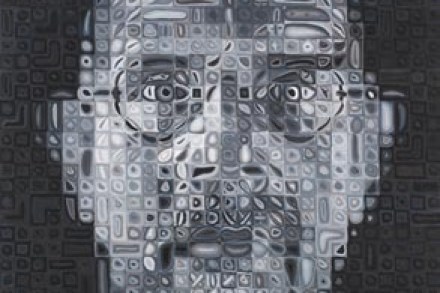
Bill Clinton looks down at me with that famous, lazy grin. His perfect American teeth show bright white and his blue eyes lock on to mine. I take a few steps forward (who wouldn’t?) but as I draw closer something odd happens to Bill: his face blurs, its outline distorts, wobbling as if underwater. A few steps more and his features have begun to pixelate into small squares and the smooth pink of his cheeks has unmixed itself — separating out into a hundred different colours. Bill is going to pieces. Closer still, now eyeball to nostril with President Clinton, I lose all sense that I’m looking at a portrait: in front of me is an abstract painting — a vast grid-full of sherbert swirls: mauves, oranges, lemon yellow, fuchsia.
Incapable of compromise

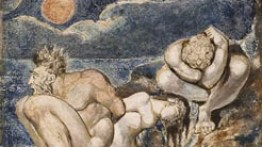
Big date for Bohemians next month: 28 November marks the 250th anniversary of the birth of William Blake whose memory is honoured by every moth-eaten visionary, every babbling poet and every garret-bound artist flinging paint at a canvas. Nowadays, Blake’s eminence is universally accepted but the great mystery of his career is that his achievements, as both illustrator and poet, made such a feeble impression on his contemporaries. It didn’t help that he was widely thought mad. And he complained throughout his life of a ‘Nervous Fear’ that made him uneasy in company. Because of his visions his behaviour was often weird.

Ways of being

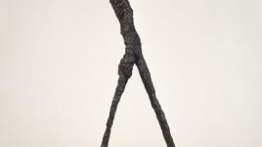
Exhibitions 2: L’Atelier d’Alberto Giacometti: Collection de la Fondation Alberto et Annette Giacometti In terms of body shape, the week of the Rugby World Cup final was an odd choice for the Pompidou Centre to kick off a new exhibition of Alberto Giacometti, an artist whose attenuated vision of humanity seems better suited to Paris Fashion Week. In fact, those looking to apportion blame for size 0 models might well start with his spindly figures with platform-soled feet. In post-war Paris, Giacometti was himself something of a style icon. With his austerely sensuous face, rumpled tweed suits and ever-burning cigarette, he embodied existentialist cool. The camera loved him.

What a waste

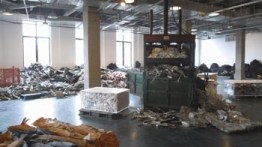
Tons of sterilised domestic and industrial waste lay strewn across the gallery floor. Against one wall mounds of unidentifiable detritus are shrouded with ribbons of black tape like seaweed on rocks. Beyond, the work of sifting and sorting and baling recyclable material has begun. Despite the sanitisation, the place reeks. All around are the sounds of Guangdong — of the ships, the trucks, the machines and the people involved in processing the rubbish that the developed world has dumped in China. On the walls, in both Mandarin and English, a litany of statistics and quotations offers a damning indictment of the environmental and public health disaster of this ugly new China Trade. The irony of the venue is not lost on artist Liu Jianhua.

Cut-throat world

This is either a seriously good film with some flaws or a seriously flawed film with some good elements. I am hoping to work out which it is by the finish of this, otherwise I will have denied you a proper ending, and we all know how irritating that is. Eastern Promises opens with a throat-cutting slaughter in a barber’s shop — and why wouldn’t it? This being a David Cronenberg film — and then almost instantly cuts to the bloodied birth of a baby. Life and death, death and life, and all of it pretty brutal and all that. Nothing new here. Nothing to write home about. But, thankfully, the plot speedily and greedily surges forward.

Horse play

Here’s something new to ban. Writers who use the Great War as an emotional backdrop to their stories. It’s embarrassing to see so many authors marching up the alley marked ‘failure of invention’. And it dishonours the dead to use their blood as wallpaper. Sadly the subject is just too tempting. It’s our equivalent of the Oedipus myth. Jocasta is the war. Oedipus is the eager recruit. Their union leads to mutilation, chaos, death and a wave of blood-guilt spreading down the generations. Michael Morpurgo’s novel War Horse focuses on the millions of animals who died in the trenches and the NT has put the book on the stage to coincide with the Christmas shopping season. Nice day out. Death and horror followed by éclairs and new dresses.

A dark and stormy night

‘Where were you when they crucified the Lord?’; when news of Waterloo was brought, or the Mutiny, or the Charge of the Light Brigade, or the death of Victoria? Thence into living memory and universal communications — when Edward VIII announced his abdication; when Neville Chamberlain returned from Munich with ‘peace in our time’; when VE, then VJ, were proclaimed; when the Suez débâcle shocked the nation; when JFK’s assassination shook the world. All these except the last are before my memory begins to go beyond feeding the ducks and collecting civic clocks (anything from the high street jewellers to Big Ben himself).

Personal story

Dance: Thierry Baë: Journal d’inquiétude, The Place: Robin Howard Dance Theatre; Shen Wei: Connect Transfer, Barbican So far, the two most thought-provoking performances I have seen in this year’s Dance Umbrella have both been French. But Compagnie Beau Geste’s duet between a man and a digger, which I reviewed enthusiastically two weeks ago, and Thierry Baë’s Journal d’inquiétude (Diary of Disquiet), which I saw last week, could not be more different. In Baë’s Journal there are no special technological devices or ideas, apart from a screen and a kind of fly-on-the-wall film. And yet both performances stood out for the same irresistible theatrical vibrancy.

Dream team

Opera: Das Rheingold; Die Walküre Halfway through the second cycle of the Ring at the Royal Opera, I’m feeling far more positive than I could have expected. When I saw the separate parts of the work I found Keith Warner’s direction cluttered and confusing, Stefanos Lazaridis’s sets ugly and evidently unsafe, Antonio Pappano’s conducting wayward and sacrificing the grand design to fussing with details, and much, even most of the singing barely adequate, sometimes calamitous.

Filth detector

I wish Mary Whitehouse were still among us. In my teenage years, she was an invaluable guide to where the filth could be found on television — though to be frank most of what she disliked was disappointing: hardly titillating, and far from filthy. I suspect that if she were invited back to earth to see a special showing of Belle de Jour, Californication, and now Fanny Hill, she would realise with horror that her life had been in vain, and she would do whatever people who are already dead do instead of committing suicide. Andrew Davies is the adaptor who is famous for putting in the sex that the original writers left out, on the grounds that they would have included it if the mores of the time had allowed. Hence all those wet cambric shirts and heaving bosoms in Pride and Prejudice.

Sense and sensibility

Sex is never any good on radio. Think of all those excruciating scenes in The Archers — Sid and Jolene in the shower, or, for those addicts with a good memory, Shula on a picnic rug with that seamy journalist from the Borchester Echo. On radio, without the carefully crafted images of a film-maker and instead just the sound effects — splashy kisses and primeval squeals — it’s ludicrous. Worse still, when listening to sexual antics rather than watching them on screen you’re left with space in your head to wonder at the absurdity of a couple of actors standing at a microphone pretending to make all that noise.

Packing a punch

It’s a good month for the Great War. At the National Theatre this week a new play by Michael Morpurgo tells the story of the war seen through the eyes of a horse. Staged with huge puppet nags, War Horse sounds on paper like the theatrical lovechild of Equus and Birdsong. Up in Bolton, with a good deal less hype, they are doing another war horse — Oh! What a Lovely War. It was first staged in 1963 by the radical Theatre Workshop, in the East End. The Great War satire was aimed at the political edification of the working class, but sadly for the Revolution it quickly attracted posh nobs from Kensington, transferred to the West End and became a huge commercial hit and finally an all-star extravaganza film in 1969. The show remains a legend.

Restless mind

For once a major blockbuster exhibition at the Tate justifies its size: the imaginative world of Louise Bourgeois is so potent and all-encompassing that a show of more than 200 works, from small experimental objects to large installations, seems not a fraction too extensive. Bourgeois, born in Paris in 1911, is famous — in this age of confession and determinedly autobiographical art — for her troubled childhood. Whereas most artists of this type foist their traumas on us raw, Bourgeois cooks hers to a turn. What is more, she has the imagination and creative vision to translate and transform her source material, transcending its personal impetus and making it universal.

Subversive narrative

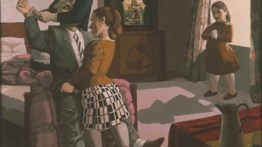
Paula Rego had a retrospective at Tate Liverpool a decade ago and a big show in her native Portugal, where she is properly regarded as the country’s greatest living artist, but both exhibitions seem niggardly in comparison with the more than 200 works shown in some 14 rooms at the Reina Sofia in Madrid. Even to someone who has made a close study of her work, this is a revelatory, even overpowering, display of both her versatility and her passion. The exhibition has been curated by Marco Livingstone who, in his elaborate catalogue, includes as well as his own lucid introduction, refreshingly free of artspeak, a fascinating interview with the artist. Rego says of the ever-present threads in her oeuvre: ‘I think bullying and revenge run all the way through.

Less is more | 20 October 2007

Theatre: Shadowlands; Cat’s-Paw; Glengarry Glen Ross Repressed Brits are on parade in Shadowlands. Author C.S. Lewis is portrayed as an emotional cripple who can’t bring himself to articulate his love for Joy Gresham, a sassy, super-intelligent American poet. Charles Dance is perfectly cast in the weird role of Lewis. With his stately, ruminative face and his air of embarrassment barely mastered, he looks like a befuddled giraffe performing good works in Africa. His eyes are just right too. Their expressive, pink-rimmed moistness makes him look as if he stopped weeping about ten minutes ago. And there’s great chemistry between him and Janie Dee as the besotted, endlessly patient Joy. William Nicholson’s script pokes gentle fun at Oxford in the 1950s.

Indigestible fare

It isn’t often that we get the chance to see a semi-opera, of which Purcell and Dryden’s King Arthur is a paradigm. And after seeing a competent production in Bury St Edmunds last week, I can’t say that I regret the infrequency of performances. This one was in the enchanting setting of the Theatre Royal, very recently restored and quite magnificent, a tiny theatre with excellent acoustics, and a fine example of English rococo. The production was a joint one with three German theatres, one of them the still more exquisite Markgrave’s Opera House in Bayreuth. The cast was of native English speakers, and the German audiences would have had an industrious evening reading the surtitles, for there is a vast acreage of text.

Blurred boundaries

Dance: Giselle — on love and other difficulties; Shaker As the blurb at the back of the programme says, it is well known that ‘Dance Umbrella celebrates and champions contemporary dance’. Yet the notion of ‘contemporary’ dance, once an artistically neat classification, has long lost its transparency. The vibrant and provocative combination of diverse performing idioms, techniques and genres that characterises today’s dance has indeed contributed greatly to blurring the boundaries of an historically defined artistic genre. It is not surprising, therefore, that ballet, namely the arch-opposite of contemporary dance, took centre stage last week in one of the world’s most significant platforms of new dance-making.

Competitive edge

Amid all the fuss about cuts at the BBC and how this will affect programme output, I can’t help thinking, why the outrage? For years, there have been dark rumblings among writers that there’s no longer a drama department to nurture young talent and commission new work — the Birtian revolution of the 1990s saw to that, and it did initially cause a sharp decline in standards, especially in the number and range of original drama productions. Over at Radio Three, the Controller Roger Wright has been attacked for not encouraging live performances of new music, but you could say he has brought other virtues to the network. Sometimes a financial squeeze on programme-making can have the effect of a health-ensuring purgative, getting rid of waste.