More from Arts

Spell bound

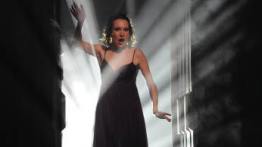
Cinderella Royal Opera House, in rep until 5 June I know that old fairy tales are not popular or fashionable any more. But last Saturday, at the opening of the Royal Ballet’s new run of Frederick Ashton’s Cinderella, I was shocked to overhear two nicely behaved children ask their grandparents why the good fairy had asked Cinders to fetch a pumpkin and why there were dancers dressed as white mice pulling her coach. It’s true that, in Ashton’s superb choreographic adaptation of the old story, the transformation scene is not as graphic as it is in Walt Disney’s animated film. Yet the youngsters’ questions were symptomatic of the cultural, psychological and political trends that inform children’s upbringing today.
Missing humour

After listening to an advance copy of tonight’s Archive on 4 I’m almost beginning to look forward to the general election of 2010. After listening to an advance copy of tonight’s Archive on 4 I’m almost beginning to look forward to the general election of 2010. A Night to Remember looks back over 60 years of Election Night Specials, guided by the curiously comforting voice of Anthony Howard, whose reflections and rummaging through the archives make dusty, devious politics begin to sound quite exciting. His programme is a useful reminder that what happens on the night of 6 May might actually make a difference.

Men only

I think it’s about time someone explained to women how to watch war films. I think it’s about time someone explained to women how to watch war films. They just don’t get them, in much the same way men don’t get handbags or expensive girl-shoes. They think it’s all boring and that the characters all look the same, so how can you care about them? They think there’s far too much shooting and killing and violence and horror and bang bang bang and it’s like watching paint dry. They’d rather let you watch on your own, if you don’t mind, while they go upstairs and read in the bath.

Sacrificing art for ideas

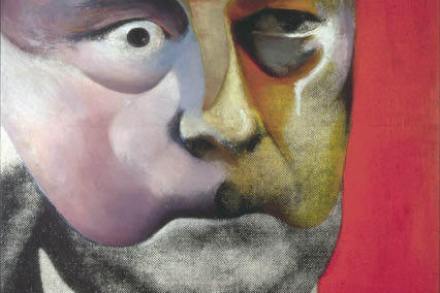
Richard Hamilton: Modern Moral Matters Serpentine Gallery, until 25 April This year is the 40th anniversary of the Serpentine Gallery, that most welcoming of exhibition venues — the gallery in the park — with its wide views and well-appointed rooms. Expectation rises as the visitor walks through gardens burgeoning with spring, even if it is raining. To start its anniversary year, the Serpentine has mounted an exhibition of Richard Hamilton’s political work entitled (in homage, presumably, to Hogarth) Modern Moral Matters. The show is a real disappointment: the blinds are down to focus the visitor’s attention inward, which might be acceptable if there were riches to be seen.

The Master’s voice

Götterdämmerung Salzburg Easter Festival Out of this nettle, danger, we pluck this flower, safety. Rather more than safety, if truth be known. The Salzburg Easter Festival, which concluded on Monday with a performance of Götterdämmerung, topping off a Ring cycle shared with the summer festival in Aix, was an event of considerable beauty. Given the extraordinary prelude to this year’s pageant, with a toxic cloud of scandal hanging over the city amid charges of embezzlement being drawn up against the outgoing director and technical director, it was more than anybody could have hoped for.

Fallen Angel

Angels in America Barbican Angels in America is the latest in the series of contemporary operas which are being mounted at the Barbican by the BBC Symphony Orchestra. The others have been semi-staged, this was three-quarter staged, with props, moved around by the performers, and an Angel crashing into the action at the close of Act I. It is the latest opera by the Transylvanian composer Peter Eötvös, whose previous opera Love and Other Demons was premiered at the 2008 Glyndebourne Festival, to no great acclaim. Angels in America, by contrast, has been given very warm welcomes in the various cities in which it has been produced, beginning with Paris in 2004.

No laughing matter | 10 April 2010

The Infidel 15, Nationwide I wish, wish, wish, wish, wish I had liked The Infidel better. I wanted to like it. I longed to like it. And I did think it would be a hoot. It’s written by David Baddiel, a thoughtful, clever and witty writer (usually). It stars Omid Djalili, who has a lovely, big, funny face and is always an engaging physical presence. The premise is neat and brave and topical: it’s about a Muslim who discovers he is adopted and was actually born Jewish. It sounded right up my street, as I do like to laugh at religion. Some days, I am so busy laughing at religion I don’t even have time to tie my own shoelaces, which is why I trip up a lot. But?

Save 6Music

Much — possibly too much — has already been written about the BBC’s plans to close down its digital stations, 6Music and the Asian Network, in a customarily pathetic attempt to placate its political enemies. Much — possibly too much — has already been written about the BBC’s plans to close down its digital stations, 6Music and the Asian Network, in a customarily pathetic attempt to placate its political enemies. My first thought, when the plans were leaked and then announced officially, was, how very clever. No one in their right mind would close 6Music, which is a terrific little station and costs buttons.

Modern living

The sublime Outnumbered (BBC1, Thursday) is back. It’s customary to compare it favourably to The Life of Riley, another BBC family sitcom, from this week shown on the previous night. I have declared an interest before: the onlie begetter of Riley is Georgia Pritchett, who years ago nannied for us. So I’m disposed to like it. And it’s wrong to write it off as just another bland comedy with sassy kids and put-upon parents. It’s about life as lived in the real modern world, with teenagers so old beyond their years that they’re not even rude to their parents, families reduced to communicating through post-it notes, and mean-spirited, bottom-line-obsessed employers. And there are well-pointed gags.

Persecuting Christians

It’s all in the voice. It’s all in the voice. Some presenters have it. Others just don’t quite draw you in; the voice is too abrasive, too knowing. Edward Stourton definitely has it. A quiet authority, a questing intelligence, but more than that a willingness to share, to enter into a conversation with those whom he hopes will be listening. On Tuesday he took us to Iraq, and to yet another unforeseen consequence of the 2003 invasion. The Archbishop of Canterbury had already touched upon this in Easter Monday’s controversial edition of Start the Week from Lambeth Palace, when he began by reminding us that many Christians in the world are experiencing a throwback to the perilous conditions of the first and second centuries AD.

Watch that band

Further unpleasant surprises for motorists this month as the government seizes yet more money from us under threat of criminal sanction (what Gordon Brown calls ‘asking’) to help replace money wasted from earlier seizures. Further unpleasant surprises for motorists this month as the government seizes yet more money from us under threat of criminal sanction (what Gordon Brown calls ‘asking’) to help replace money wasted from earlier seizures. This time it takes the form of car tax (VED) increases. If your new car is in the new band M (255g/km CO2) you’ll pay £950 for your tax disc instead of £405.

Eclectic top ten

That splendid old bruiser Michael Henderson, no stranger to Spectator readers, and as passionate about music and poetry as he is about cricket, has, as so often, a bee buzzing in his bonnet. Responding to last month’s winning entry in the ‘Olden but golden’ all-time top-ten competition, he notes that Roy Beagley included Mozart’s Die Zauberflöte on his list. But which recording? huffs the mighty Hendo. ‘There are dozens, probably hundreds of Flutes. Surely the challenge you set was to select ten favourite recordings, not ten favourite pieces of music.’ Hendo is right, of course, when it comes to anoraks like me and him.

Janacek revealed

Cunning Little Vixen Royal Opera House, in rep until 1 April Perhaps the most heartening feature of the British and especially the London operatic scene is the frequency with which Janacek’s operas are mounted now. His progress in that respect is comparable to that of Mahler, with whom he otherwise has mercifully little in common. Mahler’s symphonies soul-search, despair, exult, usually unconvincingly, or peter out, much more convincingly, in resignation and acceptance.

Suicide note

The Gods Weep Hampstead, until 3 April Mrs Warren’s Profession Comedy, booking to 19 June Finding fault with Shakespeare is one of the RSC’s favourite activities. It’s now so fed up with King Lear that it has decided it needs to be scrapped and rewritten. A tall order? Not a bit of it. The company maintains a team of ‘embedded’ writers whose talents rival those of the bard, more or less, and Dennis Kelly has been given the tiresome but necessary job of correcting the faults of this famously ill-written drama. Kelly’s previous works — Debris, Orphans, Osama the Hero, and Our Teacher’s a Troll — give some hint of his artistic range. He likes controversy, violence and macabre humour.

MacMillan magic

Royal Ballet Triple Bill Royal Opera House, in rep until 15 April The Royal Ballet’s new triple bill is a rare example of artistically enlightened programming. It is devoted to Kenneth MacMillan’s creative genius, and highlights his most distinctive and seminal choreographic aesthetic through a masterly game of contrasts. Concerto, created in 1966, provides a unique insight into how MacMillan dealt with the notion of plotless or ‘abstract’ ballet set to non-dance-specific music. Shostakovich’s sometimes infectious, sometimes emotionally intense score is translated into what could be referred to as softly toned, spirited choreography.

Beyond our ken

It seems only right to tune in to programmes about Belief in the week leading up to Easter Day, the holiest day in the Christian calendar. Whether or not you have faith, there’s some point in reflecting on matters of conscience once a year, if only to give your inner self an annual spiritual check-up. It’s a chance to pause and reflect on matters other than the bank balance, the state of the garden, or that irritating person who’s blighting your life at work. For her late-night Radio 3 series this week, Joan Bakewell has been talking to a Catholic, a Muslim, a Druid, an atheist and an Anglican Bishop.

Trouble upriver

Three reasons why I hardly ever review TV drama: 1) the length, 2) the politics, 3) sheer bloody laziness. I suppose the last one is the main reason but the others aren’t just excuses. It really is too depressing when, three hours into one of those Sunday and Monday two-part dramas, you suddenly realise that you’ve already wasted one evening and you’re about to waste another, but that you can’t bail out now because you’re in too deep — and what if something good and exciting suddenly happens? Almost all TV drama is too long and the reason for this is that the more screen hours you fill the bigger your commissioning budget.

View from a room

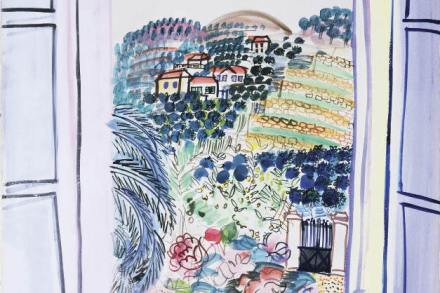
Without from Within Djanogly Art Gallery, Nottingham, until 3 May In 1935 Magritte painted a picture called ‘La Condition Humaine’ showing a mountain landscape seen from inside a cave. In the mouth of the cave an easel with a see-through canvas perfectly frames the view of a distant castle, while a fire burning inside reminds us of Plato’s famous allegory of human knowledge, comparing us to prisoners in a cave whose only perception of reality is based on shadows thrown by firelight on the walls. Painting, Magritte implies, is similarly partial (although presumably an advance on shadows for a cave-dweller).