More from Arts

Artistic rumblings

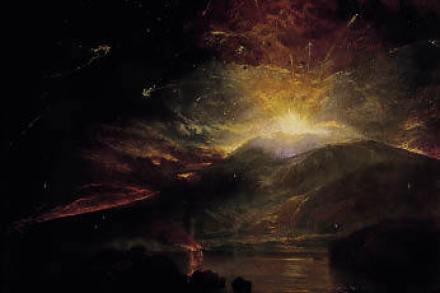
Volcano: Turner to Warhol Compton Verney, until 31 October On my desk is a lump of lava, a memento of Vesuvius. It doesn’t look like much, but neither does the volcano from the cinder track that winds around to its summit. From close to, Vesuvius is a giant ash heap; it’s from across the bay that the magic works. Never does distance lend more enchantment to the view than in the case of volcanoes: when they’re exploding they’re plain dangerous, and when not they’re really rather dull. Their allure is as elusive as a rainbow’s, and it was in rainbow colours that Andy Warhol painted Vesuvius in 1985, making it look like a Neapolitan ice cream blown under pressure through the end of a cone.

Sabotaging Tchaikovsky

Eugene Onegin Bolshoi, Royal Opera House  La bohème Soho Theatre, until 4 September Rule 1 for the sophisticated contemporary opera-goer: complain about the poor diction of singers, especially as compared to 50 years ago, and lay most of the blame on surtitles (actually the connection between the two phenomena is unclear). Rule 2: be astonished at the naïveté of anyone who is bewildered by contradictions between what is said (sung) and what is happening. To judge from the Bolshoi Opera’s production of Tchaikovsky’s Eugene Onegin, Russian directors are cottoning on to modern trends. The whole thing is set in a vast dining room, with a big table round which the chorus sits.

Playing it straight

The Sun Also Rises Royal Lyceum The Cage Pleasance Borderline Racist The Canons’ Gait The Edinburgh International Festival, respectable elder brother of the drop-out Fringe, takes its art very seriously indeed and expects the audience to do the same. It gives us the exotic, the challenging, the eclectic, the mesmeric. It gives us, in a word, the Mickey Finns. Usually we get Palestinian ghost-lore or Slovakian puppet-theatre or sub-Saharan tribal epic or Lesotho revenge drama or Apache creation myth. Sometimes we get all five, in Finnish, with subtitles and video projections, and an on-stage bongo squadron to keep us from our slumbers. But this year, in a stunning reversal of tradition, we’ve got a straight play adaptated from a bestseller by a well-known author.

Steps in time

Cinderella English National Ballet’s 60th birthday London Coliseum The post-second world war decade saw a flourishing of independent ballet companies all over Europe. Those that strove to emulate the Ballets Russes provided an alternative to the companies that aimed at nurturing home-grown talent — such as the Ballet Rambert and what became the Royal Ballet in the UK. It was in this context that English National Ballet (formerly Festival Ballet, London’s Festival Ballet and London Festival Ballet) held its first performance 60 years ago last Saturday. A significant anniversary indeed, particularly because none of the other independent European companies created around the same time has managed to survive so long.

Battered but triumphant

Big River Man (part of More 4’s ‘True Stories’, Tuesday) was one of the most gripping and brilliant, infuriating and disappointing documentaries I’ve ever seen. Big River Man (part of More 4’s ‘True Stories’, Tuesday) was one of the most gripping and brilliant, infuriating and disappointing documentaries I’ve ever seen. It was gripping and brilliant because the story it told with tremendous verve, wit, imagination and style was so extraordinary. Martin Strel, 55, a hideously overweight Slovenian drunkard and gambler, addicted to red wine and horse burgers, also happens to be the world’s greatest endurance swimmer. He’d already done the Danube, the Mississippi and the Yangtse.

Lights out

It’s not always a good idea to revisit poems or stories once loved as children. It’s not always a good idea to revisit poems or stories once loved as children. The magic and mystery can dissolve all too rapidly when refracted through adult eyes. Late on Saturday night, the poet Kenneth Steven did for me with his careful probing of the true story behind Wilfrid Gibson’s 1912 poem, ‘Flannan Isle’. Gibson retells in eerie, doomy verse the story of the disappearance of the three keepers of the Flannan lighthouse on the afternoon of Saturday 15 December 1900.

Picasso magic

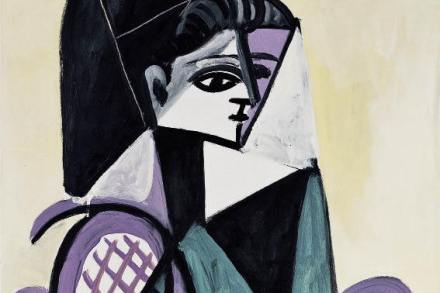
Picasso: The Mediterranean Years (1945–61) Gagosian Gallery, 6–24 Britannia Street, WC1, until 28 August The Gagosian Gallery has been remodelled for this exhibition by the architect Annabelle Selldorf, who has translated the normally looming white spaces into a succession of more sympathetic but nonetheless dramatic rooms. The expectant visitor enters via a black door to be confronted by a large but standard earthenware vase that Picasso has transformed by painting it with a brief yellow bikini. Vase becomes woman, as Picasso reinvigorates the old cliché of womanly hips looking like a vase, and effortlessly renews the metaphor. The humour and playfulness that characterise his work are at once in evidence, and the profound preoccupation with the human figure.

Rural targets

The Great British Country Fête Bush, until 14 August The Great Game: Afghanistan, Part 1 Tricycle, until 29 August Russell Kane, a rising star of stand-up, has penned a musical satire with an inflammatory theme. His play opens in a Suffolk village where the locals have risen up against Tesco’s attempts to blight the community with a thumping new shopping hub. Excellent subject! Rabid, thoughtless expansionism by supermarkets inspires rage in every corner of the country (apart from London, which couldn’t care less). After this superb set-up, the show goes wrong immediately and stumbles off in search of easy targets, facile rustic caricatures — the randy vicar, the gay farmer’s boy, the thick ferret-fancier, the racist lady from the WI, and so on.

Rare outing

Francesca da Rimini La forza del destino Opera Holland Park, in rep until 14 August Tristan und Isolde Act II Royal Albert Hall Opera Holland Park makes a speciality of reviving Italian operas of the early 20th century, often absurdly and lazily dubbed ‘verismo’. Its latest, and possibly most courageous effort on this front, is Zandonai’s Francesca da Rimini, which, far from conforming to the aesthetic brilliantly outlined in the sung Prologue to I Pagliacci, takes a subject very far removed from quotidian life, and decked out in the almost fatally pretentious language of D’Annunzio.

Long voyage

Le Corsaire, Don Quixote Bolshoi Ballet, Royal Opera House For many years in the West, Le Corsaire was just a pas de deux, a dazzling bravura number historically associated with male ballet legends such as Rudolph Nureyev and Mikhail Baryshnikov. Then, in the mid-Eighties, the Kirov Ballet, now Marijinsky Ballet, came along with a fast-paced, colourful and highly entertaining complete version, loosely based on the much-interpolated 19th-century original. Since then, a few more versions have cropped up here and there, including the 2007 one signed by Alexei Ratmansky and Yuri Burlaka, respectively the former and current artistic director of the Bolshoi Ballet. Entertaining as it might be, Le Corsaire is not a masterwork.

Touched by Schumann

Schumann is probably the most lovable of the great German masters, simply because his music is inextricably involved in first impressions: many children learning the piano will encounter early the pretty little pieces from his Album for the Young, moving on with enhanced delight to the easier numbers in Scenes from Childhood. Then, after headier teenage intoxications, the taste recoils to discover his two greatest contributions to the world hoard — the body of solo piano works with which he began, and the body of songs that overlapped then wholly took over. The 24 piano works present a cavalcade of dancing, dreaming fantasy, peopled by lovers real or imagined, heroes of music and literature living and dead, brother warriors in art against the Philistines.

Unsung talent

So why are we all becoming radio addicts, listening to an ever-greater variety of stations for more minutes each day? Could it be a yearning for something simpler, more direct, less tricksy than the constant visual stimuli that persist in assaulting us wherever we are, via the internet, TV, DVD and cinema? It’s the immediacy and the fact that you don’t have to wait those endless seconds while the wretched machine boots itself up, ready to perform, which make radio so much more appealing. With a soon-to-be-abandoned analogue set (though not, alas, my smart new digital boxes) all you have to do is press your preset button and be taken straightway, between heartbeats, to another dimension of experience.

Facts and fantasy

The Unforgettable Bob Monkhouse (ITV1) might be thought a slightly coat-trailing title, though not perhaps as much as its follow-up, The Unforgettable Jeremy Beadle. Still, I don’t suppose we’ll ever be treated to the unforgettable Jim Davidson. Or the all-too-forgettable Freddie Starr, or Whoever Remembers Bobby Davro? Monkhouse had this highly veneered gloss, and symbolised for a lot of people all that was wrong with commercial television. Smooth, unfazed, just condescending enough to the public to make your teeth feel furry. If you can fake insincerity, you can fake anything. Privately, he had a pretty miserable time, losing one son to cystic fibrosis, another — already estranged — to drugs. Even his writing partner, Denis Goodwin, committed suicide.

Damp squib

Sargent and the Sea Royal Academy, until 26 September John Singer Sargent (1856–1925) is an artist whose name arouses hopes of dazzling technical virtuosity even when his subjects are fairly run-of-the-mill. Famed as a portrait painter, his art (at its finest) has great glamour and stylishness, backed up by exuberant brushwork which can be truly exhilarating. So a summer-themed exhibition of Sargent and the Sea sounds a treat for all: seductive at the very least, and possibly rising to great heights, with all the explosive splendour of Franz Hals crossed with the Impressionists. Sadly, there is little of such pyrotechnics visible in the Academy’s damp squib of a show.

German challenge

The Prince of Homburg Donmar, until 4 September Danton’s Death Olivier, in rep until 14 October Welcome to London. This month we’re hosting the world’s very first, but probably not its last, Useless German Playwright Festival. Here’s a scribbler you may not have heard of. Heinrich von Kleist, born in 1777, angered his Prussian family by quitting the army and setting up as a dramatist. After an energetic start he decided he had better things to do with his life and killed himself. His final play, The Prince of Homburg, shows that he still had much to learn before his premature exit.

My all-time Top Ten

Regular readers may have noticed an embarrassing lacuna in this column. Having urged you to come up with your top ten albums of all time, to which you responded in such numbers, and with such entertaining and illuminating results, the sadist who set you the task has so far failed to deliver a selection of his own. This isn’t a matter of cowardice or mere idleness on my part, I promise. For months now I have been cogitating on it, agonising about it, tearing up the list and starting all over again. But it’s been fun, too, listening to much-loved albums that had somehow been allowed to gather dust on my shelves, trying to separate the excellent from the absolutely essential, and to find room for as wide a variety of music as possible.

Looking back

Bolshoi Ballet Royal Opera House, until 8 August At the beginning of the second week of its new London season, the Bolshoi Ballet presented the classic Giselle, a ballet which, not unlike other 19th-century works, underwent myriad changes, cuts and choreographic adaptations. It was only after Mary Skeaping attempted to restore the original text in the 1970s that most ballet companies adopted what has today become a sort of standard text. Interestingly, this is not entirely the case with the 1987 Bolshoi production, in which historical originality does not play such a central role.