Features

China has begun its campaign to take Taiwan

Normally, if the response to a speech of mine was that it had been a ‘despicable and insane performance’ from a ‘failed and pitiful politician’, I’d question what went wrong. But since the comments came from Chinese communists about an address I’d made in Taiwan, it’s hard not to feel some pride. Two years ago, I’d been asked to speak at the Yushan Forum, the Taiwanese government’s annual showcase for their international links. Then, I was worried about the optics of calling out Beijing’s behaviour from Taipei so I pleaded diary difficulties. I didn’t want to be accused of complicating Australia’s relations with our prickly largest customer.

The weird and wonderful world of underground chess

Most people have a set list to tick off when visiting a new country. The national museum, the famous bridge, the legendary music venue. For me, no holiday is complete until I’ve checked out the local chess scene. The habit started on a solo trip to Paris a few years ago. As a keen chess player — no master, but a competent amateur — I made sure to visit Jardin du Luxembourg, where chess enthusiasts famously congregate for games. After enjoying some matches before dusk fell and the regulars packed up, I offhandedly asked my opponent where else was good to play. In the manner of a John le Carré character, he gave me a time, a name and an address. Intrigued, I followed his instructions and found myself in an empty bar, about to close, in the 11th arrondissement.

Why the UK can’t rely on renewables…yet

Like a football tournament with an official beer, COP26 had an official energy provider: the Griffin wind farm in Perthshire, operated by SSE. Trouble is that for much of the conference it was not paid to generate electricity. Instead, it received £500,000 in ‘constraint payments’, which are given to owners of wind farms when they are generating too much electricity for the grid to absorb. The payments expose a huge hole in Britain’s renewables-heavy energy policy: we have little means of storing energy when the wind is blowing and the sun is shining so that we can use it on dull, windless days.

The selfie is dead – but self-obsession is universal

In 2013 the Oxford English Dictionary named ‘selfie’ as the word of the year. Its use had increased by 17,000 per cent in just 12 months, the OED revealed. Before long a cottage industry of feminist scholars sprang up, dedicated to producing gruesome waffle on the subject. A paper by Emma Renold of Cardiff University and Jessica Ringrose of University College London, for example, was entitled ‘Selfies, relfies and phallic tagging: post-human participations [sic] in teen digital sexuality assemblages’. Not to be outdone, Katie Warfield of Kwantlen Polytechnic University in Canada, wrote ‘MirrorCamera-Room: the gendered multi-(in)stabilities of the selfie’.

Pub theatres are a British institution

Which is the oldest pub theatre in London? The King’s Head in Islington claims that its American founder, Dan Crawford, established the trend back in 1970. But a rival venue, Pentameters, above the Horseshoe in Hampstead, maintains that its proprietor, Leonie Scott-Matthews, set it up as a fringe theatre in August 1968. The dispute rumbles on. Pubs are peculiar to British culture, and their conversion into theatres owes something to the quirks of architecture. Most have a small room on the first floor which is slightly inaccessible from the downstairs drinking area, and it’s hard to tempt boozers to climb a narrow flight of stairs and sup their pints in a cramped space that feels a bit like an attic. But these dank little rooms are ideal for theatre.

Fishing for votes: what’s really behind our trade war with France?

A decade ago, French-bashing was all the rage. David Cameron famously declared Britain would ‘roll out the red carpet’ for those fleeing the steep tax hikes proposed by the newly elected Socialist president François Hollande. The French economy continued to be a source of derision for the British, culminating in the managing director of John Lewis describing it as ‘sclerotic, hopeless and downbeat’ in October 2014. The following month, Hollande despatched his 37-year-old English-speaking economy minister to London with instructions to prove to the British that the French economy was in good health. That minister was Emmanuel Macron.

Superbad: Joe Biden’s plummeting presidency

Who can blame President Biden for nodding off at the COP26 summit on Monday? It was an astronomically boring session — opening statement after opening statement, pompous speaker after pompous speaker, insisting that the time for words on climate change is over. Now is the time for… zzzzzzzzzzzz. It’s a miracle the jet-lagged, 78-year-old leader kept his eyes open for as long as he did. Poor Joe. He has a lot on his addled mind. He’s been in office for less than a year and his presidency is already a catalogue of crises. On Tuesday, as the President stood on the COP stage in Glasgow, impotently lecturing China and Russia about their absence, another disaster was happening back home.

How we rediscovered the charms of haiku

One of the more encouraging developments of the past year and a half has been the number of us who, instead of turning to drink, have been turning to haiku. Haiku hashtags have been popping up on social media since the start of the pandemic. It turns out that 17 syllables in that classic five-seven-five formation are just what we need when we’re trying to express how we feel about these unsettling times. Facebook, Twitter, Instagram and the rest have proved to be the perfect medium for this short-form poetry. Of course, the quality is mixed. Some of the hashtags attract efforts that are less ‘narrow road to deep north’ than ‘quick jab to left arm’. But the same could be said of any open-entry poetry competition.

Are banking apps luring young people into debt?

Last month, my bicycle got a flat tyre. ‘Both of those tyres are gonna need replacing and you’ve knackered your sprockets,’ huffed the bike man. The bill came to £230. It’s the kind of irritating expense that means I run out of beer money a week before payday. I’ve always assumed I’m a reasonably normal spender. Work pays me, the money gradually disappears over the month, with hopefully a bit left over for my Isa. I’m vaguely aware that something exists called a ‘credit card’, but my parents always made clear to me that if you don’t have the money for something, don’t buy it. Where I differ from older spenders is that like many under-thirties I use a Monzo card.

Out of nowhere: Viktor Orbán’s new challenger

Hungarian politics has a lot to offer: sex tapes, offshore bank accounts, police-dodging MEPs hanging off drainpipes, supposedly left-wing parties cheerfully backing anti-Semitic parliamentary candidates. Nevertheless, most observers would admit that there has been stagnation in the past few years. Hungary’s politics have become a stale exchange of insults between familiar faces. Thank goodness, then, for Péter Márki-Zay, who has opened a window and let in some fresh air. He has been chosen by the opposition to the government as their candidate for prime minister in next year’s general election. And that means practically all the opposition parties in the Hungarian parliament working together.

Are we ready for the metaverse?

Facebook has rebranded itself as Meta and last month chief executive Mark Zuckerberg announced the creation of 10,000 jobs to help build the ‘metaverse’ — a concept so radical nobody yet knows what it really is. People in the media tend to describe it as ‘a 3D version of the internet’. Facebook describes it rather vaguely as a network of ‘virtual spaces where you can create and explore with other people who aren’t in the same physical space as you’. Some suspect it might actually be hell. The term metaverse first appeared in Neal Stephenson’s 1992 novel Snow Crash, in which future humans distract themselves from economic collapse by submerging themselves in a parallel virtual reality world.

The urgent case for net zero

Earlier this year, a report from climatologists around the world made it clear that climate change is happening now and that it is almost entirely a result of human behaviour. This is not a controversial conclusion and it is not hard to explain how the report’s authors arrived at it. First, independent observations — from the ocean to the atmosphere, from poles to tropics — all show rapid and significant warming over the past century, particularly over the past few decades. Human activity has simultaneously caused a 50 per cent increase in carbon dioxide concentrations, a more than doubling of methane concentrations, and the appearance of multiple synthetic gases, all of which are potent greenhouse substances. Who is responsible?

The enduring power of Japan’s doomsday cults

 Tokyo It is now 26 years since the doomsday cult known as Aum Shinrikyu (‘supreme truth’) carried out the worst domestic terrorist attack in Japanese history. Led by their leader Shoko Asahara, Aum released sarin gas on to the Tokyo subway, killing 13 and injuring 6,000. It remains the only time a weapon of mass destruction has been deployed by a private organisation. The details were sickening: one woman had to have her eyes surgically removed because the nerve gas fused her contact lenses on to them. Despite Asahara’s execution in 2018, the death cult has (somehow) survived, changing its name to Aleph and spawning two splinter groups. Aleph is small but appears to be in rude health, with 1,650 members, considerable cash reserves and several properties.

Why I’m paying my daughter to go to church

It would be weird if my 13-year-old daughter didn’t say she was an atheist. It’s what you say in our culture when you’re that age. To be honest it would creep me out a bit if she was all pious. But she is getting confirmed into the Anglican faith. This is a piece of hoop-jumping that her parents have decided to require of their children. I went for coffee with the vicar to ask if my daughter could join the classes. I admitted that she was a bit reluctant. In fact, it was a mixed picture. Whenever I mentioned confirmation she professed her atheism, but when I didn’t mention it for a couple of weeks she asked when the classes were starting. She is not entirely averse to attention, even if it is directed at her eternal soul. Her church-going to date has been patchy.

My family and the scars of forced adoption

I was nearly 40 when I discovered that I had an older brother. My lifelong family position as the eldest of four evaporated in a flash one Sunday afternoon in 2008 when my mother called us all together at her house, saying she had something she needed to tell us. She opened a box file and with trembling fingers pulled out a black and white photo of a baby. It turned out that my mum, who died suddenly and unexpectedly of Covid in February of this year, had been one of a number of unmarried women — there could be as many as 250,000 — forced to give up their babies for adoption between the 1950s and 1970s.

In Israel, there’s never an easy fix

From an Israeli army base on the border with Lebanon, I can see the village of Maroun al-Ras. An Iranian flag flies from the dome of the mosque. Nearby, strapped to a post, is a 20ft cutout of the late Iranian general Qassem Soleimani, which was put there earlier this year by Hezbollah after he was killed by an American air strike. His right arm and index finger are stretched out, pointing menacingly over the valley at Israel. Hezbollah, backed by Tehran, control Maroun al-Ras, and I can hear the buzz of a drone watching them. Some Israeli officials say Iran could have enough enriched uranium for a nuclear bomb in just a few weeks. I’m here with Bicom, the Britain-Israel Communications and Research Centre.

Why are we so afraid of nuclear power?

The climate change summit in Glasgow will have one important part of the discussion missing: the role of nuclear power. It seems the government is in no mood for a discussion with the nuclear industry — every one of its applications to exhibit at the COP26 summit has been rejected. That’s a shame, because there are plenty of myths to be addressed. We could discuss the lessons from the plant at Fukushima, seriously harmed by a tsunami in March 2011. Sometime later, two of the reactors overheated, burst and released a small quantity of radioactive material into the environment. At the time of this event, my wife Sandy and I were at our home in St Louis, Missouri. Our daily paper, the Wall Street Journal, had a detailed account of the tsunami.

Cop out: Boris’s battle to save the climate summit

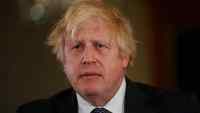
As so often, the Queen put it best. While opening the Welsh parliament a couple of weeks ago, she was caught on microphone discussing the COP26 summit and its frustrations. ‘Still don’t know who is coming,’ she told the Duchess of Cornwall. ‘It’s really irritating when they talk, but don’t do.’ In just a few words, she perfectly summed up the challenges facing Boris Johnson in Glasgow. The PM wants to get countries to commit to net-zero carbon emissions by 2050. But how to get a deal, if the main players aren’t at the table? Xi Jinping hasn’t left China since the Covid outbreak and will stay put now. Vladimir Putin is weeks away from opening a new pipeline supplying gas to Germany and continues to be quite the energy power broker.