Features

The PowerPoint plot against Joe Biden

If the revolution won’t be televised, the counter-revolution will at least be on PowerPoint. A series of 36 corporate-style PowerPoint slides have now been handed over to the Congressional Committee investigating the 6 January insurrection. Written and conceived by a retired colonel (who else?), the PowerPoint lays out a clear, if bonkers, strategy for keeping Donald Trump in power earlier this year. It involves the assertion that China had directly intervened in the election, skewing the electronic results to favour Joe Biden. Quite where the evidence would be procured to prove this is not so clear. But the plan barrels past that small problem to the main event: ‘1. Brief Senators and congressmen on foreign interference. 2. Declare National Security Emergency. 3.


The tiny charity that saves derelict churches from destruction

There is a plateau of neglect upon which an old church seems to sit for a while blessedly spared from ‘improvement’. But on the far side of the plateau, the land falls away steeply to closure, vandalism and ruination. St Mary’s church, Mundon, possessed of a rare tranquillity, had begun slipping off the plateau by 1975. The nave was exposed to rain by a gappy roof. Brambles lashed in the wind at the broken windows. Demolition was proposed. But in that year it was taken into the care of a small voluntary organisation, Friends of Friendless Churches. So it was that I could find myself standing in the dimness of the church on a winter afternoon (there being no electric light) talking to a volunteer, Christine McDonald, who has lived within half a mile all her life.

How chilling ghost stories became a Christmas tradition

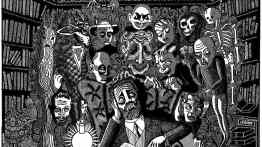
‘A sad tale’s best for winter,’ says little Mamillius in The Winter’s Tale: ‘I have one/ Of sprites and goblins…’ (He is dead by Act III.) Ghost stories have always been best told on a midwinter night — preferably aloud, in a group drawn close together around a blazing fire. Pleasure comes from awareness of the icy cold and dark, hemming our small convivial light: there is a particular frisson in the contrast between ‘in here’ and ‘out there’, between the snug ‘us’ and a possibly malign ‘them’, the known and the unknown.

The day I got the key to the Sistine Chapel

After being landlocked for the past 18 months, it was a particular thrill to set off to film in three European capitals: Berlin, Paris and Rome. As always, it is my duty to supply and prepare my wardrobe for each documentary, having been given a list of the things we shall be doing so that I can be suitably dressed for each occasion. Conscious of the ‘waste not, want not’ attitude which has intensified as the planet warms, I have devised a sort of dressing-up box of old clothes which can be re-worn (‘your chance to see again…’) and made slightly different by adding a scarf or rolling up the sleeves or trouser legs, or occasionally wearing the garment inside out. It is far easier to dress for Mongolia or Kyrgyzstan than for Paris.

My year-long battle with the parking profiteers

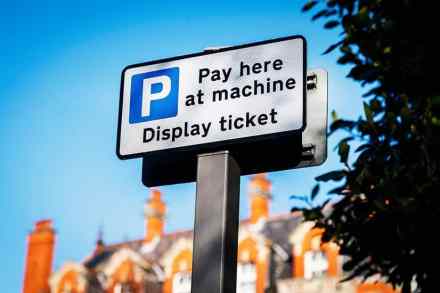
I had been cross enough about having to go to Sennen Cove. Aside from the fact that I don’t care for the place — what is the point of a Cornish beach if the sand is too coarse-grained for sandcastles? — I resented the fact that I would not even be able to park near the place I hated. The car park on the beach is full from nine in the morning; I would have to drive up to the town — which is so far away that some of the houses aren’t even second homes — and walk. Furiously I bought a ticket, chucked it in the car and marched down the cliff to the beach. When I returned to find a parking fine on the windscreen, I was, I admit, not in the holiday spirit. I assumed that sending a scan of the ticket to Armtrac, the parking company, would resolve matters.

Common prayer: when churches become mosques

A Presbyterian minister, a Pentecostalist pastor and a Sunni imam come to worship in the same place. It’s not the start of a joke: this is literally what happens at my local church in east London which, strangely, now encompasses a mosque. It was in danger of being closed, but instead the walled church complex has been partitioned, with a chunk of it sold off to Muslims while the main church building remains the home of two different Christian denominations. The site serves as a sanctuary for followers of rival creeds, a kind of suburban Temple Mount. The shared use indicates an unlikely chapter in the life of a once-renowned institution, founded in 1642 when Protestant nonconformists met in Stepney amid civil war.

Cutting ties: the sad decline of men’s neckwear

Of all the global trends exacerbated by Covid, the demise of the necktie is probably not the most important. It is, however, worth noting — because the way we dress tells us a lot about who we are. The tie has been on the retreat as a quintessential item of the male wardrobe for the past 30 or so years. Thanks to all that working from home, it is now at the edge of imminent extinction: soon it will be worn only by eccentrics, dictators or eccentric dictators. The worker bees have returned to their office hives, but on the whole their ties have not come with them. It cannot be chance that the decline of the tie has coincided with the erasure of everything it once meant to be a man. Masculinity is considered toxic. The tie is being cancelled.

Putin is more rational than Nato realises

Over the last nine weeks Vladimir Putin has moved more than 90,000 troops to the borders of Ukraine and, according to US intelligence, ordered his military planners to draw up detailed blueprints for a full-scale invasion. Putin insists the build-up is defensive. Russia is acting only in response to a ‘growing threat on our western border’, he told an audience of newly accredited diplomats in the Kremlin earlier this month, and to accuse Moscow of escalating tensions would be ‘laying the blame at the wrong door’. Call it the Kennedy defence. In September 1962 US intelligence uncovered secret Soviet plans to station short- and intermediate-range nuclear missiles in Cuba. President John F.

Why is China turning its back on the world?

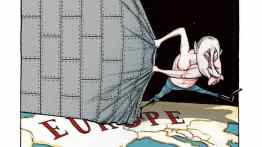
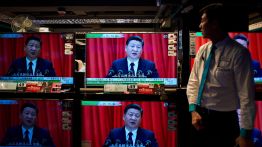
China reacted to the news of the US government’s diplomatic boycott of the Beijing Winter Olympics with predictable fury — a foreign ministry spokesman described it as a ‘naked political provocation’. He then added that US officials had jumped the gun because they had not even been invited. That seemed like a bit of added petulance, but it is entirely in keeping with China’s growing mood of self-isolation — a mood that is beginning to have some bizarre and dangerous consequences. The Chinese Communist party has always been a paranoid organisation, with a deep suspicion towards the outside world, but President Xi Jinping has taken this to new heights. Western policy-makers are alarmed.

Deaths of despair: how Britain became Europe’s drugs capital

If progress is ever made in the ‘war on drugs’, it will be thanks to people like Lorna Hughes. She runs a community centre in the Bell Foundry council estate in Loughborough. It was set up by residents appalled at how their neighbourhood had sunk into an underworld of drugs and crime. They wanted someone there keeping an eye out and helping those who needed it. One of the disused flats, a burnt-out drugs den, was converted into an office and the Marios Tinenti Centre was born. I went to visit a few weeks ago and Lorna talked me through her job. If she sees anyone doing drugs, she calls the police. If thugs are menacing people on the estate, she helps the residents lodge antisocial behaviour orders. If an addict wants help, she liaises with charities.

If I were in charge of Ofcom…

‘You can appoint your own chief executive,’ boomed the PM over a rather sad bottle of wine. He was asking if I would like to chair the media regulator Ofcom because, he declared, he was determined to do something to end the usual suspects’ control of our public bodies. It was soon apparent that I couldn’t appoint my own chief executive. Or take people with me. And as all the key positions at Ofcom are chosen by ‘independent’ panels, the chairman’s role is heavily circumscribed. So why bother? The answer was I was fascinated by the societal implications of the Online Safety Bill that Ofcom will implement.

I still miss Kirsty MacColl

I’ve been occupied this year recording and promoting a new album. I was pleased to finally see the release of the latest Bond film — I recorded the soundtrack mostly at Hans Zimmer’s studio in Soho. Hans and I are pretty tight, we’ve been working together for around ten years now. Billie Eilish and her brother Finneas came in with a great song — my job was just to ‘Bondify’ it without it not sounding like a Billie Eilish record. We tried taking it down the road of heavy orchestration first — something you need to do with Bond music — but Billie and Finneas know what they’re doing and they made sure the song kept its integrity. When it appears in the film it’s quite powerful.

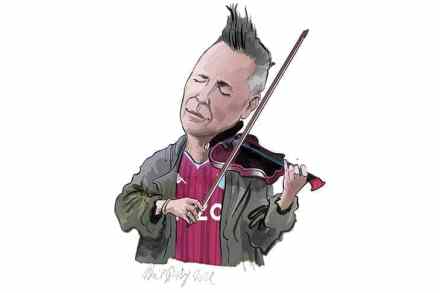
‘Prince Charles is more socialist than the Labour party’: an interview with Nigel Kennedy

‘If I needed a guide to go up a mountain, I’d choose someone who knew the way,’ says Nigel Kennedy. ‘So if someone is telling me what to do, they’d better know a little bit more than me.’ In September, Kennedy’s Jimi Hendrix tribute at the Royal Albert Hall was cancelled after organisers Classic FM deemed it ‘unsuitable for our audience’. It still rankles: ‘I reckon I know more about my particular art form than some guy sitting behind his desk,’ says Kennedy, ‘and so I can’t quite take it when people start saying what is classical music and what isn’t. To me, Hendrix’s “Little Wing” is a kind of Celtic-sounding melody.

Hospital pass: The NHS is on life support

The cabinet meeting this week turned into a surprisingly frank conversation about the National Health Service. Rishi Sunak was asked to give his thoughts on the future of health and social care. He gave a candid assessment of the dangers of being blind to the NHS’s many shortcomings. It’s political blasphemy to criticise the NHS. But once Sunak started, others joined in. Jacob Rees-Mogg added his concerns. Steve Barclay, the new Cabinet Office minister, and Kwasi Kwarteng, the Business Secretary, also contributed. By the end of the meeting, the ministers had heard each other say out loud what they have long been thinking: that the NHS, as it stands, is failing.

It’s no longer just clean eaters who are the health bores

David Hockney has just endorsed a series of specially designed beer mats, created by an artist called Mr Bingo, that display a cigarette in an ashtray with the slogan: ‘Bored with wellness.’ He went on to declare he found the very idea of wellness ‘ridiculous’ and ‘too bossy’. Hockney is a verification of that urban legend often cited but rarely seen: the granny who ‘smoked like a chimney’ and ‘drank like a fish’ and lived to be 100. He is now the nation’s good-time gran. At 84 he’s still standing — and smoking — and boasts that he’s never been to a gym in his life.

Farmer’s notebook: In defence of sheep

I’m avoiding the village pub. Since Clarkson’s Farm I constantly get asked: ‘Are farm economics really as bad as that?’ They’re worse. For anyone who is not a multimillionaire TV star with vast tracts of prime Cotswold acres, the figures are grimly red. Half of British farmers earn £10,000 or less annually, which is why so many have gone into yurts or yoghurt. My own diversification is scribbling. Presently, any spare moments I have are spent at my kitchen table, checking the proofs of a book I’ve written in defence of sheep. Sheep provide food on the plate and clothes on the back, and when farmed properly promote biodiversity. They’re also able to pick out Fiona Bruce from a line-up of celebrity photographs (really).

The Pentagon’s overreaction to China’s new weapon tests

Back in the 1960s, a senior Pentagon official would greet incoming recruits to his department with a cheery announcement: ‘Welcome to the world of strategic analysis, where we program weapons that don’t work to meet threats that don’t exist.’ The recent media excitement over Chinese tests of a hypersonic nuclear weapon which, anonymous Pentagon officials told credulous reporters, overcomes even the ‘constraints of physics’ shows that not much has changed. Hypersonic missiles fly at five times or more the speed of sound.

Peng Shuai and the return of the concubine

A high-flying Chinese businessman once told me his secret to happiness: ‘Before a man is 35, women are tools; after 35, women are toys.’ It worked for him. He married an educated woman from a good family who helped him climb the career ladder; but once established in his career, he began seeking more exciting female company. I’ve been thinking about that man since the story of the Chinese tennis player Peng Shuai broke. Peng detailed a three-year affair she had with the retired vice premier Zhang Gaoli, 40 years her senior. During the good times, they would ‘talk for hours, play chess, play tennis no end… our personalities fitted so well’. But when he got bored, he ‘disappeared’ and ‘tossed me aside’, she wrote on Weibo.