Features

Farmer’s notebook: In defence of sheep

I’m avoiding the village pub. Since Clarkson’s Farm I constantly get asked: ‘Are farm economics really as bad as that?’ They’re worse. For anyone who is not a multimillionaire TV star with vast tracts of prime Cotswold acres, the figures are grimly red. Half of British farmers earn £10,000 or less annually, which is why so many have gone into yurts or yoghurt. My own diversification is scribbling. Presently, any spare moments I have are spent at my kitchen table, checking the proofs of a book I’ve written in defence of sheep. Sheep provide food on the plate and clothes on the back, and when farmed properly promote biodiversity. They’re also able to pick out Fiona Bruce from a line-up of celebrity photographs (really).

The Pentagon’s overreaction to China’s new weapon tests

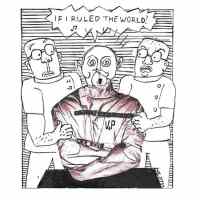
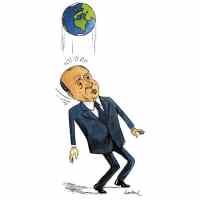
Back in the 1960s, a senior Pentagon official would greet incoming recruits to his department with a cheery announcement: ‘Welcome to the world of strategic analysis, where we program weapons that don’t work to meet threats that don’t exist.’ The recent media excitement over Chinese tests of a hypersonic nuclear weapon which, anonymous Pentagon officials told credulous reporters, overcomes even the ‘constraints of physics’ shows that not much has changed. Hypersonic missiles fly at five times or more the speed of sound.

Peng Shuai and the return of the concubine

A high-flying Chinese businessman once told me his secret to happiness: ‘Before a man is 35, women are tools; after 35, women are toys.’ It worked for him. He married an educated woman from a good family who helped him climb the career ladder; but once established in his career, he began seeking more exciting female company. I’ve been thinking about that man since the story of the Chinese tennis player Peng Shuai broke. Peng detailed a three-year affair she had with the retired vice premier Zhang Gaoli, 40 years her senior. During the good times, they would ‘talk for hours, play chess, play tennis no end… our personalities fitted so well’. But when he got bored, he ‘disappeared’ and ‘tossed me aside’, she wrote on Weibo.

When did Christmas adverts become so unbearable?

When I was young, I dated a man who wasn’t in advertising, but had lots of friends who were. Because I am witty, at some point during dinner — usually when dessert was being laid out with a platinum credit card — one of them would say: ‘Have you ever thought of working in advertising?’ I remember feeling real indignation, like someone had spat in my spritzer. I don’t care that Salman ‘Naughty, but nice’ Rushdie and Fay ‘Go to work on an egg’ Weldon started out that way; I had no intention of ending up in such a venal profession. So intense were my feelings that when, as a Bright Young Thing in the 1980s, I was asked to be one of the fresh faces which re-launched Croft Original in the style mags, I wrote a really rude letter back.

Daughters for sale: Afghans are growing desperate

Shukria Abdul Wahid has nine children, two boys and seven girls. All they had to eat yesterday, she says, were two small pieces of stale flatbread — for the whole family. She and her husband went without. They couldn’t even have tea to quieten their own hunger pangs. The gas bottle used to boil water ran out long ago and there is no money for another one. She tells me it is unbearable having to say ‘no’ to her children all day when she doesn’t have a scrap of food to give them. ‘They are very little. They do not understand the situation, they do not know what’s happening in Afghanistan,’ she says. ‘So they just keep begging — “Give us something to eat. We are hungry” — and they won’t stop crying.

The Covid revolts: Europe’s new wave of unrest

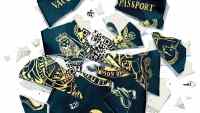
Given the ability of Covid-19 to make fools out of everyone, it is not entirely fair to single out an opinion piece penned by Christina Pagel and Martin McKee, members of the self-appointed ‘Independent Sage’ committee on 7 October. But it sums up an attitude which was common just seven weeks ago. ‘England, not for the first time, is the odd one out in Europe,’ they wrote. England had recklessly abandoned Covid restrictions in July, relying on vaccines alone to keep the country open. In contrast, our European neighbours were sensibly employing a ‘relatively light set of extra measures’, such as vaccine passports, to keep infections much lower than England’s.

Why today’s classic books may not be tomorrow’s

I used to think that you could spot a literary classic by identifying certain salient characteristics: the writing would need literary quality, for example; the book would have had some historical significance; it would have an enduring reputation among scholars and general readers. But each rule threw up exceptions. Darwin’s The Origin of Species is not an obviously ‘literary’ text. E.M. Forster’s Maurice was first published six decades after it was written. The Song of Kieu, the greatest work of Vietnamese literature, is virtually unknown outside Vietnam. And yet all of these books are classics. Over time I have come to agree with Ezra Pound’s warning at the start of his ABC of Reading (1934).

Why are Europe’s far-right parties so opposed to compulsory vaccination?

Dante’s Beach, Ravenna Thanks to soaring infection rates in Europe, the war against Covid has entered a new phase, with the prospect of tougher restrictions and compulsory vaccination. Tens of thousands marched in protest through the streets of Vienna and Brussels at the weekend, with many chanting ‘Freedom’ and ‘Down with Dictatorship’. Prominent in their ranks were supporters of the far right, a.k.a. fascists. It is easy enough to understand why libertarians of the right such as Boris Johnson, and many, though by no means all, Tories would oppose the suspension of the fundamental civil liberties of the unvaccinated. But far-right fascists?

Russia syndrome: it’s easy to blame Putin for everything

When thousands of migrants massed on the Polish-Belarusian border, the Polish Prime Minister Mateusz Morawiecki lost no time in identifying who he believed the true culprit to be. Belarusian leader Alexander Lukashenko was just an ‘executor’, Morawiecki told his parliament. The true ‘enabler’ was ‘President Putin, who shows a determination to carry out the scenario of rebuilding the Russian empire, the scenario that we, all Poles, have to forcefully oppose’. The columns of refugees were part of the ‘neo-imperialist politics of Russia’, Morawiecki said. ‘They are part of a more coordinated attack, a new kind of war.’ Without a doubt, Polish fears of Russian imperialism are well grounded in history.

Europe’s cauldron: The EU’s migrant crisis and the new hybrid war

Joe Biden’s foreign policy has been driven by two objectives: to revive the US-led alliance system that atrophied under Donald Trump and to clear the decks to allow for a new focus on China. This requires America’s allies doing more elsewhere to free the US up for the task of preventing Beijing from achieving regional hegemony in Asia. America has been moving in this direction for some time: Barack Obama spent his presidency talking about an Indo-Pacific pivot. Yet every time the US has tried to get out of a region, it’s been pulled back.

Why Gen Z should care about inflation

The inflation tiger is roaring. Older people can hear it. How about younger ones? Inflation could, after all, be the biggest blow to their finances in their lifetime. They don’t seem hugely concerned. According to polling by GfK, Generation Z is totally ‘chill’ about inflation. Older generations, meanwhile, are scarred by the last inflation spiral of the 1970s — a brown-tinged decade of power cuts, unemployment and grim donkey jackets. To younger people, that’s ancient history. Growing up in an era where inflation has averaged 2 per cent, they’d be forgiven for zoning out when they hear ‘back in the day…’ or when news reports reveal that inflation has spiked to 4.2 per cent — a peak not seen since November 2011.

The Covid lab leak theory just got even stronger

Two years in, there is no doubt the Covid pandemic began in the Chinese city of Wuhan. But there is also little doubt that the bat carrying the progenitor of the virus lived somewhere else. Central to the mystery of Covid’s origin is how a virus normally found in horseshoe bats in caves in the far south of China or south-east Asia turned up in a city a thousand miles north. New evidence suggests that part of the answer might lie in Laos. The search for viruses closely related to Sars-CoV-2 took a new turn in September when a team of French and Laotian scientists found one in a horseshoe bat living in a cave in the west Laotian province of Vientiane. Other related viruses had been found in Cambodia, Thailand, Japan and elsewhere in China, but this one, Banal-52, was different.

Is Meghan wise to go into American politics?

On a long-ago Remembrance Sunday, it fell to me, as a new service equerry, to present the Prince of Wales with his wreath to lay at the Cenotaph. The fact that the Cenotaph in question was in Hong Kong — still a British Crown Colony at the time — gives the memory a sepia tint. Adding to the retro imperial theme, His Excellency the Governor wore full dress uniform, complete with pith helmet and ostrich feather. As I waited nervously to play my walk-on part, I had time to realise how lucky I was to witness such vanishing theatre. The rest of Hong Kong cheerfully went about its business while we performed our solemn rite. Yet any locals who paused to watch the immaculate little ceremony couldn’t have guessed that a tetchy protocol impasse had only narrowly been averted.

The Palace vs the Sussexes

What will become of the British monarchy after Elizabeth II? It’s a question that many would prefer not to ask. But the Queen is 95, her husband died earlier this year and she’s pulling out of engagements she’s rarely missed in 69 years on the throne. More honest royal sources confirm the obvious: she’s had to take another significant step away from public life. From now on she will conduct more duties over video calls. She’ll save her energies for key events such as the Christmas broadcast. Which leads us to the thorny matter of her succession. Queen Elizabeth has managed to sustain the prestige and influence of the crown in an obsessively democratic age. Will her heir, Prince Charles, and his sons be able to replicate that remarkable achievement?

Why do cartoonists struggle to break America?

‘Cartoons are like gossamer and one doesn’t dissect gossamer.’ So says Mr Elinoff, the fictional cartoon editor of the New Yorker in an episode of Seinfeld, when trying to explain a cartoon to Elaine. Elaine isn’t satisfied. Mr Elinoff suggests the cartoon is a commentary on contemporary mores, a slice of life or even a pun. ‘You have no idea what this means do you?’ says Elaine. ‘No,’ he concedes. The scene sums up the problem of understanding the New Yorker’s sometimes oblique sense of humour — and may come as a relief to the many British cartoonists who have tried and failed to break into the Big Apple’s literary bastion.

Is China about to invade Taiwan?

This week, the central committee of the Chinese Communist party will issue a ‘resolution on history’. It will enshrine the official historical narrative of the Xi Jinping era. Only two CCP leaders have issued a resolution of this kind before: Mao Zedong and Deng Xiaoping. Mao’s resolution set out his role as China’s sole leader; Deng’s, the conditions for the country’s economic focus. And Xi’s? Details are yet to be revealed, but it is expected to reinforce the idea of China’s historical destiny, what Xi calls the ‘great rejuvenation of the Chinese nation’. For Xi, the project of national rejuvenation is inherently linked to the reunification with Taiwan, the only part of the old republic that did not become communist in 1949.

Court of Chaos: Boris’s style of government isn’t working for him — or his country

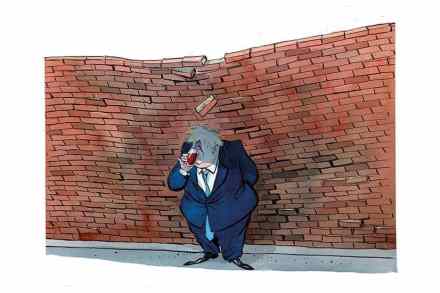
Without Boris Johnson there would be no Conservative majority. The millions who turned to him at the last election were not voting for the Tories, but for something (and someone) very different: they wanted Brexit and they trusted him to deliver it. Without Johnson, the Tories would struggle to keep his electoral coalition together, so when the Prime Minister asks his MPs to vote for something they dislike, though they denounce his madness, they do it. But now, for the first time, these MPs are beginning to waver. They’ve seen a pattern in the PM’s behaviour, they’re beginning to understand how each debacle will end, and they’re becoming wary.

How America can defend Taiwan

How would America respond if China attacked Taiwan? The pressure to defend the island would be compelling, if not overwhelming. Washington nominally maintains a ‘strategic ambiguity’ towards the defence of Taiwan, but the two countries are linked in many ways and the Biden administration recently reiterated its ‘rock solid’ commitment to the island. Beijing clearly wants to subordinate self-governing Taiwan. American credibility, meanwhile, is connected to its protection. The island is also militarily significant. Its fall would seriously undermine the defence of Japan, South Korea and the Philippines, and open up the central Pacific to the Chinese military.