Features

My miracle match against the Vatican’s cricket team

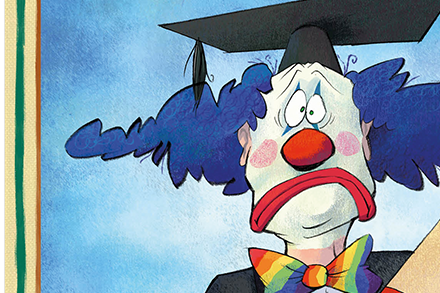
Many have come to Rome seeking spiritual guidance: Thomas à Becket, Lord Byron, Lionel Richie. I came for a different purpose: to defend a papal cricket trophy. I am not Catholic. And until last year I had never played cricket before. It all started, as many great British stories do, with a pub: the Three Stags in Kennington. My friend Tom had invited me to what he described as a ‘Cricket Club Party’. As I headed upstairs, the barman’s quizzical look when I mentioned I was there for ‘the party’ should have given me cause for concern. As I came in through the doors, I was greeted by what appeared to be the end of a Sunday lunch and a collection of six individuals for whom the collective age would have been a record-setting Test score.

‘It’s worse than during the worst of Boris’: how the civil service turned against Starmer

Somewhere in the vast array of documents the Cabinet Office has gathered on the appointment of Peter Mandelson as the UK’s ambassador in Washington, there is a text message which Keir Starmer sent the night before he made the announcement. ‘You’ll be brilliant in challenging circumstances,’ he told Mandelson. ‘And after many years of our discussions, we get to work together side by side. I really look forward to that.’ The message was leaked after one of Starmer’s most difficult weeks in charge, a week which senior civil servants believe proves, once and for all, that the Prime Minister himself will never be brilliant in challenging circumstances.

Lena Dunham’s memoir is everything wrong with feminism today

Is the right to be angry and miserable the best that modern feminism can do? Or is it possible, while acknowledging that things are far from perfect, also to recognise that women in the West today are the luckiest ever to live? On the surface, one of the most fortunate women of our times is Lena Dunham. She is revered, famous, rich, apparently in control of her voice and her dramas. Her breakthrough TV series, Girls, which she wrote and starred in, profoundly shaped how young women have been seen since the beginning of this century. Now she has published a bestselling memoir, Famesick, which has put her again at the heart of the debate over the travails of modern women. I am delighted that Dunham has once more managed to turn out a blockbuster.

How Gaza became one of the biggest issues of the local elections

As Tony Blair contested a third election in 2005, the Labour government’s popularity was in tatters. The divisions in the country were running deep, following a United States-led war in the Middle East. The general election, held alongside the locals, saw the emergence of new radical political parties. They seized an opportunity to break the two-party consensus by opposing foreign wars and weaponising an increasingly politicised Muslim vote. Not much is written today about Respect, but it had some success fighting on an anti-Iraq war platform. George Galloway, the party’s leader, won in Bethnal Green and Bow. Although Respect’s staying power proved limited, what is emerging for next month’s local elections might prove more durable.

The unlikely link between Nuremberg and The Devil Wears Prada

In the aftermath of Peter Magyar’s victory in Hungary, while I watch people dancing in the streets as they celebrate Viktor Orban’s dramatic ousting, I think of my Hungarian grandparents. As Holocaust survivors, they were the lucky ones, and they remained proud Hungarians to the end. They would have greeted this election with characteristic realism: Minden csoda harom napig tart, as the saying goes. Every miracle lasts three days. Hungary is a country still feeling the long aftershocks of the second world war and the Holocaust. Those shocks seem clearer than ever after the years I have spent researching The Nuremberg Women, my new book on the trials.

The new age of transgender rage

It’s a year since the Supreme Court ruled that gender means biological sex – and not much has changed. The Equality and Human Rights Commission (EHRC), which is advising the government on how to apply the judgment to law, has spent a long while drafting guidance. But last week, word arrived that Bridget Phillipson, the women and equalities minister, wants the EHRC to ‘tone down’ its advice, leading to further delays. Why the hold-up? My guess is that it has something to do with a new era we are entering. An era of ‘TRANS RAGE’. That’s not my expression. It’s from Bash Back, a recently formed anonymous collective going after people and organisations it believes frustrate the transgender experience.

My shameful confession: I’m not a good baker

Contrary to popular conception, I’m not a great baker. I was hired by Bake Off for my judging experience, not my baking skill. I’m a good cook and I know what’s right and wrong about a cake, but I suspect my own baking efforts would not often get Paul Hollywood’s nod of approval. On the day before Good Friday I decided to make hot cross buns. They were a total disaster. Analysing them, I could hear myself say: ‘No flavour. How old were the spices you used? And when did you buy that yeast? You do know you should chuck out spices every year and that instant yeast does not last for ever?’ So, we went to Tesco and bought new spices and yeast. The second attempt was much better, but still not wonderful. We went late-night shopping and happily the Co-op still had hot cross buns.

Trump has underestimated the Pope

Donald Trump’s latest clash with the Catholic Church stunned even the most hardened veterans of culture-war Twitter. According to the President of the United States, the Chicago-born Pope Leo XIV, the conspicuously holy spiritual leader of 1.3 billion people, is ‘WEAK on crime and terrible on foreign policy’. He also claimed that ‘if I wasn’t in the White House, Leo wouldn’t be in the Vatican’. For commentators accustomed to the fog of modern diplomatic platitudes, such trash-talk was the equivalent of a Holy Roman Emperor hurling insults at a medieval pontiff.

Treasure Britain’s last railway dining car while you still can

The 17.48 from Paddington does not, on first sight, seem exceptional. Over-hard seats, over-bright lights and a scrum at the ticket barriers: none of these is special. The modern Hitachi trains are solid but dull. Only Isambard Kingdom Brunel’s great arching iron roof adds splendour to the scene. But pause by coach L on the daily London to Carmarthen express and you might notice a small miracle. This train is one of the very last in Britain to carry a proper dining car. To its immense credit, GWR, the route’s operator, cooks and serves decent meals on six services a day: three at lunchtime and three in the evening, on its lines from London to Wales and the West Country.

What’s Britain’s place in the post-Iran world order?

Midway through James Joyce’s Ulysses, the character J.J. O’Molloytips his hat to ‘Our watchful friend, the Skibbereen Eagle’, a playful reference to an obscure provincial newspaper in the west of Ireland. Under an ambitious new editor, the Skibbereen Eagle had risen fleetingly to prominence in 1898 for its robust response to Tsar Nicholas II’s attempts to gain a warm-water port for the Russian navy by encroaching on China’s Yellow Sea. As its editorial warned in a chiding tone, the Eagle would ‘keep its eye on the Emperor of Russia and all such despotic enemies – whether at home or abroad – of human progression and man’s natural rights’.

‘People are at breaking point’: on the road with the Irish fuel protestors

A fuel protestor stood on top of a tractor waving a tricolor. In Ireland, everything is about nationhood and the price of oil is being contested here like a new war of independence. I got into the middle of a scrum of farmers and hauliers blockading Whitegate oil refinery, a kamikaze sort of protest, for it has been stopping tankers getting in and out to supply the country, severely limiting supplies. Here on the windswept coast of Cork, traditionally dubbed the rebel county, working men have been sending out the message that they have nothing left to lose. The oil crisis sent this lot over the edge arguably because they were already on the verge of a collective nervous breakdown over fuel costs, higher than in Britain partly due to EU carbon taxes.

Gentleman’s Relish is no more

It is the early hours of the morning and an email drops into my inbox. Lacking any kind of willpower, I open it. Now I’m wide awake. Because this isn’t the usual PR slop that starts my days. It’s a tip-off. A big one. A reader has discovered something about a company and they are urging me – me! – to investigate. Adrenaline surges. This must be what it felt like to be Woodward and Bernstein. Only my informant is pointing me in a slightly different direction. Their intel is on Gentleman’s Relish: the incredibly niche spread is disappearing from our shelves. It has been available in the House of Lords dining rooms but for how much longer? Online supermarkets and delis are showing it as out of stock. What is going on?

Welcome to the Taco presidency

Among the many gifts the Watergate scandal gave us was Nixon’s White House press secretary declaring: ‘This is the operative statement. The others are inoperative.’ That was after months of sticking to increasingly threadbare denials. In Donald Trump’s White House, operative statements become inoperative from one day to the next. That’s especially true of Iran. In 24 hours, from Tuesday to Wednesday this week, Trump went from ‘a whole civilisation will die tonight’ to ‘this could be the Golden Age of the Middle East!!!’. Taco: Trump Always Chickens Out, as the meme has it. The two-week ceasefire agreed this week with Iran is a lesson that you can win every battle but lose the war.

Starmer must drop this terrible Troubles bill

As we mark another anniversary of the Good Friday Agreement, we should be less inclined to celebrate and more disposed to worry. What was achieved on 10 April 1998 was remarkable. It worked not because it resolved everything, but because it deliberately did not, allowing former enemies to move forward without settling every question of the past. Yet it depended on consistent political leadership to embed its spirit into a society divided by grievance. That leadership is now faltering, with the risk of the past being weaponised in ways the Agreement was designed to avoid. The struggle for a united Ireland continues. One of the Agreement’s greatest achievements was to move it from the gunman to the ballot box. But legitimacy cuts both ways.

De Gaulle or nothing: lessons from the General

The first time I set foot in the White House as a Labour political adviser, in spring 2024, to see a then all-powerful Jake Sullivan as the US National Security Adviser, I went as an Atlanticist. By my final visit to the West Wing in January, accompanying David Lammy as his aide to see J.D. Vance, I was an Anglo-Gaullist. In between lay the humiliation of Chagos, twists and turns over Ukraine, surprise American strikes on Iran and the realisation that our closest ally, the superpower we had built our entire security around, had become erratic, emotional and unpredictable. When Labour came to power, I truly believed the country had been suffering mainly from Tory problems. I learnt the hard way that our instability stemmed mostly from British problems. And this brought me to Gaullism.

Is time up for Viktor Orban?

For a country of ten million people that spent most of the 20th century occupied and impoverished, Hungary today is thriving. This, in the eyes of his supporters, is down to the 16-year rule of Viktor Orban. Hungary’s Prime Minister has, to use his phrasing, aimed to create an ‘illiberal democracy’. He has reformed the country’s judiciary, given tax breaks to mothers to increase the birth rate and zealously resisted the EU’s refugee policies. The last is illustrated by the 140-mile fence along the Serbian border constructed during the 2015 migration crisis. Proud border guards tell you that 1.1 million migrants have been kept out in a decade. Nevertheless, Orban faces his toughest election yet when Hungarians go to the polls this Sunday.

Let teenage boys discover the English countryside

When I was four, the progressive teachers at my primary school thought it would be wise to teach us how to type on a keyboard. When it was my turn to key out the phrase ‘Biff and Chip’ on the computer, they discovered, to their horror, that I was already capable of effortless touch typing. I have been using computers, and by extension the internet, since before my earliest memories were formed. Not only did I grow up online, I did so during the early 2000s when there were virtually no safeguards or restrictions on what children could access. I pirated my first film, Star Wars: Episode III – Revenge of the Sith, at the age of seven and bought my first (sadly wasted) bitcoin at 13.