Features

Where have all the rabbits gone?

It’s spring and in this corner of rural Sussex, the bluetits are at the window, newborn lambs are bleating in their pens, and all the rabbits are dead. The burrows are still there, but the chewed grass, the little collections of brown pellets, the white bobtails scattering before your headlights at night, they are gone. I first noticed this in spring 2020, when the ancient nest of burrows in our local woods was suddenly empty. Around that time of year, the scores of rabbits gingerly setting out for the evening made a great meal for the fox cubs who first showed their faces around Easter. Both predators and prey have mostly disappeared. It turns out rabbits were also facing their own pandemic.

The assisted suicide bill should not survive

Until about six months ago, it would have been hard to find a more inoffensive politician than the Labour backbencher Kim Leadbeater. A well-liked, upbeat, down-to-earth Yorkshirewoman, she entered politics because of a personal tragedy, the murder of her sister, the MP Jo Cox, in 2016. When asked on a Spectator podcast what was the worst piece of advice she had ever received, Leadbeater half-joked: ‘Have you thought about being an MP?’ Visibly a normal, friendly person plunked down in SW1, she won many admirers and attracted little controversy. Then in September Leadbeater came top of the private members’ ballot and chose to take up the cause of assisted suicide. The current law, she argued, is cruel to those dying in terrible pain.

Would Trump really bomb Iran?

A satellite picture shows six American B-2 Stealth bombers parked on the runway at Diego Garcia. The planes – each with a distinctive flying-wing shape, like a bat – are sinister, otherworldly, and seem like a portent. Surely that’s the idea. Donald Trump has warned the Iranian leadership there ‘will be bombing the likes of which they have never seen before’ if they don’t agree to limit their nuclear programme. The US is also sending a second aircraft carrier to the Middle East and anti-ballistic missile batteries to Israel. This is Trump’s ‘coercive diplomacy’, and so far, it’s working.

‘We’re going to a more radical place’: Wes Streeting on his plans for the NHS

A copy of a leading article from The Spectator is stuck to the wall of Wes Streeting’s office in the Department of Health. ‘Is Wes Streeting the Hamlet of the Health Service?’ we asked in October, warning against the perils of inaction. ‘We were so riled by it we stuck it there to hold ourselves to account,’ Streeting explains. ‘We’re going further than your prescription, though. We thought it was insufficiently radical.’ The Health Secretary has certainly been busy. Over the past few months, he has unveiled a range of reforms, including abolishing NHS England. His Blairite zeal annoys some in Labour. He languishes in 21st place in LabourList’s cabinet league table of party members’ favourites.

Bring back gory book covers!

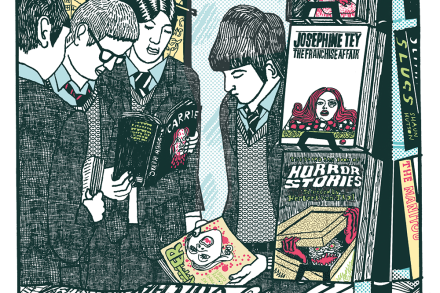
Looking for a light, breezy read? If you happened to be browsing the bestseller bookshelves this summer your eye might be drawn to a cover that shows two colourful beach chairs under wafting palms on a bright, sandy shore. The shadows cast by the chairs become those of two children – maybe it’s a story about a holiday romance, a couple who knew each other when they were younger and reunite under the Seychelles sun. If you somehow didn’t know that Stephen King was a horror writer you might not realise that this book, You Like It Darker, is his most recent short story collection. One of those stories is a sequel to Cujo, King’s 1981 shocker about a family’s amiable dog who gets nipped by a bat and embarks on a rabies rampage.

Eco warriors are driving themselves to extinction

It wasn’t that long ago when the fashionable gathering place for young couples was a meeting of the National Childbirth Trust. I remember, in the early months of 1995, sitting in our instructor’s front room as she passed around a plastic model of a female pelvis while she asked us: ‘So how do you think the baby gets out?’ Fast-forward three decades and there is a new way for middle-class would-be mothers to spend their evenings: attending sessions of a project entitled ‘Motherhood in a Climate Crisis’ put on by the University of Bristol’s Brigstow Institute. There is no better way to describe it than to quote the academics’ blurb.

Saviour complex: Jonathan Powell is still trying to change the world

In 2011, the Hampstead theatre put on an autobiographical play about a marriage strained by lies, betrayal and, as the exasperated wife says, the presence of ‘three of us’ in the relationship. The play was Loyalty by the journalist Sarah Helm, the third person was Tony Blair and the principal male character was a barely disguised Jonathan Powell, her husband and Blair’s chief of staff. The lies are about Iraq’s weapons of mass destruction, and the betrayal occurs when the Powell character goes along with the war despite not ‘really’ believing in it, siding with Blair over his partner. Two decades on, Powell is Keir Starmer’s national security adviser and may have more influence over foreign policy than anyone in government after the Prime Minister himself.

How Birmingham became the epicentre of Britain’s opioid crisis

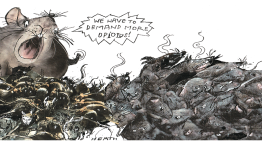
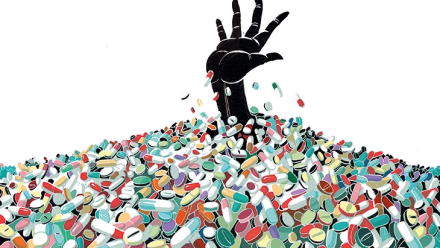
Rats grown fat on refuse prowl the streets of Birmingham. Mounds of rubbish pile up outside houses. Desperate to avoid blame, the city’s politicians bleat about being held to ransom by a pesky union. ‘Welcome to Brum,’ one resident said as he caught me taking a photo of a bin mountain. Even CNN has a reporter on the ground. On Saturday, she carefully tiptoed around lots of black bags, as if each were a landmine. This is where Peaky Blinders was filmed, she told her American viewers. Out of shot, a far greater scandal passes unnoticed. While the national press rummages through Birmingham’s bins, the backstreets of England’s second city are afflicted by a hidden opioid crisis.

Confessions of a middle-class jobseeker

Having been made redundant from a job in the City, I could have afforded not to sign on at all. But since my P45 showed I had paid well over £40,000 in income tax last year, I didn’t feel desperately guilty about clawing back £90 a week in New Style Jobseeker’s Allowance. I didn’t know how long I would remain unemployed. Plus I wanted to protect my national insurance to keep my entitlement to the state pension. The chaos started almost immediately. I registered online in early February and was told to await a date for my ‘assessment interview’. Instead, a month later, a letter arrived to say I had missed my appointment and to ring the helpline to rearrange. The number at the top of the letter? Tel: 0000 000 0000.

Has the Kremlin talked Trump out of sanctions?

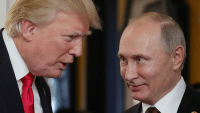
After a two-hour phone call last month, Donald Trump and Vladimir Putin announced that an improved bilateral relationship between the United States and Russia ‘has huge upside’, including ‘enormous economic deals and geopolitical stability’. Days later, however, Trump said he was ‘pissed off’ with Russia over its foot-dragging on a ceasefire in Ukraine. Putin’s demand, moreover, that Ukraine’s government be replaced with a transitional one had made him ‘very angry’. Trump warned that if a deal couldn’t be struck, then the US would ‘put secondary tariffs on all oil coming out of Russia… That would be that if you buy oil from Russia, you can’t do business in the United States. There will be a 25- to 50-point tariff on all [Russian] oil.

Would you steal from a restaurant?

‘You wouldn’t steal a car…’ began the early noughties anti-piracy video. ‘You wouldn’t steal a television… You wouldn’t steal a handbag.’ No, but it seems from reports from restaurants, you might slip some silverware into a handbag if you’re out for dinner. In February, Gordon Ramsay revealed that nearly 500 cat figurines had been stolen in one week from his latest restaurant, Lucky Cat. The maneki-neko cat models – said to bring good luck – cost £4.50 each, which makes that a loss of more than £2,000 for the restaurant in just seven days. What is it about dining out that means we think pocketing property is acceptable?

Trump shock: is there method behind the madness?

A ‘black swan event’, as defined by the risk analyst Nassim Nicholas Taleb in 2007, is a surprise occurrence that has a major impact on the global financial system and is rationalised after the fact as something that ought to have been expected all along. The 9/11 terror attacks are one example, the Covid pandemic another – shocks that rocked the world and made us wonder if freedom works. Since Wednesday last week, however, the gods of the marketplace have been wrestling with a new and more mind-boggling creature: the ‘orange swan’, a cataclysmic Donald Trump-induced happening that is at once entirely predictable and baffling, an event that is rationalised post hoc as a shock when in fact everybody saw it coming a long way off.

AI slop is flooding the zone

There are two accounts of the negative effects for humanity of the explosion of generative AI: one minatory, one trivial. The minatory, the existential, version of it is that AI will poison the information ecosystems on which our democracies depend, crash our economies by doing a very large number of us out of a job, give every lunatic and terrorist the means to engineer novel pathogens at home, and administer the coup de grâce by sending terminators into our recent pasts and/or overstocking the cosmic stationery cupboard by turning all of us into paperclips. None of these scenarios shows any signs of imminently coming to pass, though since experts in the field take them seriously, we should too. But what we’re dealing with now is not the existential, but the trivial.

Is Britain ready for a patriotic theme park?

It is the early 9th century. Peace reigns in a small French village as they prepare for a wedding. Garlands are being hung, sheep are being shepherded, all is sunshine and smiles. Then, in a snap, this bucolic bliss bursts as Viking warriors invade the scene and unleash hell. The original Puy du Fou is unashamedly pro-God, pro-monarchy and Vive la France A longboat splashes down a chute into the river, another spectacularly emerges from beneath the lake; swords clash, fires erupt, women are carried off and treasures seized. The villagers need a miracle, and it comes with the sudden appearance of a bishop, the blessed St Philibert.

The day Bangkok crumbled

Last Friday I was on my 15th-floor balcony with an early afternoon coffee, watching dogs play among the banana trees below. It was strangely quiet. Looking across the skyscrapers that form my horizon, I noticed the 137 Pillars – a luxury high-rise hotel famous for its rooftop pool perched 37 storeys above my own street. Down the tower great cascades of water, thousands of gallons, were pouring from that rooftop pool. I looked at the jungle plants on my balcony. They were moving back and forth, the blades of the rubber trees swaying as if issuing a warning, and I felt dizzy. Soon all the towers around me were exploding with the same cascades of pool water. For a few seconds, before I had realised anything, I thought: ‘How beautiful.’ Then I stood up and keeled over.

‘Trump is a coward’: meet the US soldiers who served in Ukraine

The Ukrainians of Alabama are not the kind of lobbyists whose visits strike fear into pro-Trump politicians in Washington. They are an ad hoc campaign group of expats and refugees who do their best to put Kyiv’s case politely to representatives of Congress and Senate. They do, however, have a secret weapon, in the form of an ex-US soldier from the town of Tuscaloosa, whose backstory is the kind the Beltway finds hard to ignore. Alex Drueke, 42, is an Iraq veteran whose ancestors served in every major American war since the War of Independence. Appalled at Vladimir Putin’s invasion, he joined Ukraine’s International Legion, only to be captured on his first mission, becoming the first American PoW in Moscow’s hands since Francis Gary Powers in 1960.

Beware the £5 coffee

It wasn’t until I received a notification from the Monzo app that I realised I’d spent nearly £10 on two coffees. This wasn’t in the Wolseley or even within the M25, but in Two Magpies, a café in Holt, our local market town in Norfolk – for two regular lattes (admittedly with an extra shot, since it was Monday morning) for myself and a friend. Just last year, I was taken aback when my caffeine fix crossed the £4 threshold, with the barista casually mentioning that coffee prices were rising. But £4.70 feels like it’s firmly in the ‘taking the mickey’ territory. I haven’t been back since (I’m currently writing this in a different café) because I know I’d be unable to resist exclaiming ‘HOW MUCH?