Features

Is the suit against Goldman Sachs a fraud?

The official investigation into the firm’s activities is pointless, says Philip Delves Broughton. Governments are too weak to punish the financial giant I loathe Goldman Sachs as much as the next man. It’s part jealousy at the firm’s grip on the world’s treasure. Part horror at the parade of bumptious baldies who run the firm and snigger, as the CEO Lloyd Blankfein did to the Sunday Times, that they are doing ‘God’s work’. The only way to rationalise this was to recall Dorothy Parker’s quip that you can tell what God thinks of money by considering the people he gives it to. Write a cross word about Goldman, and you can be sure to receive an email rocket from the firm’s European PR man, surname Kafka.
How New Labour met its nemesis

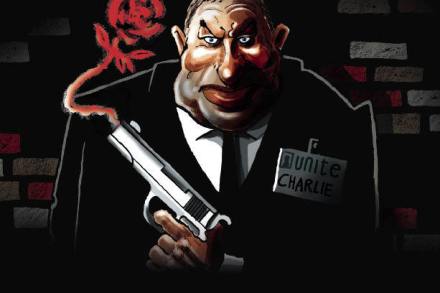
Last summer, Charlie Whelan’s lawyers threatened to sue The Spectator for an article describing him as a bully. The article was entirely correct. So what was he so keen to cover up? Fraser Nelson and Ed Howker investigate The Labour rebellettes fear the creeping takeover of the party by the Unite trade union via Charlie Whelan. He has been taken on by female officers in the union and formally charged with bullying. Certain Labour women see the Brown-Simpson-Whelan alliance as part of a menacing testosterone-sodden axis. And one that needs to be challenged. Spectator Coffee House blog, 24 May 2009 Two months later, a letter arrived from Mr Whelan’s lawyers.

The revolution will not be tweeted

Don’t listen to the hype about ‘Web 2.0’ politics, says Andrew Gilligan. Online campaigning is only of interest to a handful of Westminster nerds and journalists Ed Balls has ‘had to take the roast chicken out of the oven’. For Sarah Brown, ‘waking up in our house in Fife was today’s special treat’. William Hague is ‘enjoying a good Burger King at Wetherby services’, and the breaking news from Eric Pickles is that he is ‘out with the team in Brentwood’. In the general election as it appears on Twitter — or should that be Pooter? — there can be no doubt that the battle of ideas is well and truly joined. Questioning the importance of the ‘Web 2.

Barking mad — a day out with the BNP

Harry Mount watches Nick Griffin try to win round the disgruntled former Labour voters of Dagenham and Barking — if he wasn’t so ridiculous, he might be dangerous As always, P.G. Wodehouse got it right. Far-right groups are unlikely to take off in Britain because, for all their nastiness, they always come across as just a little too ridiculous. That’s certainly the impression I got after spending last Saturday in Barking, east London, at the BNP campaign launch. In The Code of the Woosters (1938), Wodehouse neatly took care of Sir Oswald Mosley and his Blackshirts, by casting him as Sir Roderick Spode in his black shorts; by the time Spode had set up his fascist group, there were no shirts left, according to Gussie Fink-Nottle.

The rise and fall of a young fanatic

Examine Nick Griffin’s appearance on Question Time last year, or the British National Party’s campaign for the European parliament, or even their work ‘on the ground’ in Barking today and you will find something very peculiar. The party is desperate to demonstrate to an electorate angered by expense abuses that it is a tightly run, principled organisation, unblighted by self-serving corruption and ready to ‘clean up’ mainstream politics. The reality (as Harry Mount points out opposite) could not be more different — witness the headline ‘BNP Publicist Sacked Over Plot to Kill Nick Griffin’ which appeared on the Sky News website at the start of this month.

How did Labour know where to aim its cancer-scare mailshot?

Gordon Brown’s latest campaign slogan — ‘Vote Labour or Die of Cancer’ — has a certain apocalyptic vigour about it, don’t you think, even if it was implied rather than directly stated? The party sent out 250,000 ‘postcards’ to women, although they were not the sort of postcards you get when your Aunt Jemima’s been on holiday in Lyme Regis for the week. The gist was: if the Tories get in they’ll stop your chemo, you mug. Or you won’t get treated at all, in time, and you’ll probably die. This caused a small furore — we’ll come to why the furore was a muted furore, rather than a howl of complaint, in time. Most of the people who admitted receiving this missive were outraged, disgusted and so on, and said so.

Spectator debate: ‘Pity Cameron’s a Heath not a Thatcher’

Last week’s Spectator debate — ‘Britain’s in decline again. Pity Cameron is a Heath not a Thatcher’ — looked at the nature of a future Tory government under David Cameron. Last week’s Spectator debate — ‘Britain’s in decline again. Pity Cameron is a Heath not a Thatcher’ — looked at the nature of a future Tory government under David Cameron. Proposing the motion, Simon Heffer surprised everyone by launching into a warm tribute to Ted Heath. ‘A serious talent’, Heath had been hobbled by a ‘terrible desire to let the state take control’. In office he demonstrated a fatal ‘flexibility of principle’.

Don’t be daft — you can’t put the Pope on trial

Benedict XVI’s handling of sex abuse cases is not above criticism, says John L. Allen Jr. But the campaign for him to be hauled before an international court is ill informed A Vatican spokesperson recently laughed off the campaign to issue an arrest warrant for Pope Benedict XVI when he visits the United Kingdom in September, describing it as an idea designed to make a splash in public opinion rather than something ‘serious’. One understands that response.

A Tudor mystery unravels

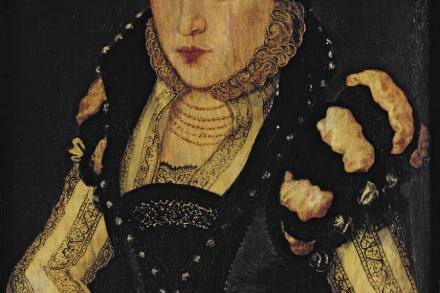
The fate of Lady Mary Grey, Queen Elizabeth’s prisoner and a potential heir to the throne, has never been resolved. Now Leanda de Lisle tells all At the Prime Minister’s country residence at Chequers, scribbles on the walls of the 12-foot prison room bear testimony to the dreary misery of the woman Elizabeth I had kept there. An heir to the throne, a potential English queen, now buried in obscurity. If Lady Mary Grey is recalled today, it is as a historical footnote. She was the dwarf who married a giant, the curious youngest sister of the famous Lady Jane Grey. But Mary was a more significant figure than her stature in the literature suggests.

The trouble with tea parties

For many Tory voters, a change of government on 6 May will not be enough. What Britain needs, they think, is little less than a revolution — against skyscraping taxes and personal debt, a corrupt parliament, and a surveillance state that is stripping away liberties as old as Magna Carta. In short, Britain needs what America has: tea parties, a grassroots movement willing to take to the streets in protest against state power. Daniel Hannan and his Freedom Association lit the fuse for such a rebellion, or so they hoped, in February with a Brighton tea party. And Hannan is not alone, there are signs everywhere of a longing for a populist backlash.

‘If we have souls, then so do chimps’

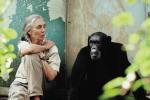
Freddy Gray meets Jane Goodall, the primatologist whose ‘unprofessional’, empathetic approach led to astonishing discoveries about how human-like chimpanzees really are A 76-year-old woman is making chimpanzee noises at me. ‘OOOHHH HAAAAA, OOOHHH HAAAA,’ she shouts. ‘And then there’s a WRAAAAH! That’s a threat! WRAAAH!’ This woman isn’t mad, though. She is Jane Goodall, the world-renowned primatologist, arguably the greatest behavioural scientist of her time. She is making ape sounds because I’ve asked her to, and because the subject of chimpanzees still inspires in her a child-like excitement.

A very Catholic education

It seems mandatory at the moment to refer to all cases of child abuse as ‘child rape’. Well — I wasn’t raped but I was, as the euphemism goes, ‘interfered with’ by a representative of the Roman Catholic Church in Ireland. And rather than seek out those who were sexually abused by priests, nuns and members of religious orders in Ireland, it would, I believe, be easier to identify the minority who were not subject to a sexual advance of some kind. When I was growing up in a border county town in the 1950s and 1960s, sexual advances by priests and brothers were as common as the use of the ruler and cane to inflict corporal punishment.

The sheep-worrying aliens made me think about homosexuals and B&Bs

Alien life-forms have been cutting holes in sheep in Shropshire with highly powered lasers and strange glowing balls of light. According to a local farmer, reported by an oddly credulous chap from the Daily Telegraph, there is a ‘corridor’ of 50 miles stretching from Shrewsbury towards the Powys border where UFOs arrive quite regularly and do weird stuff with sheep. The farmer insists that sheep have been found with perfectly circular burn holes on their foreheads, and sometimes their brains dissected. Also he has seen the UFOs and pronounced them ‘frightening’. I agree with him. Most of the UFOs I have seen have been frightening, especially those which turn up just after there’s been a lock in at the local pub.

The Spectator Debate

The Roman Catholic Church is a constant source of controversy, as the ongoing outrage over clerical sexual abuse shows. But the Church also inspires great devotion and loyalty. The Spectator recently hosted a debate under the title ‘England Should be a Catholic Country Again’. Here, we reprise two passionate arguments for and against the motion. Yes, says Piers Paul Read. A Catholic England would counter the barren hedonism of our culture ‘A weak priest inspires contempt,’ wrote François Renée de Chateaubriand in the early 19th century, ‘a vicious one excites abhorrence; but a good priest, meek, pious, without superstition, charitable, tolerant, is entitled to our love and respect.’ As it was then, so it is now.

They were chanting ‘Kill, kill, kill’

There was total silence, apart from birdsong, when we entered the village of Kuru Karama. Every building had been burnt or destroyed. There were no villagers in sight, just two or three soldiers at a guard post dozing in the late afternoon sun. At length we found a group of young men and women. Did they live here? Yes. Had they been here on the day of the massacre? No, they knew nothing. Were they Christian or Muslim? Christian. They bent their heads and one woman placed her hand over her mouth. Finally we came across Abdullah. He took us to a little square and pointed out some of the wells into which the Christian killers had thrown scores of dead bodies, head downwards. Some of the bodies were so decomposed that they could not be removed. The stench of death seeped out of the wells.

Fight the good fight

A few Saturdays ago a stocky 32-year-old went to mass at the quaintly named Gaylord Texan Convention Center in Dallas, Texas. Later that day he had an altercation with a 34-year-old Ghanaian. Records show that he threw over 1,000 punches at the older man during a half-hour scuffle. Countless bystanders witnessed the brawl but not one called the police. Why not? Because the violence was sanctioned by the World Boxing Organization. The welterweight title fight between Manny Pacquiao and Joshua Clottey attracted almost 60,000 spectators, the third-largest audience in boxing history. Days earlier a raucous crowd had filled Oxford Town Hall for the 103rd Varsity boxing match. The event drew one of its biggest ever crowds, despite ticket prices as high as £60.

What’s a war book without a dead Nazi?

Objections are raised to a cracking new children’s book on account of a dead German soldier and pictures of frostbite. But the young adore grisly bits, says Robert Gore-Langton There’s a cracking new children’s book out, Mission Telemark, by the award-winning writer Amanda Mitchison. It is set in the second world war and it’s based on the story of the Norwegian sabotage raid on Hitler’s ‘heavy water’ atomic plant in Telemark. You might remember the film The Heroes of Telemark, starring Kirk Douglas as a most unconvincing Norwegian. Both the film and the book were based on the famous 1942 mission — a tale of great courage, skis and atoms.