Iain Martin

What does Malcolm Rifkind really believe in?

From our UK edition

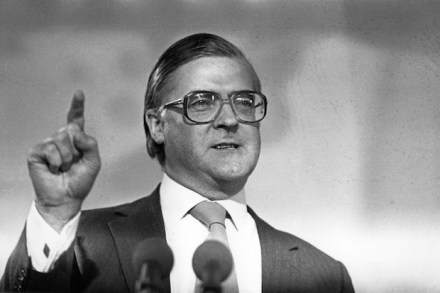
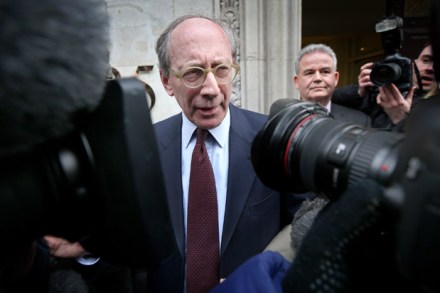
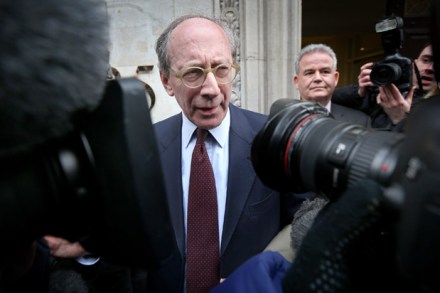
Never speak on the same platform as Sir Malcolm Rifkind. I tried it once, at a Spectator debate held during the Scottish independence referendum campaign in 2014, and I will not be repeating the experience. The former Foreign Secretary spoke as usual without notes, and with such ringing clarity and confidence that all the other panelists were easily eclipsed. That included Kelvin McKenzie, the former editor of the Sun, speaking in favour of Scottish independence. Sir Malcolm might just as well have recited the Edinburgh phonebook from memory, in his Jean Brodie tones, and the audience would still have cheered him to the echo. It was a magnificent performance from one of the best speakers of his generation. And yet, for all the brilliance, I can’t recall a single word he said.
No regrets, really?

From our UK edition

Never speak on the same platform as Sir Malcolm Rifkind. I tried it once, at a Spectator debate held during the Scottish independence referendum campaign in 2014, and I will not be repeating the experience. The former Foreign Secretary spoke as usual without notes, and with such ringing clarity and confidence that all the other panelists were easily eclipsed. That included Kelvin McKenzie, the former editor of the Sun, speaking in favour of Scottish independence. Sir Malcolm might just as well have recited the Edinburgh phonebook from memory, in his Jean Brodie tones, and the audience would still have cheered him to the echo. It was a magnificent performance from one of the best speakers of his generation. And yet, for all the brilliance, I can’t recall a single word he said.

Sturgeon’s bluff

From our UK edition

It ought not to be a surprise that Alex Salmond, Scotland’s former First Minister, has declared that the vote to leave the European Union is the trigger for a second referendum on Scottish independence. Salmond thinks everything is an excuse for another go. If a new Bay City Rollers album suffered poor reviews south of the border, or an English football pundit failed to declare Archie Gemmill’s wonder goal for Scotland against Holland in the 1978 world cup the best ever, Salmond would be right there on the UK’s television screens, chortling at the brilliance of his own wit, before intoning gravely that this insult is surely the final straw for the United Kingdom. Salmond has been demanding a second Scottish referendum almost from the moment he lost the last one.

Free markets need defending. Meet CapX

From our UK edition

With The Spectator and Coffee House you are already used to getting the very best gossip and news. Can I interest you in the perfect accompaniment?It is a new service called CapX. I'm its editor and we have been trialling the site since last summer. The new version, looking rather nice we hope, launched today. Fraser Nelson, the editor of The Spectator, kindly thought that readers of Coffee House might like to be introduced to what we're doing. Our editors based in London scour tens of thousands of sources such as blogs, academic research and newspapers around the world to locate smart stories on markets, politics, economics and ideas. We also commission our own exclusive pieces from writers in many countries.

Back to school with Lord Baker

From our UK edition

Ben, an articulate 14-year-old hard at work in the school design and proto-typing centre, is explaining to Lord Baker of Dorking how 3D printing works. Baker, a former Tory education secretary, listens intently before declaring the technology ‘marvellous’. This coming July will mark the 25th anniversary of his leaving the Department for Education — but Lord Baker, who turns 80 this year, has never quite stopped the school reform that he started. We’re at the University Technical College (UTC) in Sheffield, one of 17 such schools which has opened in recent years following the decision by Baker and his late friend Ron Dearing, the former Post Office boss, to make the remodelling of the English schools system their retirement project.

Braveheart banking: the fall of RBS

From our UK edition

When Fred Goodwin was looking for a marketing slogan in the boom years, he alighted on a simple phrase which encapsulated the ‘can-do’ philosophy of the bank he ran. RBS would, promised the adverts, ‘Make It Happen’. Goodwin and his colleagues made it happen, though not quite in the way they intended. They turned RBS into a financial monster, the world’s biggest bank, with assets of £1.9 trillion. By 2008 it had become so large and so exposed that if boom ever turned to bust the bank (and the rest of us) would be buggered. And so it proved. Five years ago this week, Lehman Brothers went out of business. That earthquake triggered a financial tsunami which went on to flatten RBS, which had to be rescued by taxpayers at the cost of £45.2 billion.

Unionist gold

From our UK edition

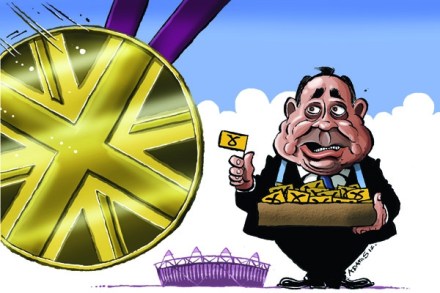
Britishness was supposed to be finished, its last flickering embers to be snuffed out by Alex Salmond when he holds his 2014 referendum on breaking up the Union. The London Olympics, the Nationalists claimed, would be the last at which the Scots, English, Welsh and Northern Irish would be teammates. The Scots, supposedly on the brink of a nationalist awakening, would cheer on their countrymen but feel no more pride in an English win then they would a French one. Pete Wishart, an SNP MP, served notice that ‘Scotland has absolutely no interest in Team GB’. But as the Games draw to a close, the SNP will have learned a lot about Scotland and its interests.

How to save the Union | 14 May 2011

From our UK edition

Alex Salmond will be a formidable opponent – so David Cameron needs to fight on his own terms In Aberdeen this week, a new statue of Robert the Bruce was unveiled. Canny, daring and tenacious, he is a king revered for an audacious victory that altered the course of Scottish history and secured his country’s independence from England. It is easy to imagine Alex Salmond plotting where his own statue will be, how tall the plinth. He has the same ambition, to win Scotland’s independence, and his battle plan is not entirely dissimilar. In Bannockburn, a much larger English force was destroyed on the battlefield as a result of its recklessly complacent commanders. Almost 700 years later, the same fate may well befall the unionist parties if they’re not careful.

Boom and bust for Gordon

From our UK edition

Iain Martin examines Gordon Brown’s confident policies before and after disaster struck and finds them wanting In a previous life, working on Scottish newspapers, I used to take delivery of the occasional article offered by Gordon Brown. The then Chancellor of the Exchequer or one of his aides would call— on the way to the airport from some important gathering — to check that the copy sent by Stone Age fax or then new-fangled email had arrived. It had, I responded ruefully. The piece he had written for the opinion pages had most definitely arrived. It was lying there on my desk staring at me. More than a thousand words by Gordon Brown, waiting to be read. Beyond the Crash is many times longer than the newspaper articles Brown bashed out.

Charlie Whelan’s war

From our UK edition

Gordon Brown’s chief fixer is ensconced in Unite, the increasingly militant union. Iain Martin asks if the comrades can be persuaded to hold back a wave of strikes Where is Charlie Whelan these days? What’s the old rascal up to? The trade union fixer, spin-doctoring confidant and close friend of the Prime Minister was on my mind after I returned from a trip to my native Scotland for Christmas. I had booked a rail ticket to take me northwards in time for the big day — £112 first class with Virgin. My only choice, seeing as the Unite trade union had engineered a British Airways strike, rendering my £190 British Airways ticket bought months ago useless. That the industrial action was then cancelled, and that I had two tickets, was no consolation.