Features

Art is now an acronym for Arid Retail Trade

As the spring auctions begin, it looks as if there’s never been a greater demand for art, says Evgeny Lebedev. But despite a booming market, the art world itself is stagnant If one was to commission a sculpture that depicted the woeful state of the British art market, then it would be difficult to improve on what Boris Johnson is proposing for the London Olympics. The Mayor’s venture represents the fusion of everything that is wrong with the system: a steel billionaire, a £19 million price-tag, a world-famous artist and 1,400 tons of metal in the shape of crashed pylons. And the end result? That the contraption will be used as a mega funfair. Publicity for the so-called ArcelorMittal Orbit speaks of its size, price and persona. There is no majesty, no mystery. No art.

It was Mandy wot lost it

It’s time to drop the myth of Lord Mandelson as a political genius, says Stephen Pollard. No one has done more to wreck the Labour party Whatever the election result, one thing is sure: industrial quantities of obloquy will be heaped on Gordon Brown as the man responsible for Labour’s result. But if the party is after the real villain of the piece, it is looking in the wrong place. Mr Brown was, it was clear from the start, never suitable for the job of Prime Minister. By last summer, such a conclusion was not merely clear, it was being beamed in blinding neon lighting from the door of 10 Downing Street. So long as Gordon Brown remained leader, Labour was guaranteed defeat.

After all the fuss, will anything actually change?

Did you vote for change, then? Or did you, as David Cameron put it during the second of those frigid televised leaders’ debates, vote for ‘hope, not fear’? I decided in the end to vote for fear, as I’ve never been very keen on hope. I think hope is overrated, if we’re honest, whereas there is a dark, brooding intensity to fear. But change? Some things will change, I suppose, but a lot of the things which make people angry will not change at all, the sort of stuff that was rarely if ever mentioned during the election campaign, but which we know thoroughly annoys many people. Here is my list of things which will continue pretty much unabated, regardless of the election result.

Travel narrows the mind

The holiday season is upon us, but it’s nothing to celebrate, says Lloyd Evans. Tourism is torture, no matter how you do it Oh God. Here it comes again. The days lengthen, the temperature climbs, the pollen spreads and the mighty armies of foreign invaders prepare to make their move. It’s not illegal immigrants who cause my heart to sink at this time of year. Those brave defectors deserve our admiration for their persistence and ingenuity. They travel here in conditions no westerner would tolerate. They cling upside down to the exhaust pipes of juggernauts. They squeeze into the drums of imported washing machines. Unlike casual holiday-makers they’re serious about this country. They’re here to learn English, find a job, raise a family, get sick and die.

‘The manifesto is what we believe in, that is what matters’

As election day approaches, David Cameron talks to Fraser Nelson and James Forsyth about Tory principles, where his campaign went wrong, and what might happen if he doesn’t win To gauge how much trouble David Cameron is in, one need only check his smile. In the days when he enjoyed a seemingly impregnable lead over Labour, he appeared fretful and inactive. But when he meets The Spectator on a train to Southampton, he is wearing a grin. This can only mean one thing: he is, once again, fighting for his political life. The polls are no longer predicting a Tory victory but a hung parliament — and senior Conservatives wonder if their leader will have to do a deal with the Lib Dems. Defeat seems to have been snatched from the jaws of victory.

The Asbo swan of Cambridge: a fable for our time

A swan won’t take your eye out, says Rod Liddle. So why the health and safety paranoia? Never mind hung parliaments and the ending of the two-party dominance of British politics (a notion I seem to remember being mooted in about 1982) — here’s the important question of the week: was the BBC right to provoke that swan? It’s a story you may have missed while worrying yourself stupid over who to vote for, or the fact that the Greeks are skint again, or Icelandic ash sending planes spiralling to earth like sycamore keys in an autumn gale.

What did Nick Clegg get up to at Cambridge?

I am not sure that I quite envy James Delingpole, cast as a teddy bear-carrying social climber in When Boris Met Dave, Channel 4’s drama-documentary about the future Tory leader’s time at Oxford. But I do feel a bit peeved that my generation is about to seize power and I can’t even claim a bit part. If Channel 4 were minded to delve into Nick Clegg’s time at Cambridge I wouldn’t even make that — for the simple reason that in the three years I spent there with him I failed even to hear of him. Failing to meet the man who this time next week may be power-broking the next government of the United Kingdom might be understandable had I spent more time in libraries and laboratories. But I was fascinated by politics at the time.

For true democracy, bring back ostracism

Among the many complaints I have heard about this unsatisfactory election is this one: it is impossible for the general public to get rid of a thoroughly unpleasant, or corrupt, or dangerous politician if he (or she) sits in a safe party seat or in the Lords. Such people can thumb their noses at us, and do. But there could be a thoroughly satisfying way of meeting this need, and one with wider applications than mere politics. The new parliament, which we all trust will be more responsive than the last one, might consider going back 2,500 years in time and copying from the resourceful ancient Greeks the admirable institution of ostracism. Most people understand the word but are unfamiliar with the process. I have been going into it while writing my present book, on Socrates and his world.

HMS Albion to the rescue

Stanley Johnson was a volcano victim — stranded in Spain with thousands of other British holidaymakers. Fortunately, the Royal Navy was on hand to bring him home in style Last week was quite extraordinary. My wife Jenny and I landed at Madrid airport on Monday afternoon, having flown overnight from Ecuador. We should have had an onward connection to London that afternoon, but because of the spreading cloud of volcanic ash, there were no flights. Next morning I was scheduled to take an early flight from Gatwick to the far north of Scotland to speak on behalf of my good friend, Alastair Graham, who is seeking to win the Caithness, Sutherland and Easter Ross constituency for the Conservatives.

The cure for calling in sick

Asking NHS staff to call a medical hotline — rather than their boss — when they feel ill has cut ‘sickies’ by a quarter. Martin Vander Weyer meets the man behind the scheme It’s Monday morning and you’re feeling a bit below par. Maybe it was last night’s kebab, maybe it’s the bug that’s going round your children’s school. You ring a workmate and ask her to tell the boss you won’t be in and you’re not sure when you’ll be back. On Tuesday, still off colour, you try to get an appointment with your GP — but the receptionist blames staff shortages at the surgery for not booking you in until Wednesday evening.

Notes from a war zone

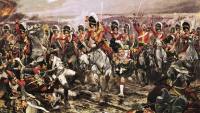
When Winston Churchill, as a young cavalry officer, found himself fighting the fierce tribesmen who inhabited the imposing mountainous terrain that defined the Indian empire’s northern border, he provided a graphic account of the brutality of the enemy the British force encountered. When Winston Churchill, as a young cavalry officer, found himself fighting the fierce tribesmen who inhabited the imposing mountainous terrain that defined the Indian empire’s northern border, he provided a graphic account of the brutality of the enemy the British force encountered. ‘At a thousand yards the traveller falls wounded by the well-aimed bullet of a breech-loading rifle,’ Churchill wrote in his account of the 1897 campaign, The Story of the Malakand Field Force.

Two weeks to save the Conservative party

The Nick Clegg bubble has been caused by the mistaken view that he is not a machine politician, says James Forsyth. But if this bubble doesn’t burst before polling day, then it could be the end of the Tory party as we know it Both Andy Coulson and the gaggle of journalists surrounding him agreed that there had been ‘no game-changer’ in the first leaders’ debate. As the Tory communications chief, it’s his job to be optimistic — but this was not spin. He believed it. And so did most of the Westminster insiders, who gave the debate to Clegg on points but thought there was no moment in the 90 minutes that was going to transform the campaign.

The elevation of Nick Clegg shows we’ve reached a new low

It doesn’t matter what the Lib Dem leader stands for, says Rod Liddle. In the era of X Factor politics, people can decide, on a whim, that he should be Prime Minister Is Nick Clegg better than Winston Churchill, as a recent opinion poll seemed to suggest? The obvious answer is yes, of course — because Nick is still alive. Winston Churchill died in 1965 and I have the silver commemorative crown coin to prove it, and a very vague memory of standing somewhere crowded in central London with my mum and dad, watching his large coffin being loaded onto some riverboat. But that is the only area, so far as I can see, where Nick has the edge over Winnie — i.e., he hasn’t yet entirely decomposed.

The great American melting pot

Americans are panicking again about immigration and the size of their population. But they shouldn’t, says Patrick Allitt. The US remains the greatest assimilator of new peoples The American census takes place every ten years, in the zero year of each decade. I filled out my form last week and anticipate being part of a final tally that will come in at around 310 million. Pundits react to this decennial ritual with a flurry of stories. You can always find a crowd who say the country is badly overpopulated, and a forlorn little bunch who are afraid it’s underpopulated. Both groups offer persuasive reasons for their views, and both predict dire consequences. The debate has been going on for decades.

Kissinger’s man from Moscow

When Anatoly Dobrynin died earlier this month, aged 90, the British press paid little notice. Yet it is increasingly clear that he was one of the most remarkable players in the Cold War — someone who did much to stop the conflict turning hot. Over 24 years he served as Soviet ambassador to six US Presidents — Kennedy, Johnson, Nixon, Ford, Carter and Reagan. Perhaps his most telling contribution was his role in the period of détente during the stewardship of Henry Kissinger, Nixon’s all-powerful national security adviser, and later secretary of state. Dobrynin arrived in Washington just in time to be thrown into the Cuban Missile Crisis. At 42, he was the first Soviet envoy to the US born after the Russian revolution.

Fifty Commandments of New Labour

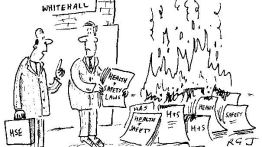
With its obsessive law-making, this government has sought to micro-manage our lives, says Brendan O’Neill. Let’s hope the next administration leaves us alone The Ten Commandments, which stood Judeo-Christian societies in fairly good stead for centuries, only forbade eight things: murder, adultery, theft, bearing false witness, coveting your neighbour’s missus and things, taking the Lord’s name in vain, worshipping false gods and making idols. New Labour, which clearly knows better than God, has, in its 13 miserable years in power, created thousands of new things Thou Shalt Not do.

Eating disorder

The class system, with its fixed mealtimes, stopped us all from getting fat, says Andrew M. Brown. Today we are a nation of all-day munchers — and it shows Imagine if, at breakfast, a mother were to offer her family, instead of cornflakes or boiled eggs, slices from a gigantic cake smothered in icing. Would that seem odd? Well, yes, it would: but that’s exactly what a lot of us do — eat cake for breakfast. A muffin is a cake by another name. And on our way to work plenty of us snap up a white chocolate and strawberry muffin, say, from Starbucks, at 583 calories, and wash it down with 300 calories’ worth of warm coffee-flavoured milk.