Dennis Sewell

Could this be the solution to the Durham Free School dilemma?

From our UK edition

A highly respected academic has stepped forward pointing education ministers towards a potentially face-saving solution to the Durham Free School dilemma. James Tooley, professor of education policy at Newcastle University has written to schools minister Lord Nash with a proposal that he should become a governor of the school, bringing with him the expertise of other colleagues from the university’s education department to beef up DFS’s leadership and governance capacity. Campaigners hope the minister will re-think the decision to close the school if he can be persuaded the school now has the necessary skills and resources on hand to improve its performance.


The quango state: how the left still runs Britain

From our UK edition

[audioplayer src="http://traffic.libsyn.com/spectator/TheViewFrom22_6_February_2014_v4.mp3" title="Fraser Nelson discusses David Cameron's quango problems" startat=1350] Listen [/audioplayer]Last week Sally Morgan reverted to type. After almost three years as a model of cross-party co-operation, instinctive Labour tribalism finally won out as she accused Downing Street of purging Labour supporters from high offices. Of the many Labour types appointed by the coalition into quangos, she was probably the last person the government expected to go hostile. Not only had she done a fine job chairing Ofsted, the schools inspector, but she was a proven reformer who certainly shares Michael Gove’s passion for new schools. Like many Blairites, she is something of a Goveite at heart.

Will Nicky Morgan admit she may have been wrong about Durham Free School?

From our UK edition

The education secretary gave Durham Free School (DFS) until 3 February to make representations showing why it should not have its funding agreement ended. Nicky Morgan now has the school’s response: a detailed explanation of why the DfE’s threat to close the school is unfair, disproportionate and wrongheaded. The academy trust has also served notice that it may apply for judicial review.  A critique of Ofsted’s behaviour throughout this affair has also been drawn up, saying that the chief inspector, Sir Michael Wilshaw, may have misled a commons committee.

If Cameron wants an ‘all-out war’ on mediocre schools, why did he get rid of Gove?

From our UK edition

It is odd to hear David Cameron promise an ‘all-out war on mediocrity’ in education. An admirable sentiment, but it’s hard to reconcile with the fact that he demoted the very person who was working so successfully for that precise aim. Here’s what he intends to say in a speech later today: 'So this party is clear. Just enough is not good enough. That means no more sink schools - and no more 'bog standard' schools either. We're waging an all-out war on mediocrity, and our aim is this: the best start in life for every child, wherever they're from - no excuses.' When a politician says ‘this is clear’ it’s a sign that he is not, really, clear. The question behind the the confusion is a simple one: how serious is David Cameron about school reform?

The Conservatives will lose votes if they fail to defend their school reforms

From our UK edition

We can be sure that between now and May there will be an endless barrage of lies and disinformation aimed at belittling this government’s achievements in improving schools. The real danger is not that these arguments will be persuasive, but that they will not be rebutted. It sometimes seems as if the government has lost faith in its own successful reforms. Where Tristram Hunt was poised ready to pounce, misrepresenting the committee’s report the moment it was published (in fact, he was at it the day before it was published!), Nicky Morgan has been recorded as absent once again. It may be that the new Education Secretary has orders from No. 10 to do little and say nothing beyond making emollient noises about teacher workload. If so, this is an opportunity missed.

The Tories have one real success in government – and they’re scared to talk about it

From our UK edition

The most significant achievement of this coalition, the only thing they really have any right to crow about, and possibly all that posterity will ever remember them for with anything approaching gratitude, will not be the ‘long-term economic plan’ they never cease to talk up, but the school reforms that the Conservatives seem almost to want to deny as the general election approaches. This reticence is a mistake. With many voters grown so cynical about mainstream politics that they’re ready to throw in their lot with any passing populist chancer, here is a rare success story that needs shouting from the rooftops.

What on earth qualifies Alan Rusbridger to run an Oxford college?

From our UK edition

When Alan Rusbridger announced his departure from The Guardian, two questions presented themselves. The first was: who will succeed him? And the second — admittedly far less interesting — was: which Oxbridge college will he end up dumped in? The answer, we now learn, is Lady Margaret Hall in Oxford. Lucky old them. It's a sign of the phenomenon which The Spectator’s Peter Oborne outlined: the inexorable rise of the media and political classes. Rusbridger is no academic — he was a chorister at fee-paying Cranleigh School and then he read English Literature at Magdalene College, Cambridge. But aside from that, he's spent most of his life on Fleet Street.

Has the Chief Inspector of Schools really gone rogue?

From our UK edition

What’s up with Sir Michael Wilshaw? The chief schools inspector was once seen as a pillar of common sense and an enthusiastic partner of Michael Gove in pragmatic schools reform. Now, he stands accused of trying to enforce a particularly toxic form of political correctness as his inspectors mark down a succession of rural English schools for being insufficiently multicultural — or as some newspapers inevitably framed it, for being ‘too white’. Some critics go further and say that Ofsted suppresses as much good teaching as it fosters and is now poised to present young people with a warped version of our national values. Sir Michael, in other words, stands accused of going rogue. He has certainly had a most erratic year.

Has Ofsted’s Michael Wilshaw really gone rogue?

From our UK edition

Another preview from the Spectator Christmas special: Dennis Sewell looks at Ofsted and argues that the Chief Inspector of Schools must revamp his power-crazed organisation. Subscribe for just £73 for a whole year — including full print and digital access, as well as a £20 John Lewis voucher. What’s up with Sir Michael Wilshaw? The chief schools inspector was once seen as a pillar of common sense and an enthusiastic partner of Michael Gove in pragmatic schools reform.

Assault on the ivory tower

From our UK edition

Look down the list of the masters, wardens and principals of Oxford colleges and you’ll soon see that The Spectator’s contributing editor Peter Oborne was on to something with his theory of the inexorable rise of the media and political classes. At high tables across the university, former journalists, broadcasting executives and quangocrats are increasingly occupying places of honour once reserved for scholars of great renown. Ensconced in the master’s chair at St Peter’s College is the former controller of BBC Radio 4, Mark Damazer. The principal of St Anne’s is former Newsnight editor and Channel 4 executive Tim Gardam. Ex-Guardian and Economist writer Frances Cairncross is the rector of Exeter College.

Pussy Riot were wrong

From our UK edition

It’s hard to tell which is the more absurd over-reaction to Pussy Riot’s 51-second performance of political and religious blasphemy in Moscow’s St Saviour’s Cathedral in February — that of the Russian state or that of the western media. It should go without saying that the treatment meted out to the three retro-punks — five months’ pre-trial detention at the mercy of unkind jailers, isolation from their families, heavily embroidered charges, their display in an aquarium-style dock under threat of a seven-year maximum sentence before a clearly biased judge — has been cruel, oppressive and grotesquely out of proportion to the offence they committed. But it cannot any longer go without saying.

Mission Impossible

From our UK edition

At the height of empire, Britain used to send missionaries out to Africa and Asia to instruct the natives in personal hygiene, instil good table manners and preach the gospel. The occasional unlucky one found himself in a cannibal’s pot for his trouble; but mostly they won out, establishing themselves as the kindly, civilising arm of imperialism, founding schools and clinics, and converting the heathen. Back home, the public was jolly proud of them. British missionaries were both an expression and a source of Britain’s muscular national self-assurance. So what are we to think of ourselves today, now that we are on the receiving end of missionary attention?

The generation game

From our UK edition

‘Intergenerational fairness’ is simply the latest cover for envy Towards the end of last month, a gang of youthful policy wonks started beating up the elderly. This is something we will have to get used to. The proposal from the Intergenerational Foundation to ease over-60s out of their three- or four-bedroomed houses to make way for younger families was just the first of a series of pernicious policies the think-tank is preparing as it opens up a new front in the politics of envy. ‘Intergenerational fairness’ is a seductive piece of branding. Who would declare themselves against fairness? In theory, it should have a particular appeal for conservatives.

Punish the rich, hurt everybody

From our UK edition

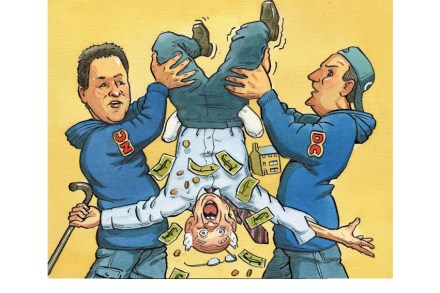
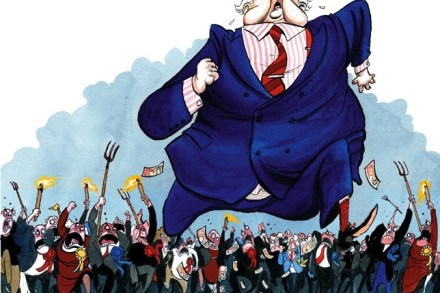
The Bible tells us that the poor will always be with us, but there is no good reason, and certainly no scriptural authority, to support the widespread belief that the rich will be too. As capital has become more mobile, slipping across fiscal boundaries at the snap of an enter-key, so too have its owners, who are today only a Gulfstream ride away from somewhere where the climate is more agreeable, the taxman less importuning and the populace less hostile. In the past, we have indulged ourselves during downturns in the politics of envy, responded with tax and regulation — then watched as the globalised rich took flight. From bankers to the Rolling Stones, those who could work anywhere decided not to stay as ministers made their pips squeak.

Punish the rich, hurt everybody | 1 September 2011

From our UK edition

This week's issue of The Spectator, out today (and available for only £1 an issue here), dwells on the new anti-rich mood in Westminster. James will have more on his cover piece later, but here's the accompanying article by Dennis Sewell to get the debate flowing: The Bible tells us that the poor will always be with us, but there is no good reason, and certainly no scriptural authority, to support the widespread belief that the rich will be too. As capital has become more mobile, slipping across fiscal boundaries at the snap of an enter-key, so too have its owners, who are today only a Gulfstream ride away from somewhere where the climate is more agreeable, the taxman less importuning and the populace less hostile.

Who speaks for the world?

From our UK edition

In the field of public diplomacy, the tiny Gulf state of Qatar has become a mouse that roars. According to Hillary Clinton, the Emir of Qatar’s television network, Al Jazeera, is knocking spots off the broadcasters of three superpowers in a global struggle for influence being played out across the airwaves. ‘We are in an information war and we are losing,’ Clinton warned the Senate foreign relations committee in March. Making only the briefest mention of the enormous expansion of international broadcasting funded by the Russian and Chinese governments in recent years, the US secretary of state went on to declare that ‘Al Jazeera is winning.

Lessons from south London

From our UK edition

Having transformed his inner-city primary, Greg Martin has bought a stately home in Sussex – and is preparing to turn it into a fully free state boarding school We’re chatting poolside, which feels somewhat incongruous since this isn’t the Riviera or a spa hotel, but a primary school in Stockwell, one of the rougher districts of south London. Greg Martin, the school’s executive head, leans forward confidentially. ‘Look,’ he whispers, pointing to the door. ‘Here comes the middle class now.’ There’s a sudden inrush of boys and girls who seem familiar. Is it the Boden or the John Lewis catalogue they stepped out of? For sure, these children are not pupils at the Durand Academy.

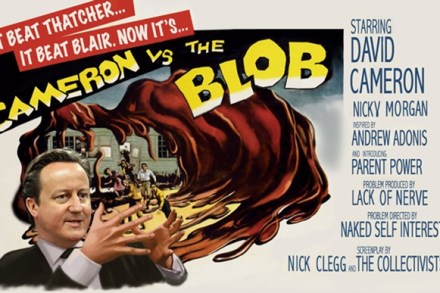
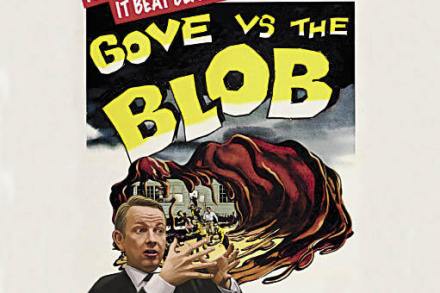
Michael Gove vs the Blob

From our UK edition

Dennis Sewell says that the political cage fight between the Tories and the educational establishment will be the most thrilling contest of Cameron’s first hundred days The Russell Group, representing Britain’s top 20 universities, warned this week that Gordon Brown’s cuts would bring to its knees within six months a higher education system that has taken 800 years to create. The destruction of our schools system has been a slower, more drawn-out process. There is, fortunately, one last chance to save it.

How eugenics poisoned the welfare state

From our UK edition

We live in a country where the poorest members of society are literally trapped. We pay them millions not to work, simply maintaining them at subsistence level like prisoners of the state. Tied up with bureaucratic regulations and subject to crazy marginal rates of tax, there are few chances to escape for Britain’s welfare-dependent. A million of those out of work have been jobless for a decade or more. They see their chances of getting a job in the future as so remote as to be barely worth considering. The chances of their children ever finding work are beginning to look slim too. The neighbourhoods in which they live are falling apart. The squalor is palpable; crime rampant; local schools are very often failing or ‘sink’ schools.

The quangocracy laid bare

From our UK edition

At last the full facts about our burgeoning quango state are laid bare. The conclusion of a report published today by the TaxPayers’ Alliance is that it’s "big, bloated and more expensive than ever before." The TPA document provides the most comprehensive and up-to-date listing available of all 1,152 'semi-autonomous public bodies' operating in the UK, along with details of how many staff each employs and how much they spend. More than £90 billion of taxpayers’ money was spent on or channelled through quangos/SAPBs in 2007-8 (up £13 billion on the year before). That’s equivalent to £3,640 for every household in the land.